Published
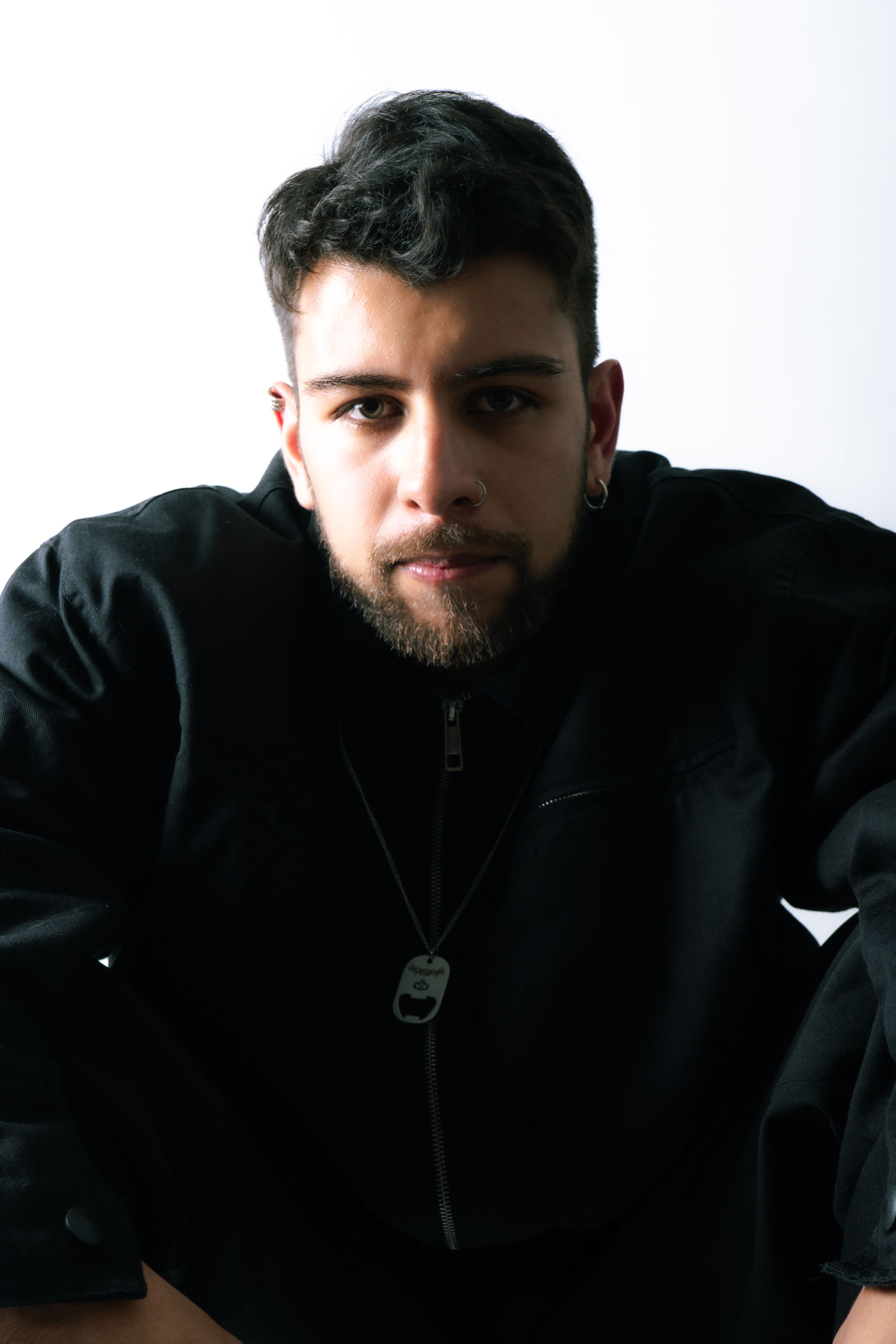
Name: Andrés Ávila aka Binary Algorithms
Occupation: Producer, composer, DJ
Nationality: Columbian
Current release: Binary Algorithms's new album Reminiscencias is out September 26th 2025 via Furatena.
Topic that I am passionate about but rarely get to talk about: I truly love the Batman videogames :)
If you enjoyed this Binary Algorithms interview and would like to stay up to date with his music, visit him on Instagram, Soundcloud, and bandcamp.
What were some of the musical experiences which planted a seed for your interest in electronic music?
I got into electronic music after going through many different “obsessions” as a teenager.
I can probably trace electronic elements in nu-metal bands, some Michael Jackson albums, and even in the soundtracks of PS1 and Xbox 360 video games.
Most genres of music make use of electronic production means. What does the term “electronic music” mean today, would you say?
If we get technical, almost all music made today could, in some way, be considered “electronic.” However, genres outside what has historically been defined as “techno”, “house”, “drum n bass”, “dubstep”, and so on, often lack the codes and sonic experimentation that have characterized them.
You can push the boundaries in any genre, but in most cases this means taking your instrumental skills to the next level. In electronic music, on the other hand, it requires finding entirely new ways to create sound.
Both approaches are equally valuable, though they follow very different paths.
Disco, house, techno, drum n bass, IDM and many other genres were about a lot more than just music. For you personally, is electronic music (still) a way of life – and if so, in which way?
Quoting Wolfgang Voigt: “I live and die with my art.” For me, it’s as simple as that — you’re either an artist or you’re not; there’s no middle point for me.
Debates around electronic music tend to focus on technology. What, though, were some of the things you learned by talking to colleagues or through performing and/or recording with other musicians? What role does community play for your interest in production and getting better as a producer?
I don’t usually work much with other musicians — not even on my “DJ” side, as I rarely go b2b with another artist. For me, it takes a very strong musical connection to feel comfortable without having full control of what’s happening.
That said, my forthcoming album would not have been possible without my closest group of friends, who introduced me to music I would have never discovered otherwise.
Many of the sonic influences for Reminiscencias came from a random YouTube link someone dropped in our WhatsApp group.
What are examples for artists, performances, and releases that really inspired you recently and possibly gave you the feeling of having experienced something fresh and new?
I’ve really been enjoying the recent releases from Burial, Skee Mask, and Barker, as well as the new albums by Jamie xx, Ela Minus, and Seph.
I also recently discovered Turnstile and their latest album (thx to my dear friend Didacta), along with the BROCKHAMPTON records.
And I’m truly excited about the upcoming LP from Lucrecia Dalt.
[Read our Ela Minus interview]
What kind of musical/sonic materials, and ideas are particularly stimulating for your own work right now?
To be honest, in the last couple of months I’ve been getting more inspiration from life experiences rather than music itself.
Where do most of your inspirations to create come from – rather from internal impulses or external ones? Which current social / political / ecological or other developments make you feel like you need to respond as an artist?
The Latin American periphery city context has always forced us to ‘respond.’ Coming from a smaller city makes recognition even harder.
For whatever reason, the same shitty dynamic between ‘international artist vs. local artist’ (where the international artist is granted better fees, better conditions, and even perceived by the crowd as inherently ‘superior’) also plays out as ‘artist from the main city vs. artist from the smaller one.’
The only difference is that the first dynamic — international vs. local — is the one most often targeted and criticized.
Today, electronic music has an interesting relationship between honouring its roots and exploring the unknown. What does the balance between these two poles look like in your music?
You can still go beyond the limits while being true to the basics and the roots. I hope that answers the question.
What were some of the recent tools you bought, used, or saw/read about which changed your perspective about production, performing, and making music?
Ableton Live 12 + Pigments 6 + ASM Hydrasynth + Granular Fx. All of them used when producing my upcoming album!
How do you see the role of sampling in electronic music today?
I would love to answer this but sampling is a way of designing sound I’m not much involved in. This is a question Bryan Müller could answer way better than me.
What are some of the most recent innovations in sound design for you - and what are currently personal limits to realising the sounds you have in your mind?
Eventide H90 is a wonderful piece, as well as the latest Qu-Bit Electronix and Make Noise eurorack modules.
I try to avoid limits, if I can’t do it due to hardware limitations I’ll try it through software, or by mixing both, analog and digital worlds.
The real limit is the mind and how far you want to take it.
In as far as it is applicable to your work, how would you describe the interaction between your music and DJing/DJ culture and clubs?
I don’t make music while thinking about how it’s going to sound on a club soundsystem or how people will react to it.
For me, the real interaction with the club only happens when I get the chance to play it live — or when someone else does.
I gotta say many times I see bodies struggling to dance to my breakbeat trax.
How, would you say are your live performances and your recording projects connected at the moment? How do they mutually influence and feed off each other?
Both are heavily connected, my “digger” side gets me to sonic palettes and places I possibly would not find myself at the studio.
Whilst my “geek producer” side is constantly pushing me to go technically beyond the regular cdjs + mixer setup — though I’m still limited by how expensive pedals and processing tools can be.
Even if AI will not entirely replace human composition, it looks set to have a significant impact on it. What does the terms composing/producing mean in the era of AI, do you feel?
I don’t really think much about it. Sure, it might be a nice tool for mixing or mastering. But if it ends up like those worthless spotify AI “artists” created just to generate plays, then yeah, call me a boomer.
AI should be scrubbing dishes and bathrooms, not pretending to make soul-less music.