Part 1
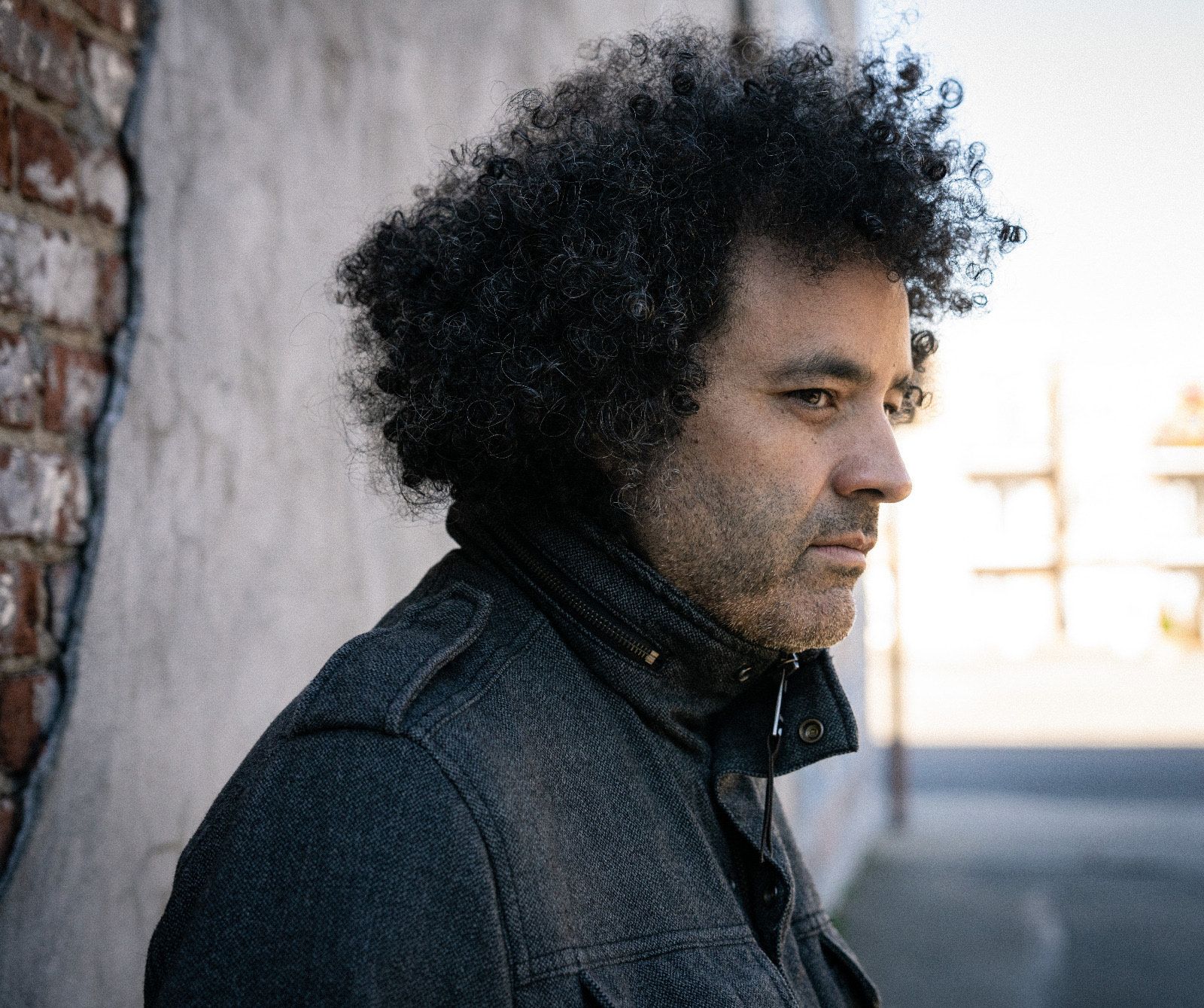
Name: Carlos Giffoni
Nationality: Venezuelan
Occupation: Composer, sound artist, writer
Current release: Carlos Giffoni's new album Pendulum, featuring Greg Kelley, Mabe Fratti, Zola Jesus, Ben Chasny, Lea Bertucci, and Iggor Cavalera, and mixed by Jim O'Rourke is out via Room40.
Recommendation for Valencia, Spain:
1 - El Centro de Arte Hortencia Herrera. (CAHH). A beautiful modern art museum that is housed in a rehabilitated historical building in the center of town.
2 - The Supersonic music archive. They host an experimental gig once a month with musicians from all over the world, and the archive houses the Francisco Lopez experimental music collection, available for viewing by appointment, which is a tremendous collection of early noise / industrial / experimental music from all over the world.
[Read our Mabe Fratti interview]
[Read our Ben Chasny interview]
[Read our Ben Chasny interview about his creative process]
[Read our Lea Bertucci interview]
[Read our Francisco Lopez interview]
[Read our Jim O'Rourke interview]
If you enjoyed this Carlos Giffoni interview and would like to stay up to date with his music, visit him on Instagram, and bandcamp.
Where does the impulse to create something come from for you? What role do often-quoted sources of inspiration like dreams, other forms of art, personal relationships, politics etc play?
Everything I create comes from different sources of inspiration. Some start from personal relationships, others from reading, seeing, or hearing something that inspires me, and others from a conceptual idea that burrows into my mind until I create something that addresses it.
Music and sound have always been important to me, and I never felt I had found my place in the world until I started making music at 15.
For my work on comics, I became a massive fan of the art form and, more recently, explored whether I had something to contribute through writing.
I guess in both cases, music/writing, I have come in as a big fan and just gave it a shot with my own personal approach, and it has worked out. I didn’t study music or writing formally, but I have done a lot of research and study on my own to learn the tools to create things I feel are worthwhile to share.
For you to get started, do there need to be concrete ideas – or what some have called a 'visualisation' of the finished work? What does the balance between planning and chance look like for you?
An overall basic concept comes first; I go into the recording session with some purpose.
For Dream Walker, I was aiming to create interesting textures and use repetitive patterns with shifting variations, while employing non-traditional synthesis techniques. As I worked on it, it took shape as a more meditative record made at night, exploring semi-conscious states.
For Pendulum, the concept of the process, sending tracks back and forth all over the world, was clearly defined from the start. But sound-wise, they were more open-ended tracks since they were all intended for collaborations, where I built them specifically for someone, with the idea that their own hands would come in to help finish and shape the track.
So on purpose, I made things that had room for expansion and that either challenged or complemented the person that I sent it to.
Is there a preparation phase for your process? Do you require your tools to be laid out in a particular way, for example, do you need to do 'research' or create 'early versions'?
A big part of each record for me is deciding which tools I will use to create it.
I work with actual hardware 90% of the time. I don’t use plugins in the DAW software; I only use it for recording and editing. I might use an included effect in the software if I feel it is necessary during editing.
In the past, when I used synthesis software, such as on my first record, Welcome Home, and on a recent archival release titled Computer Music 2005, I used tools that let me create my own instruments, such as Max MSP or custom sound code I wrote in C++.
But nowadays, what I am doing is choosing the right hardware combination for the recording, so there is some thinking ahead of time about the type of sound I want to create and how to shape it. I also like that this ‘choosing’ introduces a limitation that makes it a bit more fun: rather than working with 2000 plugins at once, I have a limited set of hardware pieces at my fingertips each time.
I also do a lot of editing. I record a lot more material than I need for a record, and then I throw a ton of it away to get at what really works for me. I do sometimes combine pieces later if it makes sense. So I would put something I make away for a long time, and when the time comes where it makes sense as an element of a newer piece, I use it.
For example, my part on the opening piece on Pendulum I had already made a while ago, and when it came time to work with Greg, it felt right to send it to him. Sometimes sound needs to sit and marinate for a while until the time is right.
Do you have certain rituals to get you into the right mindset for creating? What role do certain foods or stimulants like coffee, lighting, scents, exercise or reading poetry play?
Whenever I get stuck or need more inspiration, I go on a long walk. Stimulating the senses by experiencing the real world often leads to new ideas and thoughts for what I am working on. Ideally, this is a walk on the beach or in the mountains, out in nature.
When I lived in LA, a drive through the canyons in Malibu would do the trick as well—just experiencing the beauty of the world. Sometimes, a long walk in the city can help me get motivated by the ruckus and bring fresh ideas by contrasting what I experience.
Since the music I make is often introspective, it works as a nice break for my brain to use the other senses externally.
For Pendulume, what did you start with? If there were conceptual considerations, what were they?
For Pendulum, I wanted to expand my circle of collaborators and create a record with musicians I admire but had never worked with on a recording. So that was the starting point, just the idea of reaching out and putting together a team of incredible musicians to work with on individual tracks.
Some of these collaborators, like Nika (Zola Jesus) or Ben Chasny, I’ve known personally for decades, whereas I've met someone like Iggor Cavalera more recently. I was very excited to work with everyone in the record and create something that went beyond anything I could do on my own.
I decidedly gave away some of the control I usually have in the service of pursuing a unique record full of shared sound pieces.
Tell me a bit about the way the new material developed and gradually took its final form, please.
The process was very straightforward. I compiled a list of people and asked whether they wanted to work on a track. If they said yes, I would record something that either made sense based on what they had done before or was a complete challenge for them because it was unexpected. I was thrilled that everyone I asked said yes.
Now, a couple of people didn’t finish their tracks, but I expected this, because life gets in the way of creation sometimes. Therefore, the two tracks on the record that don’t have collaborators, I really liked them, so I decided to finish them myself and keep them simpler as a sort of palette cleanser in between the more complex tracks.
The whole process took about two years, from the time I had the idea until it was all done. It took a while for the tracks to get back to me, and then to do the final touches. Once all tracks were complete, I sent them to Jim O’Rourke for final mixing. Then it came to figure out the order of the tracks and artwork once Lawrence had agreed to release it on Room40.
And that was it.
Many writers have claimed that as soon as they enter into the process, certain aspects of the narrative are out of their hands. Do you like to keep strict control or is there a sense of following things where they lead you?
There is a phase for me when I make a plan for what I am going to make and think about how I will do it. However, once the making actually starts, I follow wherever the work leads me, often discovering new potential directions and ideas as they come.
So even when I chart a straight path, if there is a scenic road that looks interesting, I take it and see where it goes. This is always the case with music for me.
It is different for writing: I usually outline the whole story to make sure it makes sense before I start, and it is more about filling in the space in between. It can also happen that the story changes as the writing progresses. I am very open to change.