Published
Name: Letters from Nowhere
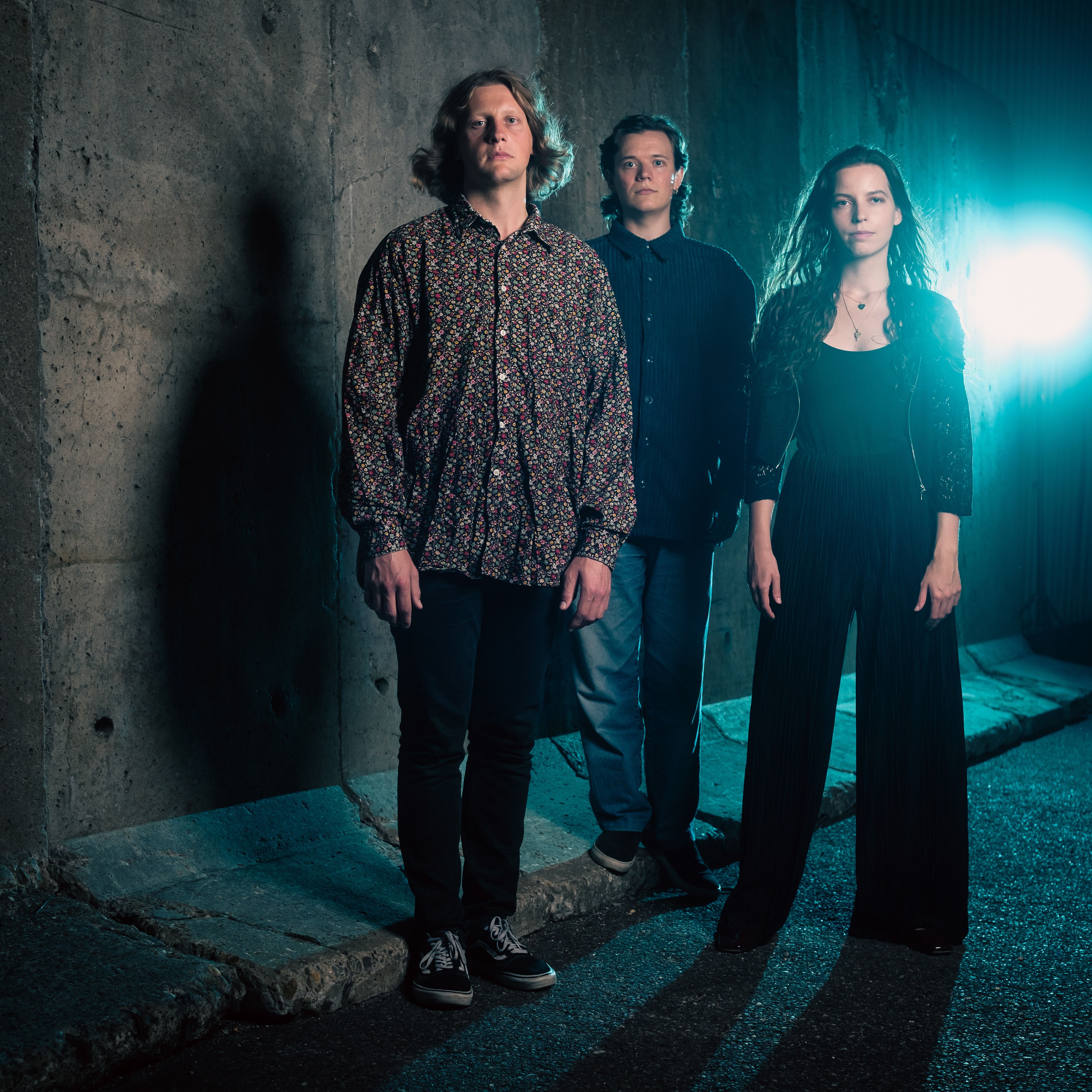
Members: Clara Vetter, Håvard Nordberg Funderud, Petter Asbjørnsen
Interviewee: Clara Vetter
Nationality: German
Current release: Letters from Nowhere's Owls in Council is out via Unit.
If you enjoyed this Clara Vetter interview and would like to know more about her work and upcoming performances, visit her personal homepage. She is also on Facebook.
For a deeper dive, read our earlier Clara Vetter interview.
What were some of your earliest collaborations? How do you look back on them with hindsight?
From a very early age, I have loved collaborating in music and art. It started in childhood when I played music with friends, writing my first arrangements so we could perform any songs we liked.
Throughout my musical education, playing in bands has always been – and still is – essential. It constantly teaches me how to verbalize my ideas, expand them with inspiration from others, and challenge myself to create something with intention under ever-changing and unpredictable circumstances.
There are many potential models for collaboration, from live performances and jamming/producing in the same room together up to file sharing. Which of these do you prefer – and why?
I really enjoy diverse creative processes, and the same goes for collaborations. The more varied the methods, the better!
When creating, I like being pushed out of routines and discovering new paths. That’s why I love collective work so much – everyone brings a different perspective, which multiplies my own ideas.
How did Letters from Nowhere come about?
My colleagues and I met in Copenhagen while studying there. From the very first meeting, I was fascinated by their playing, artistic knowledge, and intuition – and I felt so liberated and inspired making music with them.
After settling into the city, I asked them if they were interested in forming a long-term band project where we would compose together. We were all excited about the idea, but then Covid hit and we had to leave Copenhagen, returning to Germany and Norway. Luckily, we were so determined to make it work that we kept creating across the distance.
Despite the limitations, we constantly looked for ways to collaborate. At one point, we began improvising with each other’s recordings, which were originally just meant to document our compositional process. Our first performance actually happened in two different places.
Out of this challenge our band concept was born: we improvise live with our own recordings, shaping them with effects in real time, thus overcoming the usual limitations of space and time.
What did you know about each other before working together? Describe your creative partners in a few words, please.
Petter played with me at my entrance exam in Copenhagen. I was fascinated by his dedication to my music, which wasn’t easy to perform. His intention, virtuosity, and the way he combined ease with playfulness really stayed with me. We also spent time together in my first days in Denmark – going to concerts, talking about music and art. His perspectives were so interesting that they made me rethink my own music from different angles.
Håvard was in my semester. From the beginning, we spent a lot of time together and quickly became friends – just like with Petter. When I first heard him play, I was amazed and deeply moved, because his melodic language felt so close to mine. At the same time, his personal touch was something I wanted to develop in my own improvisations. From what Håvard told me, he felt something similar about me. We kept encouraging each other in our weekly class, where we shared our latest musical ideas.
Håvard and Petter had already been connected through the Norwegian jazz scene for years. For me, starting to collaborate with them felt like the perfect puzzle piece falling into place.
What do you generally look for in a collaborator and what made you want to collaborate with each other specifically?
For me, it’s crucial that my collaborators and I understand each other’s perspectives and are willing to merge them in ways that benefit the project.
Since Håvard, Petter, and I were already fascinated by each other’s playing and artistic perspectives, we had common ground even before starting the project.
Tell me a bit about your current instruments and tools, please. In which way do they support creative exchange and collaborations with others?
In Letters From Nowhere we don’t just play our main instruments. Since part of our concept is to perform with our past selves, we use samplers to launch recordings and improvise with them live. We work with Logic on our computers. Each of us has a sampler with a digital pedalboard and is free to experiment whenever it fits the music.
During the compositional process, we share sketches via Dropbox or Google Drive. In online meetings we discuss them, listen to MIDI files or recordings, and sometimes load these ideas into our samplers for performances. We also swap projects regularly so that everyone works on every piece. This works perfectly for us, because we’ve learned to embrace openness toward our own ideas. We always write sketches clearly enough to spark inspiration, but unfinished enough to leave room for others.
Thanks to the trust we’ve built, this process feels effortless. Whenever someone’s inspiration slows down, another picks it up and develops it further. We call it a kind of “creative pen-friendship,” and it has become a central part of our identity as a band.
Before you started making music together, did you in any form exchange concrete ideas, goals, or strategies? Generally speaking, what are your preferences when it comes to planning vs spontaneity in a collaboration?
During the lockdown, we spent over a year working in the way I described earlier – exchanging ideas online, meeting virtually, and sending sketches back and forth. We had no idea when we’d ever be able to play together in person again, but we kept going. There wasn’t a fixed goal, other than to create good music. That focus kept us dedicated to the process and open to using the circumstances in the best possible way.
For me, both planning and spontaneity are important. But what matters most is actively seeking out opportunities and responding to limitations with an open mind. The pandemic – with its isolation and uncertainty – forced us to think differently, and from it our “time- and space-breaking” concept was born.
Without those circumstances, we might never have come up with it. We also hope that our music shows others that even in challenging situations, there are always solutions and new paths.
Describe the process of working on Owls in Council, please. What was different from your expectations and what did the other add to the music?
The composition process for this album felt much more relaxed – perhaps because this time, we chose to work at a distance, not just because we had no other option. We planned one week of rehearsals together and recorded on the last two days. Compared to our first album, everything felt easier and smoother.
That first recording happened live in 2022, at the end of a tour through Scandinavia and Germany. Back then, constantly changing travel restrictions forced us to adapt almost daily. It was exhausting, but it also connected us deeply and showed how much the project meant to us.
For the new album, we added a layer of post-production to push our “breaking space and time” concept even further.
Is there a piece which shows the different aspects you each contributed to the process particularly clearly?
Yes, the title track “Owls in Council” highlights our contributions most clearly.
Håvard wrote the initial melody, Petter created the first variation, ...
... and I composed the third.
It was the first time our collaborative process unfolded so distinctly. Usually, we merge our ideas so closely that in the end it’s hard to tell who came up with what. But Håvard’s melody was so strong that we didn’t want to alter it – we just rewrote it from different perspectives.
On the album, these three versions almost act like reprises: the melody reappears, but in different forms each time.
What tend to be the best collaborations in your opinion – those with artists you have a lot in common with or those where you have more differences? What happens when another musician takes you outside of your comfort zone?
For me, the best collaborations are those where everyone understands and values each other’s perspectives. That’s what creates the possibility to go further than one could alone. I don’t separate “common” and “different” perspectives so strictly. Other people will always see things I don’t – and vice versa.
A successful collaboration gathers all of this knowledge into the project, leaving fewer blind spots because multiple perspectives shape it. When collaborators really see each other, there’s space for every idea, and each one finds its place naturally. That’s the state I aim for, because then even being pushed out of my comfort zone feels not only safe, but exciting.
Decisions between creatives often work without words. How did this process work in this case?
In our case, we actually talk a lot – and still do. I’m glad we’re all good at putting our thoughts and feelings into words. That was essential when developing our concept under such unusual circumstances, and it still matters when composing or rehearsing new music.
At the same time, we also connect quickly without words while playing. We’ve trained ourselves in a kind of radical openness – making it a priority to fully grasp each other’s impulses and ideas, without losing our own voice.
Whether verbal or non-verbal, our communication has become very fast and efficient.
What are your thoughts on the need for compromise vs standing by one’s convictions? How did you resolve potential disagreements in this collaboration?
In good collaborations – like this one – discussions never feel like compromise. As I said, when communication works and everyone really understands each other, every idea finds its place naturally.
For me, it helps to believe strongly in my ideas, but to keep them flexible. That way, I can recognize when someone else has found a way to express what I was aiming for – sometimes even more powerfully than I imagined.
Was/Is this collaboration fun – does it need to be?
Yes – absolutely! It was and still is a lot of fun. During the pandemic, it kept us going artistically and helped us grow together.
We still enjoy creating and performing so much. Every process teaches us not only about each other, but also about ourselves. That’s both inspiring and enlightening – and everything we learn here carries over into other projects as well.
Do you find that thanks to this collaboration, you changed certain parts of your process or your outlook on certain creative aspects?
Definitely. I’ve learned to structure my creative processes in ways that fit both me and the current situation. For example, composing doesn’t always mean spending hours at the computer. You can even collaborate with yourself by developing new frameworks.
In a previous trio album, I mapped constellations of stars onto the piano keyboard and composed from where the stars appeared. Also very simple structures such as composing for only a couple of minutes in different places, moods, and moments of the day can spark new ideas. I feel like these frameworks have made my music much more versatile.
Håvard and Petter naturally bring versatile creative methods into their work, and collaborating with them opened me up to new possibilities. I’m glad we now share our creative zones not only in Letters From Nowhere but also in our individual projects.
Collaborating with one’s heroes can be a thrill or a cause for panic. Do you have any practical experience with this and what was it like?
I’ve had the pleasure of playing with many amazing musicians, such as Ronny Graupe, Lucia Cadotsch, Phil Donkin, Oliver Steidle, and Fabian Arends. I’ve learned so much from them – and still do whenever we meet again.
[Read our Ronny Graupe interview]
What helps me is to keep the focus on the music, not on myself or questions like “am I good enough?” In good collaborations, knowledge and perspectives merge, and everyone brings something the others haven’t thought of yet.
If self-doubts creep in, I remind myself that there’s always at least something – even if it’s small – that I can contribute, and that this will add value to the music.