Published
Part 2
What are among your favourite spaces to record and play your music?
In terms of recording, I've only ever done it at my own or friends' houses, never in a 'professional' setting.
With this in mind, I think a level of comfort is the most important factor for me. For the act of making music to feel like a natural process and not a perfunctory exercise or gruelling task, which logging time at a studio probably would for me.
In terms of performing, Troth have been lucky to play in a variety of beautiful settings - a repurposed power station for the 2024 Sydney Biennale, a hyper-modern church in Sydney for Soft Centre 2022, De Nor at Middelheim outdoor museum in Antwerp a few months ago.
Having said that, we played at a shop front gallery in Ghent the day before Antwerp. The positive feedback loop with the audience in the room made for a buzzing experience and really opened up the joy of playing.
Some backyard shows at friends' houses are the most vital-feeling I've ever played too, for the same reason.
Do music and sound feel “material” to you? Does working with sound feel like you're sculpting or shaping something?
Talking to a friend recently, he was describing his own music-making process as "making films", where I guess I think of my own as writing narratives. A kind of authorship, either as self-contained short stories or as an aspect of a wider narrative arc, within or across albums. So, in a sense, that is something material.
I also very much see sound as an art-form, not just puerile entertainment or social function. In that sense, a considered sound-maker is sculpting an object by assembling a song/composition from available pieces, just one that is ephemeral and literally comprising vibration in the air.
My dad, who is an artist and musician, was talking to me about this recently - that music can't be confined to one space where it can be interacted with by an audience, like a painting, that it can be carried anywhere. I agree with him, there is a kind of democracy to recorded sound in that way, as a maker and an appreciator. Especially in modern times, a song can be experienced wherever the receiver chooses, it is not confined to one context. Even in the folk tradition of songs being passed along and taught to others.
So there is an act of agency in how the work is then perceived, what its utility is, with how the listener chooses to frame the sound. The same can't be said for a painting or sculpture in a gallery, its context is clearly defined and beholden to access. If viewed as a digital rendering, it is arguable whether the same materiality of the work is even conveyed.
Sorry, long-winded response, maybe sound is "material" but also, the "material" it is comprised of is ephemeral and can be constantly reshaped, carried and reinterpreted.
How important is sound for our overall well-being and in how far do you feel the "acoustic health" of a society or environment is reflective of its overall health?
I personally find it extremely important, but also realise the same significance isn't there for everybody. Or that they don't perceive it as such at least.
When I spend time with people who live 'more normal' lives (in Australia), they generally have the television on, with the volume up. There are often the sounds of power tools, mowers, dirt bikes, barking dogs, phone notifications turned to maximum, mainstream news sources, in their environment. I don't think any of this is healthy or nourishes the human spirit in any sense. I personally find it energetically draining.
The noise (aural, visual, emotional) of the city is extreme for me. I think these spaces are often fraught with a kind of tension, of selling something, or at the very least a drowning-out of our own internal vibrations. In my estimation, this din of over-activity and stimulation is not conducive to peace, contemplation or critical thought. We all could probably use a bit more of these faculties.
However, sound can also be a strong tool for positivity of course, for instance cultures where storytelling and song was used to convey important messages (Aboriginal culture, the Druids) or as the voice of protest, opposition to oppression. I try to keep this sense of positive energy in the music that I'm involved in making these days.
Sound, song, and rhythm are all around us, from animal noises to the waves of the ocean. What, if any, are some of the most moving experiences you've had with these non-human-made sounds?
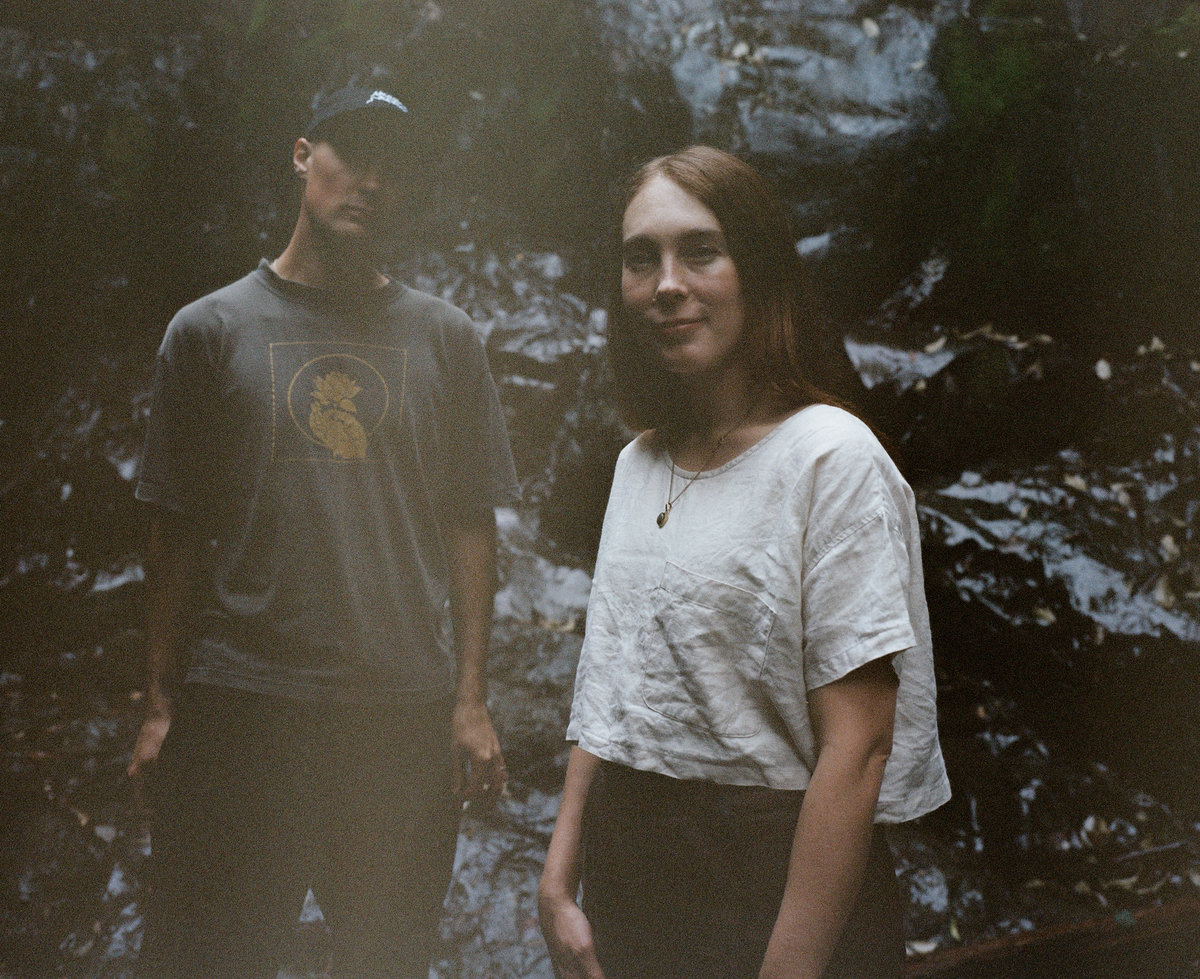
Amelia and I moved to Tasmania a few years ago from what is an increasingly loud and sonically oppressive environment. Every day here is a pleasant engagement with sound; birdlife, trees moving, space to be quiet. In terms of most moving experiences, a few initially come to mind.
We walked a track in the Blue Mountains, near Sydney, a few days ago that is right next to where we were married. We talked about how, when we were first there, a black cockatoo was unusually close to us and I made a phone recording that ended up on our song 'Days Became A Circle'.
On the mainland, this species is not as common and are generally more reticent than others.
Many animals communicate through sound. Based either on experience or intuition, do you feel as though interspecies communication is possible and important? Is there a creative element to it, would you say?
100%. I often find that when Amelia and I are writing a song or rehearsing, birds will join in if they are in agreement with the frequencies. There are specific Troth songs, like Land Sighs, where this noticeably happens more regularly.
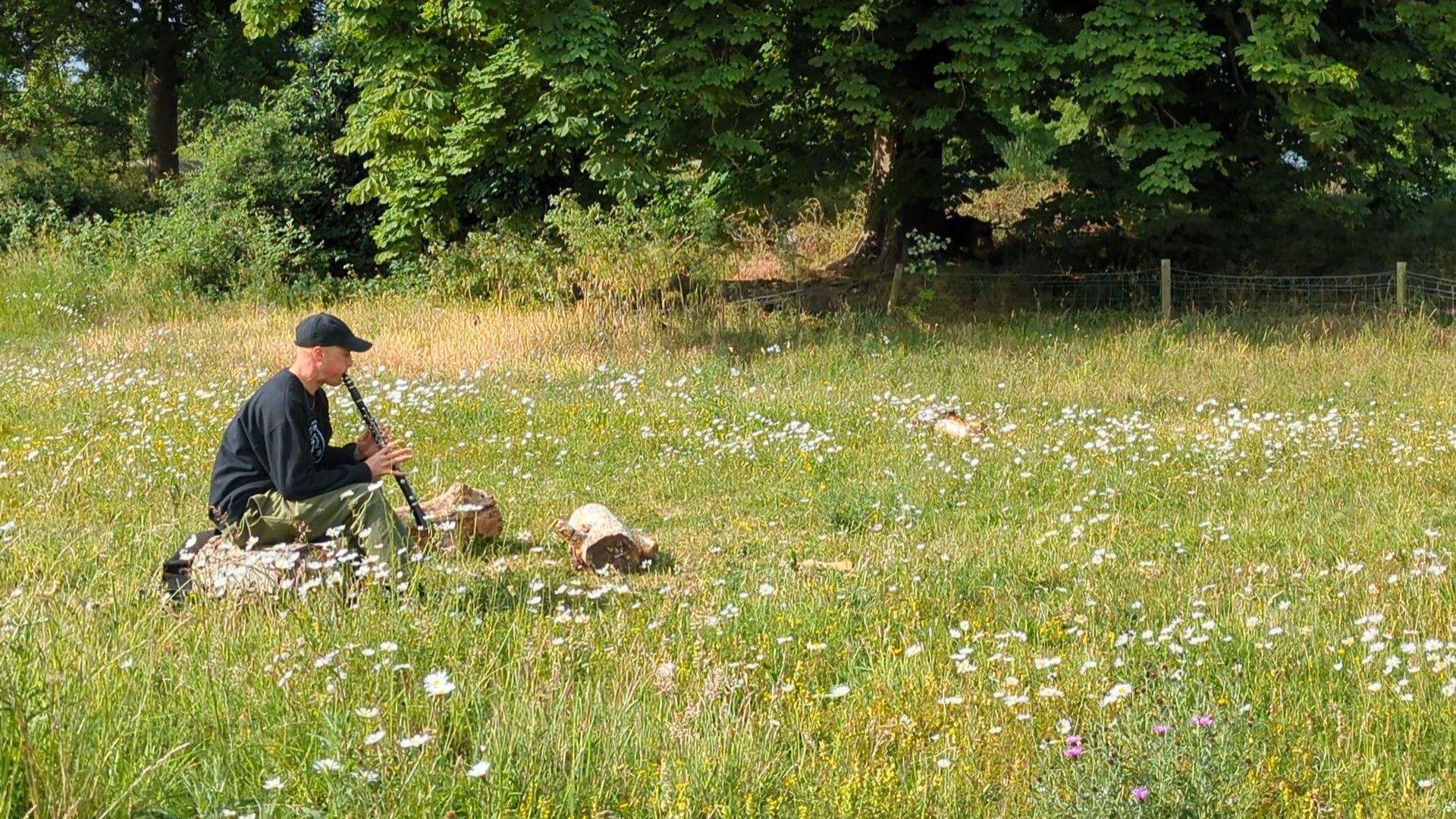
Birds have complex capacities for song, are playful and are great communicators, so of course there is an element of creativity within that. Where we live there is a community of pademelons (small native marsupials) that we exist alongside, they will often come to the window of the room where I am practicing clarinet or have a nap nearby while I am playing, so that is a clear response to the sound.
Conversely, I also think calm silence can be extremely powerful in communicating with animals at certain times.
Tinnitus and developing hyperacusis are very real risks for anyone working with sound. Do you take precautions in this regard and if you're suffering from these or similar issues – how do you cope with them?
Having cut my teeth playing and attending noise and punk shows for years, the thought has occurred to me. I think that a respectful and considered meditation practice and being comfortable with your own internal hum can help, alongside many other positive benefits.
If you don't have the inclination, maybe just listen to the Quiet Time tape by Huerco S.
We can surround us with sound every second of the day. The great pianist Glenn Gould even considered this the ultimate delight. How do you see that yourself and what importance does silence hold?
I realise that true silence is impossible, and probably not even desirable for most people.
Amelia and I live a very quiet life, in many senses. It allows more space for subtlety and contemplation.
Seth S. Horowitz called hearing the “universal sense” and emphasised that it was more precise and faster than any of our other senses, including vision. How would our world be different if we paid less attention to looks and listened more instead?
Perhaps things would slow down. We would appreciate the smaller details and refinement of experience.
Obviously it depends on the context, if we are speaking of the sonic maximalism of most cities, then it becomes more difficult to pick apart these nuances due to noise. I am by nature a quiet person and try not to be overtly loud in public myself, in any sense.