Part 1
Name: Creve Coeur
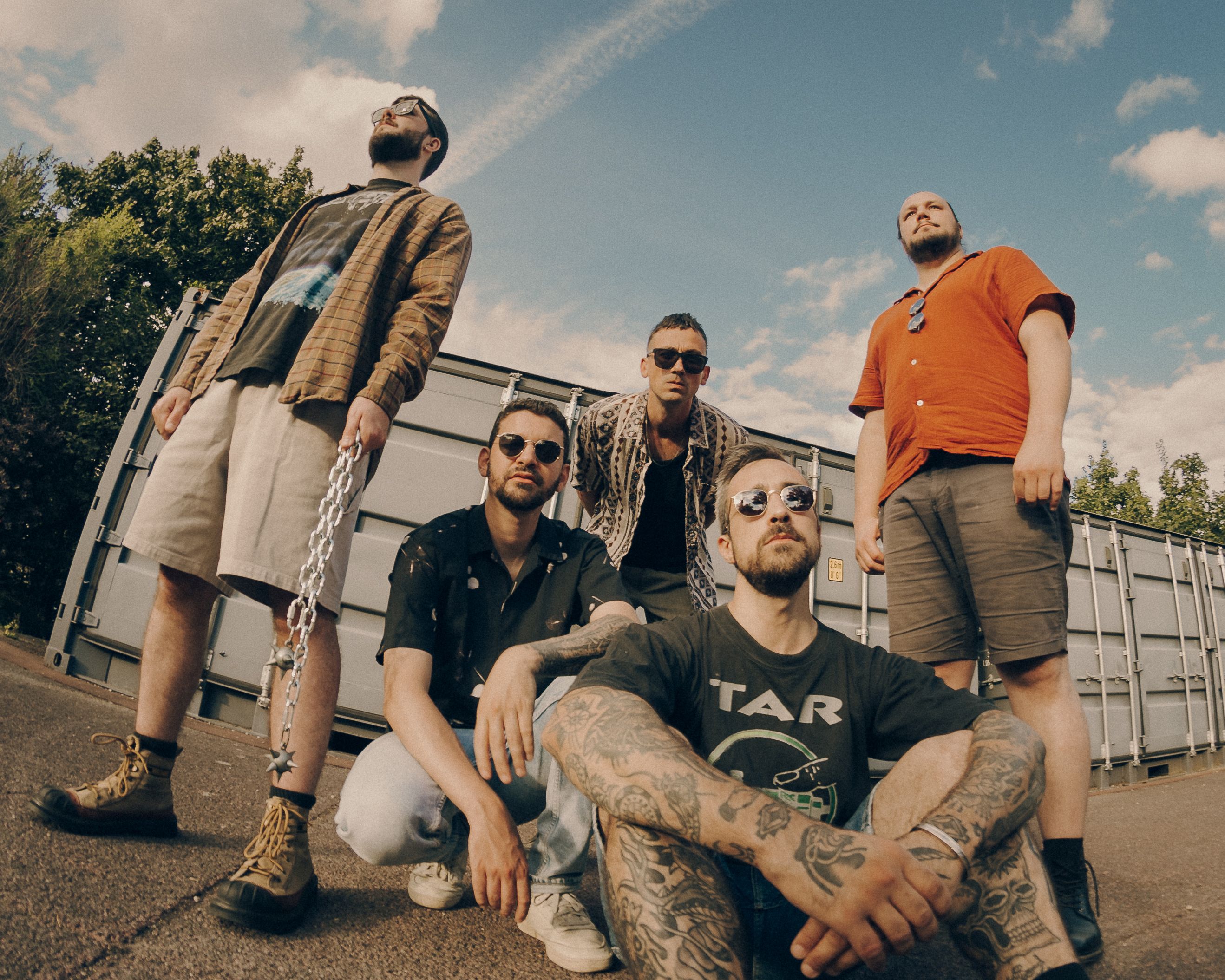
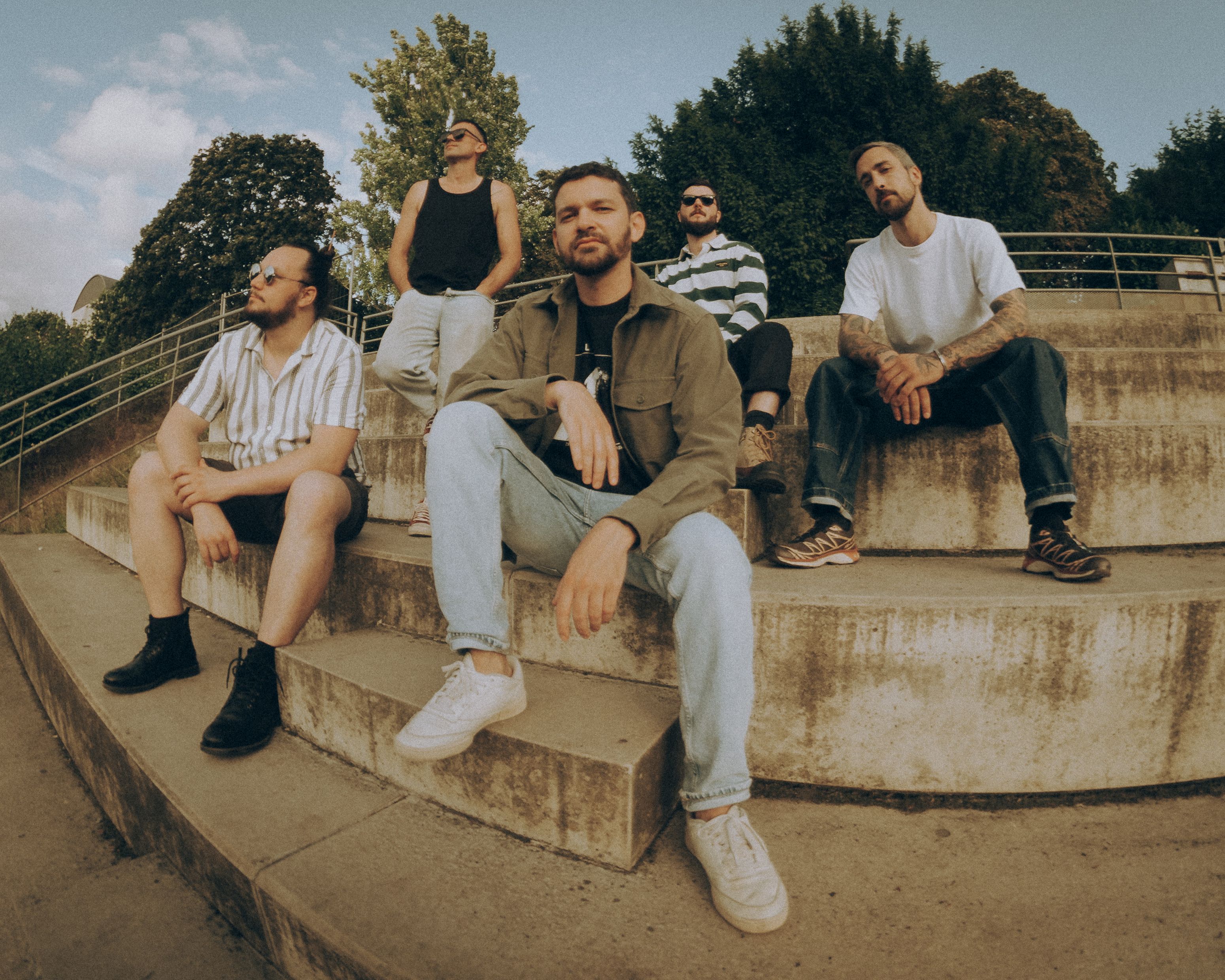
Members: Fabien Claes (guitar, piano), Valère Brisard (guitar, horn), Corentin Sarkadi (vocals), Boris Patchinsky (bass), Paul Void (drums, synthesizers), Quentin Dubarry (saxophone)
Interviewee: Boris Patchinsky
Nationality: France
Current release: Creve Coeur's new album Catastrophes is out via Atypeek. Buy the album directly from the band's bandcamp store.
Recommendations: I couldn’t praise enough the work of journalist Michael Azerrad Our Band Could Be Your Life (Back Bay Books) to anyone who wants to learn about how the US underground punk scene emerged in the 80s, with first-hand chronicles depicting the self-determination ethics, tour van struggles and musical legacy of bands like Black Flag, Minor Threat, Big Black or Fugazi … Great reading for every musician in indie bands …
As for musical advice, since we’re playing noise-rock and are French, this is the occasion to mention one of France’s greatest noise-rock albums from the 90s, the excellent Trans Lines Appointment (Big Cat) from Lyon’s Deity Guns. This is their only album, it was produced by Sonic Youth’s Lee Ranaldo, and it’s a great listen. These guys then formed the post-rock outfit Bästard, and then Zëro, who also deserve a close attention.
If you enjoyed this Creve Coeur interview and would like to know more about the band, visit them on Instagram, and Facebook.
For a while, it seemed as though the model of the bed room producer would replace bands altogether. Why do you like playing in a band rather than making music on your own?
For me, speaking from a bass player point of view, the pleasure of making music primarily comes from the immediate interaction with other human musicians.
Within the style of music that we do in CC, the multiplicity of kindred spirits playing together in a room goes a long way, as far as the creative side of things is concerned, — eventually leading to a new musical situation that is bigger than the sum of our individual musical skills being taken individually.
Take the long improvised bridge of our album closer “Mathématique” for instance, the musical situation happening here and now as we’re all playing together in the studio room makes for a unique musical perspective inherent to the collective intelligence we’re creating at that precise moment.
Improvisation plays a crucial part in our music, which you could relate to our shared love for all forms of “free” music, be it post-hardcore / Fugazi-like experimentations, minimalist electronic compositions (such as the interlude “¶”, composed by our drummer Paul Void), or any kind of noise rock you can think of.
What, to you, are some of the greatest bands, and what makes them great?
As already mentioned, I personally consider a band like Fugazi a quasi-archetypal figure of what a “great” band should stand for, at least in the indie scene. The reputation they earned for their righteousness, integrity and social awareness before, during and even after the band’s “indefinite hiatus” constitutes a cornerstone upon which I try to measure my own actions and thoughts as an indie musician as well as a human being to this day.
Musically, they never repeated themselves and each and every of their albums overflowed with brilliant musical ideas. Plus their live performances, with extended improvisations and communication with the audience, constitute a landmark rarely achieved by other bands rooted in punk rock music and remain essential to this day.
For similar reasons, I could talk about Mogwai, who always delivered challenging music, playing bombastic shows with a large portion of experimentation, and explored new sonic territories throughout their complete discography, pioneering the (post-) rock subgenre, Come On Die Young still being one my favourite album of all time.
They also managed to find a subtle balance between the urge to remain independent and the necessity to cope with the music industry at a larger scale, by creating their own label, Rock Action Records.
Before you started making music together, did you in any form exchange concrete ideas, goals, or strategies? Generally speaking, what are your preferences when it comes to planning vs spontaneity in a collaboration?
The core foundation of the project, that is Valère and Fabien (baryton and guitar), Paul Void (drums and electronics) and me as a bass player, — all coming from the Parisian indie/noise/post-rock scene — initially formed as an ephemeral Foals tribute band for a unique show in Paris around February 2018. The show turned out great, and we promised ourselves to get back together to form a new band, as soon as it would be the right time to do so ...
Which we did around the 2020-Covid area, when Fabien sent us some demos in the vein of Metz and Gilla’s Band noise-rock. The main strategy was basically to reunite the band members around music that we liked and enjoyed playing. Coco (singer) came a little bit later in the project, when we had the basic instrumental tracks of our album already composed.
So, I would say, the project grew out of our common love for noise rock music, in a very pragmatic, spontaneous form, in the way we composed and reacted to each other … Then, the planning part basically came to the equation when we had to plan for touring, and eventually recording and releasing our first album.
But we still hold spontaneity in high regards, in the way we have let Coco bring his own outsider-art singing to the instrumental tracks, or the part experimentation plays within the live configuration.
There are many potential models for creativity, from live performances and jamming/producing in the same room together up to file sharing. Which of these do you prefer – and why?
We kind of mix all of these creative strategies in CC, but in different temporalities. When it is time for us to compose new music, we like to sit together and play/jam during rehearsal time in the studio to come up with new musical ideas, i.e. bass and drum grooves, new guitar riffs provided by either Fab or Val, testing new vocal parts…
Lately, we composed a lot at home, recording together ideas on DAW with our instruments and pedalboards. Fabien is really fast at programming basic drum tracks, that way we can draw new musical outlines quite efficiently together, while not having to go to the studio when we can’t manage to gather all together.
I personally do favour the studio improvisation approach, which can often bring out unexpected idiosyncrasies of each member of the band, that wouldn’t have surfaced hadn’t it been for the collective mind we’re entering by playing together.
How do your different characters add up to the band's sound and in which way is the end result – including live performances – different from the sum of its pieces?
Interesting to see how the Aristotle idea of the end result being more (or less) than the sum of its parts comes often in this interview …
But I have the feeling that it is particularly relevant for a project like CC, where the five of us all have very distinct sensibilities and musical skills, but when we play together in a room it all adds up to something very different than what we all create in our other projects.
This is particularly true in live contexts, where our drummer’s tropism toward improvised music often leads us to manipulate, extend and dilate time perception, i.e. we often start our gigs with a few minutes of guitar noise scratching, in a concrete music fashion, before skyrocketing into Sonic Youth-like wall of noise territories.
In this project, the singularities of each band member and the peculiar way we react to each other form something quite uncertain, that can be very pleasing or rather disturbing, depending on the nights …
Tell me about a piece or album which shows the different aspects you each contribute to the process particularly clearly, please.
I would instantly think about the piece “Paul”, on Gilla’s Band (or Girl Band at the time) first album in 2015, which perfectly embodies the kind of dynamics we try to apply on our own music.
Tight drum & bass provides a solid yet serpentine movement, with a sliding bassline, reminiscent of a track like “120 dB” on our album, while guitars bring noise textures to create a bizarre and uncomfortable environment for the lyrics to soak in. The voice is treated much like an instrument, while the idea of repetition propels the track towards an unexpected and bleak ending.
Repetition is a key concept which we often use on our compositions, most notably in tracks like “Courage”, “Vertige Noir”, or the final build-up on the already quoted “Mathématique”.
We just love the hypnotic, almost trance-inducing feeling repetition creates, and the works of bands like Gilla’s Band, but also Lungfish, Shellac or My Disco, have profoundly influenced us on that point.