Published
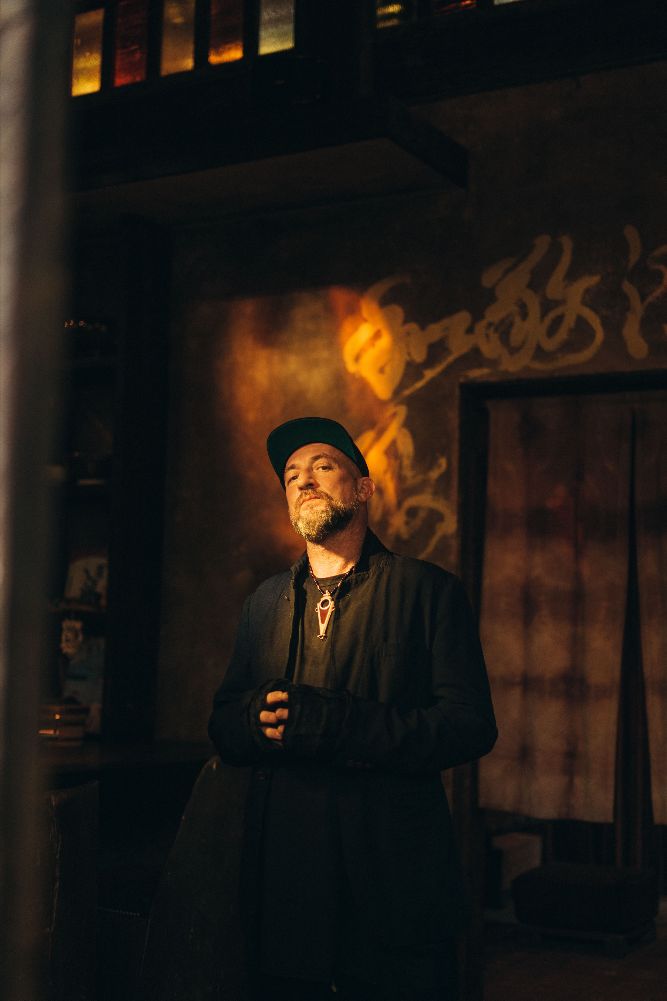
Name: Damian Lazarus
Nationality: British
Occupation: DJ, producer, label founder at Crosstown Rebels
Current Release: Damian Lazarus's new album Magickal is out via Crosstown Rebels. It features collaborations with, among others, A-Trak, Totally Enormous Extinct Dinosaurs, Mestiza, Mathew Jonson, and Fink.
Global Recommendation: I spend a lot of time in Florence Italy, recently I discovered this little-known museum called The Stibbert which houses 36,000 collected items from the 19th century including an incredible collection of Japanese suits of armour and samurai swords.
[Read our Totally Enormous Extinct Dinosaurs interview]
[Read our Mathew Jonson interview]
[Read our Fink interview]
If you enjoyed these thoughts by Damian Lazarus and would like to know more about his music, upcoming live dates and new releases, visit his official homepage. He is also on Instagram, Soundcloud, and Facebook.
For a deeper dive, we recommend our earlier Damian Lazarus interview.
What were some of the musical experiences which planted a seed for your interest in electronic music?
My father was into Isaac Hayes and Stevie Wonder, my mother was into the Beatles, my Uncle was into Pink Floyd and my grandfather was into Hollywood musicals.
I guess being around this great collection of sounds had a big impact on me, so much so that I took a weekend job at the age of 12 simply to fund my record buying habit. I started buying records at that age and I guess the first, more electronic-facing stuff was Mantronix, Howard Janes, Grandmaster Flash, Loose Ends and the Streetsounds Electro compilation series.
“Jam on it” by Newcleus was a track that me and my best friend would rap along to, with its heavy bassline turned all the way up.
Soon after I started hanging out with and assisting a mobile DJ in my local area and the die was cast. I was going to be a DJ and by the age of 14 I had my first set of Technics and a Numark mixer.
Most genres of music make use of electronic production means. What does the term “electronic music” mean today, would you say?
It’s true that it really doesn’t make much sense in this day and age as a ‘genre’. I guess it can apply to anyone making music strictly and exclusively with technology, maybe it can still apply to techno in its purist form.
I tend to use technology to form the basis of my music but often the real beauty comes from the harp or the djembe or the Spanish guitar that I might use. But then these sounds are mutated, oscillated or processed electronically to co-exist in a balanced way with the tools used to make dance music.
So much pop music today is electronically produced whether it be Chappell Roan, Dua Lipa or Charlie XCX but their song writing skills and vocal delivery deem it to be classed differently. Ultimately once you turn the power on to record using electricity, you could argue that you are making electronic music.
I grew up mainly listening to electronic music but have of lately, along with others I've spoken to, been somewhat disappointed by most new releases. I'd be curious about your own view on this, the “creative health” of the scene and potential reasons for the disappointment.
I get sent around 5-600 new tunes a week, these are a mixture of demos and promos of forthcoming releases. Every week my assistant listens to all of them (or at least he’s supposed to). He was my Tour Manager for the last 7 years so he knows exactly my taste and he understands the nuances of what's good or bad (for me).
He then selects usually 40-60 of the best music available. That means that we have just let go of approximately 400 to 450 new tracks that were sent to me that week, mainly because they are lacking in personality and / or originality. From those 40 to 60 tracks that I listen to in that week, I would say that on average 3 or 4 tracks might make it into my dj set the next weekend and maybe 1 track might be interesting enough to warrant a follow up call from me to the artist.
All this goes to suggest that either a) my taste in music has become non forgiving and / or b) there is too much un-interesting music being made. But its important for me to add, that even with so much disappointment, my love of this music and desire to find the next best tune never subsides, I just have to wade through a lot of shit in order to find it.
What were some of the recent releases, or performances of electronic music that left a deep impact on you?
I’ve been listening to a lot of music by Jlin, I think she is probably the most important contemporary composer of electronic music.
Her sound connects closely to Björk and Aphex Twin.
The most impressive live show I saw recently was Autechre who played in total darkness in an incredible concert hall in Lisbon.
Where do most of your inspirations to create come from – rather from internal impulses or external ones? Which current social / political / ecological or other developments make you feel like you need to respond as an artist?
Ideas tend to spark from the outside, it might be a singular sound I hear or something somebody says or something I read, the idea is sucked in and rummages around inside my head for a while and then comes out again when I'm in the studio.
I try to switch off from what’s happening in the world politically or otherwise when im in the studio but often it’s difficult to turn off that noise. This album has been made during 2 wars with millions of innocent lives being lost so it’s hard to ignore that as it leads to feelings of frustration and disempowerment.
So at these moments I remind myself that I am creating timeless art, not a statement of the present day. The music is a companion piece to the world around me at the time of its inception, not a result of what’s happening outside.
Music has become a lot more global, and incorporating elements from other parts of the world or the musical spectrum is commonplace. Do you still think there are city scenes with a distinct, unique sound? How does your local scene influence your work?
I built my studio on top of a mountain in Tuscany.
Italy has a clear, uninterrupted view of the stars and nature all around. There is no sound from the outside world. I collect ideas from my travels around the world and bring those to the mountain. It’s a good feeling to sit there and play old scratchy records that I found at the Medina in Marrakech or in a tiny alleyway in Luxor.
Sometimes there will be a direct connection with what I start to create, other times I will reflect on the feelings and senses present at the time I found that record.
Today, electronic music has an interesting relationship between honouring its roots and exploring the unknown. What does the balance between these two poles look like in your music?
There are days and nights in the studio where I try out as many new ideas as possible, it can get pretty self indulgent and not much of it will be usable.
Ultimately with MAGICKAL I think I wanted to express myself purely but always with an eye on the dancefloor and what will bring about the perfect emotional response. The roots of my music largely lay in House, Funk and Soul but my production has an edge and a hint of the weird.
That's been the main focus for me, to pull together my past and my present and create music that will lift the spirit.
How much potential for something “new” is there still in electronic music? What could this “new” look like?
Regularly in the studio I decide to tear up the rule book and try new ideas. Sometimes it will lead to something interesting but more often it leads to unfulfilling rabbit holes where you spend hours getting lost in a maze.
It’s an exciting process but ultimately at the end I just want the music to feel like it’s ‘me’. My sound, my life, my indelible signature.
What were some of the recent tools you bought, used, or saw/read about which changed your perspective about production, performing, and making music?
Honestly one of my favourite tools is not hardware or plug-ins, it’s Brian Eno’s Oblique Strategies.
Do you think that there is a limit to what can be done in sound design – and what defines these limits?
The only limit is your imagination as there seem now to be tools for every possible idea.
In as far as it is applicable to your work, how would you describe the interaction between your music and DJing/DJ culture and clubs?
In the past I have not paid too much attention to making music that I can play in my DJ sets, its never really been the main focus, which is maybe a little odd given I DJ 3-5 nights a week.
I've always wanted my music to have a timeless shelf life and I worry that if you make a song that gets hammered in the clubs, people tend to turn against it over time in that it just becomes over-played. I've always been more focused on creating songs that are slightly more niche, nuanced and not trying to be the next big thing.
However, whilst writing MAGICKAL I think this is the closest I’ve ever been to creating a body of work, an album that does both … that will be played in clubs and festivals but also be listened to and enjoyed over time at home and in non-party situations.
How would you say are your live performances and your recording projects connected at the moment? How do they mutually influence and feed off each other?
When I’m DJing I’m constantly evaluating what is working well on the dancefloor, I’m always making little mental notes … this bass sound felt really warm, this repetition was too much, this melody didn’t work, etc.
Being able to play the music you’re working on in a club on a great sound system is something quite unique in dance music, you’re able to road test new songs and ideas anonymously and continue the creative process afterwards with some understanding of how the final piece will sound.
Even if AI will not entirely replace human composition, it looks set to have a significant impact on it. What does the terms composing/producing mean in the era of AI, do you feel?
It depends how much people care about the purity and creation of music in the future.
We would all like to think that it will be a sacred art to be cherished but the ultimately in this day and age of 5 second attention spans its unlikely that anyone will give a fuck how a piece of music was made. For me that’s the saddest indictment of the rise of AI.
Are there approaches, artists, festivals, labels, spaces or anyone/-thing else out there who you feel deserve a shout out for taking electronic music into the future?
Day Zero continues to be the most forward thinking festival experience in the world in my humble opinion.