Published
Part 1
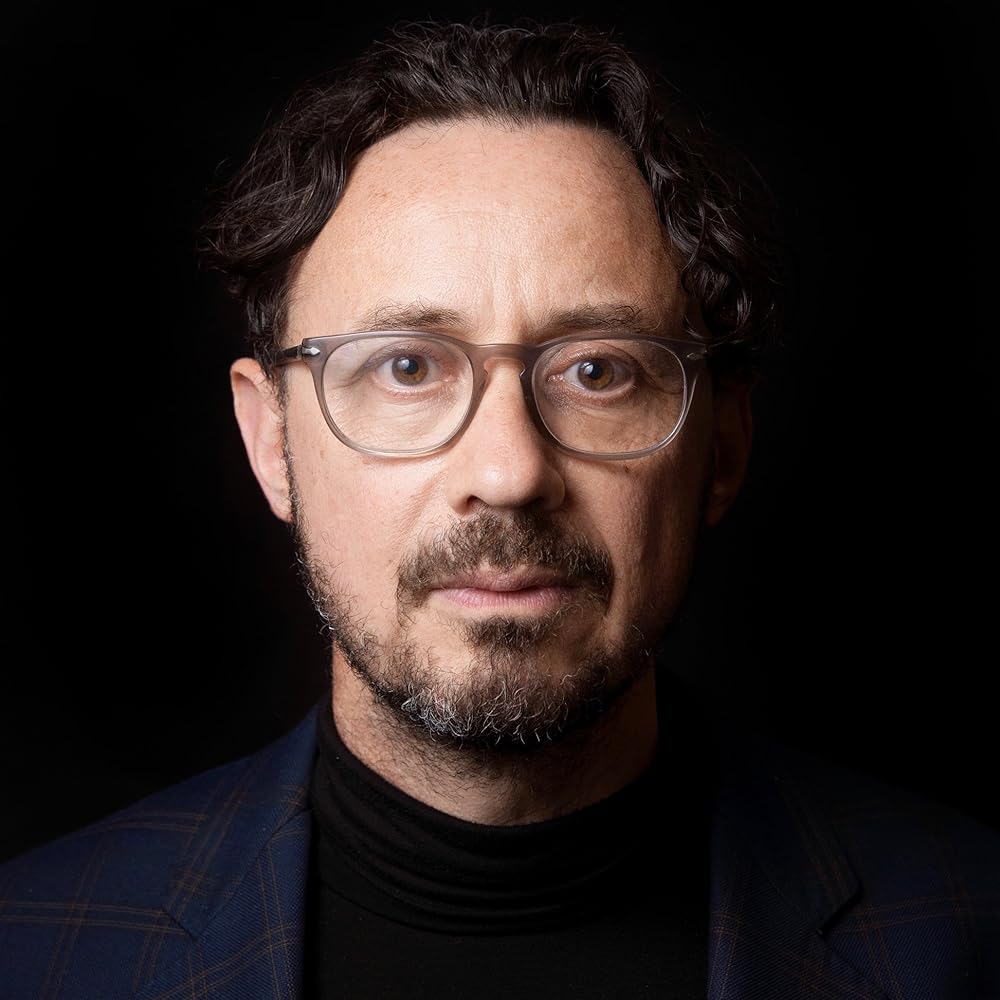
Name: David Norland
Nationality: British
Occupation: Composer, stoyteller
Current Release: David Norland's new album La Source is out August 7th 2026 via Denovali.
Recommendations for London, UK: St Alfege, the church near where I live in London, is gorgeous Hawksmoor church, and Thomas Tallis, who was organist and choirmaster there for forty years, is buried beneath it. Go there and feel free to commune with the great man’s spirit.
Things I am passionate about but rarely get to talk about: I love old stone buildings. I spent a lot of time in old stone churches as a kid, as a chorister. We’d come back from Los Angeles every summer and spend time near Stamford, in Lincolnshire. There’s a vein of limestone that runs through that area, and the towns and houses are simply beautiful. The British countryside lifts my spirit.
But my favorite place of all is East Midlands Parkway. The Soar power station looms over it in the middle of gorgeous countryside. Old and new. Ancient and modern. New ideas contrasting with old. Dungeness power station is the same. The continuity of the human spirit and appetite for invention and reinvention connects me to the past and the future, and gives me an extraordinary sense of wonder at the simple miracle of being here at this point on that continuum. It gives me shivers. And encourages me to do my small piece in keeping it moving forward.
I’m still waiting for the phone call to open the batting for the England cricket team. Baz, Ben, if you’re listening, I’m available! I’m fit! Put me in coach!! I follow it religiously, could easily commentate on an international or county game, and am probably at my very happiest watching a game at the Oval or Trent Bridge. Plus I took a hat trick opening the bowling for the school under 14 side. My fierce 50mph dobblers are just what you need!
If you enjoyed this David Norland interview and would like to know more about his music, visit his official homepage. He is also on Instagram, and Facebook.
The borders between producers, sound artists, and even songwriters are becoming increasingly blurry. What does being a composer mean today, would you say?
Since the tools to make and manipulate music and sound are so widely available, anyone can be anything they choose to call themselves! I like it - you don’t have to have graduated from the conservatory to be a composer, you don’t have to make tea at a studio for years to learn how to record the music you want to hear.
I had formal composition lessons when I was a child, and they weren’t more useful or foundational to me than being in a band and learning about distortion and improvisation. I’m always drawn in by something I haven’t heard before, so a kind of punk approach, where DIY messing around is seen as valuable, seems really useful to me.
The Sly and Robbie remix of Barotraum experiments with a viola over Sly’s programmed drums - the leftfieldness is what makes it interesting.
Otherwise you get these orthodoxies that spring up, like almost a hundred years of serialism being taught in music schools as the be-all and end-all of contemporary composition, which I think is both funny and also responsible for some very uninteresting music.
I like strange and unusual art, and the blurring of artificial boundaries or classifications seems more likely to foster it. Beauty can become saccharine without innovation.
Many people perceive classical music and contemporary composition as having high barriers of entrance, both for listeners and musicians. What have your own experiences been in this regard?
A few years ago I heard Jay Campbell play Marc Sabat’s Partite Requiem … an astonishing piece, requiring immense virtuosity from the cellist. Otherworldly overtones and harmonics. For traditional instruments, the player’s ability is often the composer’s vocabulary.
I’m a less than average pianist, a good (but odd!) singer, and was a decent enough guitarist to work as a session player in London for a while in my twenties. I almost never use the guitar in my work now.
In composition I find it really good artistic practice to turn limitations into assets. It can yield unusual and highly personal work. The single of La Source has simple piano and percussion, as that’s what I play with my limited technical ability. Sometimes I’m writing for much better musicians than me, and sometimes I’m making work that takes its form specifically from my own limitations.
On “E-Car Soul” (and throughout La Source) I use only my own voice - I have a very big vocal range, but the fact that it’s only my voice with all its imperfections produces a very individual sound.
I am grateful the last twenty years or so have seen a resurgence of tonal composition in the contemporary classical world. There’s plenty more to be explored without throwing out melody and harmony. Timbre, rhythm, atmosphere, sound design - someone like Tristan Perich is operating in a world far beyond reacting to perceived Romanticism.
As of today, what kind of materials, ideas, and technologies are particularly stimulating for you?
I normally want to zig as others zag. Texts in languages more ancient than Latin seem like good fodder for my current choral technique, which is chopping the text into constituent syllables and then rearranging it as I set it to music.
It’s in some ways connected to an old Ircam piece of software called cataRT, which chops audio into pixel-like chunks on a graph, and then lets you play them by scrubbing your mouse over them. I used it on a film score (November Criminals - First Time) and the results were very unusual. I like recording things in mid/side currently - the sense of space and depth is very appealing.
I find it helpful to have great recording gear - it can make a huge difference. Old Neumann and Coles mics, Overstayer recording channels. I find the sound of different rooms very interesting, much more so than artificial reverb. And I like composing as improvisation … treating the studio as an instrument, keeping the mics set up, and just recording my musical impulses without any sense of self-editing or planning, and letting one idea inspire the next in a free flow.
Editing and rational thought can come later.
Where do most of your inspirations to create come from – rather from internal impulses or external ones? Which current social / political / ecological or other developments make you feel like you need to respond as an artist?
In retrospect I always had difficulty reconciling music with the non-spiritual background I came from.
My family ignored that realm with deep intellectual conceit, and the schools I attended had very confusing attitudes - at morning assembly we’d sing Anglican hymns, I’d be singing Tallis motets in the choir, and then in science class the teacher would tell us, “you know that God stuff is bunk, right?” So baffling!
Music to me has always been a transcendence, which by its very nature speaks of both the human and the beyond-human. There’s a great book, The Spirituality of Imperfection by Ernest Kurtz, which posits that the human dilemma is that we are half-angel, half-beast. How do we accept and love both parts of ourselves? That’s what music speaks to, for me, and La Source in particular.
My current goal is to explore how I formulate meaning, since truth seems so profoundly under attack currently. It’s clear that humans face an existential climate crisis already upon us, and possibly a technological one too, and unless we can be honest about it, our chances of averting them are minimal. I belong to a religion of one, but I find good in most religions, and I see everything ecological and political as fundamentally spiritual in nature.
Forgiveness is the foundation of my spirituality, and I work very hard to find forgiveness for the intentional dissemination of fatal falsehood. I can only speak for myself, but these issues seem to eclipse any other inspiration. We are living in a time when the ideas of the so-called “Dark Enlightenment” influence some of the most powerful people in the world. That should have each of us yelling from whatever tiny soapbox is available to us.
Enlightenment values are still front and center for me, they seem so obviously preferable to the Dark Enlightenment’s “servitude, hierarchy, bondage, and ruthlessness”, as Time put it. That these things should even be suggested as the way forward is profoundly sad. La Source addresses whatever that power is that lights up the human spirit.
Tell me a bit about the sounds & creative directions, artists & communities, as well as the colleagues & creative hotspots of your current hometown, please. How do they influence your music?
I moved back to London recently after 30 years in Los Angeles. London is as creatively inspiring as it ever was.
As a choral composer I was so happy that NYX remixed “E-Car Soul.” Sian and Philippa are visionaries, mixing choral improvisation with embodied experience.
Next level stuff, and otherworldly music. London has such amazing old architecture, so often you find underground, genre-defying or forward-looking music being performed in stunning ancient churches.