Published
Part 2
In terms of basic definitions, I'd be curious about terms which you've either used or which have come up surrounding your work: Energy, vibration, sound, and music. Are these interchangeable or do they refer to different phenomena or different aspects?
Energy in my work mainly concerns the exchange of acoustic and chemical energy occurring in horticultural experiments with sound after the capacity of plants to transform light energy into food via photosynthesis.
Âoustic vibration is synonymous with sound, and in this regard, there is a quote by Brian LaBelle that illustrates how I approach sound in my work:
“Sound is intrinsically and unignorably relational: it emanates, propagates, communicates, vibrates, and agitates; it leaves a body and enters others.”
My sonic art approaches sound analogous to food in that both display the properties mentioned by LaBelle, as chemical energy outflows, disseminates and supports exchange. Listening refers to the ability of some plants and fungi species and human and non-human animals to advance learning and communication through the perception of sonic stimuli.
About music, contemporary and experimental music critique tends to reduce sound to its human appreciation, which is not helpful in the advancement of truly biodiverse listening practices. Also, the assessment in new music analysis centres on the output -as in absolute music- outweighing the artistic input / process, whereas in my work they are inseparable.
With regards to your recent releases with a horticultural focus, do you see this as more “composed” or constructed according to scientific principles? Is there something to be learned, and appreciated for humans by listening to this compared to outwardly similar sounding works without the thematic bias?
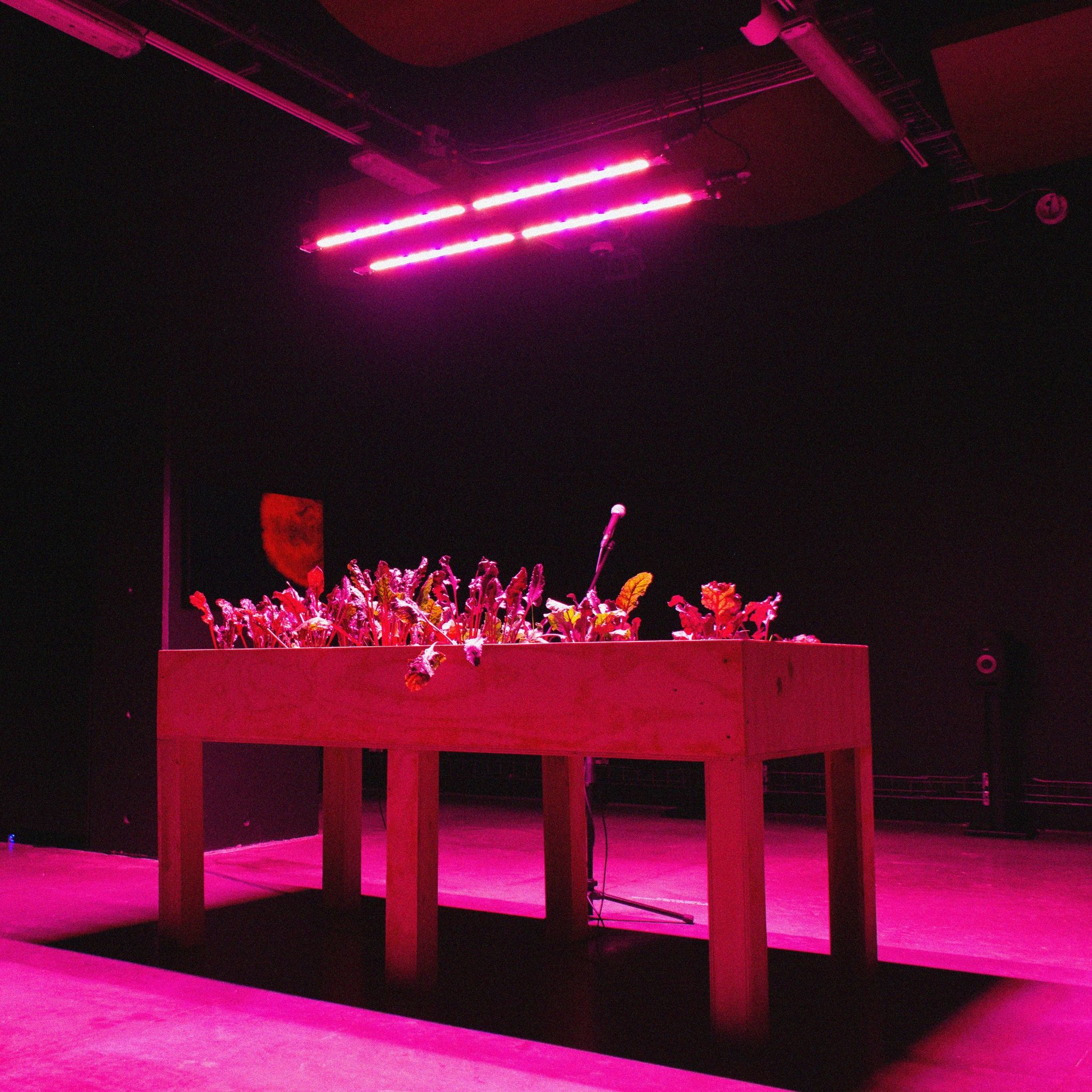
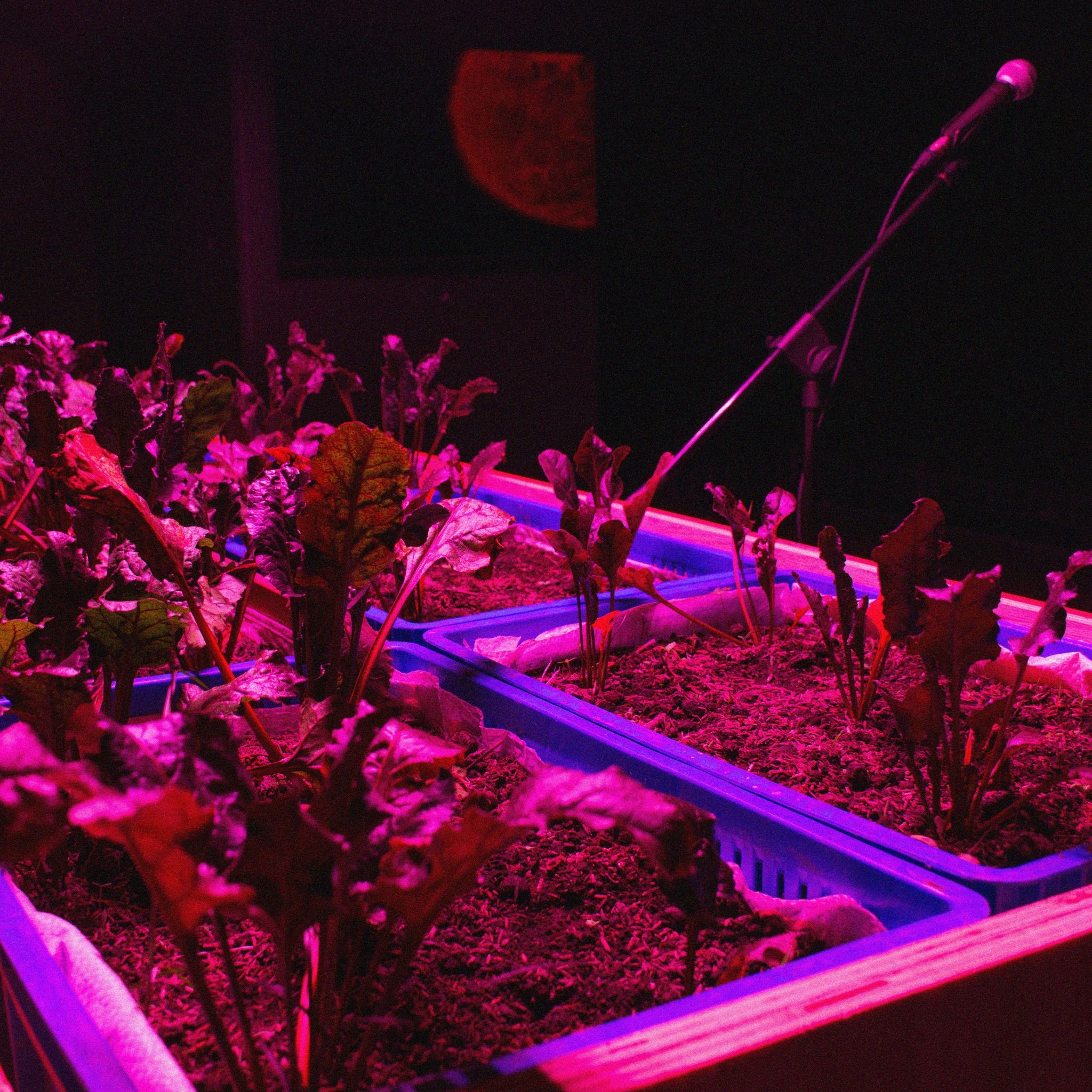
Interesting question. Beta Vulgaris (CD version) and One Last Perfect Day (multichannel installation version), created to invigorate beet plants, demanded a thorough investigation of previous horticultural sonic experiments to become familiar with frequencies that could aid them. In these experiments the sine waves are projected continuously which influenced my creation, prolonging tones like lengthy high and medium pitched drones.
Also, research on the benefits of insect chewing sounds, lead me to recreate them using Foley and incorporate these sounds in my experiment-installation. Since sowing, I embarked on a process combining intuition and observation, improvising and composing sequences daily while also talking to them, and closely observing their blooming following a growth chart. 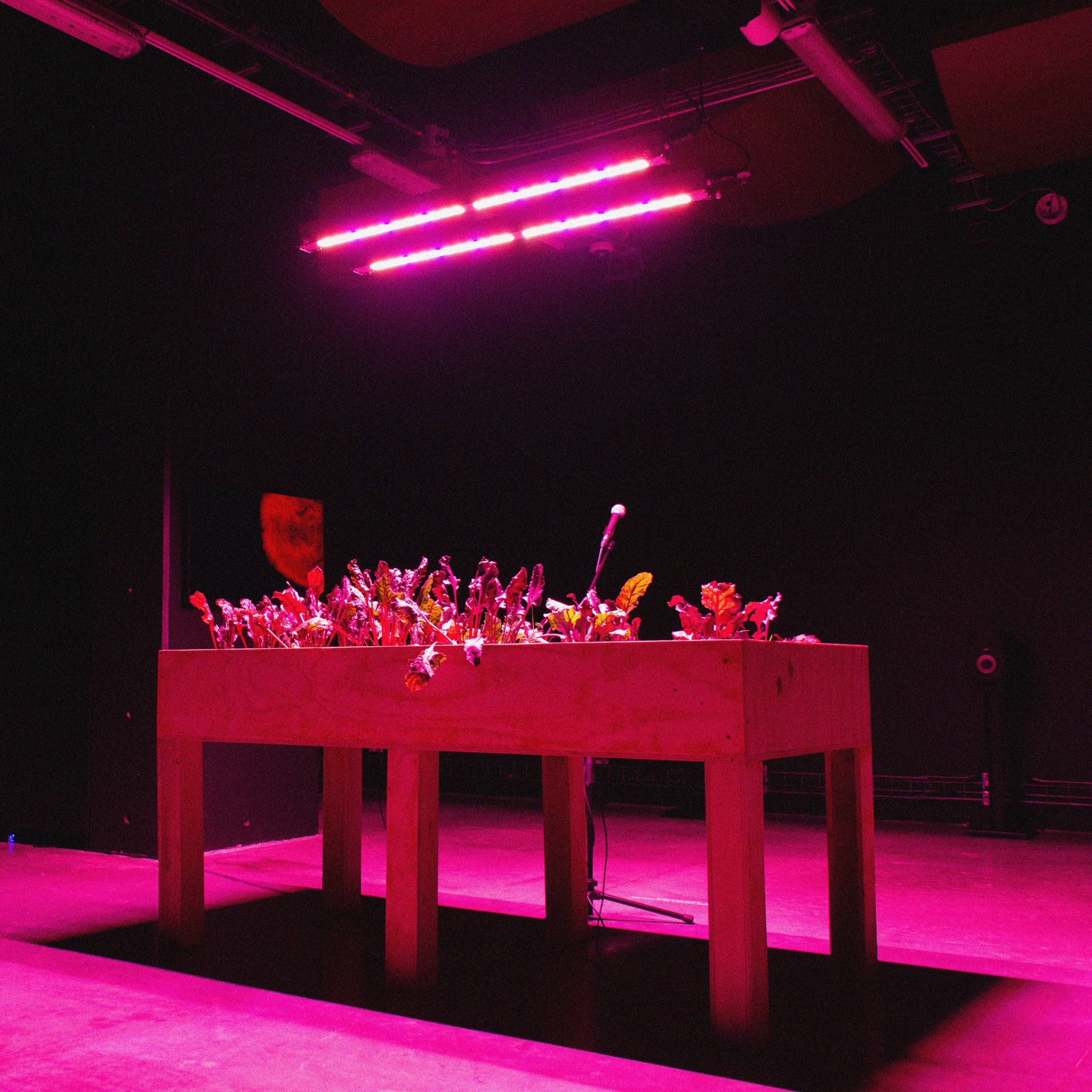
After the first 40 days, when they exhibited a steady and satisfactory growth rate, I stopped working on the material, playing it on a loop instead until harvest. In Acoustic energy: music to stimulate plants, the advancement of my investigation and experimentation led me to narrow the frequency range of the sine tones and omit Foley recreating insects, as plants can tell the difference between a physical sound and its recording, as Monica Gagliano indicates.
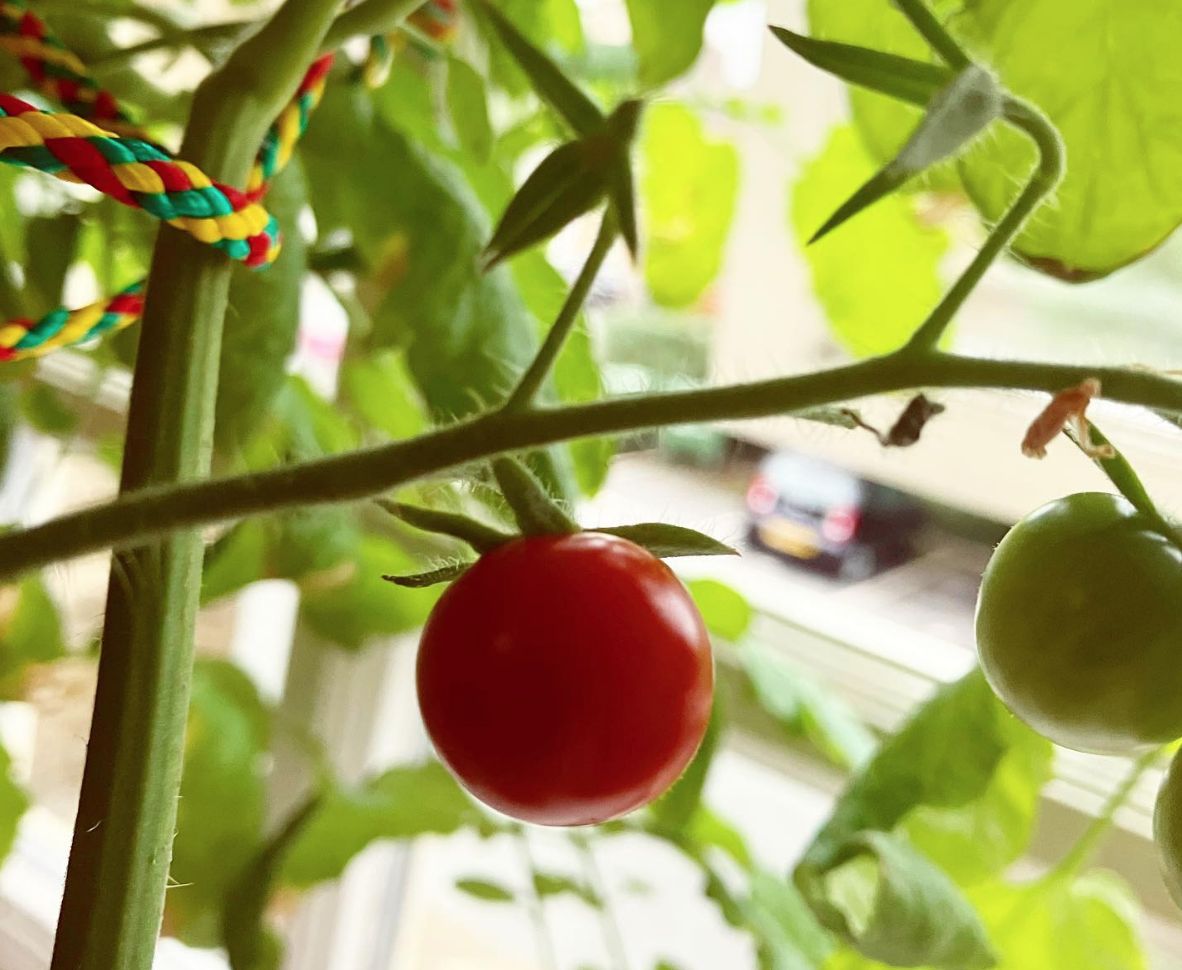
While my previous work improvising and composing played a key role, the methodology I developed aimed for the sensibility of beets and tomatoes to permeate the output. Furthermore, my partial recreation of previous horticultural experiments and the appreciation of artworks using sine waves by Elaine Radigue, Daphne Oram, Marcus Schmickler, Ruth Anderson, Klaus Filip, and Nicolas Bernier helped me with some artistic decisions.
Whether these artworks are undetachable from their “conceptual development” is subject to the relation of the listener with plants, as these pieces are meant to be experienced with them, creating shared experiences where our sensibility and imagination welcome the pleasant Otherness we encounter in plants.
In this regard, Maria Paladamanolaki (A Closer Listen) wrote an insightful article about Beta Vulgaris, where she mentions that it is “not a work about the growth of beets but a methodology for becoming more attuned to plant life, of growing closer to our environment and its/our communal well-being”, a helpful analysis which aided me in understanding the philosophical scope of my work.
On the other hand, Frans de Waard, who has no plants in his house, wrote in Vital Weekly that “Beta Vulgaris” emerges as an “interestingly ambient music-based” work which, at the proper levels, positively affects the room. Moreover, De Waard and Colombian art critic Esteban Gutierrez (ArtNexus journal) manifested in their reviews that the sine tones emerged as irritating at first listen, forcing the former to lower the levels of his amplifier while, for Gutierrez, they gradually became pleasant in the museum space.
Beta Vulgaris and Acoustic energy: music to stimulate plants were presented in radio shows by Kate Carr, Hamish MacKenzie, Richard Chartier and Colin Frank, which is rewarding considering how it helped these pieces reach plants and plant holders around the world, that otherwise couldn’t have happened.
[Read our Kate Carr interview]
[Read our Richard Chartier interview]
One thing's for sure: If plants and animals are sensitive to sound, then it would follow that the sound we project into their space is either intrusive or beneficial. What are particularly rampant examples of the former, and what would be sensible approaches to further the latter?
White noise at high levels (85-90 dB) can harm plants, and hard-rock music is detrimental, forcing stems to grow in unusual patterns, roots moving away from the sound source, and making plants thirsty.
In reply to your second question, high sine waves, insect chewing sounds, and loving human voices can help plants' health, as discussed in this interview.
Without even using a word like communication, do you think that a deeper relationship between plants and humans is imaginable? If I would like to engage in it, what could be the first steps for me to take in that direction?
Anthropologist and biologist Fatima Jackson advanced a fascinating theory concerning collaboration between plants and humans that illustrates how I envision communication operating between us.
She encounters reciprocated and symmetric cooperation in ecological and bio-ethical horticulture, where humans satisfy alimentary habits in accordance with the creation of nutrients and volatile flavour compounds in plants. In return, plants produce aliment and flavour composites in correspondence with our demand for aliment and flavour, sustaining their subsistence as crops.
My advice to communicate with plants is to spend time with them, and if it is spent advancing rural or urban farming, it could aid your well-being and mental health. If the exchange transcends to the kitchen, you are off to a significant mutuality, improving the quality of aliments consumed and joy around food while decreasing waste and reducing your carbon footprint.
If you speak to them and play them sounds that help their nutrient intake, this dialogue will sensorially expand and might get you closely attuned with plants.
Wilson, E.O. (1984) The Biophilia Hypothesis. Harvard University Press.
H. Elsey (2016). Green Fingers and Clear Minds. PCM.
Vélez, D. (2019) Ecos de la Chicha. 45SNA.
https://habitatsonoro.wordpress.com/2019/10/15/ecos-de-la-chicha/
Collins, M.E., Foreman, J.E.K. (2001) The Effect of Sound on the Growth of Plants.
University of Western Ontario.
Vélez, D. (2021) One Last Perfect Day. MAMM
https://habitatsonoro.wordpress.com/2021/09/16/one-last-perfect-day/
Khait, I. (2019) Plants emit informative airborne sounds under stress. Cold Spring Harbor Laboratory.
Stevenson, A (2008) Probing Question: Does talking to plants help them grow? PennState.
Gagliano, M., Grimonprez, M., Depczynski, M., Renton, M. (2017) Tuned in: plant roots use sound to locate water. Springer-Verlag Berlin Heidelberg.
Mohr, Ch.M. (2021) Trees Talk Tremor: Wood Anatomy and Content Reveal Contrasting Tree-Growth Responses to Earthquakes. AGU.
Retallack, D.L. (1973) The Sound of Music and Plants. DeVorss and Co.
Appel H.M., Cocroft, R.B., (2014) Plants respond to leaf vibrations caused by insect herbivore chewing. Oecologia 175:1257–1266
https://www.thewire.co.uk/audio/tracks/hear-exclusive-lee-patterson-sounds
Chapman, D., Vélez, D. (2022) Singing in the Dark. Cultures of Place
https://habitatsonoro.wordpress.com/2022/07/06/singing-in-the-dark/
Perks, M. (2004) Xylem acoustic signals from mature Pinus sylvestris during an extended drought. Annals of Forest Science.
LaBelle, B. (2006) Background Noise. Continuum. (page ix)
Vélez, D. (2023) Beta Vulgaris. Sublime Retrat.
Vélez, D. (2022) Acoustic Energy
https://acloserlisten.com/2023/03/22/david-velez-beta-vulgaris/
https://www.vitalweekly.net/number-1370/
Jackson, F. (1996) The Coevolutionary Relationship of Humans and Domesticated Plants. Department of Anthropology, Bioanthropology Research Laboratory, University of Maryland.