Published
Name: Derek Piotr
Nationality: American
Occupation: Composer, sound artist, vocalist, folklorist, songwriter
Current release: Derek Piotr's Divine Supplementation is out now. It includes new remixes of material from his full-length Divine Supplication.
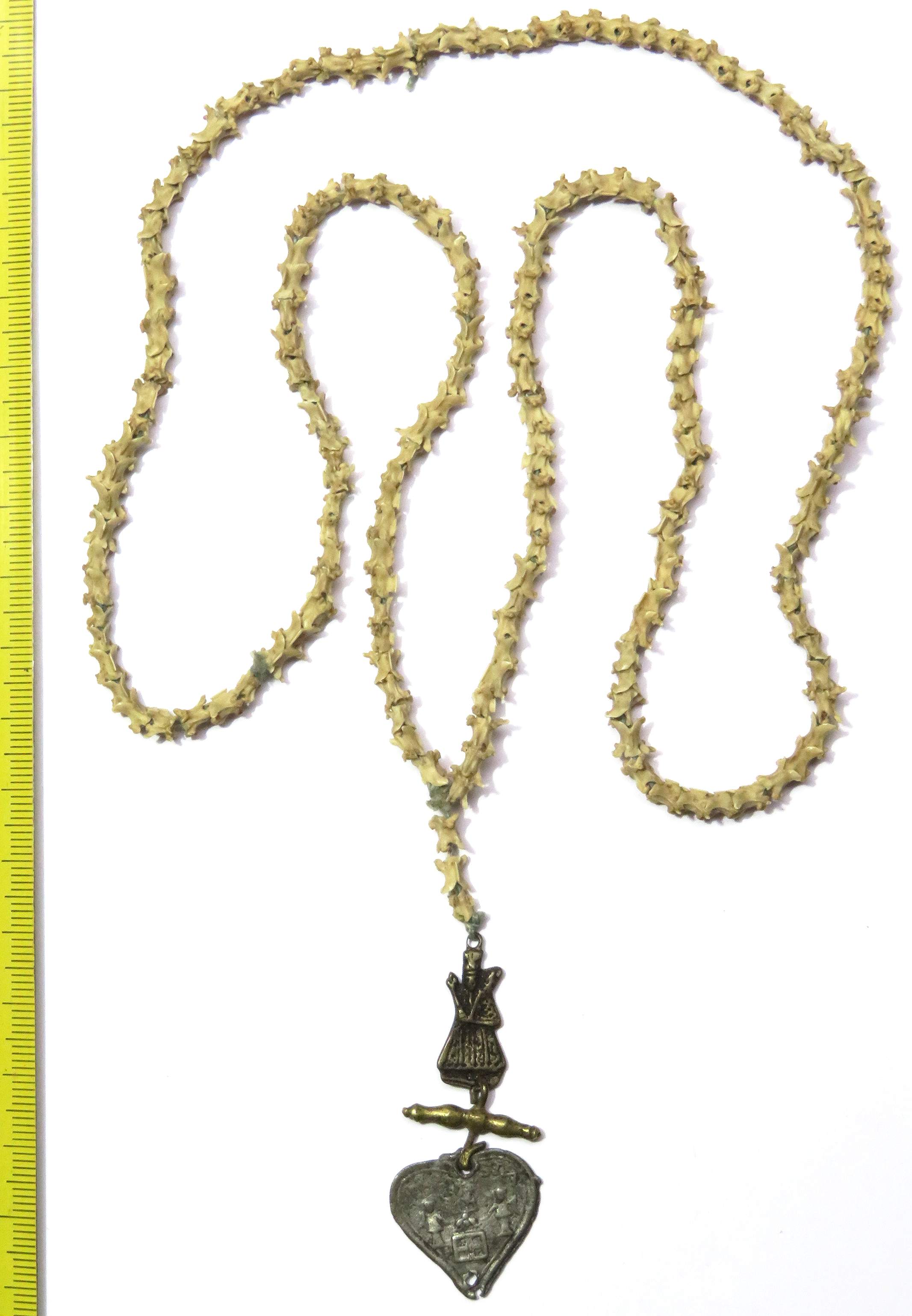
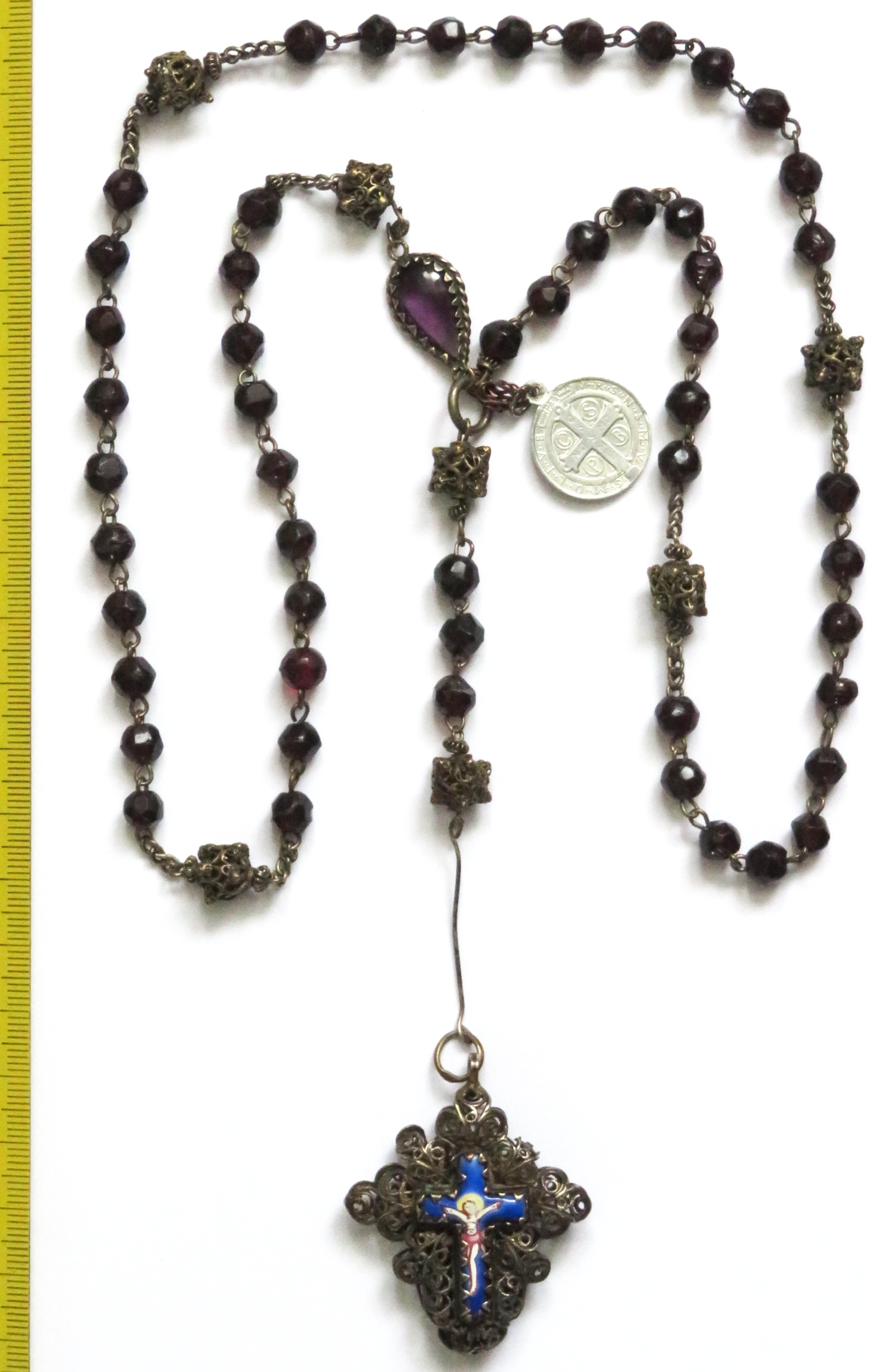
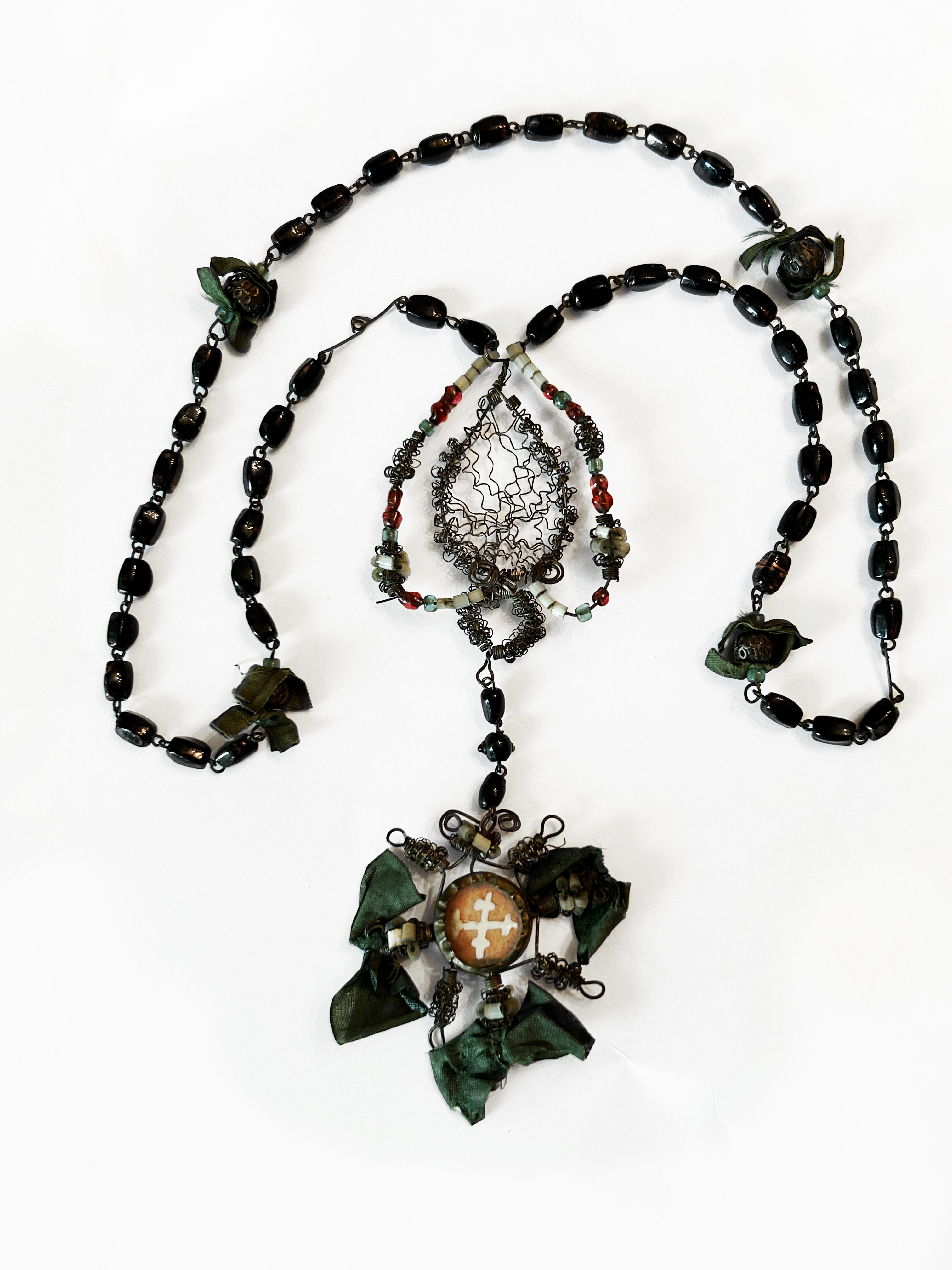
Topic I am passionate about but rarely get to talk about: I collect and study antique rosaries. I work with rosaryhistory.com quite a bit, so I'm gonna attach some photos of pieces in my collection that are mirrored on Rosary History (attached to this interview in the sidebar). I'm really preoccupied with the way superstition and folk belief intersect with organized religion because the two should be diametrically opposed and yet they get married all the time.
If you enjoyed these thoughts by Derek Piotr and would like to stay up to date with his music, visit his official homepage. He is also on Instagram, and Soundcloud.
For a deeper dive, read our earlier Derek Piotr interview.
The path to becoming a producer is a process - but from many interviews, I am under the impression that there are nonetheless one or a few defining moments. If this was the case for you – what were they and why were they so incisive?
I would say usually the defining moments are the ones I see in hindsight … I think maybe a lot of producers would say that.
I don't know if I had like one giant “a-ha” moment that changed my life, but I think if I did it was when I made my first record with AGF, and that was a process of writing emails back-and-forth for a few years and sending her some demos, and then she agreed to help me with engineering and produced my first album. She remains one of my closest friends, and we stay in touch and we collaborate across different disciplines.
But yeah, I guess like the defining moment would be when AGF reached out and wanted to help me with my first album.
I also just released two remixes from my last record that I am totally in love with: one by Thomas Brinkmann, and one by Switch/Solid Groove, both production heroes of mine.
Tell me about one or two of your early pieces that you're still proud of (or satisfied with) in terms of production – and why you're content with them.
Again this is a funny question, because the things that I thought maybe we were so awesome when I was making them, maybe I have different feelings about now. And maybe the things that I thought were like just sort of sufficient now I'm kind of like proud of …
But I would say definitely I really stand behind the albums Drono and Avia. I'm really proud of both of those records.
I seem to get into this mood where little bit more like like low-key, I have like a colorful side and then a film noir side and the film noir side I think sometimes is the more successful mood or maybe I'm just impressed by my own discipline during those phases. I definitely like both sides of myself, but I would pick those two records …
And then maybe also the track “Tonic/You Move” from Forest People Pop, ...
… and then maybe also “A Not-Quite Locked Door” off my last record Divine Supplication, I think that those are successful …
But if you wanna go really early “Radimantra” from my second record Airing I really love, still that's one of my favorite pieces I ever made.
In how far, would you say, was your evolution as an artist connected to the evolution of your music set-up and studio? Were there shared stepping stones?
Not at all evolved … my music set up is still just laptop and microphone, and a lot of software sampling.
What maybe has developed is that I work with an engineer, Scott Solter, who has produced for a lot of amazing artists, and we have mutual admiration. He’s a genius and we've tried a lot of different things together … he's mixed really clean for me, he's mixed really degraded for me.
For instance, for The Devil Knows How, we put a lot of the tracks through various tape situations and wire recorders and different tape decks to really erode the material.
For Divine Supplication he worked really cleanly, mixed really clean … but we've been working together for over 10 years now and it started with mixes from Avia that I handed him and said “you can do whatever you want to these”. Those mixes came out as single versions, so they weren't on the album and then our relationship developed from there.
So I'm handing what I'm doing off to other people more frequently now, and working in a more flexible way, but my gear hasn't changed. It's very minimal actually, and I used to have a lot of anxiety over this maybe early on in my career, like I wanted to be taken seriously next to all of the modular racks and mixers and the toys all the boys would bring to these noise festivals … and I just had my laptop and my soundcard.
But as I've gotten older I have total confidence in that method, and yeah, the blueprint certainly hasn't changed!
There are artists who can realise their ideas best with a traditional – or modified – piano interface, others with a keyboard and a mouse, yet others by turning knobs or touching screens. What's your preferred and most intuitive/natural way of making music and why?
I'm very much of the “keyboard and mouse” school, but I also use my voice a lot. My voice is like a central element to a lot of my records, so in that way I'm getting away from gear. I'm using the “original gear” which is the voice!
I definitely spent my time with touchscreens maybe in the mid mid teens 2014-2015, but I work best with a keyboard and a mouse for sure.
Tell me about your aesthetic preferences for picking effects like reverb, delay, compression, chorus etc … - what was the role of these effects in the production of your current release?
I used to listen to a lot of pure sound collage, I grew up on UbuWeb definitely, like John Cage and so on …
I used to not use reverb, and a lot of my early works are pretty dry, like it was about the purity of whatever sound I was using in the sense of that there weren't like note bends or glissando going on. It was like there was no Photoshop on the sounds; I was certainly distorting and cutting things up for sure, but it was like a kind of a dry dusty experience.
As I've gotten older I guess I'm in my like acid jazz phase, because reverb and delay are big paintbrushes for me now. I use them in various ways now, like to add or change momentum to a piece. But also this year I'm using phasers and like flanges a little bit now. I don't know if this is like some weird nostalgia for me, but like 15 years ago the idea of phasers would be like “no way!” But now I'm in my “lite soft acid phase.”
I’m using a lot of effects now that I kind of grew into and I think for me at this point nothing is off-limits as far as what can contribute to the momentum of a piece. It's more about listening to the music you're writing and and just removing all biases and preconceptions and asking yourself: “what does this song really need in order for it to thrive?”
Producers work with sound in a very direct way for very long stretches of time. What are some of its qualities that you appreciate now more than before, and how do you try to bring these to the fore in your work?
Lately I'm trying to introduce more harmony and a little bit more natural progression into my tracks, musically speaking.
I think maybe I was more in love with texture and contrast earlier in my career, and maybe those things were astonishing for a minute but not ultimately musically successful, not like something you could return to endlessly.
I think I'm trying to solve that component now. I want to make something a little bit more musically successful, and I'm even thinking for my next project of hiring a jazz arranger or a string arranger, maybe not even to arrange for strings literally, but just to assess the chord structure of what I've got, and alter it to some degree.
The current production process allows for fast and infinite variations. Can you tell me about how you deal with this potential for the infinite and what ultimately decides on how many iterations to create and which version to release?
I think the piece tells you what it needs; I don't know if I need to really elaborate on that because I think every musician reading this will understand that. The piece always decides what vitamins it needs, and how much sunlight it needs and what you need to give it.
It's not so much about infinite variation as much as you start something and then it tells you. Kind of like if you're knitting and you think it's gonna be a hat, but it ends up being a scarf–you can't control it! It will tell you what shape it's gonna take.
Tell me about the role collaboration played in your recent productions – and how you see the potential for machines as collaborators compared to humans.
I am more and more collaborating with other vocalists, and other musicians generally.
I run the Fieldwork Archive, and some of the musicians that come into the archive are also musicians I'm currently working with. For instance there's a Romanian girl that works with Trei Parale, her name is Mariana and she is in my new record.
There's also Frida Haltli, she's the daughter of Maja Ratkje, and Frida's singing some Norwegian folk songs that Maja recorded for the Achive and Frida is also working with me right now.
Again, because as I keep saying I wanna give this song what it needs, it's sort of like no one is off-limits as far as introducing them into a piece, to fill out what the song needs ultimately.
Production, as opposed to live performance, can be a lonely process and feedback from listeners isn't always tangible. What is it about it that gives you satisfaction?
I love my alone time. I love taking what someone has given me and stitching it together, putting it away for a few days, coming back, realizing that transitions need to change, different things need to be edited down or extended …
That isn't to say I like working alone, because I think I did just one record in my career, Grunt, that was entirely made by myself except I had one violin player on three tracks, and that was a lonely process. That was a fun experiment, but it's ultimately like not that rewarding.
I really like working with other people because I don't think I have all the skills. It's very arrogant to think that you have all the skills as a musician; I think that we all have strengths, but that's what makes collaboration so important. We all have different strengths, and so to combine those and give the song what it needs–I think I've said the six times now! But you have to give the song what it needs.
That being said, I love taking someone's session that they sent me and just snipping away at it for months and months and months on my own.
We can watch videos on production, take producer courses, and exchange deep insights on gear forums. Amidst these options to improve one's chops/skills, how do you keep things playful?
I just have a natural inner conviction. I don't watch any tutorials. I always figure things out myself …
Maybe I'm overly confident, but I've never looked at other people as to how I should do things–I've always done things completely self-taught, kind of trial and error. I'm completely in my own lane, I have been at a computer cutting up sound for 20 years on my own, in my bedroom the majority of the time, so it's it's just an internal growth.
As far as being playful, I think I have like a weird sense of humor … for instance I got an Indonesian duo to sample Nathan Salsberg's guitar playing. Nathan Salsberg is a collaborator who does like American primitive Kentucky guitar, and he played on my last record.
Gabber Modus Operandi remixed his guitar playing for a track, which I think is hilarious. I wish these kinds of combinations would happen more often! So I think I just have like a sick sense of humor with some of my references that I kind of try and air out as much as possible
Creativity can reach many different corners of our lives. Do you personally feel as though producing a piece of music is inherently different from something like making a great cup of coffee? What do you express through music that you couldn't or wouldn't in more 'mundane' tasks?
I think it's all the same. I think a good cup of coffee, or a flower arrangement, or meeting someone at a tag sale can be just as fulfilling spiritually as writing a good song.
But I also think with songs you have to give everything to the song. I said this to some of my friends with children: I couldn't be the parent that a child deserves. I could be a “good parent”, I could get the kid to school and dress the kid in nice clothes and give the kid substantial meals, but I'm an artist first, and so I think probably children is like just not in the cards for me.
To be a truly great parent you have to sacrifice everything. And so, to that point, I could write a “good song” tomorrow, I could write a perfectly adequate song tomorrow. But to truly write great music, you have to sacrifice so much and put so much of yourself for the work to really make something transcend … so that's always in the back of my mind.