Published
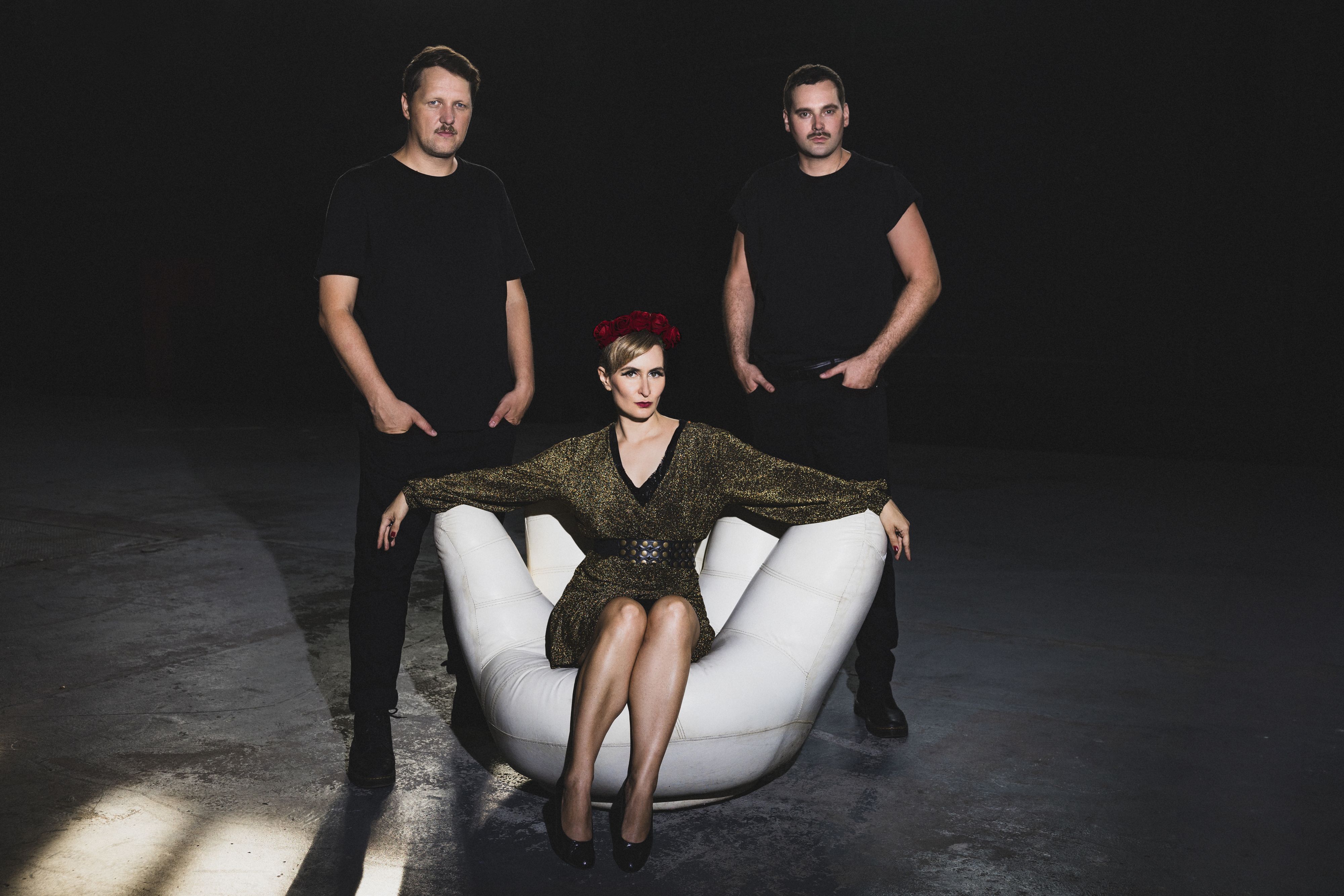
Name: Dina Summer
Members: Members: Jakob Häglsperger, Dina Pascal Brudi, Maximilian Brudi
Interviewee: Dina Pascal Brudi
Current release: new single,a remix of "No More Tears" by JG Outsider, is out via Iptamenos Discos.
Recommendations:
Dina: My all-time favorite book is On the Road by Jack Kerouac. It’s definitely worth reading more than once; each time, you find something new in it. It even inspired a song of ours called “On the Road,” which didn’t make it onto the album, but will be released sometime in the future!
If you enjoyed this Dina Summer interview and would like to stay up to date with the band and their music, visit their official homepage. They are also on Instagram, Soundcloud, bandcamp, tiktok, and Facebook.
For a deeper dive, read the thoughts of Jacob and Max in our earlier Dina Summer interview.
What were some of the artists and albums which inspired you early on purely on the strength of their lyrics? What moves you in the lyrics of other artists?
There are so many, but Madonna’s lyrics had a huge impact on me growing up.
She’s empowering, especially for young women, with lines like “You deserve the best in life, so if the time isn't right, then move on” and “Happiness lies in your own hand.” Her words have this way of uplifting and instilling self-confidence, while breaking norms.
Hearing the Smashing Pumpkins' line, “The world is a vampire”, from "Bullet with Butterfly Wings," was unforgettable. It resonated with me and fueled my love for lyrics that are both poetic and raw.
Artists like Lou Reed, David Bowie, Nick Cave, Nine Inch Nails, LCD Soundsystem, Nick Drake, and Alanis Morissette also inspired me a lot.
And I’ve always loved surreal lyrics—like “Strawberry Fields Forever” by the Beatles, “O Superman” by Laurie Anderson, “Sunshine Superman” by Donovan or “See Emily Play” by Pink Floyd.
One lyric I wish I’d written is from Covenant’s “Bullet:” “Time is like a bullet from behind, I run for cover just like you.” It perfectly captures the feeling of being pursued by time, something everyone can relate to.
And "Drowning in the flood of morning light” - for me it’s the most poetic way to express the feeling of exiting a nightclub in the morning.
Madonna's lyrics inspired “No More Tears” from our album:
"No more sadness
no more tears
I'll dry my eyes
I'll face my fears”
Likewise, I drew inspiration from “Bullet” to weave metaphors into “Schall & Rauch:”
“Tears in stardust
Falling from my eyes
Your absence
A void in starlit skies
Like a fallen comet
Our love burned bright
But now it's just ashes
Scattered in the night”
When working on music, when do the lyrics enter the picture? Where do they come from? Do lyrics need to grow together with the music or can they emerge from a place of their own?
Most often, the music inspires the lyrics. When I’m in the studio, the music brings images and stories to mind.
Sometimes, though, I start with a theme or a word I see somewhere, and the music brings it to life.
For example, “Nothing to Hide” was inspired by the concept of past life lovers and eternal love - I knew that’s what I wanted the song to convey.
“Halkidiki” was born from nostalgia for summers spent there since I was a child. I’ve wanted to write about it for years, but I waited until the right song came along that matched that feeling.
Do you think that some of your earliest musical experiences planted a seed for your interest in writing lyrics or poetry? How and when did you start writing?
Music has always been a huge part of my life. I grew up in a musical family—my dad would play piano, guitar, and harmonica almost daily, filling our home with music. I spent hours playing the piano and the guitar, listening to the radio and later on I discovered MTV, which opened up a whole new world for me.
As teenagers, my best friends and I started a band. We only had access to a friend’s keyboard and my dad’s guitar and I took charge of writing lyrics. Sometimes, I’d write funny songs or little stories inspired by things around me, like a "cat song" that was just with a meow sound of the keyboard and a story about some crazy cats, or a story set on a train, inspired by the view from my bedroom window, as we lived right by the train station.
I’ve never really felt shy or embarrassed about writing, I think it just came naturally to me. It wasn’t about having a special talent either; I just enjoyed creating stories and expressing myself.
How do you see the relationship between words and music?
Music and words each bring something unique and powerful, but they work differently. Music touches the soul and can communicate emotions in a universal way, regardless of language. It can amplify feelings, making you feel more deeply.
Words, on the other hand, have the power to shape thoughts and change minds. They can open up new perspectives, offer comfort, lift people from dark places, and inspire strength.
So while music makes you feel, words can provoke, inspire, and empower. They’re equally powerful, but in complementary ways. Music sets the mood and words can give you the thoughts and ideas to journey somewhere entirely new.
Entering new worlds and escapism through music and literature have always exerted a very strong pull on me. What do you think you are drawn to most when it comes to writing?
I love diving into surreal or invented scenarios, inspired by books, films, or pure imagination. I’m a big fan of the Dada movement, so writing eccentric, out-of-the-box lyrics really appeals to me.
Each song is different - some are about about love or emotion, others about empowerment and some just explore fun topics that fascinate me, like fortune tellers, the Fata Morgana illusion, the story of Maurizio Zanfanti, the Casanova of Italodisco's capital Rimini, who has had sex allegedly with over 6000 women and passed away at the age of 63, while having sex with a 23-year old tourist, and otherworldly stories.
On our new album Girls Gang, two songs play with themes like this. “Alien” tells a story about aliens coming to Earth to help humanity - a metaphor for embracing differences without judgment.
“Zombie” is about a lonely, friendly zombie, which for me is a metaphor about looking beyond appearances.
I used to be the only goth at my university, and later on I met many other goths, punks, metalheads, people with "scary" exteriors - who turned out to be total sweethearts. It’s a reminder to see people for who they truly are.
In how far are you consciously aware of the meaning of the lyrics you're writing during the creative process? Do you need to have a concrete concept or can the words take the lead?
Usually, I have a topic or a song title in mind, but then the words lead the way.
For “Girls Gang,” I wanted a song about girlfriends, the importance of friendship, and having strong female idols. For me, it’s been goth queens who inspired me, and I wanted this to be an ode to them.
I also love rhyming, so sometimes I start with a line or phrase I like, and the rest falls into place. For “Girls Gang,” I had the line “We like to dress like Sioux”, because I always loved Siouxsie Sioux’s style.
From there, I matched it with “shades of midnight blue” and created a mood and aesthetic that felt right, which gave birth to this verse:
“We paint our world
In shades of midnight blue
Sometimes we feel like Wednesday
We like to dress like Sioux.”