Published
Part 2
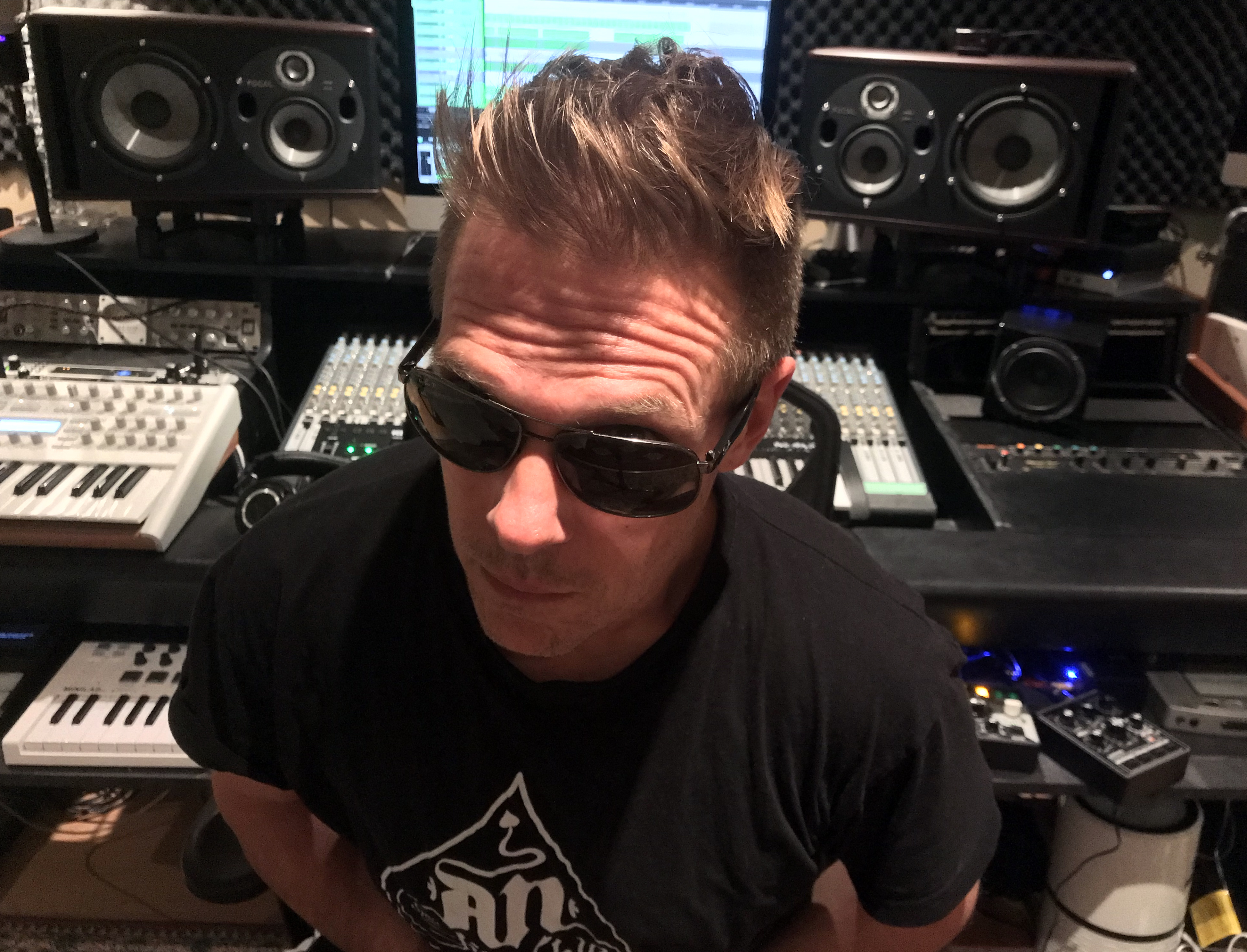
How would you describe the relationship between technology and creativity for your work? Using a recent piece as an example, how do you work with your production tools to achieve specific artistic results?
I spent my youth recording on a mixer and tape. Pushing record, running to the drum booth, playing an entire song (humming it in my head to try and remember where to change the dynamics and add drum fills), then adding bass, etc … It was time consuming and you had to keep redoing parts from start to finish if you made a mistake. It was an incredible learning experience but also a huge loss of time at points.
Technology has allowed me to record, mix, master, promote and share music - all from my home. This was revolutionary for all musicians, and aspiring producers.
Working mainly ITB, I couldn’t imagine going back to recording on tape personally. I might transfer the parts to tape for that “sound”. But for editing, nothing can top a DAW. Working within a DAW that you know really well allows you to get your ideas out quickly and efficiently, access to hundreds of plugins for sound and processing so you have a greater opportunity to transfer the ideas from your head to your DAW.
I wouldn’t be able to work the way I do without technology being where it is.
Within a digital working environment, it is possible to compile huge archives of ideas for later use. Tell me a bit about your strategies of building such an archive and how you put these ideas and sketches to use.
It’s absolutely a fountain of gold when you create sketches often. I’ve even started posting “A Beat A Day” microgrooves that are 8 bars long and I’m aiming to do this for one year.
The two main methods for getting ideas down are:
1) In Reaper, I’ll have a bass line or drum line in mind. Let’s say a bass line.
I’ll find a temporary drum loop of mine that is close to what I’m aiming for. Once that’s set up for about 3-4 minutes in length, I’ll record a bass line from start to finish. (About 50% of the time I’ll play tracks from start to finish on each instrument rather than loop 8 or 16 bars). I’ll then continue adding parts until I’ve got the rough song set up with verses, chorus’, bridge and outro. The final steps might be to finish the track as a dub, or instrumental that I’ll send out to a vocalist.
When working with vocalists, I’ll wait for them to come back before adding the final details of the track such as motifs, riffs, breaks, fx, etc ... all of the small elements that truly make a song unique.
2) Maschine - Maschine provides a different approach and method of recording ideas. I’ll find 16 oneshots I like, drop them in, and based on the sounds, try various tempos and styles of music. I may end up with 5-10 song ideas from these 16 oneshots. From there, I’ll export the loops and bring them into Reaper to build out into songs
As I work on these ideas, I have two folders, one for “New Riddims” ideas and one for “Unused”. The unused songs ideas may become part of loop packs, or used in another song or not at all. The idea is to develop as many quality ideas as you can because each time you do, you’re learning, improving and increasing the chances of you hitting on that “magic” idea.
Those are the ones you instantly know have that special something and will become full songs.
How do you retain an element of surprise for your own work – are there technologies which are particularly useful in this regard?
Changing things up really helps. Excellent question and one I think is very important.
I was at a festival years ago and heard the story of a musician who decided to only use one synth to record an entire album. No outside sounds. I was really intrigued by this and began experimenting with this concept and produced an entire album of songs. Not all of them were worth releasing but it made the point: If you only have a few pieces of gear, it’s worth spending the time to see how you can maximize their potential sounds and what you can achieve with them.
I have a few key pieces of gear that are always used but I switch around the rest of my gear often. Maybe I’ll just use one specific keyboard and really try to find interesting sounds, adding a phaser pedal or echo pedal. Another time I’ll use a plugin I never use, etc … the idea is to try something different for each song you work on. If you listen to my music, it’s rare you’ll hear the same sounds in a song other than certain organ or 70s key sounds I know and love (we all have a few sounds we love that fit into almost any song).
Technology wise, I try different plugins often or chain a few together or re-discover ones I have. Another great resource to try things is here.
This list has some really good plugins for free.
In Ableton, which I also use, I’ll set up 10-15 plugins on the master track and play with different plugin combinations (echo, reverbs, filters, LFO’s, lofi, distortion, phasers) you can create some very unique sounds this way - and those sound can help inspire you, or song ideas.
Production tools can already suggest compositional ideas on their own. How much of your music is based on concepts and ideas you had before entering the studio, how much of it is triggered by equipment, software and apps?
Another good question.
Ideas for me may come from a song I hear, I like the rhythm or a sound, or I hear a snare drum and think, maybe a subtle rhythm while outside or I intentionally sit down to work on a specific style, i.e. roots steppers or trip hop or dub.
In fact when I heard the Skrillex & Damian Marley track “Make It Bun Dem”, I was inspired to create something along those same parameters of style and tempo.
My version ended up being “Pull Up Selector”.
I wrote the bulk of this track "Nancy France" while on tour with just my laptop. The tool I use can determine the direction I might take and style. Maschine is for generating ideas quickly and then picking out which of those ideas I feel might work as a song. Reaper is where I’ll build tracks out, either from scratch or importing the ideas I create in Maschine. When I feel there’s something missing but want to get a fresh approach for a song, I’ll import that song into Ableton and load up Sampler or a chain of plugins. Each tool will generate a different approach which can help bring out different ideas.
For softsynths I use Massive for certain sounds, years ago I created presets that I still use to this day. Arturia is also a great source for sounds such as B3, Rhodes, Clavinet, Wurli.
Have there been technologies which have profoundly changed or even questioned the way you make music?
No question about it, the DAW once it became affordable and “drag & drop”. I used Cubase on an Atari in the early 90s, the very first version of Pro Tools but neither of them inspired me to create as I didn’t want to spend hours of time learning them.
It was ACID Pro that changed everything. All of a sudden, everything I’d been looking for was right there in one place. From the moment I began learning this program I was producing music and haven’t looked back.
To some, the advent of AI and 'intelligent' composing tools offers potential for machines to contribute to the creative process. Do you feel as though technology can develop a form of creativity itself? Is there possibly a sense of co-authorship between yourself and your tools?
AI is not something I’ve considered. I do think that there is a synchronicity with the tools you have such as effects plugins as they allow you to program either random events or targeted events that are not “natural” but allow for something different than you, as a human, would think of, or create.
But using AI to co-write music feels false to me as you’re losing the reason for creating music - the pure joy of stumbling onto something you feel special that lifts your spirit and inspires you to keep going.
What tools/instruments do you feel could have a deeper impact on creativity but need to still be invented or developed?
That’s a question I had to really think about, with thousands of plugins of all types, DAWs, computer options and availability of loops everywhere.
I think what would help bring forth a more personal, inner creativity would be learning. Learning basic harmony, music theory, an instrument or combination. This will help improve the overall creative output for any artist.