Published
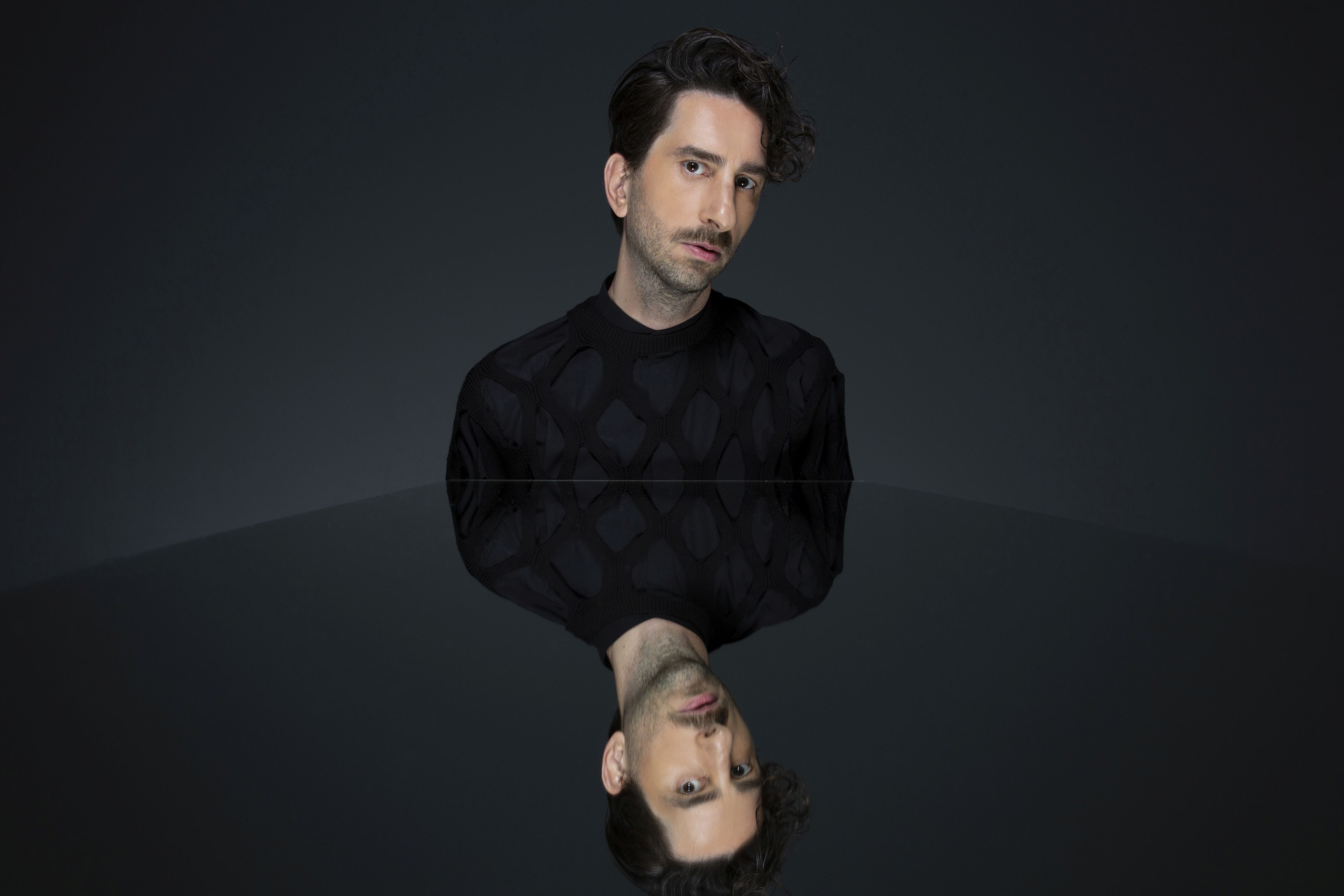
Name: Petros Manganaris aka Echonomist
Nationality: Greek
Occupation: Producer, DJ,
Current release: Echonomist's new Dominator EP is out via Habitat.
Recommendation for Thessaloniki, Greece: Walk along the seafront at sunset, from the White Tower towards the port. It’s simple, but it’s the soul of the city. The light, the atmosphere and the sense of calm.
If you enjoyed this Echonomist interview and would like to stay up to date with his music, visit him on Instagram, Soundcloud, and Facebook.
Are there examples of minimalism in music – and outside of music - that impressed you early on?
My sound has always evolved in cycles.
Early on, I was obsessed with the pioneers: Kraftwerk, krautrock experimentalism, Detroit techno artists who treated machines almost like living organisms.
Over time, I kept stripping things back, finding more meaning in fewer elements and becoming more intentional. The more I got into hardware synthesisers and rich analog equipment, the more minimal I became.
When a machine has so much character on its own, you learn to trust the sound instead of filling all the space. It becomes a conversation rather than a construction project.
Were you ever interested in minimalism as a style – from the Philip-Glass variety to solo instrumental work to minimal techno? If so, tell me a bit about your interest in this.
I went through a Philip Glass, Wim Mertens, Arvo Part & Steve Reich phase. Their patterns felt almost meditative.
At the same time, I was absorbing Autechre, Aphex Twin, Boards of Canada, Vangelis, and FSOL. All different worlds, but often built from very few elements that somehow created huge emotional resonance.
Minimal techno later became a natural extension of that mindset.
Do you feel that making music is a process of adding elements until it is done, or one where you chisel away pieces from something that is already there?
I start by overbuilding. I let ideas run free, even if they get messy and chaotic. Then I step back and start carving.
The real track usually appears once I remove the noise I created in the first phase.
Many artists are becoming more minimalist in their music as the years go on, focusing on the “essence.” How is that for yourself, and how would you describe your development in this regard?
I think anyone who lives inside electronic music naturally becomes more minimalistic over time. The longer you’re in it, the more you realise that it’s not about packing ideas in. It’s about letting the right ones breathe.
You go so deep into sound, texture, and melody that simplicity, silence, and space start to feel more powerful than any big arrangement.
What were some of the starting points for your most recent release?
I’ve always been drawn to emotional worlds, not just dancefloor function. Around "Secret Places," I needed to explore texture, atmosphere, and memory.
It was a period where I allowed myself to drift into more cinematic, shoegaze-y spaces.
After the more introspective phase, I felt hungry for energy again. Playing gigs and festivals reignited that fire.
I wanted to write tracks that connect physically, not just emotionally. Something that moves both the body and the subconscious. Plus, there's something special about a well-crafted club record: it’s raw, honest, and immediate.
That hunger for movement is what ultimately led to my latest release on Habitat Records, “Dominator”, designed to hit the body first and let the subconscious catch up later.
Do you like to set yourself limitations? If so, what were some of those limitations for the new pieces?
Limitations are what actually open the door for creativity. For this release, I stripped things down. A couple of synths, a drum machine, barely any effects. If the raw sound didn’t move me, I didn’t polish it or force it. I just shifted direction.
Dominator came out of this super organic exchange of ideas with Alex from Mind Against. We were bouncing sketches back and forth until things clicked.
What were some of the most important pieces of gear or instruments for this release?
These days, I prefer a few instruments I know deeply. When you build a relationship with your tools, you pull more meaning from less. That said, in this release, I was inspired by my Alpha Juno preset “Dominator”.
It’s wild how a preset ended up defining whole chapters of rave culture. But the cool thing is that once you start tweaking it on the Juno Alpha, even tiny nudges completely change its soul.
The thing about the Alpha Juno is that it forces you into this almost meditative, one-parameter-at-a-time relationship. No big knob-per-function playground … just that little menu system and the data wheel. It turns sound design into something slower and more intentional.
Almost like writing with a fountain pen instead of typing on a laptop.
[Read our feature on the Alpha Juno-1]
Reducing one's options and techniques often implies a different way of working with the materials. Tell me about yours, please.
It forced me to rely on instinct instead of endless searching. No scrolling through hundreds of presets. No “maybe something better is hidden somewhere.”
I shaped sounds directly and stayed close to the emotional core. That immediacy defined the character of the tracks.
With so much incredible music instantly available, are you finding that you want to take it all in – or that you need to be more selective? How do you pick the music you really want to invest in?
Honestly, I try to be selective … but it’s impossible. There’s just so much good music out there right now. So many producers are doing wild, inspiring things that I can’t help myself.
I start with the intention of keeping it tight, but then I hear something fresh, and that leads me down another rabbit hole, and suddenly I’m ten artists deep with a playlist full of new obsessions.
Would you say that minimalism extends into other parts of your life as well?
You simplify your life! What you work on, what you own, how you spend your time, not for aesthetics, but to create mental and emotional space.
Music taught me that leaving room is powerful. As an independent artist, setting goals and focus is essential, but it’s about “limiting without limiting” so you don’t lose track of time.
By remembering you have plenty of time, you reduce stress, protect inspiration, and let creativity flow naturally.