Published
Part 2
Are you acting out certain roles or parts of your personality in your improvisations which you couldn't or wouldn't in your daily life or other parts of music? If so, which are these? If not, what, would you say, are the key ideas behind your approach?
I don’t think I’m acting out anything else than myself when I’m playing, and I try to do so in a sincere and wholesome way. This has changed a lot over the years, and only recently have I felt that I’m not in conflict with parts of myself when playing. I’m trying to connect all the dots in my life, to be more true to myself and everyone around me - also through the music.
I think of myself as a kind and inclusive person. When I’m playing the piano, I’m mostly focused on the music itself, but I use the music to fill the room with good vibes in the same way as how I take care of the people around me. However, I think the music might have more temper than how I appear to most people.
I have used music as a source for reflection for as long as I can remember. It’s particularly important when I struggle with my emotions or feeling down. Improvising gives me a sensation of clarity and the feeling of purpose. It’s when I’m improvising that I am staying closest to my emotions. If I don’t feel emotionally connected to the music, then I would take action to get more «into» it.
Turning on a dime is one of the key advantages of improvised music, but it can be hard to let go of established patterns, chord progressions or textures.
In terms of your personal expression and the experience of performance, how does playing solo compare to group improvisations?
I feel most free when I’m playing solo, but in duos with attentive and highly musical players such as Seamus Blake or Hildegunn Øiseth it could get really close to that same degree of freedom. And it’s especially rewarding when it’s possible to spontaneously compose in tandem, in an almost telepathic way.
I have a duo album with Seamus coming up, and it has a lot of these moments, which I think is great.
In the, to you, best improvisations, do you feel a strong sense of personal presence or do you (or your ego) “disappear”?
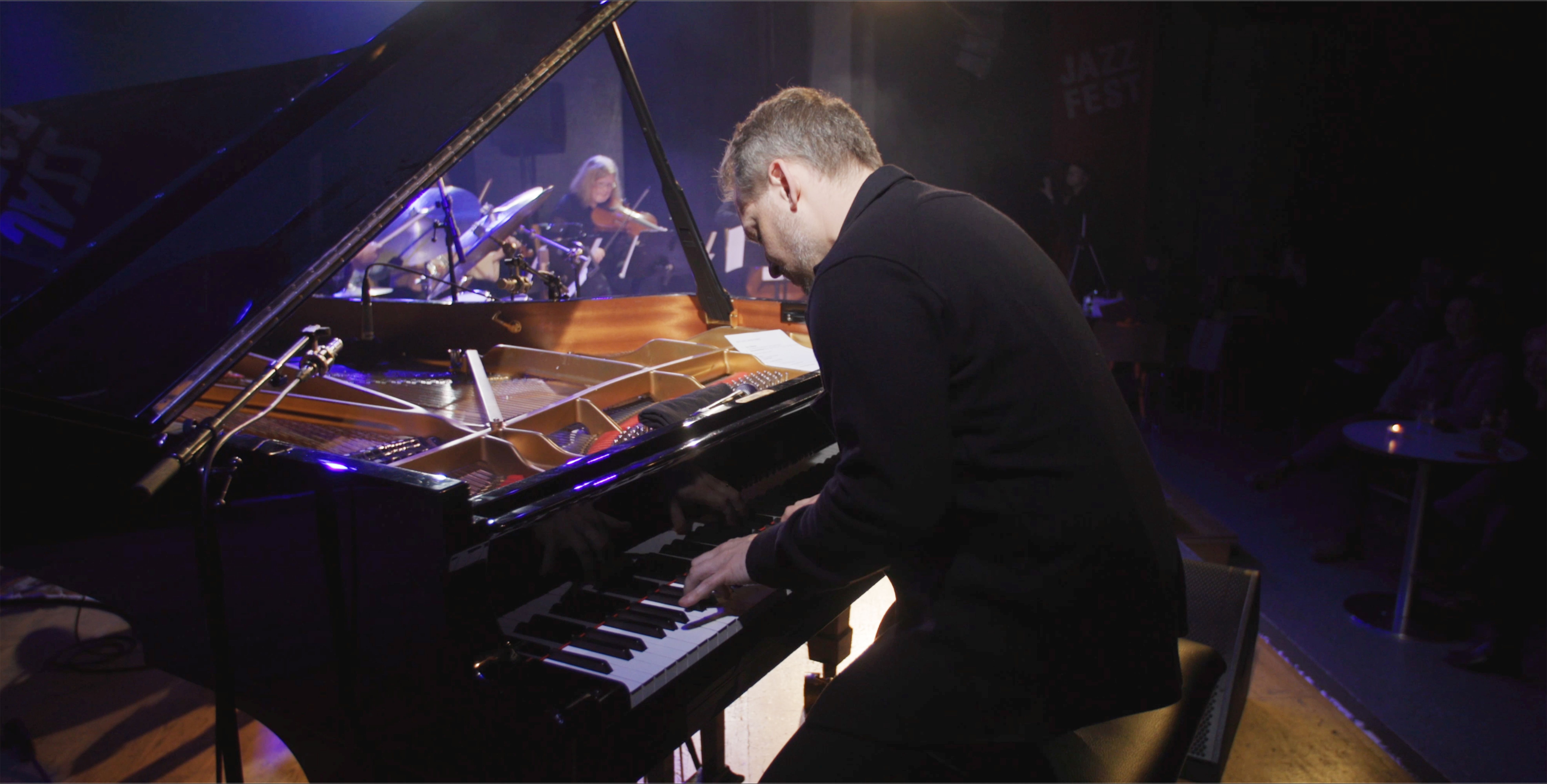
When I’m improvising at best I get carried away with the music, not thinking about myself at all. It’s like I just have to play it. It’s a string of narrative unfolding in front of me, and I’m the performer responsible of bringing it to life.
At some level I feel that I’m conscious of what’s going on in the music, but it happens so fast. I can see all the patterns, like all the chords, the keys, the motifs and the rhythms, and I can manipulate them consciously, but it moves so fast that it would take me a long time to express in words everything that is going on and every decision that I have to take.
In a live situation, decisions between creatives often work without words. From your experience and current projects, what does this process feel like and how does it work?
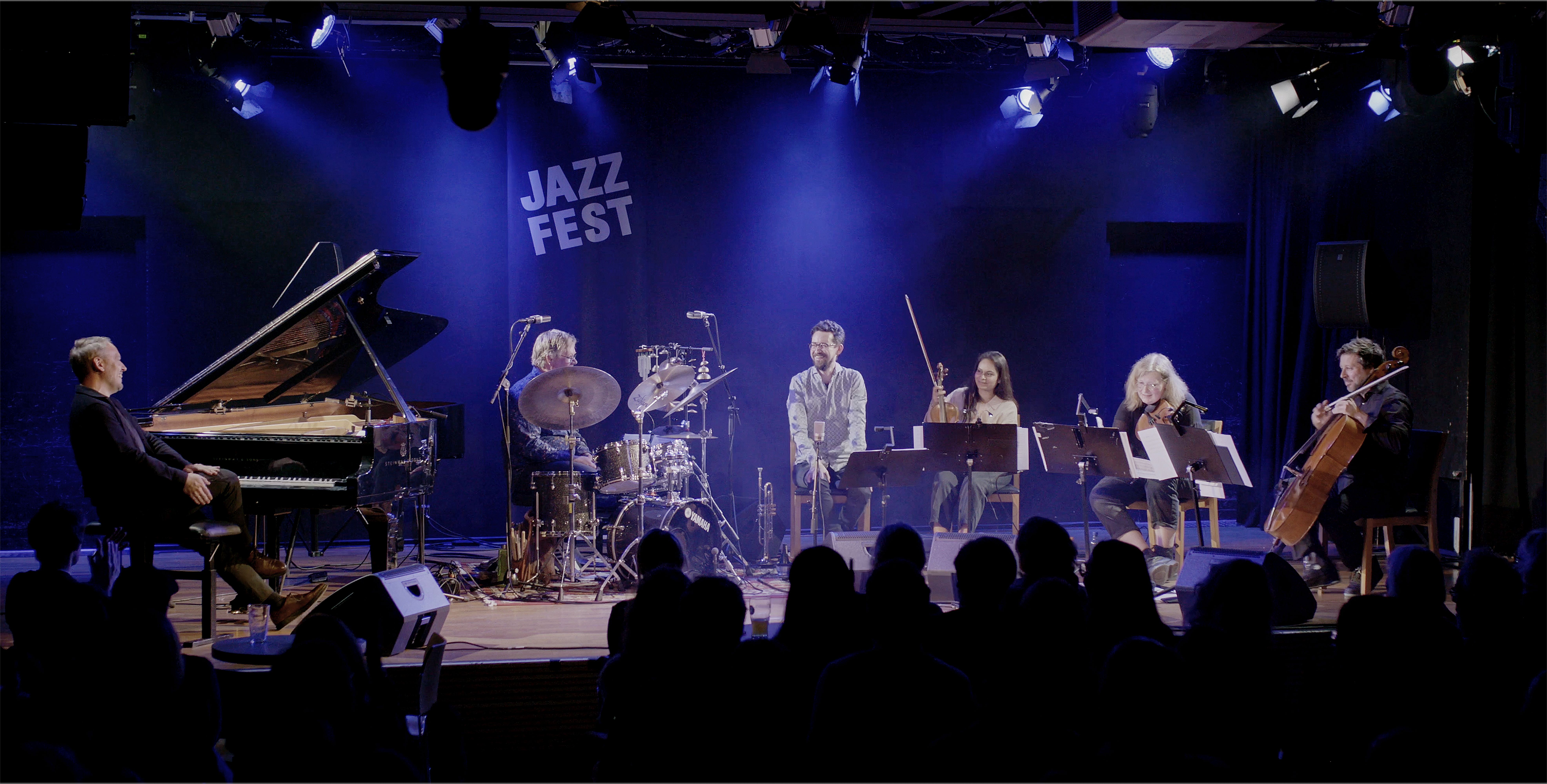
This is most present in smaller constellations such as duos, but it happens all the time in my trio as well.
We have been playing together for ten years and know each other really well. Everyone knows how to follow-up in an instant and create a constructive base for the interplay and for the music. If either one of us struggle in some kind of way, the other two would give the support needed.
We’re good friends, also in the music.
Stewart Copeland said: “Listening is where the cool stuff comes from. And that listening thing, magically, turns all of your chops into gold.” What do you listen for?
I listen with both ears, my brain and my heart. If I didn’t listen I wouldn’t be anywhere near where I am now.
I don’t feel that listening intellectually doesn’t give way for listening emotionally, and I’m always trying to learn something from the music I hear. When I improvise, listening is probably equally important as playing. I have to stay attentive to every note in order to give meaning to all the music.
I think attentive listening is one of the main ingredients in improvisation. When I listen, I feel more of the music too. I also listen inwards to my own ideas unfolding, to know what to play next. If I don’t keep my attention to them I would miss out of a lot of interesting details, which would then affect the rest of the musical narrative.
There can be surprising moments during improvisations – from one of the performers not playing a single note to another shaking up a quiet section with an outburst of noise. Have you been part of similar situations and how did they impact the performance from your point of view?
I love playing with musicians that surprise me, because I think it keeps the music unpredictable - also for me playing it.
Per Oddvar Johansen is particularly good at this, while at the same time going it in a tasteful and meaningful way. One of my very early piano trios, Green Serene (2004-2010), played a few concerts with the Norwegian trumpet player Per Jørgensen. He is very spontaneous, and not afraid to shake things up.
We released and album called Living Live in 2010, which I would say is a hidden gem in the Norwegian jazz discography.
I have always been fascinated by the many facets of improvisation but sometimes found it hard to follow them as a listener. Do you have some recommendations in this regard?
I think Craig Taborn’s solo albums are good in this way, because he often focuses his improvisation around very distinctive ideas, which he develops over time. With a trained ear it’s quite easy to figure out what the idea or the concept is, and it leaves a lot of room for listening to other parameters, like dynamics, piano technique, motivic development and other transformable elements.
I’m generally a fan of improvised music where the storytelling allows for the use of traditional musical elements in addition to the atonal and non- rhythmical parts. This is what puts Keith Jarrett’s solo concerts in a unique position. I haven’t discovered any other piano player who is able to do this with the same depth and range as him. When it comes to listening to improvised piano music, I can only listen to Jarrett and maybe also Taborn repeatedly.
But I always check out new music, and I’m always curious about how other pianists work with this format. I would study it to try to broaden my own understanding, and to broaden my own repertoire.
In a way, improvisations remind us of the transitory nature of life. When an improvisation ends, is it really gone, just like a cup of coffee? Or does it live on in some form?
You’re right, and I think it’s downright amazing to work with a kind of art that is so similar to life itself. It’s a language, and it is storytelling, and it exists only in that moment. However, it’s able to create a deep impact.
I’ve felt this myself, and I have heard that from many people visiting my concerts. It has the power to speak directly to the heart, and with it’s incomparable presence it can also make time disappear completely. Sometimes when I play, and the music carries me away, I even forget to blink. So when I finish playing and suddenly realize that I have been playing for a very long time, I can even hardly use my eyes for a while.
I hope the people attending my solo concerts feel that we build a friendship through the music we create together. That we’re in this together. And that they get to know me through the music. It’s very brief, and maybe they won’t be able to remember anything specific in a long-term perspective, but I hope I’m creating an unforgettable experience that can remind them of something deep and true.
But when you also know the language, and you’re able to hear what’s actually going on, it’s possible to learn so much acquire a permanent knowledge. I was fortunate that Craig Taborn played a solo concert in Zürich while I was guest teaching at ZHdK just recently, and I was eager to absorb as much information as possible from this concert. I was really hard at work, but at the same time I enjoyed the concert to the fullest.
I transcribed many interesting ostinatos, riffs, techniques and chord progressions, which I will definitely take a look at later on.