

Name: Mohan Das aka Frankie Flowerz
Nationality: Malysian
Occupation: Producer, songwriter, DJ
Current release: Frankie Flowerz's new album Nightride, featuring Robert Owens, is out via Funkhaus.
Recommendations: Book - Miles, an Autobiography by Quincy Troupe. Music - "Cavatina" by John Williams from the Movie Deer Hunter. It's so fitting to the entire movie.
[Read our Robert Owens interview]
If you enjoyed this Frankie Flowerz interview and would like to know more about his work, visit him on Facebook, Instagram, and Soundcloud.
When I listen to music, I see shapes, objects and colours. What happens in your body when you're listening? Do you listen with your eyes open or closed?
Depending on the music, I would feel my body naturally reacting either rhythmically - as I used to be a dancer before - or mentally if it's an emotional experience which I can relate to - especially if the lyrics and the whole chordwork & instrumentation of the song takes me there.
Chord progression is very important in this sense. It’s the fundament of a song because for me, everything rests on this. When I'm using headphones, my eyes are closed. When I'm in the studio, if I'm doing blind A/B comparisons, then closed as well.
Entering new worlds and escapism through music have always exerted a very strong pull on me. What do you think you are drawn to most when it comes to listening to and creating music?
For me it's mostly relating to an experience or a fantasy. It doesn’t matter if it really did happen to me but if something strikes me as real enough, for instance, like hope, aspirations I have, then I find myself gathering enough content to write a song.
When it comes to purely listening to music from others I often try to ponder on what the writer must have been thinking or feeling depending on the intensity of the material.
What were your very first steps in music like and how would you rate the gains made through experience?
I remember being a dancer and how I would close my eyes and express my gratitude through bodily movements, by painting a picture in my mind, connecting the 2 together based on the particular song I was listening to.
Later on I wanted to express myself through my own creation and that would be to understand the emotion I could create by simply using the right chords on the piano - that really was a gamechanger for me.
I work with a trained classical pianist and he brings different colours to my work. I love jazz chordwork as it can really open up a song. It’s a fun learning experience for the both of us.
Building other atmospheres around this was and still is a very exciting journey because it can take various paths.
According to scientific studies, we make our deepest and most incisive musical experiences between the ages of 13-16. What did music mean to you at that age and what’s changed since then?
Oh - now this makes complete sense to me as it was exactly during this age when I was drawn to music.
At age 13 I developed a keen interest in listening to various types of music and which genre fitted my moods. At age 15 I got into dancing and I won my first ever school talent show dancing to Michael Jackson's “P.Y.T.” It was a mixture of bodypopping, disco,miming and robotics .
After forming my first ever dance group the same year and pursuing it rather professionally, I got into deejaying by age 17 (I was already messing around with 2 tape decks during school break holidays at age 14 for the fun of it) and my first gigs were short 45 minute sets in between the house band of a club I played for.
The change came about by dancing myself and then making people dance. That progressed into creating music. Never in my wildest dreams was I expecting it to go that far as it has today.
How would you describe your own relationship with your instrument, tools or equipment?
I would say it’s a very beautiful one as it has never let me down. Unless of course the electricity goes off - it's an incredible outlet to reflect on and have conversations with. it's also extremely personal and deep.
Plus, it keeps growing – I suppose as songwriters we never really stop discovering - there isn’t a comfort zone - just when I think O've discovered my limit is when another door opens and boom! I've just entered a new phase writing exciting stuff.
Frankie Flowerz and Robert Owens Interview Image by David Vendryes
Where does the impulse to create something come from for you? What role do often-quoted sources of inspiration like dreams, other forms of art, personal relationships, politics etc play?
Everything. There aren’t specific impulses but rather triggered moments.
It can be anything which moves me. I could be sitting having a coffee somewhere and looking at a person; I might end up wondering just by that person's expression what he/she might be feeling inside and this could set me off in writing mode. Or I could be watching a movie and a particular scene could send a short musical phrase to my imagination and I would then hum it on my phone.
Then of course there is the standard heartbreak or infatuated version too.
Are you acting out parts of your personality in your music which you couldn't or wouldn't in your daily life? If so, which are these? What, would you say, are the key ideas behind your approach to music?
Oh yes, definitely. Every single time as a matter of fact. If I'm upset about the current situation in the world, I can easily project that in a song.
There was something quite comforting which I discovered during the Pandemic - the fact that everything kinda came to a grinding halt and a certain sense of stillness which I found to be quite pleasing.
I still can recall how I felt walking in the park by the stream close to where I live. I was all alone and everything seemed less polluted in a way, the air was fresher, the water seemed clearer, kind of refreshing in a way and this really did impact one aspect of my approach to music during this phase - somewhat like a brand new start.
That’s is how I wrote my 3rd studio LP Nightride.
If music is a language, what can we communicate with it? How do you deal with misunderstandings?
It definitely is a language to begin with. We can communicate our feelings, hopes, mistakes, regrets, decisions etc with it. All the listener has to do is to pay attention and really listen.
I deal with misunderstandings by trying to communicate this through lyrical content.
Making music, in the beginning, is often playful and about discovery. How do you retain a sense of playfulness and how do you still draw surprises from tools, approaches and musical forms you may be very familiar with?
I think it's very important to listen to other people's music, to be open to different artforms, like watching a pantomime performer for example and deeply observing this. Even a good photo exhibition captures moments which can never be re-created. If the visuals are strong enough, the message gets through.
In music creation the ultimate goal is to be able to express what I hear with my instruments and tools. This is where mastery of an instrument is important - that’s when the playfulness comes about.
I work with musicians, too, to help me achieve this colour. There are many tools like efx plugins which one can use to achieve that “surprise” moment in a song.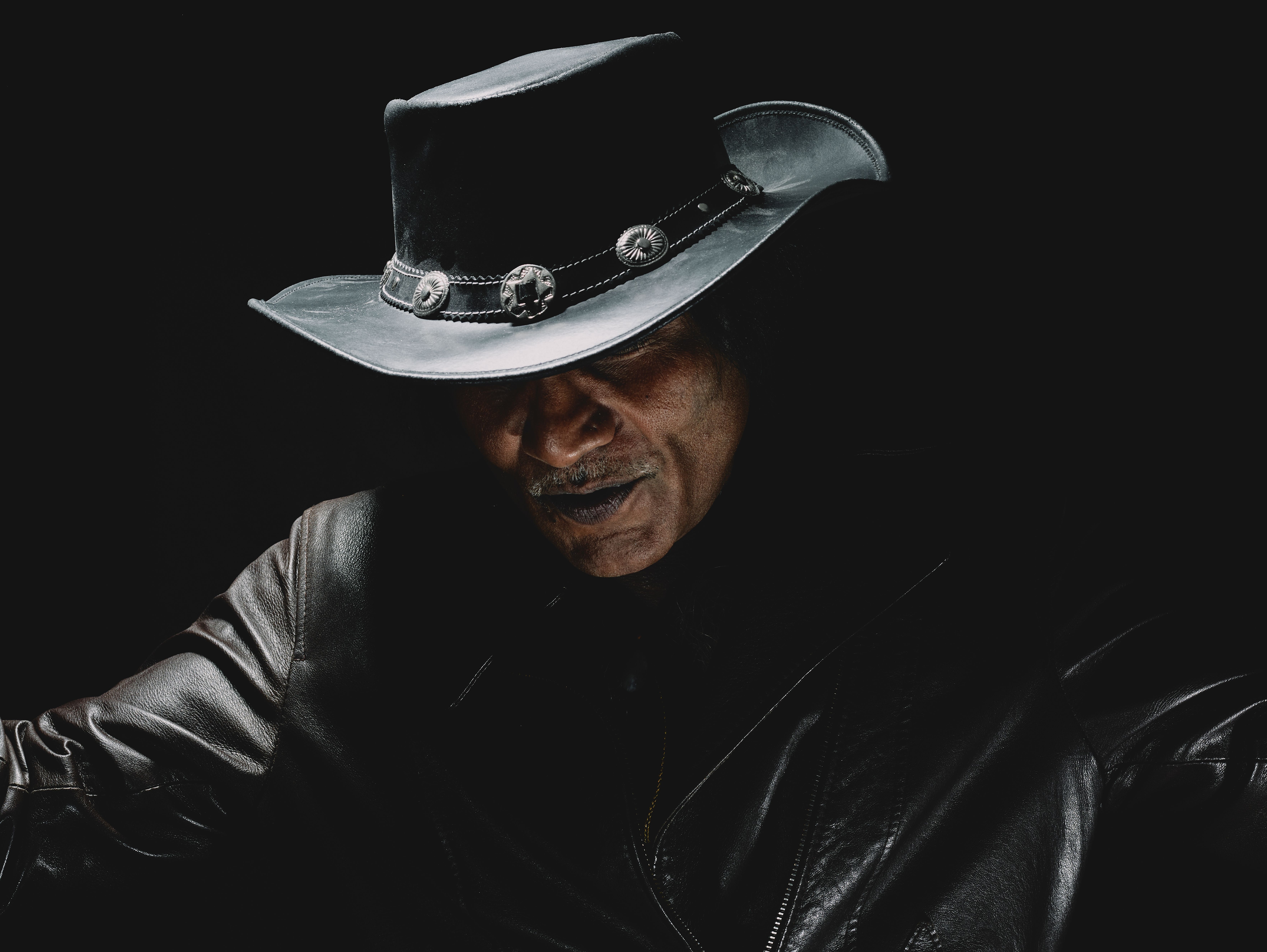
Frankie Flowerz Interview Image by David Vendryes
Sound, song, and rhythm are all around us, from animal noises to the waves of the ocean. What, if any, are some of the most moving experiences you've had with these non-human-made sounds? In how far would you describe them as “musical”?
There is emotion and movement even in silence. Space creates a huge contrast when it's inserted at the right moment. Like when we stop talking and just look at a person - if the frequency is right, we can communicate very subtlely. Tension, Suspense. Rest. It contributes to dynamics. I think light jockeys do this too.
I've very often, during my studio sessions encountered acoustical accidents, outside noises which sync and fit perfectly with the music I'm writing - like a door opening, or the wind etc … I'm sure this has happened to many others too. We have to listen and be receptive, then it happens.
There seems to be an increasing trend to capture music in algorithms, and data. But already at the time of Plato, arithmetic, geometry, and music were considered closely connected. How do you see that connection yourself? What aspects of music do you feel can be captured through numbers, and which can not?
Well, there are 12 half steps in each octave - so there is definitely some math involved. Plus, transposing is pure math too. Frequencies are all about numbers too. But these numbers are all technical stuff, they don’t contribute to an atmosphere I'm trying to create.
But you know, there are EQ softwares which indulge in such things. Smart EQ and stuff where the software requires some input of a song and then it comes up with a “suitable” equalization. Have tried but it never really works 100%, it sculpts a bit but it's more important to be able to do these things alone. That’s why I studied Audio Engineering in the late 90.
I'm not into AI stuff to create a song so I can't tell you how those algorithms are created. But I suppose they're heavily influenced by surveillance software, when it's abused it is err … plain plagiarism. There is a difference between being inspired by as opposed to copying a successful formula.
How does the way you make music reflect the way you live your life? Can we learn lessons about life by understanding music on a deeper level?
It's an outlet for me, sometimes to vent and sometimes to express my happiness or pain.
We can definitely learn many lessons by understanding music on a deeper level if we want to build a relationship with it. Some people read books and get visions in their minds, scenarios etc … with me it's music and also pictures.
We can surround us with sound every second of the day. The great pianist Glenn Gould even considered this the ultimate delight. How do you see that yourself and what importance does silence hold?
Yes it certainly is the ultimate delight for me or people attracted to the audio sensory aspect. Some are attracted to reading and having the freedom to create pictures in their minds as they visualise the reading content.
As in regards to silence I actually think I answered this above in a different question.
Do you feel as though writing or performing a piece of music is inherently different from something like making a great cup of coffee? What do you express through music that you couldn't or wouldn't in more 'mundane' tasks?
Maybe making a cup of coffee or tea isn’t the best comparison (I'm not a Barista to judge) but I'd say cooking up a meal with different ingriedients definitely has similiarities to making music.
It consists of ingredients and depending on how honest and experimental we choose to be with the content of our music (foodwise, the quality of ingredients and compatibility used to cook food) the final result is most often a direct product based on that.
If you could make a wish for the future – what are developments in music you would like to see and hear?
Let the baker make the bread, let the seller sell it. If you're capable of doing both, good on you! If not, be fair, compliment each other and realise we are all in it together. Create a payment scheme which is sustainable. Greed kills creativity and this destroys the artform. Egos are huge to manage, man.
I think (maybe I'm speaking for myself here) most of us involved in the the field of creation want to leave something behind when we eventually say goodbye and we want to be treated fairly. Need I say more?

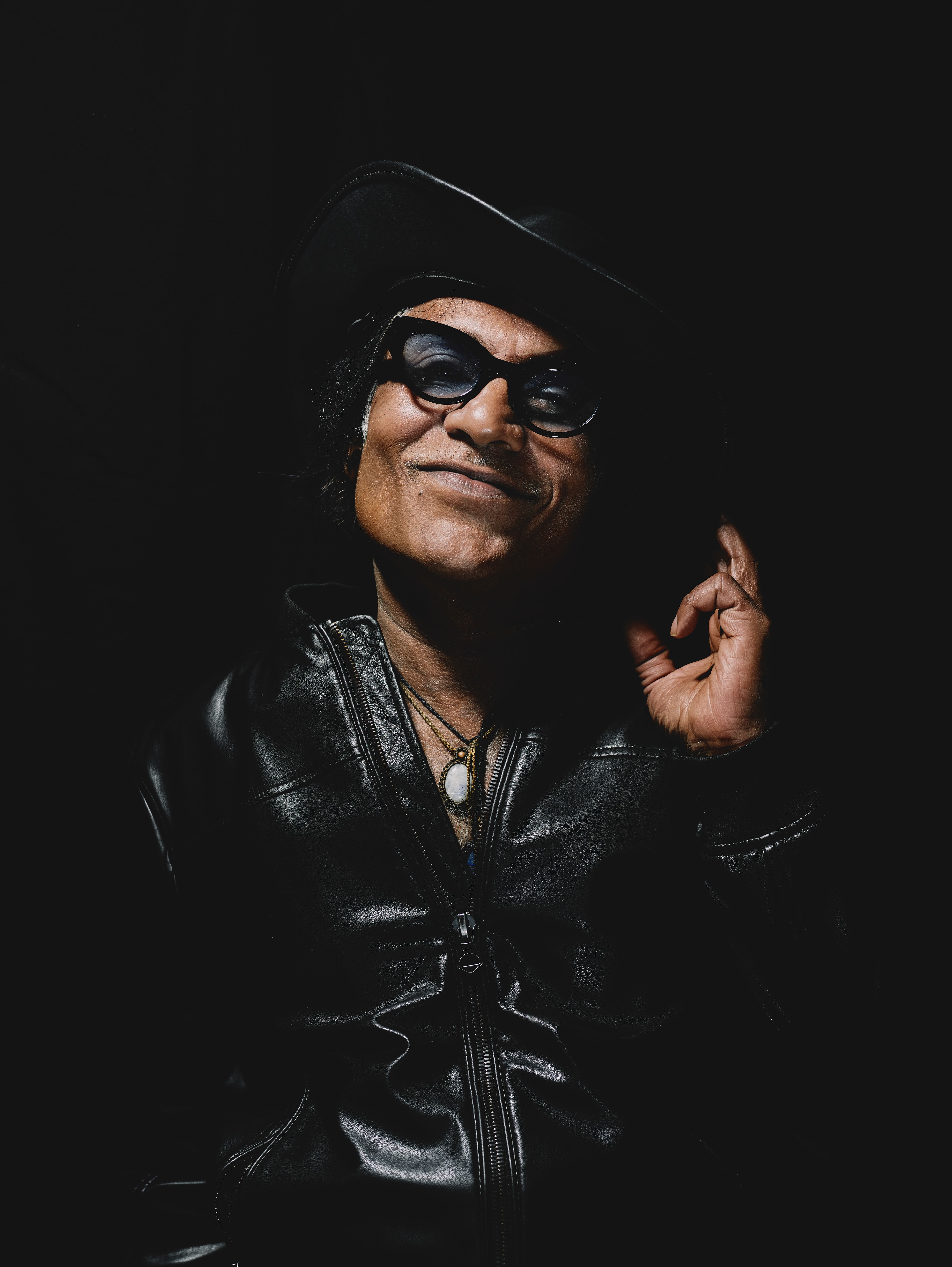 Frankie Flowerz Interview Image by David Vendryes
"My instruments have never let me down. Unless of course the electricity goes off."
Video
