Published
Part 2
Listening can be both a solitary and a communal activity. Likewise, creating music can be private or collaborative. Can you talk about your preferences in this regard and how these constellations influence creative results?
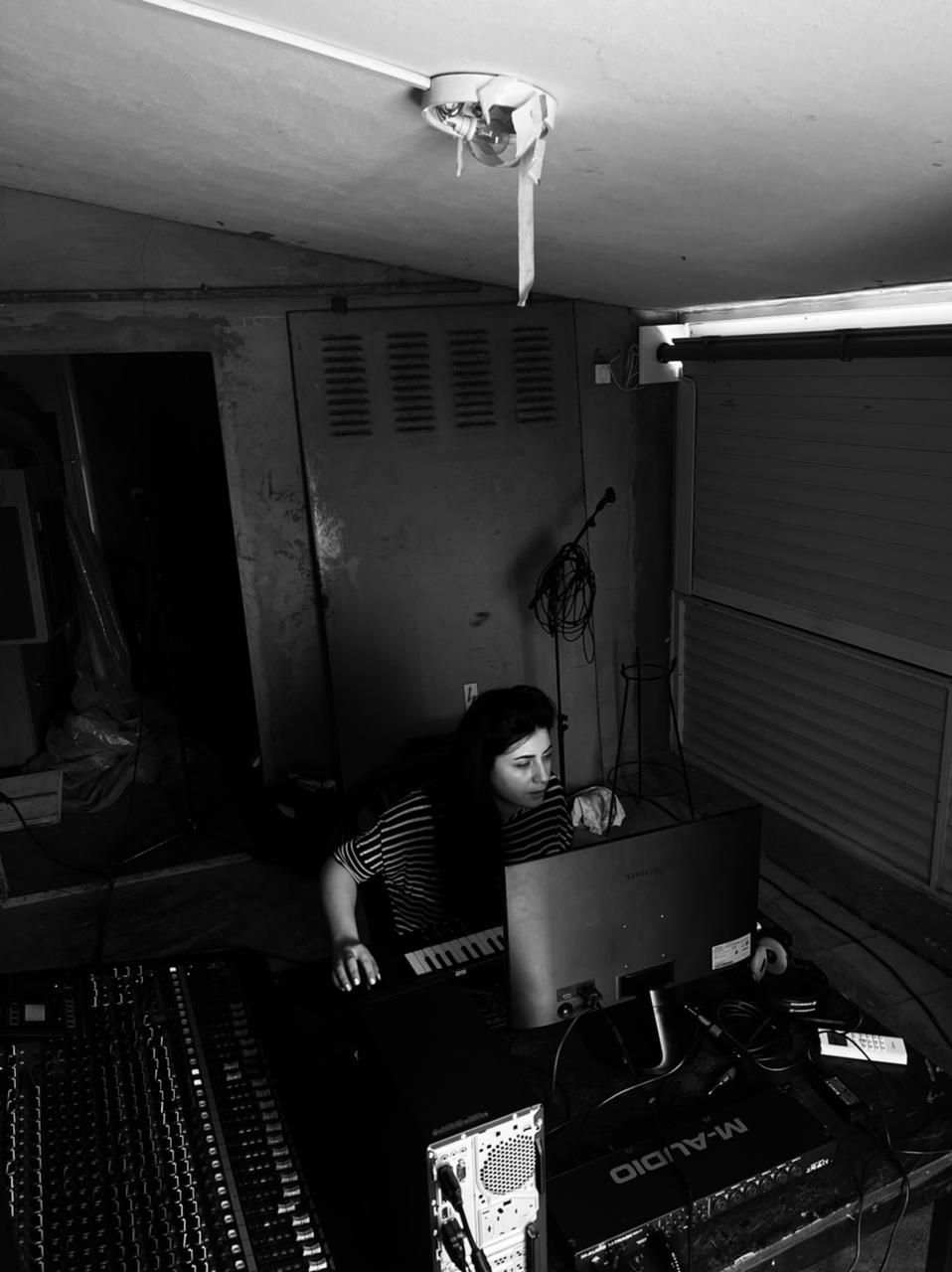
As someone who creates music alone, I personally prefer a solitary approach to music creation.
When I am creating music, I like to be fully immersed in my own thoughts, emotions and ideas without any external influence or distractions. The privacy of the creative process allows me to freely express myself and experiment with different sounds and compositions without feeling pressure or constraints.
However, I also recognize the value of collaboration in music creation. Collaborating with other artists can bring new perspectives, diverse skillsets, and fresh inspiration to the creative process. Collaborating can also help to challenge one's creative boundaries and result in new and innovative music that would not have been possible through solo efforts.
Ultimately, both solitary and collaborative approaches to music creation have their own benefits and limitations, and the best approach often depends on the individual artist's personality, goals and creative process. Whether it is creating music alone or in collaboration with others, the most important thing is to find a process that allows one to fully express themselves and produce the best results
How do your work and your creativity relate to the world and what is the role of music in society?
Obviously music has always played a significant role in society, serving as a means of expression, communication, and emotional connection. My work and creativity are deeply rooted in this idea.
For me, creating music is a way to connect with others and to share my experiences and emotions. My music is a reflection of the world I live in and the issues that I care about. At the same time, I believe that music can also have a powerful impact on the world. It has the ability to inspire change, to bring people together, and to provide solace and comfort in difficult times.
The role of music in society is to bring people together, to promote understanding and empathy, and to provide a voice for those who might not otherwise be heard.
Art can be a way of dealing with the big topics in life: Life, loss, death, love, pain, and many more. In which way and on which occasions has music – both your own or that of others - contributed to your understanding of these questions?
Music has played a significant role in my understanding of the big topics in life such as loss, death, love, and pain. Through the power of sound, rhythm, and melody, music has the ability to evoke emotions and bring these abstract concepts to life in a tangible way. Both my own music and the music of others have helped me process and reflect on these universal experiences in different ways.
For example, listening to music that speaks to me has helped me to understand and process my own experiences with feelings, emotions, spirituality, mindsets etc.. On the other hand, creating my own music allows me to express and work through these emotions in a therapeutic and cathartic way. Additionally, through exploring and composing music that deals with these big topics, I have gained a deeper appreciation and understanding of the human experience as a whole.
In short, music has served as a tool for me to explore, understand, and process the complexities of life, and has helped me to make sense of these abstract concepts through the power of sound and creativity.
How do you see the connection between music and science and what can these two fields reveal about each other?
As a scientist and electronic music producer, it's interesting to consider the connection between music and science. Both music and science are ways of exploring and understanding the world around us, and they can reveal different aspects of the same phenomena.
Music, for example, can bring to life the patterns and rhythms found in nature, while science can help us understand the underlying mechanisms that produce those patterns and rhythms.
In the realm of electronic music production, the connection between science and music becomes even more pronounced. The use of technology in music production and sound design requires a deep understanding of scientific principles, such as waveform manipulation, signal processing, and psychoacoustics. Additionally, scientific concepts such as chaos theory, complexity, and fractals have influenced the development of many musical styles and genres.
In the end, music and science are two complementary ways of understanding the world and both can inform and inspire each other. As a scientist and music producer, you are in a unique position to bridge the gap between these two fields and to explore the connection between music and science in new and innovative ways.
Creativity can reach many different corners of our lives. Do you feel as though writing or performing a piece of music is inherently different from something like making a great cup of coffee? What do you express through music that you couldn't or wouldn't in more 'mundane' tasks?
From my understanding of human experiences, it can be said that creativity can indeed reach many different aspects of life. However, the creative process of composing music is different from performing more routine tasks such as making coffee.
In my opinion, Music is a form of self-expression, and for many musicians, it is a way to communicate emotions, thoughts, and experiences that they may struggle to express through words. When creating music, a composer can express their unique perspective, evoke powerful emotions, and convey a message to their audience in a way that is personal to them.
In contrast, making a cup of coffee, while it can require some level of creativity, may not provide the same level of self-expression. For many people, making coffee is a routine task that they perform to get their daily caffeine fix.
Therefore, while both activities require creativity, the creative process of writing and performing a piece of music is unique in that it allows the composer to delve into their inner world and communicate their experiences in a personal and expressive way.
Music is vibration in the air, captured by our ear drums. From your perspective as a creator and listener, do you have an explanation how it able to transmit such diverse and potentially deep messages?
I think music has the ability to transmit diverse and potentially deep messages by tapping into the emotional and cognitive responses of the listener.
From a scientific perspective, music is a series of organized sounds that stimulate the auditory system, which then leads to the release of neurotransmitters such as dopamine, endorphins and serotonin that are responsible for regulating mood and emotions. On an psychological level, music has the ability to evoke strong emotions, memories and stories through its melody, rhythm, and lyrics. This can be a form of personal expression for the composer and a way to connect with the listeners on a deeper level.
I also think music can be seen as a universal language that transcends cultural, linguistic and geographical boundaries. It has the ability to express emotions, ideas and stories in a way that is not limited by words and can be interpreted differently by different people. This makes it an important tool for communication, healing, and self-expression, as well as a means of exploring complex and abstract ideas.
Overall, music's ability to transmit diverse and deep messages comes from a combination of its ability to evoke emotions, connect with the listener on a personal level, and express ideas and stories in a universal language.