Published
Part 2
From very deep/high/loud/quiet sounds to very long/short/simple/complex compositions - are there extremes in music you feel drawn to and what response do they elicit?
Yes, there are definitely extremes in music that I am drawn to. I enjoy the wall of noise that is created during harsh noise shows, especially some of the local noise acts in Vancouver. There are times when I’m immersed in this space that I really find it meditative, in that it takes the place of chanting or a mantra in terms of focusing your inner voice.
I am also very drawn to minimalism, and extremely repetitive minimalism with very little changes, like Philip Glass’s early pieces - Music in a Similar Motion and Music in Fifths. To me this work has a relationship to the noise performances that I mentioned, and it actually helps me to focus to have such repetition. I find some of these pieces almost aggressive in their minimalism, especially because some of the early recordings that just use an Farfisa organ with a somewhat distorted quality to it. I find this similar to some of the moments in pieces by Glenn Branca.
I’m also drawn to the repetition in percussion and drumming, and some of the recent releases on Nyege Nyege Tapes like Kadodi - Robert Mugamba’s Domadana Kadodi performers from Uganda, and some of the electronic permutations based on this drumming by Bamba Pana.
There are other extremes in music that I think are only effective through live performance, like experiencing a Black Metal act like Wolves in the Throne Room or seeing live performances by noisier acts like Lightning Bolt or Death Grips.
There are definitely groups that I would not tend listen to around the house so much, but would love to see live. The response to this music is so much more intense live, and there is a physical aspect which comes from the intensity of the pit at these shows that can’t really be divorced from the experience of the music.
And some of this same live response to music also goes for things like Gamelan, that I really prefer to see in person versus on a recording. The experience of seeing Gamelan played live, or experiencing minimal performances like Steve Reich’s Music for Pieces of Wood, carries with it a psychoacoustic experience that is really mesmerizing. Especially with some of the acoustic phenomenon that happens through things like phasing.
With Gamelan there is a kind of live panning between the instruments, and the players can appear to be moving in fast motion, especially with some of the faster styles of Balinese Gamelan. There is a really transformative effect of experiencing this live.
Could you describe your creative process on the basis of one of your pieces, live performances or albums that's particularly dear to you, please?
I can go into a bit more detail on my most recent albums Universal Synthesizer Interface Volumes I&II. I described a bit of this process earlier, in that it was a combination of a conceptual idea, research and experimentation.
My creative process for the pieces on these albums was really about surrendering to the limitations of algorithmic midi sequencing software from the mid 1980s into the early 1990s. This was really refreshing in a sense, as anything that involves computers today is not really about focusing on one thing at a time, and these programs require this kind if focus.
If you mention algorithms today, we get a very different connotation. If a computer participates in the artistic process with current technology and AI, it’s a very different process today than with these early programs. Today, computers are so powerful that it can actually be a struggle to impose limitations. The process that I discovered through using this software is dear to me, because it suggests that we can use the parameters defined by algorithms in a way that feels like it is a collaboration with technology. The software gave me a structure to put in my own parameters, in order to interact with this structure and use it as a tool to create music.
I think it’s important for us to be reminded of this today, and to maybe look back a bit to times when people were not so connected computers and the internet. When we used to go to a computer to fulfil a particular task, and then leave the computer to do other things in our lives that weren’t connected to computers, phones, etc.
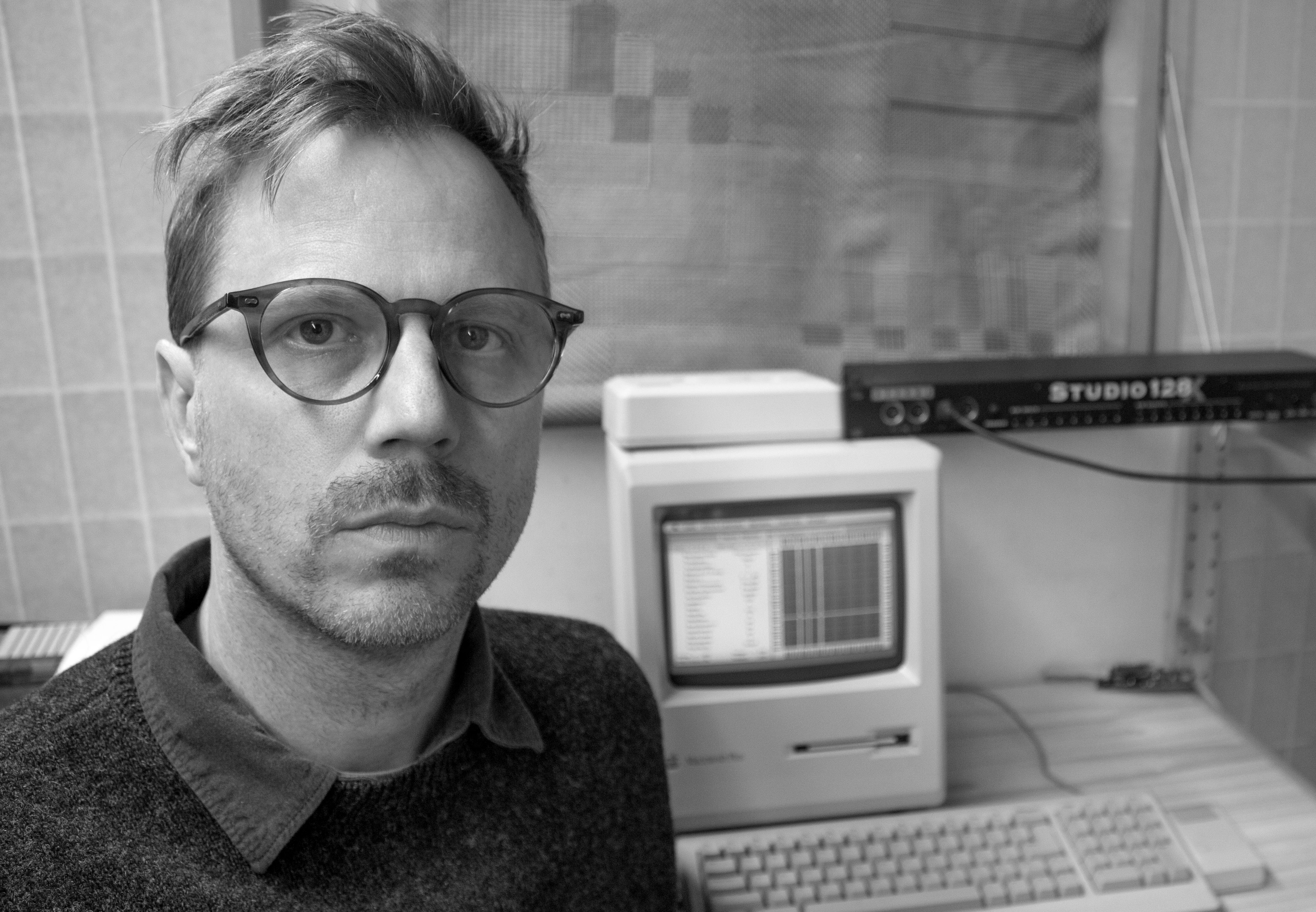
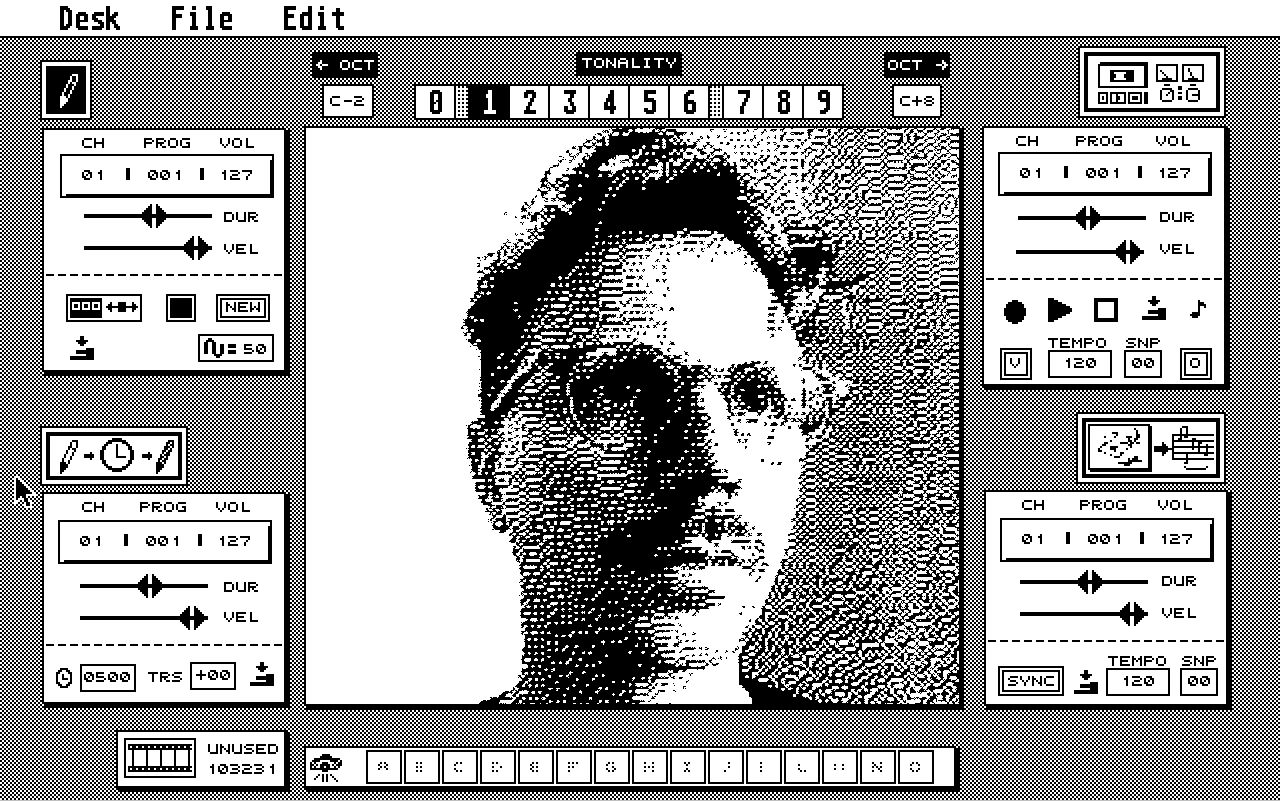
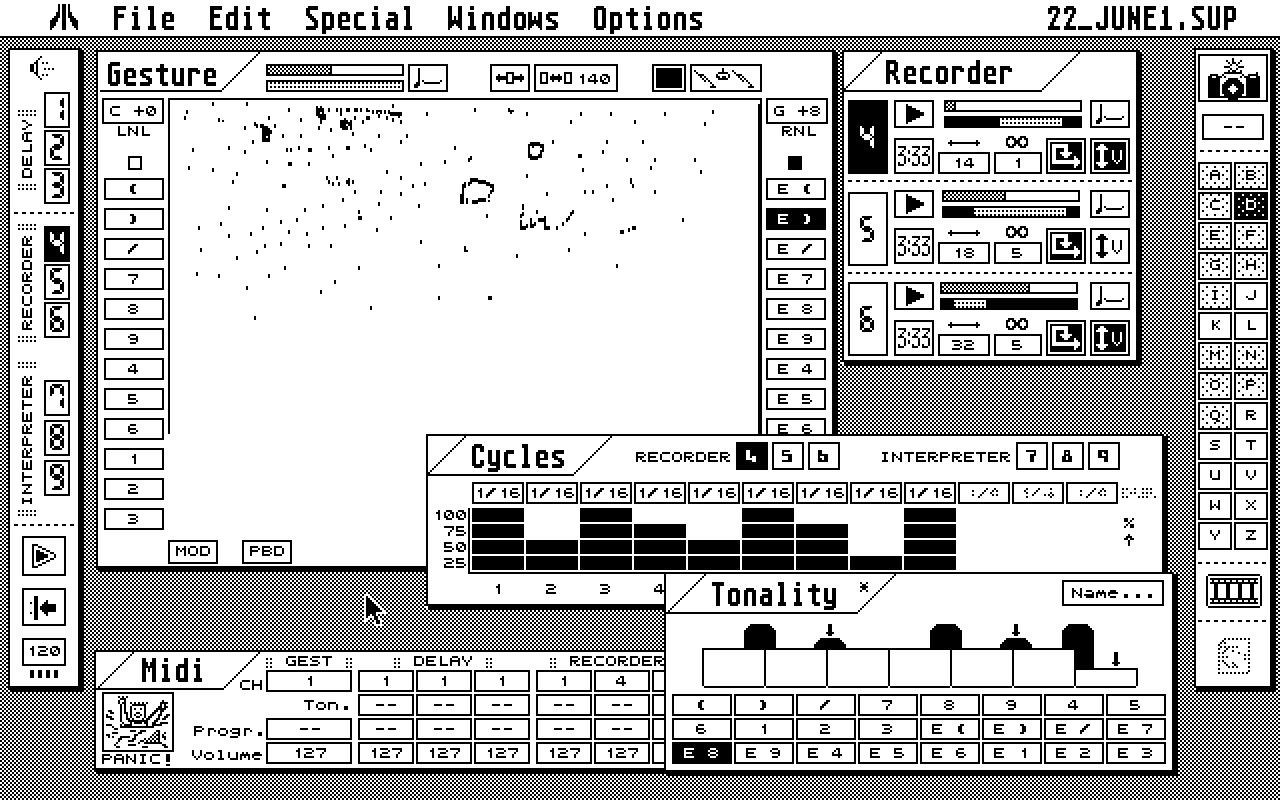
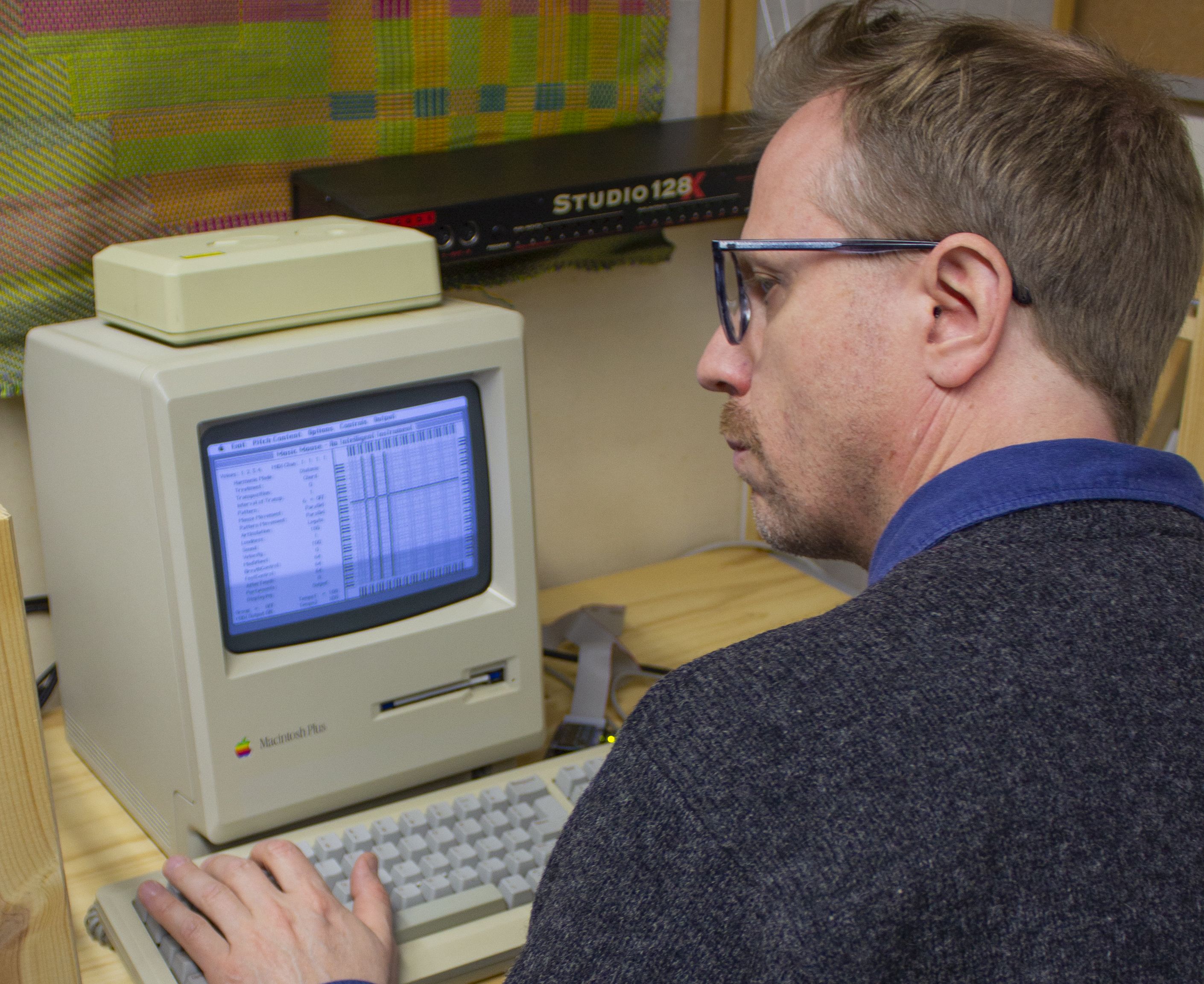
What I found most interesting about surrendering to this era of software, was that the sequencing capabilities were actually much more complex and interesting than more recent sequencers I’ve used. There is a kind of simple, elegant complexity to them. The software allowed for each vintage computer (Macintosh Plus, Amiga, or Atari ST) to be used as a stand-alone interactive algorithmic sequencing instrument. To compare this to today, using a program like Ableton Live allows you to use an almost unlimited number of instruments simultaneously. So, the process of using just one instrument / sequencer to create an entire composition is a very different process to what is possible today.
The creative process that emerged out of experimentation, was about finding my own technique of working with each of the sequencers. I was also able to really jam with each piece of software, and found myself getting lost in a process that was both intuitive and experimental. I created my own technique to create music, with what could only be described as responding to a kind of alien graphic user interface. Which is really what delving into each piece of software felt like.
If you look at each of the interfaces for the software, I think you might have the same response. Something from the controls on an alien ship, combined with 8bit vintage computer aesthetics.

Do you conduct “experiments” or make use of scientific insights when you're making music?
Yes, my radio transmission projects definitely have this side to them.
The most recent project is called Anti-Wave, and it involves using devices that are able to pick up frequencies beyond the human spectrum of hearing, and making these frequencies audible.
I have had a lot of insight into the electromagnetic spectrum through this project, in terms of the human range of audibility, the visible spectrum, and our response to this radiation with things like temperature / heat. How all of the world around us is made of a spectrum of frequencies, and our body has receptors for these frequencies, in terms of sight, hearing, and how things feel to our skin.
It also made me very aware of other species of insects and animals that have a higher spectrum of sight or hearing. Butterflies are particularly interesting; in that they live in an alternate reality that is based on a completely different range of visible frequencies.
How does the way you make music reflect the way you live your life? Can we learn lessons about life by understanding music on a deeper level?
I’m constantly interested in researching and learning, reading books, and discovering new things. My music is a reflection of this approach to life. We can definitely learn to slow down and pay attention and be present by listening deeply.
I think understanding music, and especially the process that different musicians and artists are involved with, is really important to me. It helps me, and can inspire me and guide me through my artistic process, and my life.
Do you feel as though writing or performing a piece of music is inherently different from something like making a great cup of coffee? What do you express through music that you couldn't or wouldn't in more 'mundane' tasks?
Its funny, because what this made me think of was my process of creating the mix for my music. I listen to a piece over and over for hours, making small changes after each listen, and through this process I create the form for the piece. With the coffee example that you gave, I thought about making coffee over and over again.
Sitting drinking the coffee, and really tasting it at a very deep level, and then immediately getting up and repeating the process over again. Making another cup, and refining the technique, and then drinking this next cup and seeing the results of the tweaking of the process. That would be madness.
The process that I go through when I create only really makes sense to me with an artistic medium. But I do think that the kind of attention that I pay while in this process would be really useful to apply to other mundane tasks. Or just sitting and listening in nature. But to get more to your point … I think I can only express myself fully through an artistic process, but I think there are different ways this can also be expressed, through something like cooking.
The biggest difference I think for me is when I perform. Even if I can find a similar sense of creation through something like cooking, I haven’t found a similar level of presence and awareness and being in the moment as when I am in the middle of a performance. This is really special in terms of occupying space with the audience, and being in this space together. It’s really rare to have time with a group of people that are being extra attentive to what is taking place in the moment.
Every time I listen to "Albedo 0.39" by Vangelis, I choke up. But the lyrics are made up of nothing but numbers and values. Do you, too, have a song or piece of music that affects you in a way that you can't explain?
My first response in terms of a piece of music, was Uakti’s versions of Aguas Da Amazonia, which are compositions by Philip Glass. This always puts me into a space that is introspective, but not a melancholy introspection, as the music is very energizing. It’s a really lovely balance between this kind of introspective listening, and inspiring invigorating sounds. In particular the track “Japura River.”
This being said, I think I feel a lot of emotion with music, and I’m not sure I need to explain it in terms of a concrete why or how, it is what it is even without words. For me an emotional response is either the result of a feeling that the artist has expressed and successfully conveyed to the listener, or it's something that is specific to the listener that is triggered by the music. I often have emotional responses to music, and most of the time think this is the result of an effective and successful piece of music.
Now, if you asked the composer if my emotional response was what they had in mind, it may or may not be. But I think that feeling something emotional would be a nice response for a composer to hear.
If you could make a wish for the future – what are developments in music you would like to see and hear?
I would really like to see all of the creative potential that is possible today, in terms of using technology to create and compose music, to allow for music that is not just performed with a laptop and MIDI devices. I’d like to see some of the more interesting electronic compositions come to life with groups of people playing instruments. This could still be with electronic instruments, or a combination of electronic and orchestral etc.
I’ve been looking at how a lot of different people are performing with technology today, and how so many people have access to extremely powerful technological tools, or how modular synthesis has become so common. This makes me wonder what some of the composers who were working with early mainframe and personal computers would create today. I think that there is still so much potential in looking to the past and present, and creating work that speaks to this history.
I’m also personally excited about the potential of having my electronic compositions become scores for an ensemble to play.