Published
Part 1
Name: Louise Ölund aka LOUIE.LOU
Nationality: Swedish
Occupation: Composer, multi-instrumentalist, producer
Current release: LOUIE.LOU's new album Ljusår is out via Lamour.
Recommendations on the topic of sound: I read a lot. A lot of novels and poetry. But truth be told, not so much on this subject, even though the reading happens and is experienced as an inner listening.
But I think I want to say: Listen to the sound around you. And sometimes; choose silence. Silence teaches you to listen.
If you enjoyed this LOUIE.LOU interview and would like to know more about her music, visit her on Instagram, and bandcamp.
When I listen to music, I see shapes, objects and colours. What happens in your body when you're listening? Do you listen with your eyes open or closed?
The effects on body and mind depend of course on the type of music I listen to. But I would probably describe it as a great presence.
I often listen to music while in motion, for example while walking or biking and movement forward greatly affects my perception of the world. It partly opens up the visual impressions of the surroundings, but it can also filter the environment so that I may become more in tune with myself and my body.
I am greatly affected by what I hear. If I am at home in my own surroundings and want to listen actively to music, I often close my eyes and immerse myself in the music.
I like both ways, but how I do it depends on what I am otherwise doing and my needs at the moment. I feel I can both rest and become activated by sounds and music.
How do listening with headphones and listening through a stereo system change your experience of sound and music?
I feel it definitely affects me. I prefer listening on headphones and can take in the music more that way. It shuts out other noises and the listening becomes more active.
For me, listening to music is mainly an experience that I do best on my own and in that sense the headphones enhance this feeling. I also notice that I take in and hear more layers in the sound image with headphones. I like the feeling of having the music close to the mind!
Tell me about some of the albums or artists that you love specifically for their sound, please.
Brian Eno – Apollo. An obvious example of how the sound image in this minimal form can halt the listener. It is great in that sense despite its sparse format. It hits me directly.
[Read our Brian Eno interview about climate change]
Sonic Youth – Goo. I love the sound of both guitar and bass and the intense yet laid back sound when embedded with the rest of the production.
The whole production is of course special and sounds both beautiful and dirty. There is nerve like many of Sonic Youths productions. They manage to create an ambient feeling even though the songs have both intensity and edge.
Dallas Acid - Spa Hunter and The Spiral Arm. It doesn't take many seconds of listening to any of the music before being drawn into it.
Their sound image is very special compared to other music based on modular synths. They are at a musically sound wise level that makes them stand out compared to many others. It is both beautiful and with great emotion, without relying to much on “safe bets.”
It is mighty, beautiful and captivating in both its minimalism and grandness without it feeling too polished.
There can be sounds which feel highly irritating to us and then there are others we could gladly listen to for hours. Do you have examples for either one or both of these?
Yes. I am very sensitive to sounds and very much affected by them in my everyday life.
I have a hard time with sounds related to urban living. It could for example be sounds from the stairwell, water pipes, motor sounds etc. I also find it difficult with a lot of different sounds at the same time in connection to having conversations with other people. I often struggle with this in my everyday life.
Apart from when I listen to music I very much prefer silence and gravitate to places where I can find it. However, then I may pick up on other sounds that opens my senses, for example the wind blowing through the trees, the sound of water, birds and other sounds related to nature. In this I am able to completely relax. It gives me calm both mentally and physically.
A way of handling the sounds that affect me negatively is by making field recordings that I often use in my compositions. “Nya fält” from my newly released album LJUSÅR is an example with more urban sounds than any of the other pieces on the album.
It is a way of facing the sounds and accepting them. This enables me to transform the chosen sounds into something other than it originally was. I do this by recording and processing them to sound pieces and compositions.
Through this process I feel I become friends with the sounds I don't like or sometimes do like. It is a way of reimagining the sounds.
Are there everyday places, spaces, or devices which intrigue you by the way they sound? Which are these?
I often think about the many sounds that surround us all the time, even when we think and experience them as quiet.
The other day I observed – and was fascinated by, for example, how sounds arise in the foliage of trees as they are swept through by the wind. The leaves themselves produce sounds in the movement and in meeting one another, but also the space – the emptiness between branches and leaves produce sound using the wind.
Another sound that fascinates me – and it demands silence to be heard; the sound of feathers. When a bird flies with its wings flapping, making its way through the air it produces sound. It is a very soft and beautiful sound. I feel gratitude in the moments I may hear it.
Silence is a prerequisite for certain sounds to be heard. This inspired me indirectly when I composed the piece “Is i Fjäderdräkt,” even though the concept of the piece extends further.
In this piece I think of the birds' existence as place specific, in places far apart but acting as signals between. The signals reach other places far away, but within the latitude on which we live here: 64th parallel North.
There is something specifically in common in this, regardless whether human or animal; to experience light and darkness at exactly the same moment.
Have you ever been in spaces with extreme sonic characteristics, such as anechoic chambers or caves? What was the experience like?
The Cistern on Svanö in Ångermanland in the North of Sweden. It is an old emptied out oil cistern in an old industrial town, surrounded by beautiful water and mountain scenery. The Cistern has a unique reverb that reaches up to 25 seconds.
It is an amazing environment for working with sound, experimental music and more or less minimal music. I have recorded sounds there that I have based some compositions on, but I have also played my music live in the cistern.
Last couple of years a festival has been built there called the Nonagon festival – a festival focusing on audiovisual art and experimental music. The cistern produces such a long reverb of 25 seconds because of its natural spatiality, it's a special thing. It enables you to work with both the spatiality to a high degree and use it, but you also need to adapt.
So what happens there soundwise is in close connection to the room as such. You need to listen and get a sense of the room. You may be forced to venture in to being more minimal than usual. It is a great delight and satisfaction to work with music and sound in this way.
What are among your favourite spaces to record and play your music?
All field recordings are recorded in Ångermanland and in Umeå, Västerbotten in the north of Sweden. One of the main reasons being these are the places I live, but they also have an important thematic role in my compositions. Partly in a historical perspective.
In this way, “Porten i Torsåker,” which was released as a single on Lamour Records before my album LJUSÅR, is a concrete example. The piece is based on field recordings from a village called Torsåker in Ångermanland. It was here that the most extensive witch hunts took place in 17th century Sweden, and I wanted to approach the place through sound.
I made field recordings by Torsåkers church where many of the dramatic historical events took place. Departing from this I set to music and developed the piece and the sounds I captured.
But these places also hold an important role in another way; the relationship between man – animal, their common denominators and what distinguishes them from each other. But also what it means to be human in the present time and civilization. So both these places where I spend a lot of time give me sound images and thoughts with influences coming from both city and forest.
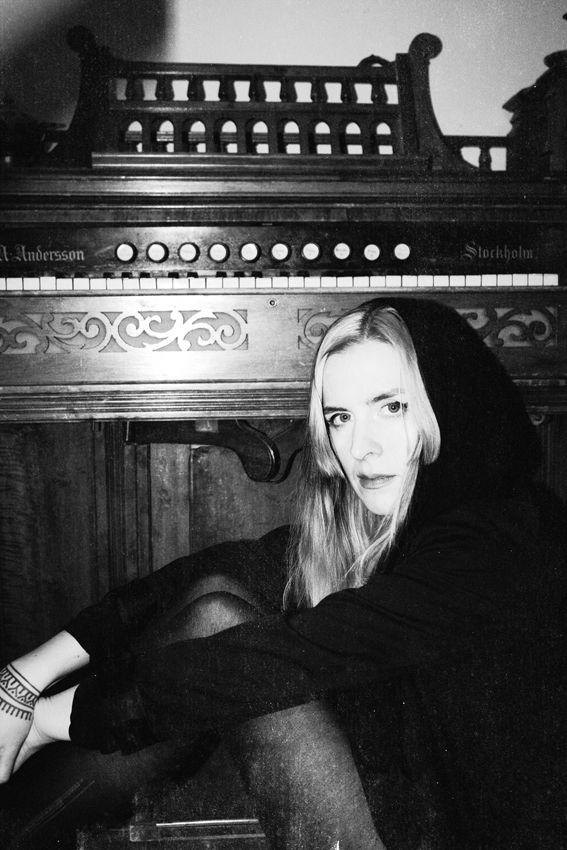
When I am playing, for example on my organ or other instruments creating my sound works and music, I am either at home in my house in the countryside in Ångermanland or in my apartment in Umeå. It is usually in my apartment that I play and write my music. I mainly use the organ. It is a major relief to be able to play whenever I want. Sometimes longer and more focused, and other times when inspiration strikes, for example whilst waiting for the coffee to boil or things like that. I would not be able to do this if I had a studio outside of my home.
The drawback of this being that I sometimes wonder if the neighbours hear my playing. It can sometimes distract my focus. But on the whole I appreciate the everyday access.