Published
Name: Qadasi & Maqhinga
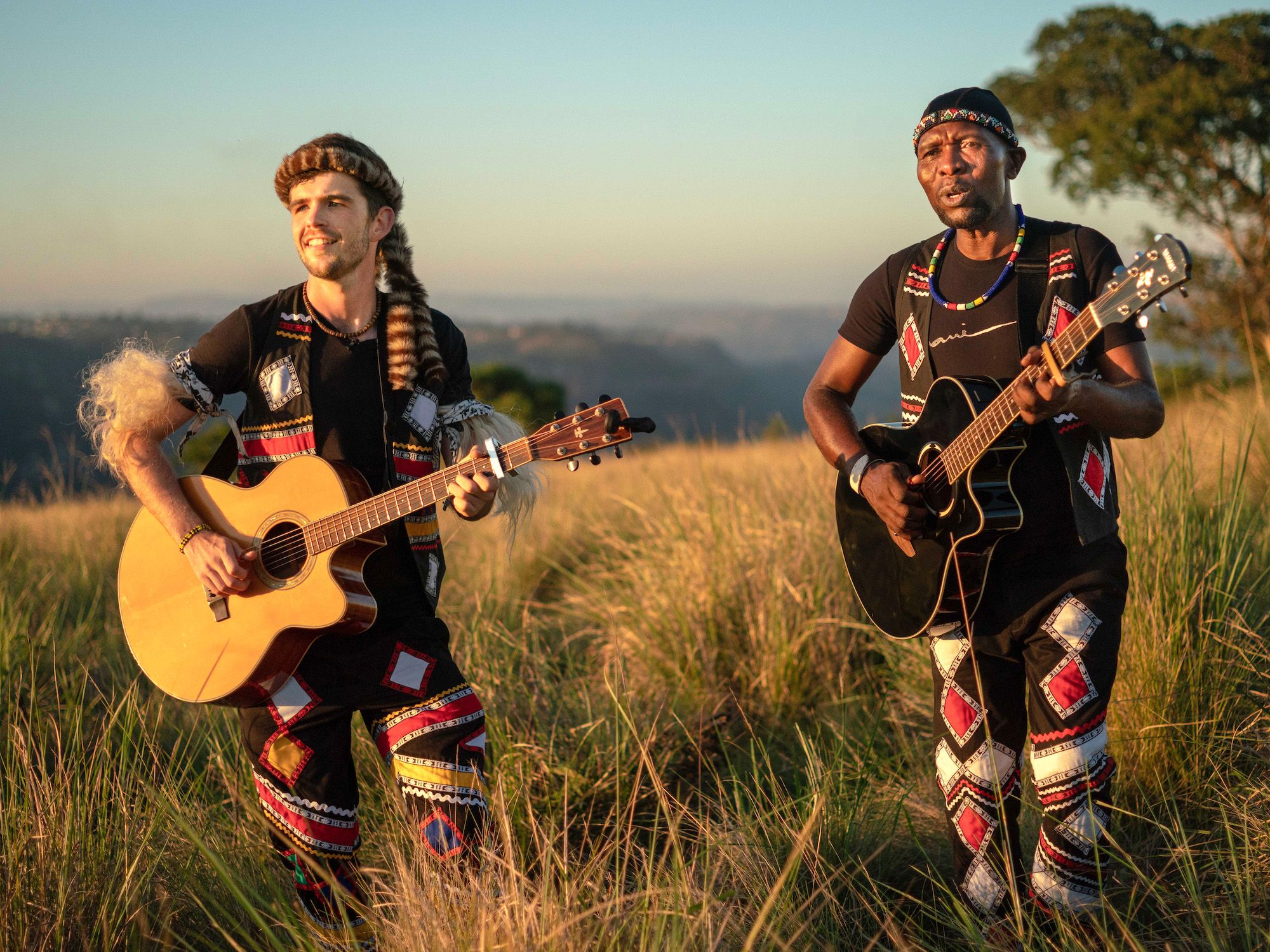
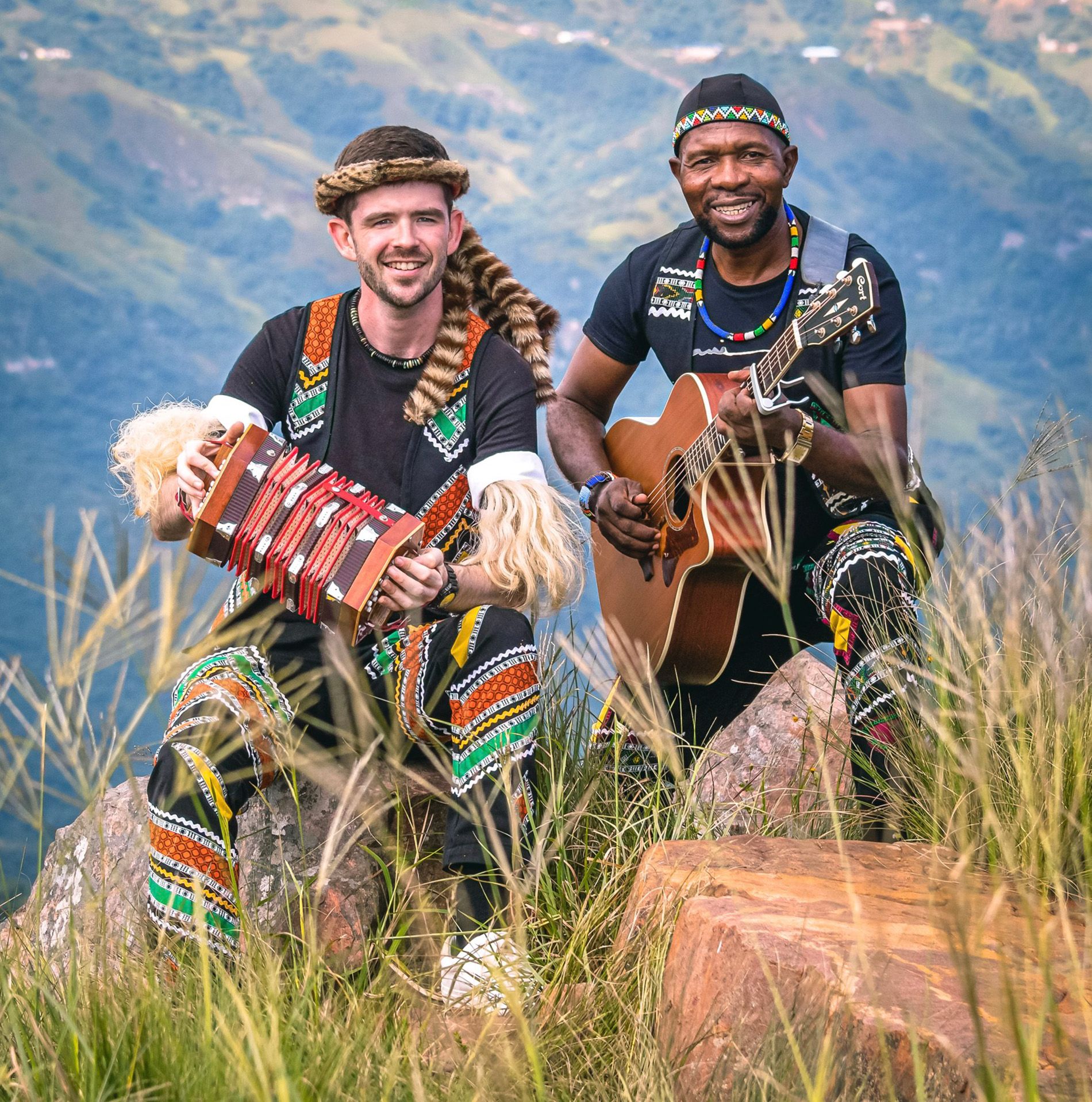
Members: David Jenkins aka Qadasi (guitar, vocals) , Maqhinga Radebe (guitar, vocals)
Nationality: South African
Current event: Qadasi & Maqhinga are among the artists performing at the Musicport Festival 2024. Under the headline of “A Magnet for World-Class Musical Diversity,” the festival will take place at Whitby’s landmark Pavilion - Friday October 25 – Sunday October 27 2024. Get tickets here. Other acts at the event include Afro Celt Sound System, Chahat Mahmood Ali Qawwal Group, Divanhana, Fulu Miziki, Rokia Koné as well as Jah Wobble and The Invaders of the Heart.
Recommendations:
Qadasi: Lahl’ Umlenze by Thandiswa Mazwai – Thandiswa is a South African vocal powerhouse, and I love how she fuses elements of traditional Xhosa music with Jazz, Afro-soul and reggae. ‘Lahl’ Umlenze’ has a powerful melody line and vocal backing. The lyrics are about hardships that have been experienced and how they have been overcome through the power of music.
Maqhinga: "Amaphoyisa" by Ladysmith Black Mambazo - I have always held Ladysmith Black Mambazo in high regard, especially due to the opportunities they have provided me. Their song ‘Amaphoyisa’ is a poignant comparison of the South African police force's treatment of citizens before and after Apartheid, and it is masterfully composed.
[Read our Rokia Koné interview]
[Read our Divanhana interview]
If you enjoyed this Qadasi & Maqhinga interview and would like to know more about the band, their music and current live dates, visit their official homepage. They are also Instagram, and Facebook.
When I listen to music, I see shapes, objects and colours. What happens in your body when you're listening? Do you listen with your eyes open or closed?
Qadasi: Depending on the style and energy of the music being played, I find that I am often transported to a specific time, place or event when listening to familiar music, and this can induce an array of different emotions.
I mostly listen to music when travelling on the road, so my eyes are usually open!
Maqhinga: When a song has an effect on us, we say “lengoma ivusa uhlevane”, meaning, this song has made my skin tingle. That is when I know the song is powerful.
Entering/creating new worlds through music has always exerted a strong pull on me. What do you think you are drawn to most when it comes to listening to and creating music?
Qadasi: I love how both creating and listening to music can immediately take one on a journey, and the direction in which the melody travels is solely reliant on how the writer feels/felt at that moment in time.
Maqhinga: It is amazing to think that the song you are currently working on has the potential to reach millions of listeners, and this feeling gives me energy when composing new tracks.
According to scientific studies, we make our deepest and most incisive musical experiences between the ages of 13-16. What did music mean to you at that age and what’s changed since then?
Qadasi: This was a pivotal period in my musical journey as I started playing the guitar at the age of 12. So for the next several years, my musical senses were overloading with curiosity and intrigue. Now, 20 years later, that passion for music is more present than ever.
Maqhinga: When I was that age, I remember being fascinated by traditional Zulu music being played by full bands on the radio, and this influenced my desire to become a professional Maskandi artist.
Traditional styles have changed drastically over the years, but my love for the old way of playing still remains the same.
Tell me about one or two of your early pieces that you're still proud of (or satisfied with) – and why you're content with them.
Qadasi: ‘Make Tracks’ is one of my favourite early pieces. It’s a great example of a fusion of the styles I love most – traditional Maskandi and western folk.
And subject wise, I have always loved to travel, and the track focuses on the importance of getting out there and seeing what the world has to offer. This feeling of movement is further conveyed through the melody.
Maqhinga: ‘Ufunde kanjani?’, which I wrote in 1992. I feel like it was lyrically and melodically very well written, and it ultimately gave me the opportunity to work with Ladysmith Black Mambazo in the USA in the mid nineties.
What is your current studio or workspace like? What instruments, tools, equipment, and space do you need to make music?
Qadasi: I have a humble home studio which I use to track instruments and mix productions. When it comes to composing or laying down a basic song foundation, my go to instrument is my acoustic guitar, preferably in a quiet, relaxing location, if not in my studio space.
Maqhinga: I am fortunate to live on the same property as a professional studio, and when my compositions are ready to be recorded, I can spend time in that studio working on the final product. My go to instrument is always my acoustic guitar.
From the earliest sketches to the finished piece, tell me about the creative process for your current release, please.
Qadasi: Most of my productions start with basic melodies hummed into my phone’s microphone. When I have a chance to sit down in a quiet space with my guitar, I take that melody and build on it, seeing whether it needs to advance in different directions, or stay as is.
Then it’s a matter of figuring out what lyrical ideas fit into the emotion of the song.
Maqhinga: Song ideas either start with a melody or with a storyline, and it is definitely easier when I think of a storyline first. It doesn’t take long for me to think of a potential melody.
I especially enjoy the process of composing catchy choruses that listeners will find easy and fun to sing.
What role and importance do rituals have for you, both as an artist and a listener?
Qadasi & Maqhinga: Being in a good frame of mind is crucial for performances and studio work, and as a duo, we collaborate closely on everything.
If one of us isn't feeling our best, we can lean on each other for support and uplift each other's spirits before stepping on stage or into the studio.
Are you acting out parts of your personality in your music which you couldn't or wouldn't in your daily life? If so, which are these?
Qadasi: I've always had a bit of an introverted personality, and music allows me to really loosen up and express myself in ways I might not typically feel comfortable with.
Maqhinga: Composing music and performing live puts me in a professional state of mind. I feel very focused and also have a feeling of pride knowing that this is what I do for a living.
Late producer SOPHIE said: “You have the possibility [...] to generate any texture, and any sound. So why would any musician want to limit themselves?” What's your take on that?
Qadasi & Maqhinga: Yes, we have that ability. But it is a question of how far we are willing or able to steer away from our musical direction.
Do you feel that your music or your work as an artist needs to have a societal purpose or a responsibility to anyone but yourself?
Qadasi & Maqhinga: Music provides us with a platform to make our voices heard in society. So if you feel strongly about an issue affecting society, we believe there's nothing wrong with speaking out about it.
However, we also believe that an artist shouldn’t feel obligated to do this when composing.
Once a piece is done and released, do you find it important that listeners understand it in a specific way? How do you deal with “misunderstandings?”
Qadasi: I hope that listeners will have an understanding of what I was trying to convey, but once a piece is released, it's ultimately up to them to interpret it. I understand that not everyone will connect with my music, as everyone has their own tastes and perspectives.
Maqhinga: I try to write songs in ways that people will understand them easily. I want them to be cleverly written, but relatable. 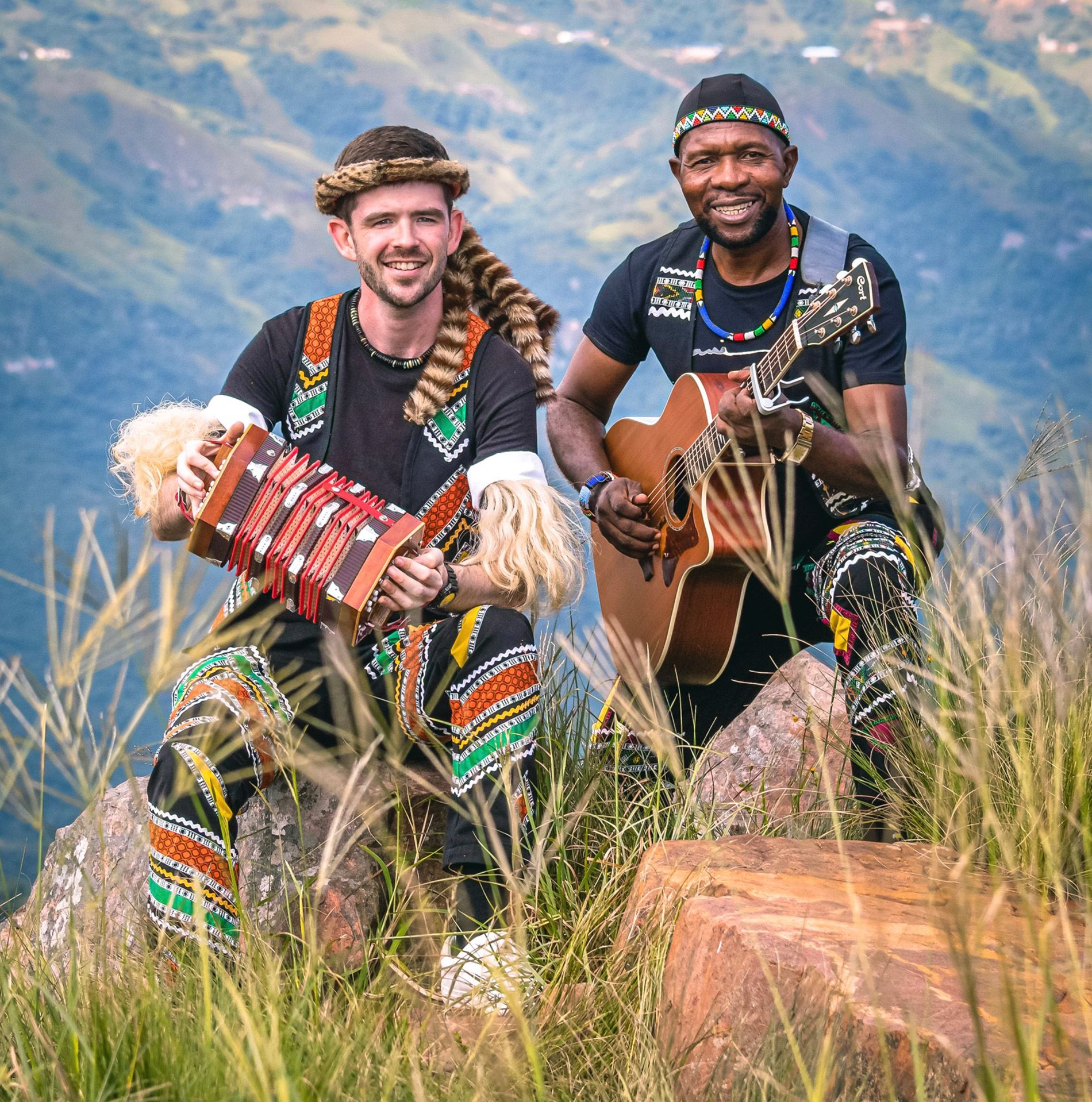
Qadasi & Maqhinga Interview image by Harry Lock
Sound, song, and rhythm are all around us, from animal noises to the waves of the ocean. What, if any, are some of the most moving experiences you've had with these non-human-made sounds? In how far would you describe them as “musical”?
Qadasi: I agree that music is all around us, and I especially feel this when I'm in nature - whether walking through a forest, sitting by a river, or listening to birdsong. Those sounds can evoke just as much emotion and feeling as a powerful musical composition.
Maqhinga: Hearing the birds sing at home in rural Zululand is always a magical feeling. There are so many different species with different sounds, yet somehow these sounds come together harmoniously.
We can surround us with sound every second of the day. The great pianist Glenn Gould even considered this the ultimate delight. How do you see that yourself and what importance does silence hold?
Qadasi: It is a real privilege to be able to listen to almost anything imaginable, especially with the help of modern technology.
However, silence is equally powerful, and as a composer, it's often during these quiet moments that inspiration strikes.
Maqhinga: I find that after hours of performing, being in the studio or being exposed to music in general, I love the feeling of going into a quiet space and giving my ears a break. It’s a chance to recalibrate.
Do you feel as though writing or performing a piece of music is inherently different from something like making a great cup of coffee? What do you express through music that you couldn't or wouldn't in more 'mundane' tasks?
Qadasi & Maqhinga: Unlike making a great cup of coffee, writing music gives you the freedom to explore any direction and experiment to your heart's content.
It's an incredible feeling being able to push creative limits - something we can't always do with everyday tasks.
What is a music related question that you would like to ask yourself – and what's your answer to it?
Qadasi:
How does your music reflect your personal journey and experiences?
My music is a profound reflection of my personal journey. The style I play has been with me since childhood, echoing my origins, experiences, and deep love for my country. This essence is woven into every melody and lyric I create.
Maqhinga:
When did you know that music would be your profession?
I knew that I could do music for a living when I was given the opportunity to play guitar for Ladysmith Black Mambazo as part of their stage play, Nomathemba, in America in the mid-nineties. This gave me the energy I needed to take it further.