Published
Part 2
Once a piece is finished, how important is it for you to let it lie and evaluate it later on? How much improvement and refinement do you personally allow until you're satisfied with a piece? What does this process look like in practise?
Having recorded everything we improvise together during our creative times we then listen back and feel into what ideas seem to have mileage.
Some things come out pretty much fully formed and other things take years to find their way - so the art of it is knowing when to pursue the ones that feel like they have something in them but don’t necessarily come out easily. Other pieces go through many iterations and never quite feel finished, even once recorded and played live many times.
In addition to this, we change things so much depending on the context of a performance and who our audience is, that our music is in many ways constantly discovering and rediscovering itself, depending on the context. Space and Time have become essential as part of the process of getting our work close to any sort of finished state.
We respect that process and have learned to be patient.
When you're in the studio to record a piece, how important is the actual performance and the moment of performing the song still in an age where so much can be “done and fixed in post?“
The essence of a take is important to us, so we tend not to do any “fixing in the post” in our playing. But we do like to use the studio as a compositional tool, with some of our tracks created wholly in the studio, out of fragments of recorded material.
Most of the tracks on Precious Collection and our debut album Unfurl are molded, tinkered with and added to in the post-stage. But the fundamental performance of a tune actually tends to exist in its entirety as a take, or at least in most cases the original form lays down a framework for the track to blossom.
Even recording a solo song is usually a collaborative process. Tell me about the importance of trust between the participants, personal relationships between musicians and engineers and the freedom to perform and try things – rather than gear, technique or “chops” - for creating a great song.
Trust and communication for us are the most important aspects of our relationship - both creatively and interpersonally. We need to feel free to express ourselves, connect deeply with the music, the melody, the feel, the chords and lyrics if they are present - this is essential to be able to communicate what we think musically to one another freely.
We are very choosy about who we work with for this very reason - the energetic and inter-personal dynamic has to be right with our collaborators in order for things to flow. We decided to self-produce Precious Collection because we wanted to make the leap to feeling in total creative control of the project. We therefore worked with engineers who would support our process and give us space to try things and experiment in the studio, with a playful and encouraging positive attitude.
This isn’t always so commonly found in our experience to date, and we are extremely grateful to all the incredible engineers we worked with in making Precious Collection including Colin Fleming, Jordan Parry and Al Harle. Ditto for working with mix engineer Julian Tardo down in Hove, who was extremely open minded and dedicated to helping us tweak the mix until we were happy to call it ‘finished’. We are super grateful to all those who have been there supporting us on our journey, who understand our sound and our intention with the music, and who have respected our roles as producers of this record.
As women in music it can be difficult to claim that space, and we both struggle with confidence to trust ourselves enough to be at the creative helm. In the end it was incredibly rewarding and fun to self-produce - sometimes spontaneously adding in magic sounds, or extra backing vocals to a track when at home, and we feel very lucky that everyone we have worked with on this record has been supportive of our spontaneous way of working.
What's your take on the role and importance of production, including mixing and mastering for you personally? In terms of what they contribute to a song, what is the balance between the composition and the arrangement (performance)?
To us, the production of a track is all wrapped up in a piece’s composition.
While we are starting as an acoustic violin and cello duo playing traditional music and the initial stamp of a recording is capturing a take with the right mics in the right space, this for us is not the end of it. Making a studio album is a very specific thing for us that we wish to honour as much as our live shows in it being its own form of expression.
There are some things which benefit from being recorded in the simplest and most transparent way, with just choices about the warmth or depth of the sound, but other pieces really benefit from being chopped up and re-composed in the post, or by using specific effects on certain parts to bring out particular things.
The mix and all of the subtle (or not so subtle) choices we made across the entire process are absolutely part of the composition and presentation of our record as a complete body of work.
After finishing a piece or album and releasing something into the world, there can be a sense of emptiness. Can you relate to this – and how do you return to the state of creativity after experiencing it?
We try to honour being continuously creative with each other, as hard as that can be with a million other things happening. After this album was “finished” we were really ready to be focussing on new material, desperate to enter the creative process again, and have been trying to carve out time ever since.
This year we were super lucky to be accepted on the artist residency programme at Hawkwood College for Future Thinking in Stroud, spending a week in January solely focussing on creative work. For the time being we have put working on new material on hold for a while during the release process of our 2nd album but we aim to get back into this process later in the year to keep things moving.
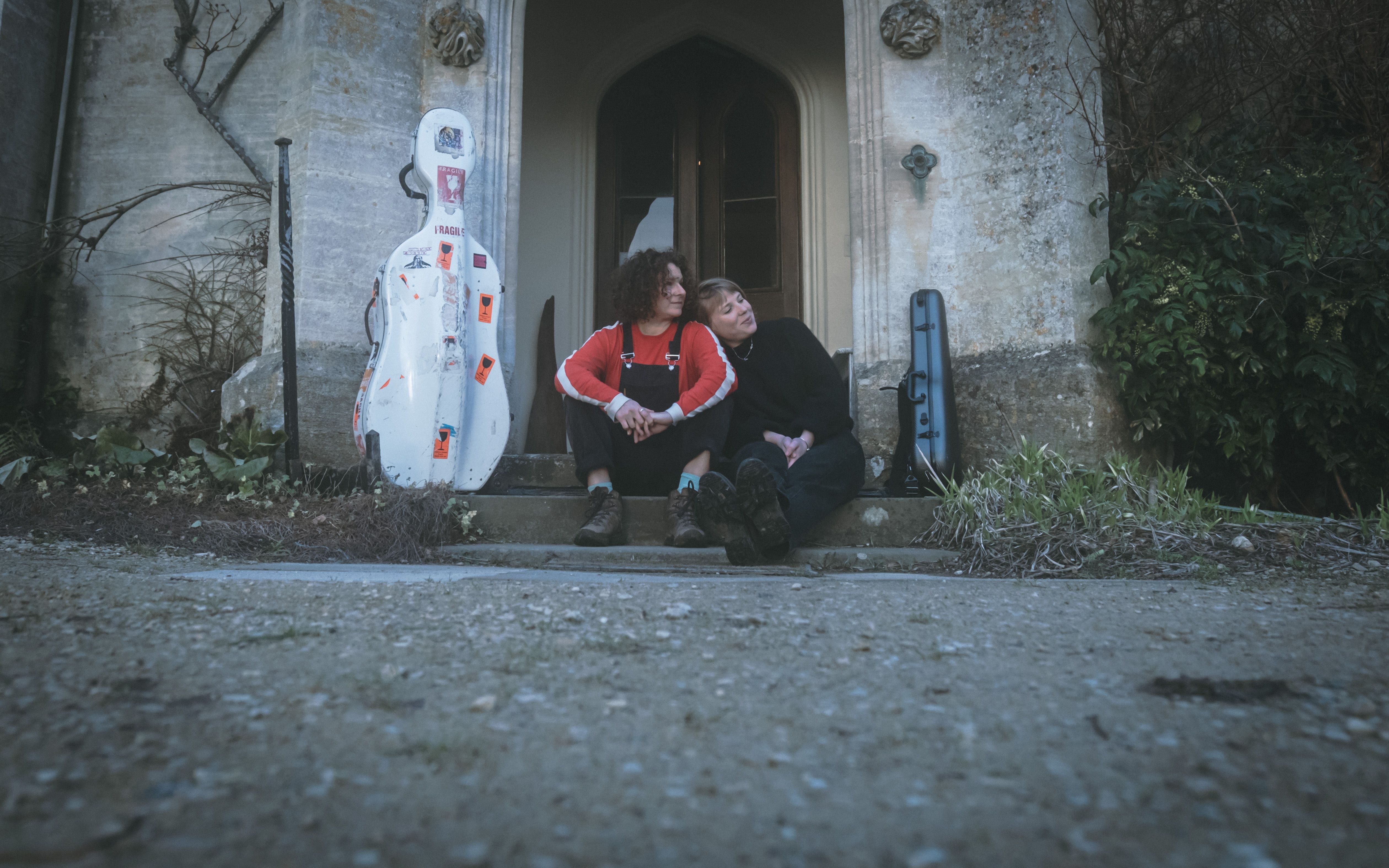
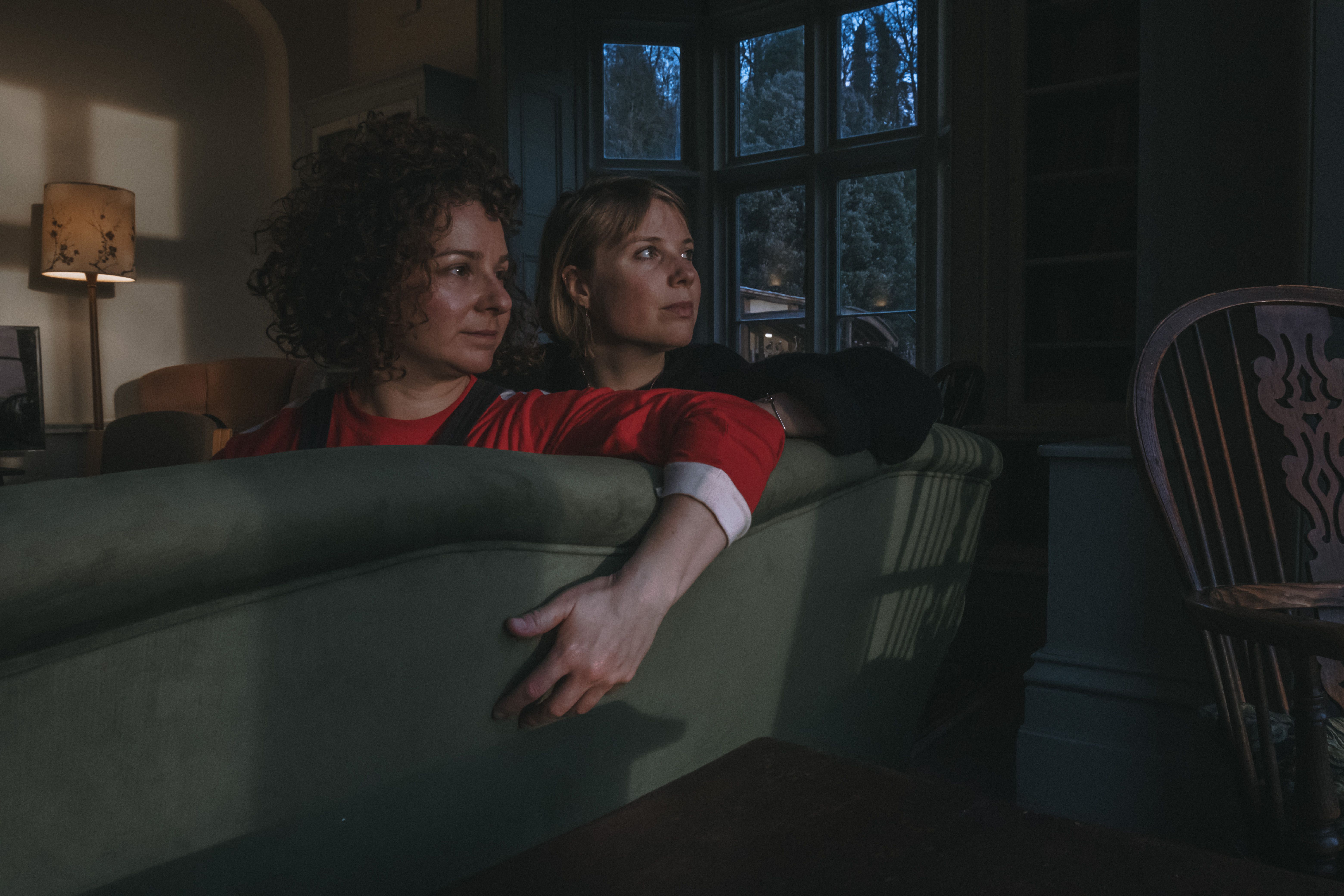
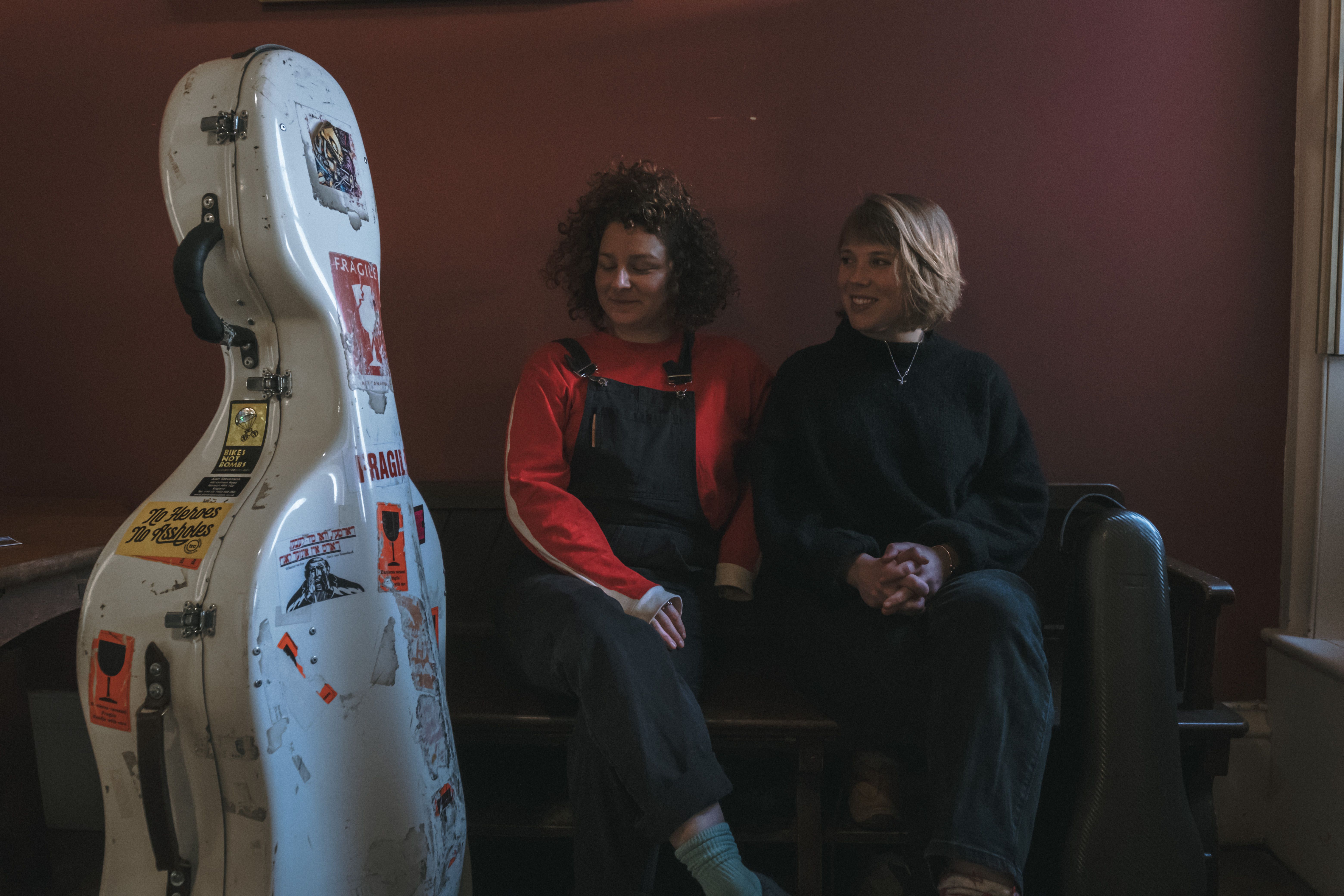
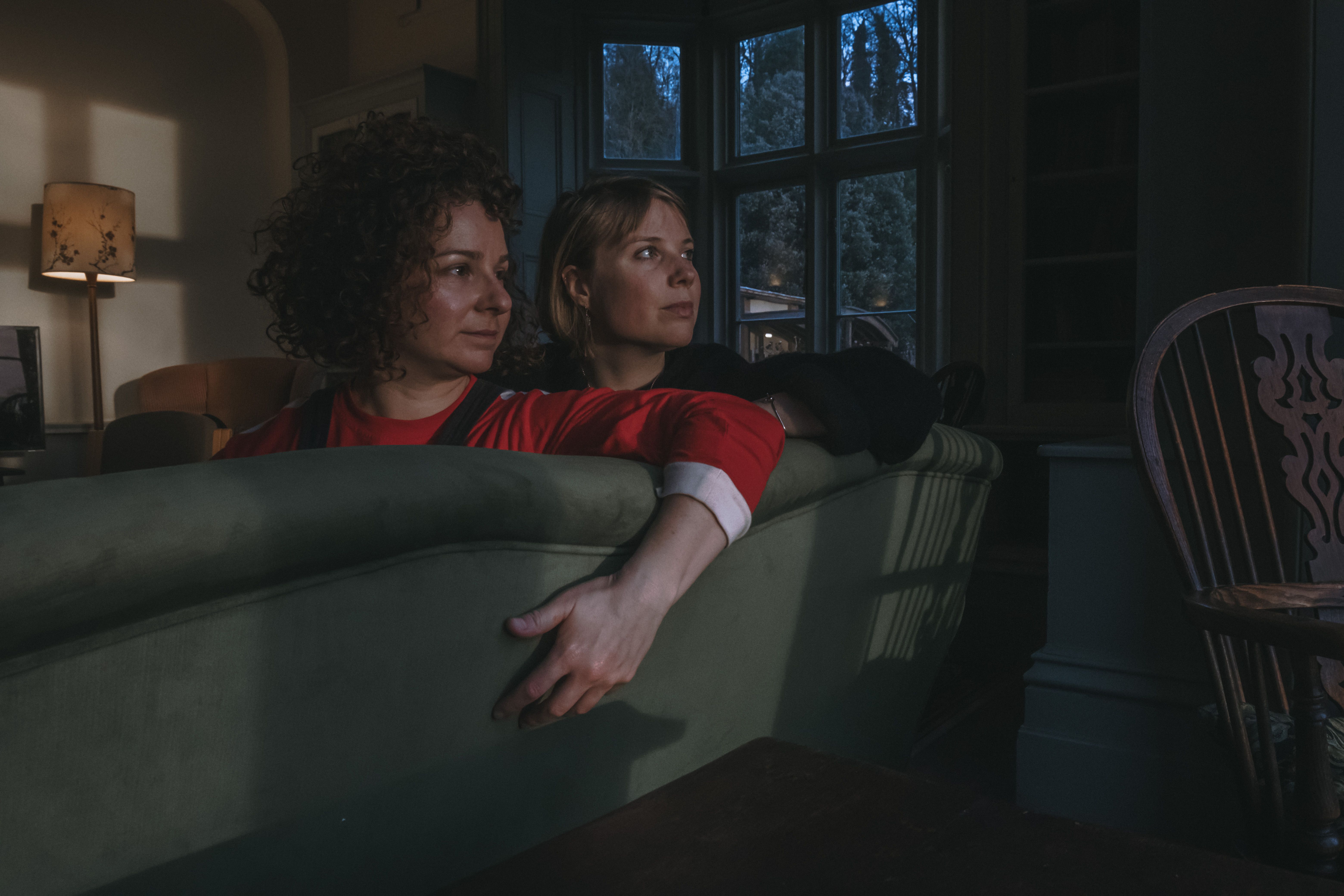
Fran & Flora Interview Image by Dom Thompson
Music is a language, but like any language, it can lead to misunderstandings. In which way has your own work – or perhaps the work of artists you like or admire - been misunderstood? How do you deal with this?
Once you create a piece of music for the world it’s up to the listener to engage with it and take from it what they want to. As artists it’s our job to try and be as clear as we can in what we are trying to communicate, but without being overly prescriptive.
In Fran & Flora we predominantly work with Yiddish and Jewish music, some traditional Romanian music and tunes from further afield including Greece, Turkey and Armenia. We cherish the archives we have been able to glean repertoire from, our mentors who have taught and inspired us, our adventures, diaspora culture, the beautiful Klezmer and traditional music communities we have grown to be part of and most of all we seek to connect with and inspire people, to help them feel joy and grief and everything in between by bringing people together and connect with what it means to be human.
In all honesty, we wouldn’t be doing what we do without the support of friends, artists, family and random folks you meet on the street at a bus stop.
We don’t plan to stop making music any time soon, in fact we hope to continue to meet new fans and make new friends, have more adventures, create more records and exist in the world as our truest selves.
Anything beyond that is out of our control.