Published
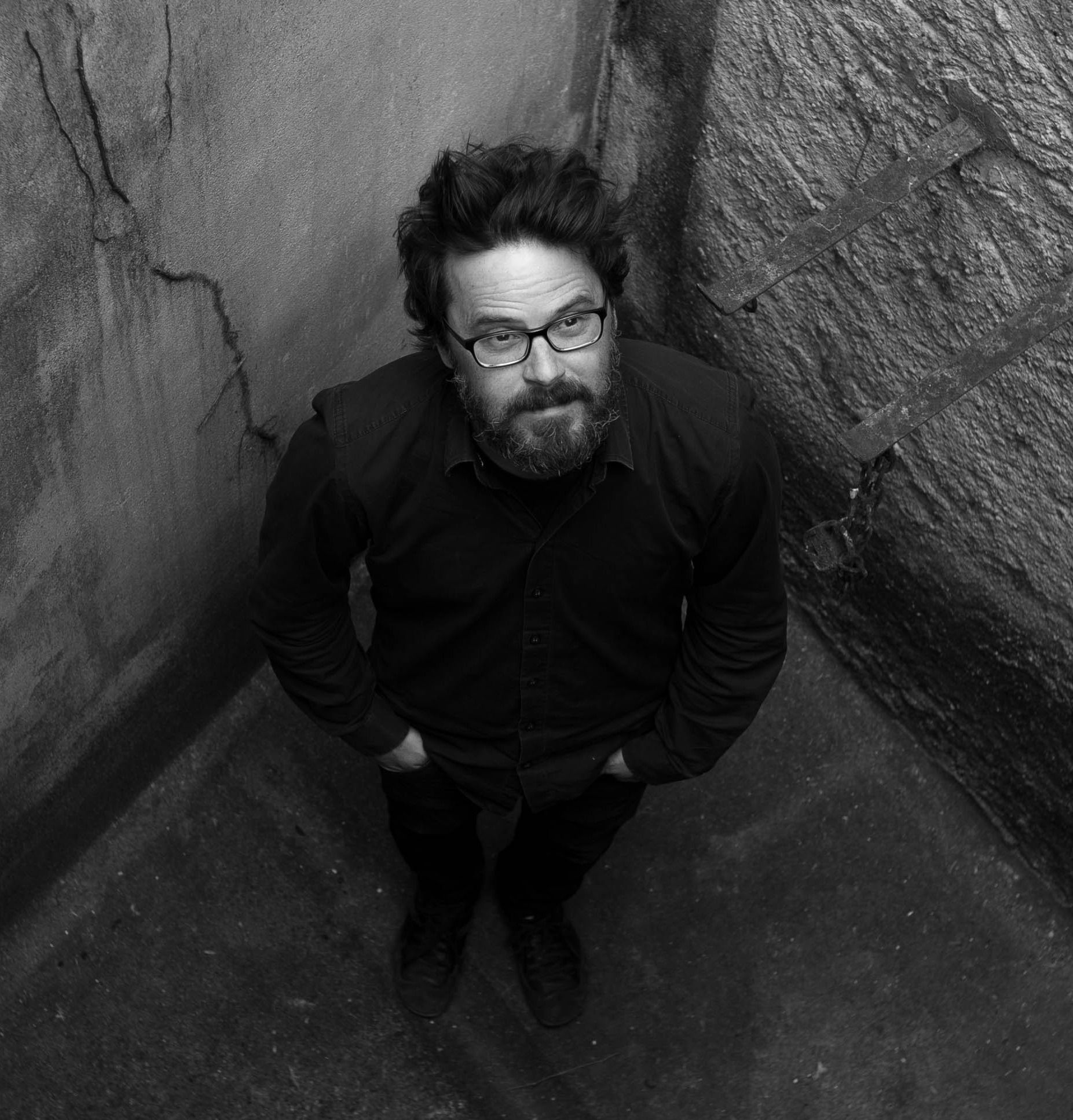
Name: Gaudenz Badrutt
Occupation: Sound artist, composer
Nationality: Swiss
Recent release: Gaudenz Badrutt's new LP Palace is out via Bruit Editions.
Recommendations on the topic of sound: Two books:
Records Ruin the Landscape. John Cage, the Sixties, and Sound Recording by David Grubbs on Duke University Press, and Spectres. Composing Listening, edited by François Bonnet and Bartolomé Sanson on Shelter Press.
[Read our David Grubbs interview]
If you enjoyed this Gaudenz Badrutt interview and would like to know more about his music, visit his official homepage. He is also on Instagram, and bandcamp.
Over the course of his career, Gaudenz Badrutt has collaborated with a wide range of artists, including Michael Vorfeld, and Toshimaru Nakamura.
[Read our Michael Vorfeld interview]
[Read our Toshimaru Nakamura interview]
When I listen to music, I see shapes, objects and colours. What happens in your body when you're listening? Do you listen with your eyes open or closed?
There are many options how I am listening. When I am listening to a record very focused: I will often listen with closed eyes. My brain starts to be kind of a part of the music, goes with it. Sometimes also the body, the feeling of it can change.
I don't see colours or shapes, I am just focused on the sound/music, sometimes I feel surrounded by them, sometimes I feel me as a part of the sound, being inside of sounds.
Palace can be listened to in different ways, but its symphonic aspects are mostly perceptible when listening with closed eyes – maybe there are many shapes, objects, colours!
How do listening with headphones and listening through a stereo system change your experience of sound and music?
It changes totally – with headphones, I miss the acoustics of the space where I am in. This adds something to the music.
Headphones are sometimes fine to get even more into details, but I really miss the real space. A space transmitted through speakers is a different one then the space where I am in.
Even if Palace has its own resonant space, I think it is still better to listen it through a excellent speakersystem (loud).
Tell me about some of the albums or artists that you love specifically for their sound, please.
John Butcher's Resonant Spaces (which seems to be the opposite of the previous answer).
Luc Ferrari's 'Les Arythmiques' (because there is kind of a space in a space, within my own space. Which explains the previous answer).
Otomo Yoshihide's 'Cathode' (because there is a interplay with my own space and environment).
[Read our Otomo Yoshihide interview]
Are there everyday places, spaces, or devices which intrigue you by the way they sound? Which are these?
Very quiet environments outside in nature, in the nowhere. Even better: with snow, as it makes all sounds very dry, without any resonance. They start to be very precisely articulated.
I like well articulated sounds, also when I am creating my own music. But I also like the sounds of the fridge at home.
Have you ever been in spaces with extreme sonic characteristics, such as anechoic chambers or caves? What was the experience like?
Yes, a special place for me is a small Romanesque church in the Swiss mountains. It has such a long reverberation time that you can easily sing three notes yourself by overlaying the reverberation. The reverberation itself becomes the sound.
Like sometimes in Palace - there are even sounds there that consist solely of the reverberation of something else. Like a blurred, faint memory of something forgotten.
What are among your favourite spaces to record and play your music?
In general: rooms with a good acoustic atmosphere of their own.
I need this in order to be able to place my sounds in them so that they have a certain right to exist in the room. To enter into a connection with it.
Do music and sound feel “material” to you? Does working with sound feel like you're sculpting or shaping something?
Yes, that's exactly my style. I often think more of a sculpture than music or sound.
Maybe that's one reason for the album title Palace. In some ways Palace is a sculpture itself, in other ways Palace is just a space in which that sculpture exists.
How important is sound for our overall well-being and in how far do you feel the "acoustic health" of a society or environment is reflective of its overall health?
Very complex question. The answer would be much too long.
Sound, song, and rhythm are all around us, from animal noises to the waves of the ocean. What, if any, are some of the most moving experiences you've had with these non-human-made sounds?
Picking blueberries, surrounded by many invisible roaring deer. In the mountains.
Many animals communicate through sound. Based either on experience or intuition, do you feel as though interspecies communication is possible and important? Is there a creative element to it, would you say?
Yes, absolutely. I love how animals communicate through sounds. Whether there is creativity behind it or not - it doesn't really matter. It's a practice of social behaviour that, at least from the outside – has great creative potential.
Extreme, virtuosic, strange, funny, poetic. Lots of qualities.
Tinnitus and developing hyperacusis are very real risks for anyone working with sound. Do you take precautions in this regard and if you're suffering from these or similar issues – how do you cope with them?
I always try to project my music at a physically effective volume, but not beyond the pain threshold.
Making music with earplugs is not an option for me personally. Because then I lose contact with the room and the listeners. So I always try to be considerate of all the ears in the room.
We can surround us with sound every second of the day. The great pianist Glenn Gould even considered this the ultimate delight. How do you see that yourself and what importance does silence hold?
Silence is very important to me, but it is almost non-existent - at least 'natural' silence, which is not really silent. It takes a lot of effort to experience it. That's why I try to remember such silence.
Sometimes, fortunately, that's enough.
Seth S. Horowitz called hearing the “universal sense” and emphasised that it was more precise and faster than any of our other senses, including vision. How would our world be different if we paid less attention to looks and listened more instead?
A completely different world.
So different that I can't imagine it ...