Published
Part 1
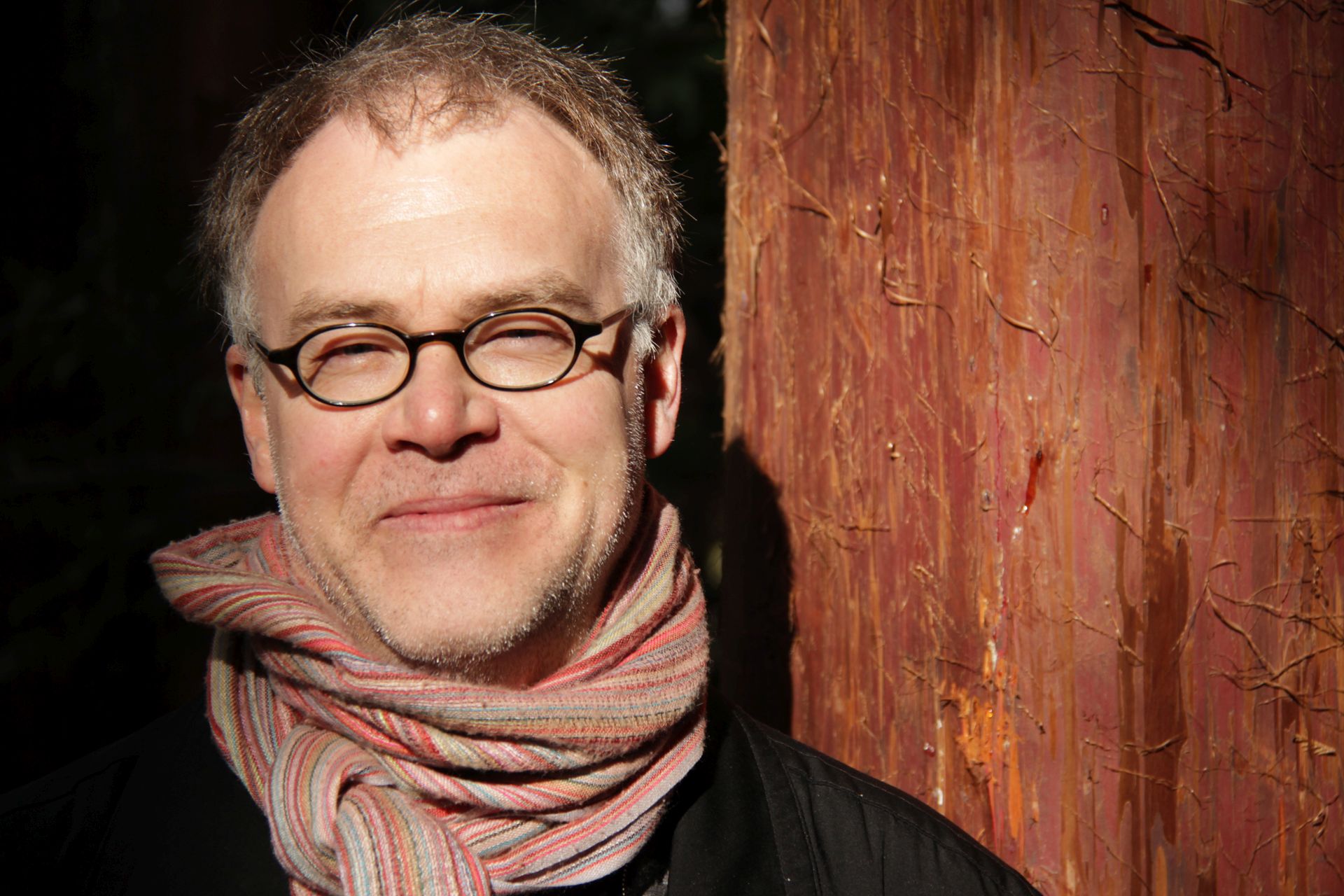
Name: Gene Coleman
Nationality: American
Occupation: Composer, musician, video director
Recent release: Gene Coleman's Exploratorium is out via False Walls. A launch event for the Exploratorium album takes place at Bowerbird, Philadelphia, on October 17, 2024.
Recommendations: This is hard! At this moment I’m going with The Narrow Road to the Deep North, a collection of texts by Matsuo Basho (1644-1694). I used various translations of his Haiku for both KATA and Forest Minds. These poems are filled with marvelous allusions to synesthesia, such as:
Rippling Waves
In Tune
With the Scent of Wind
I note that in this translation it’s no longer a proper Haiku. No matter, the idea and the feeling conveyed is fantastic.
If you enjoyed this interview with Gene Coleman and would like to find out more about his music, visit his official website. He is also on Facebook.
Over the course of his career, Gene Coleman has worked with a wide range of artists, including Theo Bleckmann, Jim O’Rourke and Mats Gustafsson.
[Read our Theo Bleckmann interview]
[Read our Jim O’Rourke interview]
[Read our Mats Gustafsson interview]
Where does the impulse to create something come from for you? What role do often-quoted sources of inspiration like dreams, other forms of art, personal relationships, politics, etc. play?
I find it difficult to site a specific source for inspiration, but in recent years my inspiration (or way of thinking about life in general) seems to come from neuroscience in one way or another.
I have a lecture about what I call “Neuro Music” called “Music Mirrors Mind” which I have given at various places, such as the University of California Sage Center for the Mind and at the Art Academy in L’Aquila Italy. I talk about some of the things that have inspired me, including Stan Brakhage, Anthony Braxton and Helmut Lachenmann and put those people in the context of Neuroaesthetics.
More broadly, ideas about exploratory behaviour, Neuro Music and Transcultural Music have been the basis for many of my works over the last 20 years. Exploratorium is an album of some of those works and a space of exploration. Indeed, all the works on the album are examples of Neuro Music, which is the fundamental connection point across these compositions.
I define Neuro Music as an area of research and creation based on the study and application of models and concepts from Auditory Neuroscience, as a form of musical composition. For me the big question is: how can we apply ideas and data from Auditory Neuroscience to create new works of art?
My definition of Neuro Music is also shaped by the growing field of Neuroaesthetics, which is a branch of Cognitive Neuroscience that studies aesthetic behaviors, such as the definitions of and responses to beauty.
For you to get started, do there need to be concrete ideas – or what some have called a 'visualisation' of the finished work? What does the balance between planning and chance look like for you?
I would draw a distinction between “ideas” (concrete or otherwise) and “images” or “visualizations”. I do experience both strong ideas and concepts that I want to express, as well as images of the particular work I’m considering.
“Forest Minds” is the work I’m composing now, and it has taken months to formulate the images and ideas that it contains.
Is there a preparation phase for your process? Do you require your tools to be laid out in a particular way, for example, do you need to do 'research' or create 'early versions'?
In years past I did not really make many sketches or draft versions of a work. Typically, I would lay out the structure of the work and then start making it very directly, without the intent to change it later, as if I was improvising.
Recently I do much more work with models of the work before the final piece is created.
Do you have certain rituals to get you into the right mindset for creating? What role do certain foods or stimulants like coffee, lighting, scents, exercise or reading poetry play?
Not really. In fact, I’ve always wondered why I have a day good for creative work or not. I’m skeptical of pushing my creative actions as I doubt it renders something exceptional. Deadlines have a way of forcing things out though, and I think that pressure can be a good thing.
I recently read about Werner Herzog’s process for working, which he says involves immersing himself in ancient classic poetry before he starts writing. I think this is an interesting idea, but it’s not something I would choose to do.
What do you start with? And, to quote a question by the great Bruce Duffie: When you come up with a musical idea, have you created the idea or have you discovered the idea?
In recent years I always start with models of the auditory pathway of the brain (APB). Thinking about these models and how I will deploy them in a particular work is an endless source of exploration and inspiration. I don’t know if this qualifies as discovery or invention – I think it’s both.
Some more detail on this:
‘Atonal Music as a Model for Investigating Exploratory Behaviour’, a paper by a group of neuroscientists, was published in 2022. The paper’s research into ideas of listeners’ exploratory behaviour as a neurological activity opens up new ways to think about creativity, both for the composer’s work and how music is heard and processed by listeners. Is it possible to understand an impulse to create things that don’t fit known compositional categories or strategies?
There is no clear answer to that yet, but I have a desire to explore new lands in music, I don’t want to travel where most composers go. The possibilities for Neuroscience to deepen our understanding of sound and music, as well as the behaviours of listeners, are extraordinary. Applying these ideas from Neuroscience has profoundly transformed the way I think about and create music.
My interest in Neuroscience and music began around 10 years ago and found an early form in my work for solo cello “The Geometry of Thinking” (2016). That work contained experiments with what I call Geometric Bowing, a technique of moving the bow on the strings in geometric patterns (rather than the normal back and forth) to represent auditory information processing in the brain.
Another technique is called Synapse Bowing, which involves moving the bow vertically on the strings, following patterns of electrical flow between Neurons, as presented by the Neuroscientist Eugene M. Izhikevich in his book Dynamical Systems in Neuroscience. Geometric and Synapse Bowing are on full display in the first work on the Exploratorium album, “RITORNO” (2019), which is my 2nd string quartet.
The Neuro compositional methods I have developed are modeled on the auditory pathway of the brain (APB). It is my belief that constructing musical compositions based on the APB will allow new forms of musical thought and expression to emerge.
Technically speaking, the auditory pathway is the entire chain of events that occur in our auditory experience, from sound waves striking the Pina (outer ear) to the mechanical conversion of air waves to water waves, then to impulses in the auditory nerve, then onward to various stages of cognition, memory, emotion and thinking. This is a vast territory, and in some works I have found it interesting to focus on a particular portion of the APB as the model for the composition.
Such is the case with “Kokhlos I” and “Kokhlos IV”, which use the inner ear (the Cochlea) as the model for the entire piece. These works (along with “Vidrone”) use texts by Lance Olsen, who wrote a novel called Dreamlives of Debris that rewrites the mythology of the labyrinth in Crete. ‘Kokhlos’ is the Greek word for ‘spiral shell’, from which the term Cochlea originates. I compare the labyrinth to the Cochlea, the winding, spiral organ that converts sound waves to electrochemical signals.
I am in awe of the ways in which music and brain functions are so similar. I have studied the way the brain processes sound and worked to develop and define related compositional models and refine existing ones. The creative process of designing these models and using them to create music is an amazing odyssey. My models of the auditory pathway merge with my intuition (the subconscious); for many years I have explored the conscious and subconscious in music, though I didn’t define it like that until recently.
Many writers have claimed that as soon as they enter into the process, certain aspects of the narrative are out of their hands. Do you like to keep strict control or is there a sense of following things where they lead you?
The APB models are something I’ve made as a guide, so they provide me with enough structure while allowing many creative choices to occur during the process of composition.
For me that is a very satisfying combination!