Published
Part 1
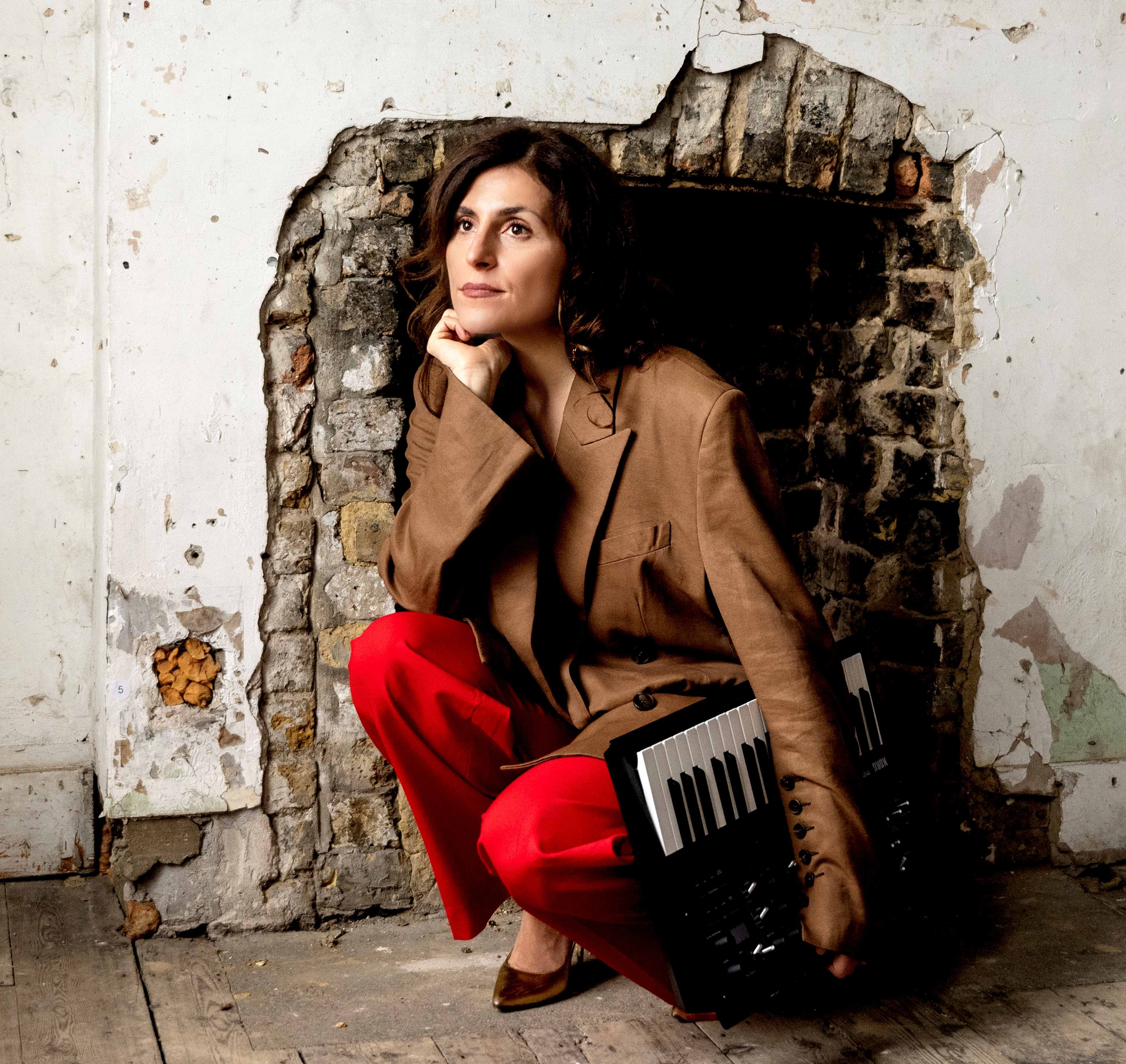
Name: Irene Serra aka ISQ
Nationality: Italian-born, Denmark- and Italy-raised, London-based
Occupation: Singer, songwriter
Current Release: Irene Serra's new single “Animal” is out via 9 Lives. Her fifth studio album The Silence is Deafening will follow on 23rd October 2026.
If you enjoyed this ISQ interview and would like to know more about Irena Serra's music and upcoming live dates, visit her official homepage. She is also on Instagram, and Facebook.
Do you think that some of your earliest musical experiences planted a seed for your interest in writing lyrics or poetry? How and when did you start writing?
Music has been part of my life for as long as I can remember. One of my earliest memories is not so much of a particular song, but of the feeling music created.
I was one of those children who was constantly singing — probably to the annoyance of my parents and sisters. Looking back, I think that emotional connection to music planted the first seed not only for performing, but also for writing. Music felt like a way of expressing things I couldn't express any other way.
I started toying with the idea of writing songs when I was quite young, although I didn't really know what I was doing. We had a piano in the living room, and I kept a little notebook where I would write lyrics and ideas. I must have been seven or eight when I wrote my first songs. I know this because one day my sisters found the notebook and to make fun of me, locked themselves in the bathroom and began reading the lyrics aloud through the open window for the neighbours to hear!
Songwriting became a more serious pursuit in my late teens and early twenties, when I began to understand that writing songs could be more than a private pastime. It became a way of making sense of the world around me and giving shape to experiences, emotions and questions that I couldn't always express in conversation.
Entering new worlds and escapism through music and literature have always exerted a very strong pull on me. What do you think you are drawn to most when it comes to writing?
I think I'm drawn to exactly that sense of entering another world. Writing allows me to step outside everyday life and into a space where different possibilities exist.
One thing I've learned over the years is that songwriting is a practice. I don't wait around for divine inspiration, although I'm always grateful when it arrives. More often, I simply show up at the piano and begin. Sometimes a song comes quickly and seems to write itself. Other times it emerges through persistence and revision.
What I love most is the process itself. There comes a point where the work tips into a state of flow and something quite mysterious happens. You begin with nothing, and after an hour or a day or a month, there's a song where before there was silence.
The early stages are often very intuitive. I'll be searching for melodies, fitting syllables to phrases, singing words that don't necessarily make sense yet. A lot of subconscious material surfaces in that process. Sometimes I look back at a lyric and realise I've written something I didn't even know I was thinking or feeling. In that sense, songwriting can be surprisingly revealing.
Perhaps that's what continues to draw me back to it. There's a sense of discovery, but also a sense of returning to something essential. It reconnects me to the feeling I had as a child when I first fell in love with music: that there is something magical about it, something capable of transporting you elsewhere while also bringing you closer to yourself.
It is sometimes said that "music begins where words end." What do you make of that?
I think it's one of my favourite quotes because it captures something I've experienced many times in my own life. There are moments when language simply isn't enough and some experiences seem to exist beyond words.
I felt that very strongly when my mother passed away. Her death was sudden, and in the days that followed I found myself becoming unusually silent. For someone who loves conversation and communication, that was a strange experience. I'm Italian; talking is practically part of my DNA. Yet I remember feeling as though not only I had gone silent, but the world around me had too.
During that time, music became a lifeline. When I couldn't find words for what I was feeling, music was still there. It allowed me to connect with emotions that I couldn't yet articulate, let alone share with other people.
That's why I think music is such a powerful force in people's lives. It can reach places that are inaccessible to ordinary conversation. It accompanies us through our greatest joys and deepest griefs, often when nothing else can. For me, it has been a constant companion in both the best and worst moments of my life.
I have always considered many forms of music to be a form of poetry as well. Where do you personally see similarities? What can music express which may be out of reach for poetry?
I absolutely see many forms of songwriting as a form of poetry.
In some cases, I think the distinction almost disappears. When I listen to artists like Leonard Cohen or Bob Dylan, I often think of them as poets who happen to work through music. Their lyrics can stand entirely on their own, without melody or accompaniment, as powerful pieces of writing. I feel similarly about Billie Holiday. Although she wasn't primarily a songwriter, there was such depth and nuance in the way she delivered words that she became, for me, the poetess of jazz.
Poetry is a constant source of inspiration in my own writing. I love the work of Sylvia Plath and Mary Oliver, and more recently I've been drawn to writers such as Raymond Antrobus and Ocean Vuong. Poetry reminds me how much can be communicated through precision, imagery and rhythm, often with very few words.
What music can express beyond poetry is the added layer of harmony. Poetry and lyrics share language, metaphor and narrative, but music adds another emotional dimension. The same line can feel completely different depending on the harmony beneath it. A chord can reinforce a lyric, complicate it, or even contradict it. Music gives us access to emotional layers that words alone sometimes cannot reach.
When I'm writing songs, I often separate the lyrics from the music and read them back on their own. I ask myself whether they still work as a piece of writing. Would they hold my attention if they were simply spoken aloud? I think that's an important test because beautiful music can sometimes disguise weak lyrics. Ideally, both elements should be able to stand independently while becoming something greater when combined.
As a vocalist, words are central to how I connect with people. Stories are one of humanity's oldest ways of making sense of the world and sharing experience. If listeners can recognise something of themselves in a story, then a genuine connection becomes possible. That's what I am always searching for when I write.
What are areas/themes/topics that you keep returning to in your lyrics?
The themes in my songwriting have definitely changed over time. My first two albums were largely preoccupied with love and relationships, although not only romantic ones. I was interested in connection in all its forms: intimacy, friendship, longing, disappointment and the ways we relate to one another.
Over the past decade, my focus has shifted. The themes I keep returning to now are womanhood, migration, grief, belonging and intergenerational wisdom. Much of that change has been shaped by life itself.
Losing both of my parents had a profound impact on me, particularly the loss of my mother. It made me acutely aware of the links that connect us to previous generations and of how much knowledge, memory and identity are carried through families.
After my parents passed away, I felt a strong need to reconnect with my wider family and to piece together parts of my family history that I had never fully explored. Growing up in Copenhagen, away from most of my relatives, I didn't have the kind of extended family network that many people take for granted. As I've grown older, understanding where I come from has become increasingly important.
That naturally led me to questions of home and belonging. I was born to Italian parents, grew up in Denmark, lived in Italy as a teenager and then moved to the UK to study music. I've spent much of my life moving between cultures and languages, so the question of where home is — and what home actually means — has become a recurring theme in my work.
Looking back, I can see that many of my songs are really asking different versions of the same question. "Zion" from my album Too explores the idea that another person can become your home, …
… while "This Bird Has Flown" from my first album, -isq, examines what happens when that sense of home disappears.
Although the song deals with heartbreak, it's ultimately about feeling profoundly alive in the wake of loss. Whether I'm writing about family, migration, grief or love, I'm often returning to questions of belonging, connection and what it means to find our place in the world.
That idea runs through much of both Requiem for the Faithful and my upcoming album, The Silence Is Deafening. In many ways, those records are attempts to understand identity, family and the invisible threads that connect us across generations.
On the basis of a piece off your most recent release, tell me about how the lyrics grew into their final form and what points of consideration were.
I'll use "Animal", the first single from my upcoming album The Silence Is Deafening, because it was one of those rare songs that arrived remarkably quickly. Both the music and the lyrics seemed to appear almost fully formed, which doesn't happen very often. Usually, songwriting is a slower process for me.
What's interesting is that I didn't fully understand what the song was about while I was writing it. It was only afterwards, when I looked back at the finished lyrics, that I realised it was really about my mother and our relationship.
My mother grew up in southern Sicily in the 1940s and 50s, in a culture with very clear expectations about what a woman's life should look like. By contrast, I grew up in liberal Copenhagen, attended international schools, moved to Italy as a teenager and later to London to study music. For much of my younger life, I saw my mother's worldview and my own as fundamentally opposed. The values she represented felt restrictive to me, while I was determined to carve out a more independent path.
As I got older, my perspective changed. I began to understand that many of the things I had interpreted as attempts to restrict me were in fact attempts to protect me. She was responding from the world she knew, just as I was responding from the world I knew. We were both products of our upbringing, our culture and our time.
The song became a way of exploring that realisation. It's about misunderstanding and love existing side by side. It's about recognising that two people can see the world very differently and still care deeply for one another. Looking back, I wish I had been more patient and more curious about her perspective. Writing "Animal" allowed me to examine those feelings and, in some ways, make peace with them.
The final lyric changed very little from the original draft. Most of the work happened afterwards, when I began to understand what the song had been trying to tell me. Sometimes songwriting feels less like inventing something than uncovering something that was already there.