Published
Name: Javier Rojo
Nationality: Spanish
Occupation: Saxophonist, composer, improviser
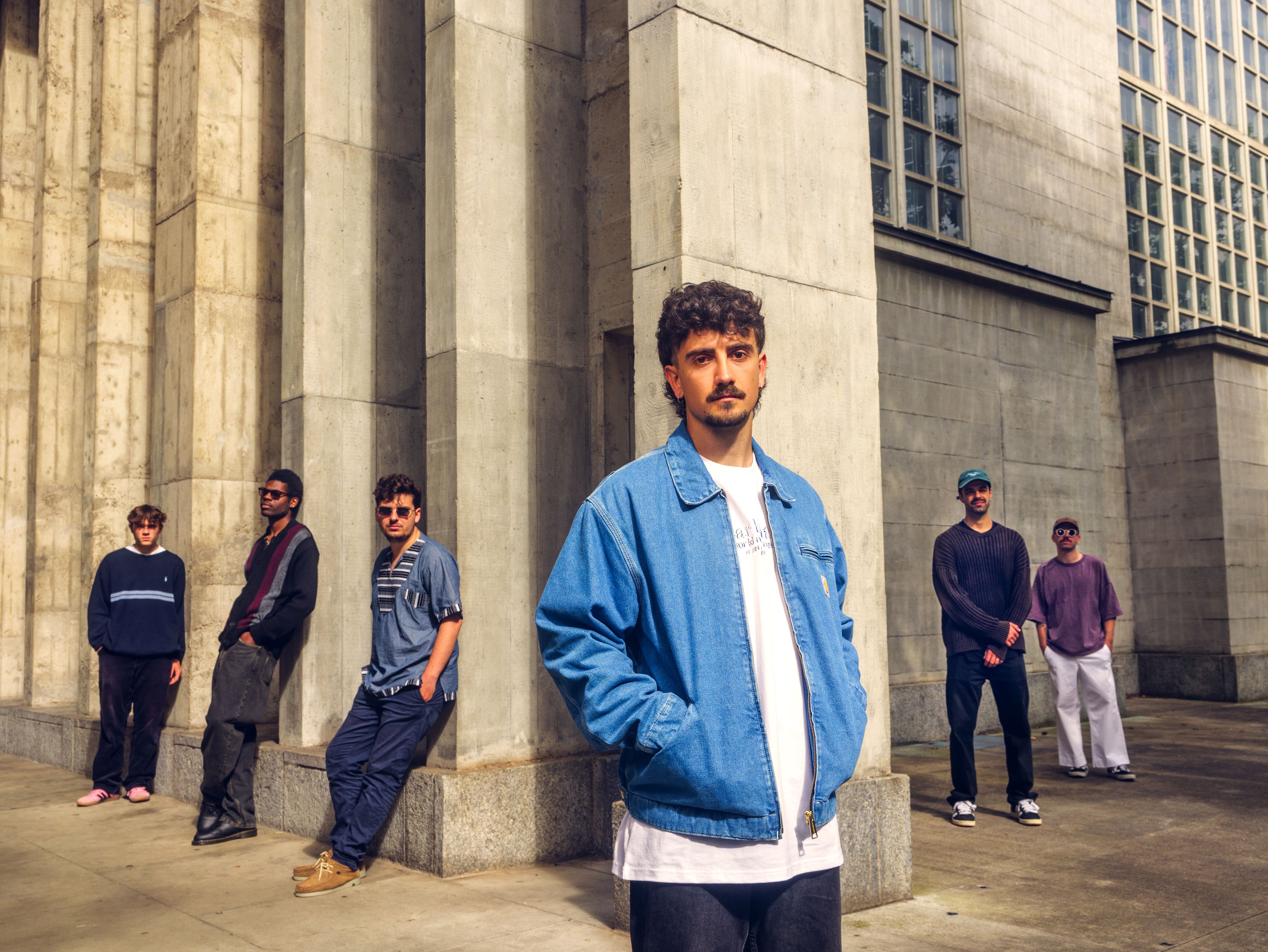
Current Release: Javier Rojo's album Música para amansar fieras is out via Fresh Sound. It features Álvaro Ocón (trumpet), Noé Sécula (piano), Eliott Knuets (guitar), Joan Codina (bass), Genius Wesley (drums), Fernando Brox (flute).
Recommendations: I’ll leave here some things I’ve been in love with lately.
Books: Steppenwolf by Hermann Hesse; LETTING GO: THE PATHWAY OF SURRENDER by David R. Hawkins
Music: Steamin’ by Miles Davis; Symphony of Psalms by Igor Stravinsky; Bach's Choral Works
Painting: French Impressionism
If you enjoyed this Javier Rojo interview and would like to know more about his music, visit him on Instagram. He also has an informative artist page on the website of Fresh Sound.
For a deeper dive, read our earlier Javier Rojo interview about Direction in Jazz.
Do you think that some of your earliest musical experiences planted a seed for your interest in improvisation?
During my time studying classical music, I often felt tied to the aesthetics and interpretative approach imposed by the teacher and the classical tradition, without any real freedom.
From the moment I discovered jazz and improvised music, I felt an immediate connection. I've always been a very restless and curious person, and this genre provided me with the freedom I was looking for.
When did you first consciously start getting interested in musical improvisation? Which artists, teachers, albums or performances involving prominent use of improvisation captured your imagination in the beginning?
It was around the age of 16 when I had a class at the conservatory related to jazz and improvisation, thanks to Pascual Piqueras—an incredible teacher and musician, skilled in jazz, classical music, composition, conducting, and pedagogy. This, combined with the music my father always played for me—being a huge fan of jazz, blues, soul, etc.— sparked my interest.
Around that time, I also started playing in a Brass Band formed by my conservatory friends from my hometown, which connected me with different and more modern genres than those I had been studying since childhood. I remember starting with the most classic tunes—standards like “Autumn Leaves,” “There Will Never Be Another You,” and blues progressions.
But a life-changing concert for me was in September 2019, when I heard Santi de la Rubia live for the first time. He later became my professor during my time in Barcelona. After hearing him play at Robadors23 in Barcelona, I decided I wanted to fully dedicate myself to the saxophone.
Around that time, I was also deeply immersed in listening to Coltrane—who, along with Mark Turner, is probably my biggest idol.
Tell me about your instrument and/or tools, please. What made you seek it out, what makes it “your” instrument, and what are some of the most important aspects of playing it?
I think the fact that my biggest instrumental idols are tenor saxophonists led me to choose this instrument. I felt that through it, I could express myself musically in the way I wanted. In the end, the instrument is a medium—you need to feel a special connection with the possibilities it offers.
I remember that as a child, I always wanted to play the drums. But when I started at the conservatory in my hometown, percussion wasn’t an option. Then, I became interested in the viola—it seemed like a deeper-sounding violin (that was my perspective when I first discovered it, haha!).
Eventually, I chose the clarinet because all my teachers thought I was too hyperactive and needed an instrument that was easy to produce sound on right away to keep me motivated.
The timbre of the tenor saxophone, its range, and its presence are qualities that really attract me to it.
Derek Bailey defined improvising as the search for material which is endlessly transformable. What kind of materials have turned to be particularly transformable and stimulating for you?
I think that for a jazz musician like me, the primary material is bebop, voice leading, and harmonic control—always with a solid time feel, good sound, and open ears to stay aware of what’s happening around you and shape your material accordingly. Any type of material you work on is transformable; it can be applied in different ways and to different motifs.
For me, it’s essential to take existing ideas, analyze and synthesize them, and then develop them in a personal way. That doesn’t mean the goal is to be "different" from everyone else or to have a so-called "unique" sound. I believe that music is already there, and since each of us is inherently unique as human beings, the more material I gather, the more freedom I have to express myself.
It’s like learning languages—the more you know, the better you can communicate, haha!
Do you feel as though there are at least elements of composition and improvisation which are entirely unique to each? Based on your own work or maybe performances or recordings by other artists, do you feel that there are results which could only have happened through one of them?
I believe that composition and improvisation are closely related. The difference is that when you're improvising, you make decisions on the spot and have to stand by them in real time. When composing, you have more time to make decisions and can shape things much more.
In my case, I try to find a connection between everything I do in both improvisation and composition, looking for common threads between the two.
When you're improvising, does it actually feel like you're inventing something on the spot – or are you inventively re-arranging patterns from preparations, practise or previous performances? What balance is there between forgetting and remembering in your work?
I think it is very important to work methodically on certain concepts in order to later play them freely based on what is happening in the moment.
For me, the goal is to interact with what is happening and with the musicians I’m playing with, using the material I have but at the same time without thinking about anything in a premeditated way.
Reacting in the moment is like meeting someone for coffee and having a conversation—you’re not going to recite memorized stories or predetermined topics. It’s something that flows naturally, and you adapt to the conversation, contributing your point of view to each topic.
Are you acting out parts of your personality in your improvisations which you couldn't or wouldn't through other musical approaches? If so, which are these? What, would you say, are the key ideas behind your approach to improvisation?
We all have many "personalities" within us. One of the tracks on the album “Coefusión Monstruosa” was inspired by a book I read that talked about this (Steppenwolf by Hermann Hesse).
The different moods we experience mean that each day, and in every moment, we might react differently to the same situation, and depending on who we are with, we also behave in different ways. By this, I don’t mean that we are fake or that we wear a thousand masks, but rather that we are the same essence projected in different ways.
I think this also happens with music. Depending on the music I’m playing and who I’m playing with, I may express myself differently, but in the end, it’s always me—the same essence projected into different situations.
In terms of your personal expression and the experience of performance, how does playing solo compare to group improvisations?
I think they are two different concepts, but they have things in common, as I mentioned earlier. I’ve never done a solo jazz concert—I think it’s very demanding and requires a lot of maturity, but it’s something I’d love to do in the future, hahaha!
When I played classical music, I did some solo performances, and I believe that in both situations, it’s very important to be connected to the moment. When you play with others, you also have to be aware of what they are doing, how they react, and how you respond, but you always have to be present.
In your best improvisations, do you feel a strong sense of personal presence or do you (or your ego) “disappear”?
Usually, when I finish a solo and feel that it was great, it's because we built something together as a band. For that to happen, it’s very important to set the ego aside.
In fact, I believe that setting the ego aside is always important. For me, along with fear, ego is one of the two greatest enemies we have as human beings.
In a live situation, decisions between creatives often work without words. From your experience and current projects, what does this process feel like and how does it work?
It’s true that between two very creative people, there can be a connection without the need for words. After all, music is a language based on call and response, tension and resolution.
However, for me, it’s also very important to play with people with whom I share a special human connection.
Stewart Copeland said: “Listening is where the cool stuff comes from. And that listening thing, magically, turns all of your chops into gold.” What do you listen for?
I agree! There are a thousand ideas around us, and if you’re playing with good musicians, even more so!
I think there are different types of ideas, and they all lead to infinite possibilities—melodic, rhythmic, harmonic, conceptual, etc.
There can be surprising moments during improvisations – from one of the performers not playing a single note to another shaking up a quiet section with an outburst of noise. Have you been part of similar situations and how did they impact the performance from your point of view?
There are always situations like the ones you mentioned, which might be unexpected, but you have to know how to make the most of them!
These moments, if musically justified by the one executing them, open up a world of possibilities that you might have never explored before.
I have always been fascinated by the many facets of improvisation but sometimes found it hard to follow them as a listener. Do you have some recommendations for “how to listen” in this regard?
When something fascinates me, it’s very important for me to listen to it many times, one after the other. I focus on the different instruments and musicians, trying to see how they build something common from different perspectives.
If the music is good, you’re sure to come back and listen to it again later, and you’ll never stop discovering new things. With great albums, musical works in general, or other forms of art like painting, you always find new details in genius.
In a way, improvisations remind us of the transitory nature of life. When an improvisation ends, is it really gone, just like a cup of coffee? Or does it live on in some form?
From my point of view, I believe it lives on in some form.
For me, it's very important that everything has a common thread and a connection in the overall curve of the piece. It’s like when you listen to a fugue by Bach—the first idea is there, but what comes after is a consequence of the first idea.
The same should happen with improvisation: you start with a theme, and then you improvise based on that theme and the mood you’ve built. The next soloist should be aware of what has happened before and be consistent with it, and so on, forever.