Published
Name: Jerome Sabbagh
Nationality: French, NYC-based
Occupation: Saxophonist, composer, band leader, label founder at analog tone factory
Current release: Jerome Sabbagh's Heart, featuring Joe Martin on bass and Al Foster on drums, is out now on analog tone factory.
If you enjoyed this Jerome Sabbagh interview and would like to know more about his music, upcoming releases and live dates, visit his official homepage. He is also on Instagram, and Facebook.
For a deeper dive, read our earlier Jerome Sabbagh interview and our conversation with him about Analogue Philosophy.
Analog aesthetics were mostly a niche topic until Mofi Gate gave it an unfortunate mainstream push. Are you a Mofi owner and what was your take on that entire story?
I have a couple of Miles reissues on Mofi, ESP and Nefertiti. I thought they sounded good but I don’t have the originals to compare to. I was curious about the One Steps, but I never actually bought one.
To me, it was clearly implied that these records were all analog, so they should have been upfront about the fact that most of them weren’t … I think most people understand that it’s harder to keep an all analog chain, it’s a lot of effort and cost, so it stands to reason that it’s worth a premium.
I also personally think, having heard and worked with high resolution digital including 192/24 and DSD 256, that analog all the way sounds better when done right. We haven’t figured it all out yet with the ones and the zeros … It keeps getting better, and can sound great, but, as convenient as it is, something is still missing compared to analog at its best, at least for me.
How would you describe the difference between analog and digital sound, not just in terms of technology but mainly feeling and experience?
I think the ritual of listening to vinyl is more conducive to focused listening and as a result, we get more out of it. You get what you put in!
It’s also nice to read the liner notes and know who is playing on the record you’re listening to.
Do you have an explanation – not so much from a technical perspective but that of how audio is processed in listeners – about why many seem to prefer analog sound to CD?
There actually are technical explanations for that. Even though the CDs capture a spectrum of frequencies that is theoretically enough for what the human ear can grasp, all the digital filtering, which is technically necessary, alters our perception and is detrimental to the result.
Analog doesn’t have those issues. It certainly has other issues, but I would argue that they seem to get in the way of the flow of the music less. There is often a weird disconnect with digital, even in the best systems.
The atf website explicitly singles out the importance of the tape you're using. How do different tapes influence the recordings?
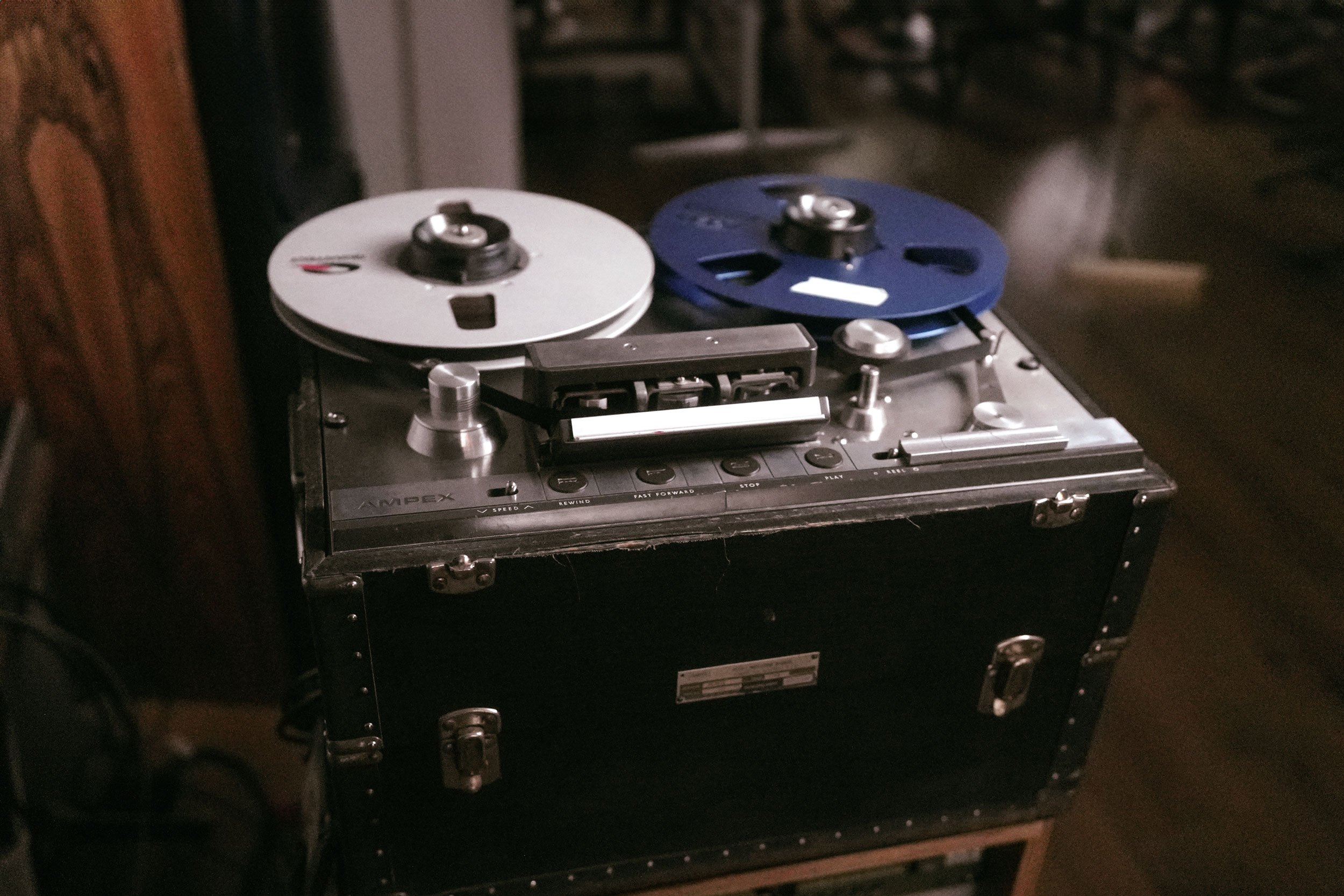
Different tapes have different sounds, so we tried the ones we had access to and we picked the one that sounded the best to us.
Everything has a sound. People talk about neutrality but it doesn’t really exist, even in digital. It’s an impossible goal to reach, and I am not even sure that it’s the right goal. I just try to pick the best sounding tools for what I am trying to do, and I try to record in a way that gives people a convincing reproduction of the music, something that sounds like the band playing in a room, and that - hopefully - will draw them in.
It’s always a matter of taste and a judgement call. I was talking to James Farber yesterday and he said that at the beginning of his career he recorded to a particular Scotch tape that he loved the sound of. To this day, he thinks he did some of his best work using that tape. Unfortunately it’s not made anymore …
You're also offering R2R tapes and high res digital. How would you describe their sound compared to the vinyl?
R2R tape, when done right, is in my opinion the best sounding format. It has an ease and a weight that I find very appealing. It’s one more step closer to the feeling of the musicians being in the room. It’s really solid, it’s just right there, there is no sense of strain whatsoever.
The vinyl is like that too, with a bit less weight to my ears in general, although that also depends on how good the cut, the pressing and the turntable are. It’s still the best practical option for most people and it sounds really great.
The high res digital is also quite good, it’s the best digital capture of the master tape I know how to make. We tried different analog to digital converters and found one we really like, which wasn’t that easy. So the high res files are still very good, but they don’t quite grab me the same way.
In a few forum posts, you've hinted at the difficult economics behind making releases like this. Can you elaborate on this a bit? I'd also be curious whether you see series like Tone Poet, which push a legendary back catalogue, as a benefit or a competition edging out new music by living artists?
The Tone Poet series has been great in that it introduced a lot of people to great music and quality pressings. They are great products at an affordable price. I have quite as few. I also think they have been helpful to me in that they raise awareness of sonics and recording quality in jazz, and made at least some people want to listen to new music recorded carefully and pressed well on vinyl.
I think a lot of people who buy Tone Poets see some value in what we are trying to do, actually seek new music, and want to support it. I am grateful for that.
As far as the economics of it all, it’s not easy. Tape is expensive, the best studios and engineers are expensive. Musicians need to get paid fairly, needless to say. All that adds up very quickly. That said, I am encouraged by the support of listeners who actually buy the records, whether on vinyl, tape, CD or high res files.
Even though I have benefited from the support of high end audio companies darTZeel, Stenheim and Ana Mighty Sound (darTZeel and Stenheim signed on to be executive producers of “Vintage” and “Heart”), the support of people buying this music is absolutely essential to making those type of records. I am grateful for it. Without it, it’s simply not possible.
For someone like me, streaming can’t finance anything, not enough goes back to the musicians. So to anyone out there reading this who has bought one of my records, thank you! You are making a difference.
A label like ERC, the way I understood it, does not master its releases and merely runs it through their impressive console. What is your take on the role of mastering?
Mastering is very important, but it’s also subtle. To me, the best mastering engineers know just what to do and also, usually more importantly, what not to do. It’s really easy to ruin a recording by running it through too many processes at mastering.
I aim to only do what’s necessary and nothing more, and to use very high end equipment to preserve the integrity of the signal. I’ve been fortunate to work with great mastering engineers - Doug Sax, Bernie Grundman - who have such equipment, and, even more importantly, the ears and taste to go with it.
In the case of my last three records (No Filter, Vintage, and Heart), they are straight transfers. There is no EQ at mastering. Bernie Grundman cut the record straight from the tape, he even bypassed the mastering board for more fidelity. For The Turn, Doug Sax did an EQ which made it a lot better.
It was a rare case of taking a very good recording and making it even better. I was thrilled and grateful that he was able to do that without ruining any of what was good about the recording to start with.
I don’t think there is a recipe that always works. Some records need a little something at mastering, some don’t. If the recording is bad to start with, mastering won’t save it. As important as mastering is, recording is more important.
The master tapes of some legendary albums will soon deteriorate. What will be lost in your opinion?
Digital has gotten to the point where it’s a very good archival tool, but it won’t ever be the same. That’s partly why those first pressings are so sought after, they were made when the tape was fresh! I can certainly see an argument for that.
But the music is the most important thing and if you have to settle for a more modern cut of Kind of Blue, or another iconic record made from a digital file, or just listen to a CD, it’s still the same great record.
The music, thankfully, will always be there. As obsessive as audiophiles can get, we need to keep things in perspective. We are all lucky to listen to Miles, whatever the media may be!