Published
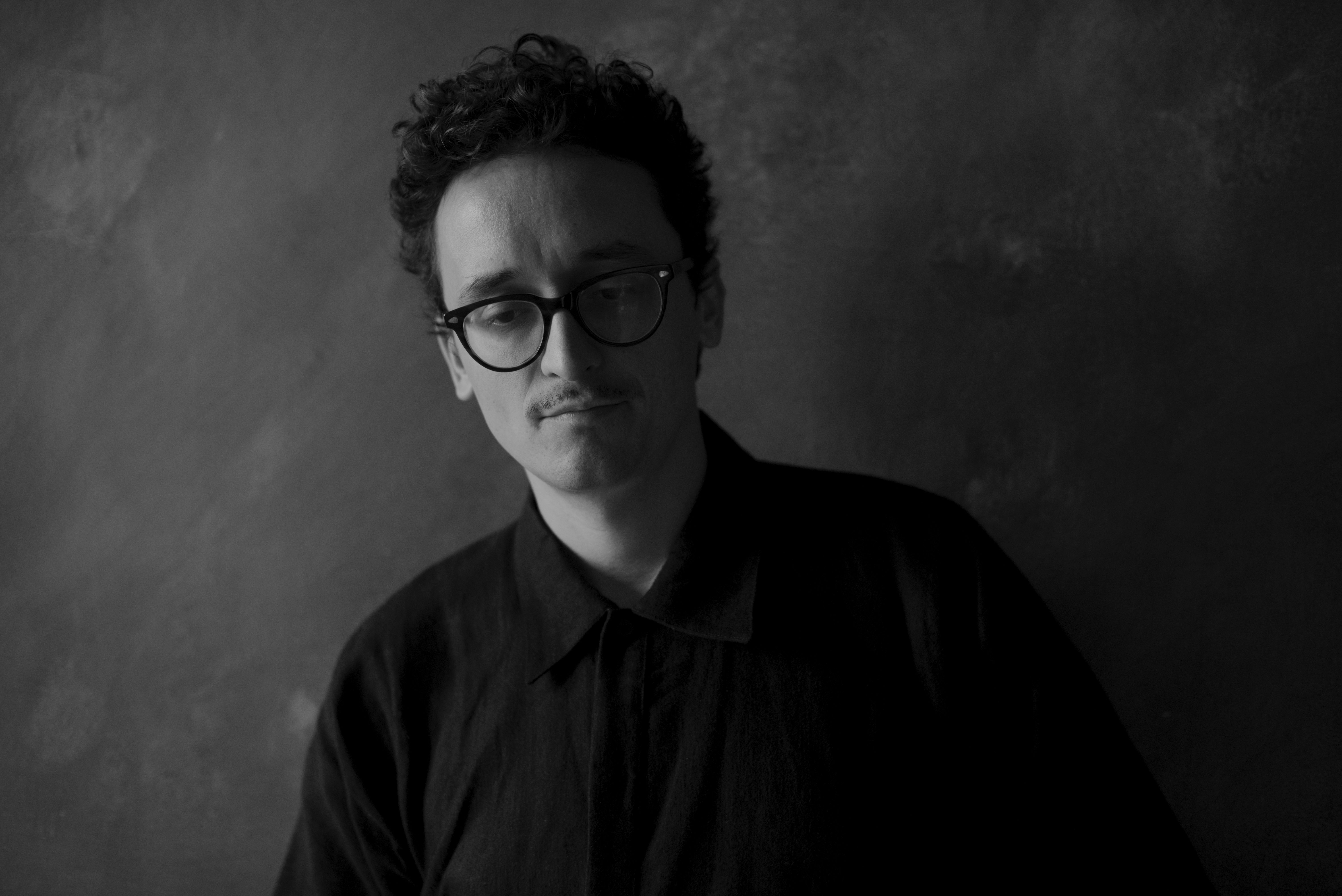
Name: Joachim Badenhorst
Nationality: Belgian
Occupation: Clarinet player, saxophonist, composer, improviser
Current release: For the self-titled debut album of his new band Youran, Joachim Badenhorst assembled a band comprising of Alistair Payne (trumpet), Nabou Claerhout (trombone), Tsubasa Hori (taiko, bells, koto), Simon Jermyn (electric guitar, electric bass), Rutger Zuydervelt (electronics), Hayo Boerema (church organ). It is out now via Klein Klein.
Current event: Joachim Badenhorst's Youran will perform at Brand! Festival 2025, its 10th anniversay edition. It will take place from November 26th to 29th 2025 at the nona arts center in Mechelen. For more information and tickets, read our interview with Brand! festival organiser Bart Vanvoorden.
Shoutouts: I love the International Anthem label. All the music they put out feels very fresh and contemporary to me. I love a lot of the artists on their label, like Jeff Parker, Carlos Niño, Damon Locks, Ibelisse Guardia Ferragutti & Frank Rosaly and Ben Lamar Gay.
Recommendations for Antwerp, Belgium: You're welcome to come visit 'Eggspace', a pop-up store/venue at our house which is run by my wife. She curates a pop-up store of hand made fabrics and objects and we have small shows once in a while, or we gather to sing, as 'Singing Eggs'.
[Read our Carlos Niño interview]
[Read our Ben Lamar Gay interview]
[Read our Damon Locks interview]
[Read our Ibelisse Guardia & Frank Rosaly interview]
If you enjoyed this Joachim Badenhorst interview and would like to stay up to date with his music and upcoming live dates, visit his official homepage. He is also on Instagram, and bandcamp.
What were some of the musical experiences which planted a seed for your interest in jazz?
As a kid I played classical clarinet. Then, as a teenager, one of the first bands I played in was a klezmer trio with accordion and double bass. We would play a lot in bars in Antwerp, we played traditional tunes, but there was a lot of space for improvisation.
Around that time I got a CD by Charlie Parker and I was really mesmerized by him and the music. Through klezmer music I started listening to clarinet players like Giora Feidman and David Krakauer and then the Tzadik label and John Zorn's music.
By then I'd got really into jazz music, bebop, and I became obsessed with it.
What does the term jazz mean today, would you say?
Jazz, as a term, is pretty broad, it can mean many things, there are so many styles and subgenres today.
For me personally, anything can be jazz, if there is an open spirit and improvisation involved.
As of today, what kind of materials, ideas, and technologies are particularly stimulating for you?
Technology is developing so fast these days, all these new programs with endless possibilities, AI ... It's quite overwhelming.
At the moment I feel like going the opposite way: I enjoy sitting at home and play Bach on my old, beat-up upright piano. I'm more interested in acoustic sounds, and human interaction.
Now that technology and AI is becoming so big, I think human interaction, community and nature are becoming more essential.
Where do most of your inspirations to create come from – rather from internal impulses or external ones? Which current social / political / ecological or other developments make you feel like you need to respond as an artist?
Usually it comes from within, but lately there's so much horrible shit going on in the world, which deeply troubles me and makes me want to act and respond.
Especially these past two years, the genocide in Gaza keeps me awake at night. Together with my wife Bei, we have organized many benefit events for Gaza in our home town Antwerp. I also made a song for a benefit album for Gaza called 'A Million Tears'.
I think as artists we should stand up and use our voice when we see injustice.
Tell me a bit about the sounds & creative directions, artists & communities, as well as the colleagues & creative hotspots of your current hometown, please. How do they influence your music?
I have many colleagues with whom I've been collaborating for years but we don't necessarily live in the same place. Some of the musicians whom I met while studying, like french bassist Brice Soniano, Danish guitarist Mikkel Ploug and Irish guitar/bass player Simon Jermyn who is part of the Youran ensemble.
Bassist Pascal Niggenkemper whom I met when we both lived in New York, we've been playing together in different projects and recently we started working together again in his new project called Le 7ieme continent.
Pascal always keeps on exploring and reinventing the possibilities of his instrument, which is very inspiring to me.
In Antwerp, we often hang out with Bert Cools and Indre Jurgeliviciute, we're more or less neighbours. They have a beautiful band called Merope. We sometimes get together and sing, together with other neighbours.
They are fantastic musicians and have a really open minded spirit. Very inspiring over-all.
Besides music there's a really interesting art, fashion, theatre scene in Antwerp which all inspire me a lot. I often collaborate with artist Rinus van de Velde (who helped with the cover art of the Youran album).
The past year I've worked with the Antwerp theatre group Fc Bergman, I made music for their piece 'Works and Days'.
I met fashion designer Jan-Jan Van Essche in high school and we've been friends and collaborating since.
What role do electronic tools and instruments play for your creative process?
For this Youran album, I made a lot of edits on my laptop, and recorded and processed my vocals myself. After the album was mixed by Roel Snellbrand, we sent the mixes to Rutger Zuydervelt, who added his electronics and who made the final mix.
So there was quite some electronic tools used in the process of making the album, but the whole still feels organic to me. Besides Rutger's input, all the other instruments were played and recorded acoustically.
[Read our Rutger Zuydervelt / Machinefabriek interview]
Thanks to technological advances, collaboration has become a lot easier. What have been some of the most fruitful collaborations for you recently and what approaches to and modes of collaboration currently seem best to you?
For me the most fruitful collaborations are the ones where we can work in person, be in the same room.
How much potential for something “new” is there still in jazz? What could this “new” look like?
I think there are still a lot of possibilities to explore new things in music. This Youran album, for example, has a pretty unique instrumentation, I don't know if there have been albums made with this combination of instruments before.
But I think it's more important to make the music that feels true to yourself, make music that feels right. If the music is honest, it will feel fresh and new.
How, would you say are your live performances and your recording projects connected at the moment? How do they mutually influence and feed off each other?
This Youran project started from live performances at the North Sea Round town festival in Rotterdam.
We played two long form concerts of about 3 hours each. The second performance took place at the giant Laurenskerk and the festival asked if I would include the church organist Hayo Boerema. This concert was so exciting and inspiring that I decided that I wanted to make an album, with the ensemble including the church organs. So the inspiration came from the live performances.
Lately I've started approaching live performance and making albums differently. I love the spontaneity of an improvised live concert, and it's wonderful to be there and witness that moment, be in it, share the energy in the acoustics of the space.
When I made my previous album Cosmos with Carate urio Orchestra, the music was recorded with the band all together, but then I started working with post-production and 'sculpting' the album into a concept album with a story and narration.
I liked this approach and with this Youran album I took it a step further. I really collaged the whole album together, I recorded some of the musicians, then took those recordings and composed more, before I recorded other musicians on top of that. The musicians never recorded together, it was all done with overdubs.
With the album I made a sort of dreamed up version of Youran, which will be different from the live performances, which is fine with me. I don't want to hear the exact same version as a recording if I go to see a live concert anyway.
What, would you say, are the key ideas behind your approach to improvisation?
My ideal situation would be to close my eyes, forget about everything, be in the moment, without any predetermined plan, and react to what is happening around you. A zen-like state without distraction of the mind.
It's not easy to shut off thoughts and be completely in the moment, to no longer be conscious that you're on a stage and there's an audience and that there are certain expectations.
To be really free.