Published
Part 1
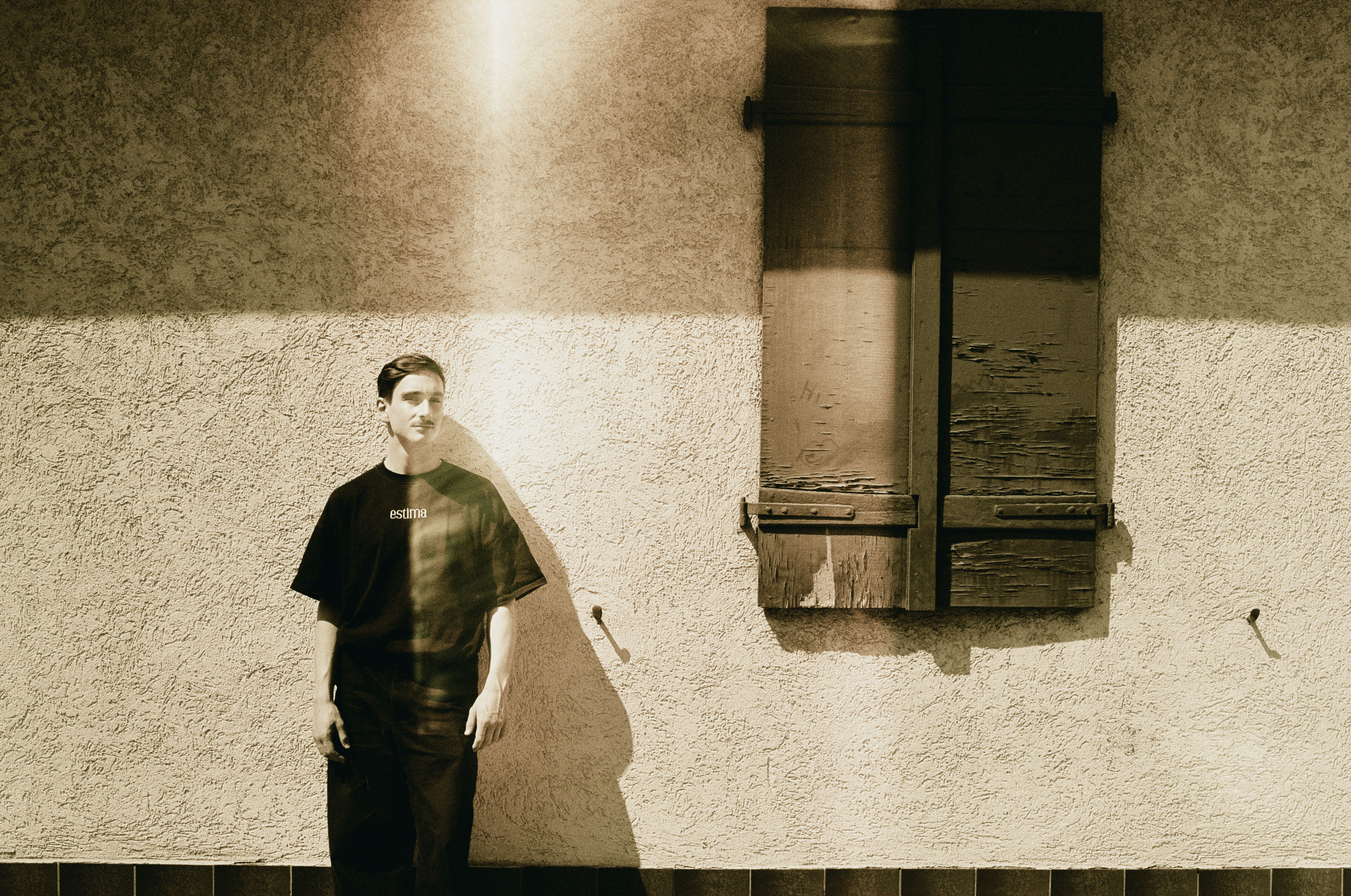
Name: Justin Zitt
Occupation: Pianist, composer
Nationality: German
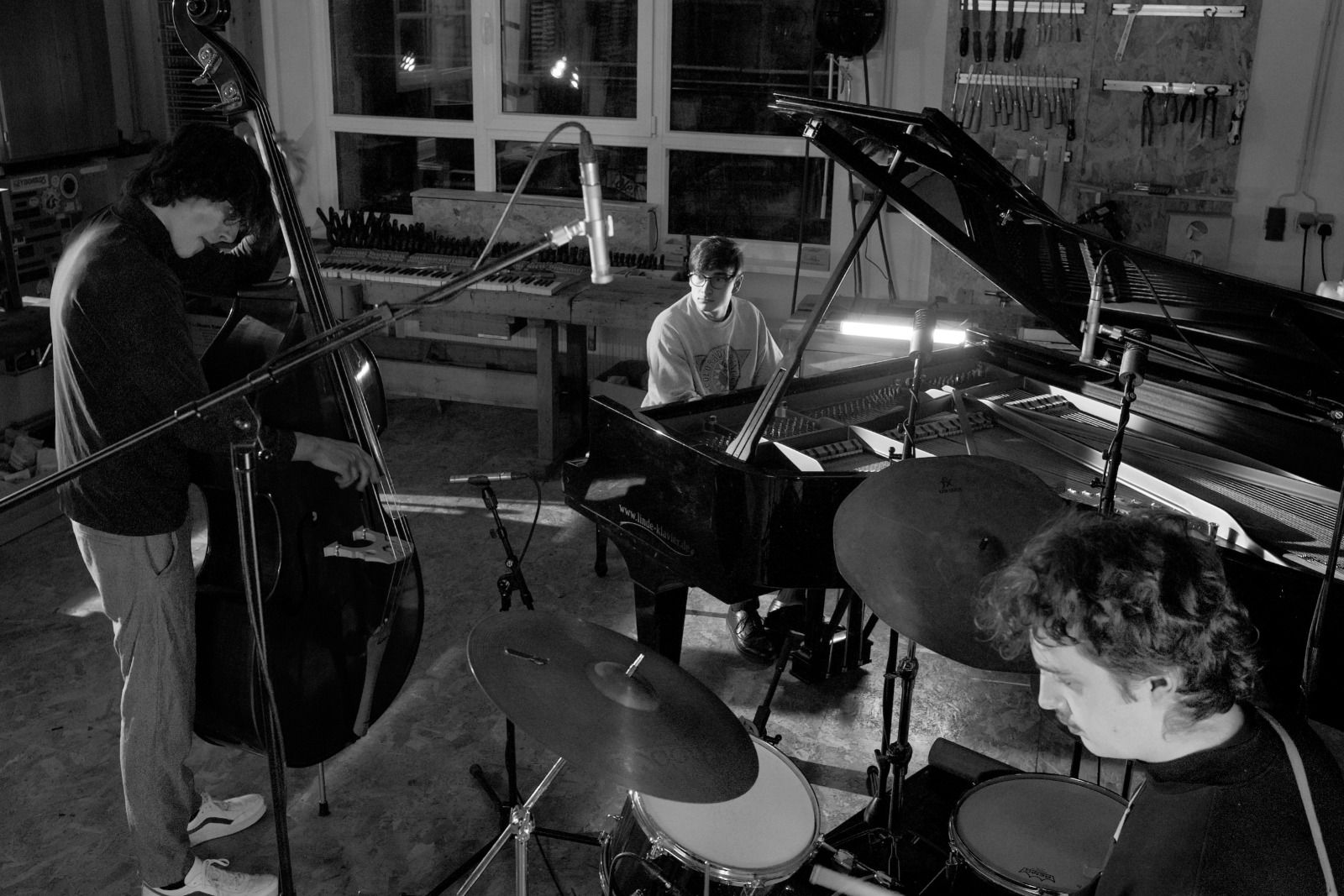
Current release: Justin Zitt's Frigo is out via unit. Alongisde him on piano and compositions, the release features Julian Grüneberg (bass) and Julius Steyer (drums)
Shoutouts: Elias Stemeseder, Leif Berger, Christian Lillinger, Robert Landfermann, Petter Eldh are some of my personal favourites taking jazz into the future but of course there are so many!
I feel like my label UNIT records and BOOMSLANG seem to put out really exciting new music.
Klavierwerkstatt Linde in Mannheim is the best venue, but I am very biased ;)
Global Recommendations: I will just make some food recommendations.
Mannheim: XIANG XIANG WOK
Amsterdam: BELLA STORIA
New York: If you’re visiting from Europe, try to get Mexican food. From where I lived, I often went to “Eva’s x Cinco de Mayo” (can’t say anything about the meat though).
If you enjoyed this Justin Zitt interview and would like to stay up to date with his music, visit him on Instagram.
What were some of the musical experiences which planted a seed for your interest in jazz?
When I was 13 I got the chance to accompany the gospel choir of my piano teacher.
It was one of my first times even playing with a band and these performances were my first concert experiences. Connecting with the groove of the drums and feeling the power of the choir made such a big impression on me. I also got to improvise and play solos which was fun.
From there I went deeper in standard jazz etc. I think on a deeper level, this kind of music, I played when I was young, is still influencing me today. I most certainly still enjoy listening to it.
What does the term jazz mean today, would you say?
Difficult question, but I guess nowadays “jazz” stands for a multitude of musical styles that in some way have their origin in the black-american music forms developed in 20th century.
I think, for me an important aspect is the approach of improvisation, developed by the greats (Charlie Parker, Bud Powell, John Coltrane, Herbie Hancock, etc.), and the distinct way of playing time and the complexity of rhythm.
Also, jazz always was about combining different musical traditions. So I would argue that the changing aesthetics over the years are part of its nature. European classical music, especially its harmony, was always a part of the music. Coming back to my composing, I try to implement more recent harmonic approaches of European classical composers of the 20th century.
Rhythmically I search for ideas that are rather new, but still have their roots in a sense of pulse and create an energetic drive.
For example my composition “Die Uhr” has a steady pulse underneath all the shifting rhythmic events, then in the solos it is actually a pretty common modern jazz form with harmony, that is a result of Modern Jazz, more recent European classical music and just creative voice-leading.
As of today, what kind of materials, ideas, and technologies are particularly stimulating for you?
What comes to my mind is “being less explicit” about the written material. Sometimes, complex music can put the musicians in a box. And I think the audience very much notices this. I would like my music to create an impressive musical image - creative and free rather than being rigid and “correct”.
For me this could mean, melodically - exploring notes and their relationships, not necessarily implied in the harmony of the composition; texturally – super-imposing soundscapes creating colourful layers.
Also, for my master studies in Amsterdam I research polyrhythmic concepts. We are already doing it on the album (“Toleranzangst”) – rhythmic patterns that stay the same but the metric grid and therefore also the pulse shifts around it.
This practice always gets me excited and there are still so many aspects to be discovered.
Where do most of your inspirations to create come from – rather from internal impulses or external ones? Which current social / political / ecological or other developments make you feel like you need to respond as an artist?
When I write my own music, I try to be as true to myself as possible. I just want to discover what I find compelling and I don’t want to copy anyone. So I guess, I try to channel my internal impulses but as far as I am concerned these are just the results of me dealing with external musical influences.
When I look at the world, I don’t feel like I can change very much with my art, to be honest. But what I see in society that my music could potentially have an influence on is the extreme division. People seem to be on one side or the other, me too.
But maybe improvised music, which also introduces an audience to things that they might not be used to hearing yet, could actually create a room for diversity and acceptance. I think, there are things society could learn from freely improvising musicians, their interactions, leading, following and accepting, and also trying to be true to one’s own perspectives.
This also was the idea behind the track “Divided into one”.
Tell me a bit about the sounds & creative directions, artists & communities, as well as the colleagues & creative hotspots of your current hometown, please. How do they influence your music?
This is also a difficult question for me because I have been moving twice in the last one and a half years. So right now, I don’t feel very settled in one community yet.
While recording the album I was based in Mannheim. I had dear friends around me that definitely helped me work out my compositions and ideas but, to be honest, the biggest musical influences on me at that time were the (young) contemporary and avantgarde jazz scenes in Cologne and Berlin. Also my teachers at music school were mainly musicians from these cities that were also playing a lot. These lessons were extremely helpful.
But yes, I think for me and a lot of my peers, we looked a lot to what was happening in these bigger cities. For example, you can maybe hear a little bit of a “Robert Landfermann” approach to composition on “Penuel”.
Summer 2024, I moved to Amsterdam. This environment was so different because suddenly there were so many colleagues around me that were working on their own music, all very unique and a lot that inspired me.
So being immersed in such a diverse music scene – and trying to absorb what I can – my own music also became more diverse. I also wrote just more music, some of it was more complex, but some was aesthetically more common “modern jazz”. What I find very compelling in Amsterdam is that there are a lot of young musicians that are creating music that is super fresh, with influences from more traditional and very American modern jazz to avantgarde free-jazz and even pop. So they find this middle ground between the genres.
For the last few months I have been living in New York but I am also leaving at the end of this year and obviously I am not settled at all. But I can say, that for me “Close Up” jazz club in the East Village has been a very important spot for music and community.
There is fresh music from many young artists that is deeply rooted in jazz-tradition – stronger that in other places – yet, also embracing avantgarde and free jazz concepts. I feel like this music has a lot of power and is also very satisfying in its complexity.
What role do electronic tools and instruments play for your creative process?
I barely use electronic instruments and tools.
Actually only when writing music, I often record myself just on a voice memo, while working out ideas. Then I use notation software and right now I am getting into mixing my own recordings.
Let’s see what happens when they finally repaired my JUNO-06 …
[Read our feature on the Roland Alpha Juno-1]
[Read our feature on the Roland Juno-60]
[Read our feature on the Roland Juno-106]
Thanks to technological advances, collaboration has become a lot easier. What have been some of the most fruitful collaborations for you recently and what approaches to and modes of collaboration currently seem best to you?
With the trio we have not been living in the same city for the past one and a half years and before that we were very used to practicing all the time together.
That’s where it really helped to send around either piano recordings of me or MIDIs and also just chat about the new pieces that I wrote for the band. So when we came together for the tour in October Julius and Julian were actually nailing the very difficult music, which was great to see.
In Amsterdam we have a new collaboration with vibes player Aleksander Sever (based in Amsterdam) and drummer Samuel Dietze (based in Dresden). This is a similar geographical situation but with a more collaborative approach to the compositions.
This is a fairly new project but one interesting approach with that band could be recording remotely and sending each other the music. Not necessarily with the goal of releasing this but to work in detail on the sonic aesthetic of the band.
Generally I feel, that with how my music currently works it is probably not possible to record it all remotely. But to work on compositions and their interpretations with collaborators that are geographically distant is a great possibility and I want to get deeper into that.