Published
Part 1
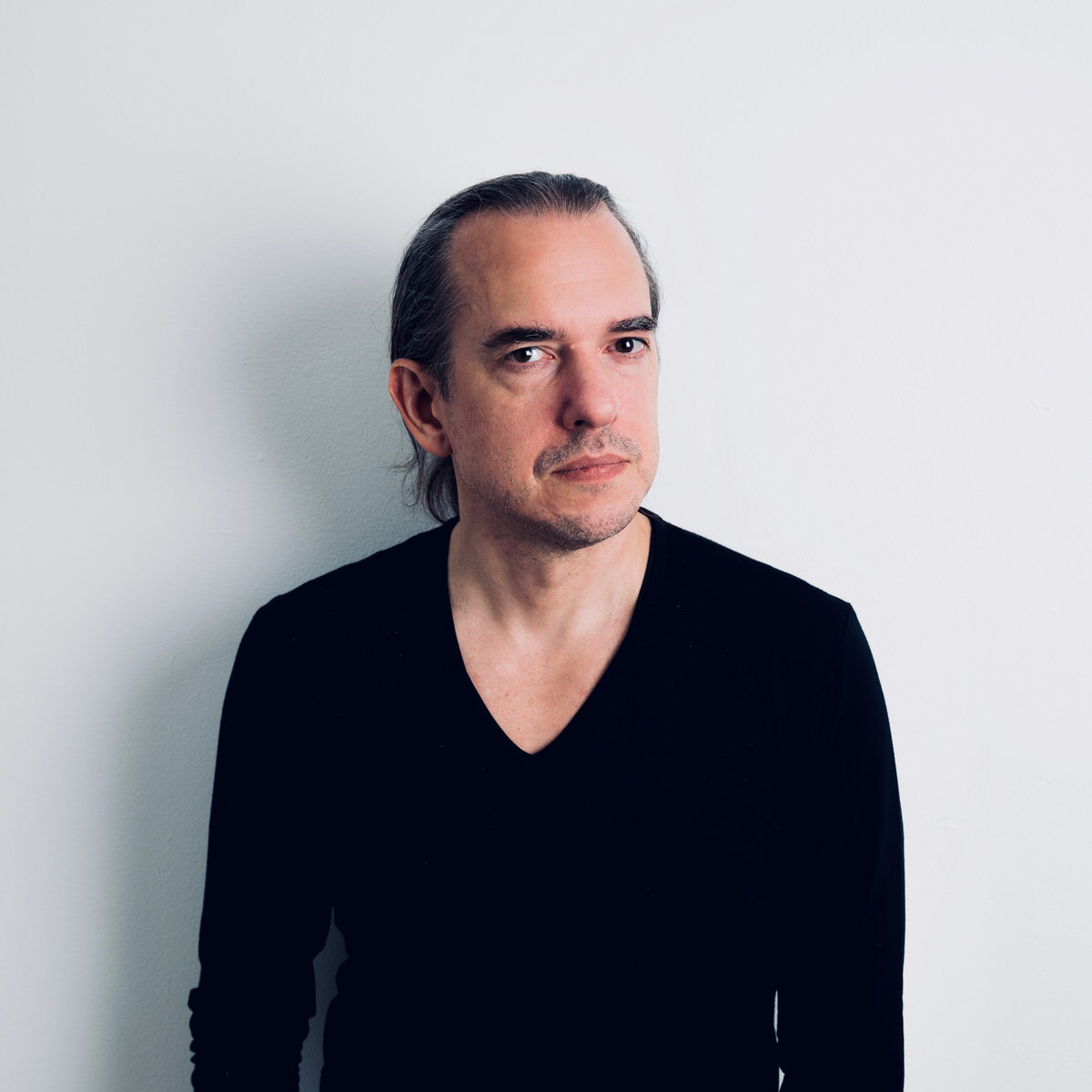
Name: Marc Pelath aka The Laconic
Nationality: American
Occupation: Composer, musician
Current release: The Laconic's Ascension, produced by Markus Reuter, is out via iapetus and physical copies can be pre-ordered now.
Recommendations: Readers in the UK and EU are more familiar with Mike Oldfield's discography, but in the US, he is generally only known for Tubular Bells, if even that, and for me, that was just him getting warmed up. Hergest Ridge is the obvious place to go next, but I'm going to recommend Incantations. Incantations isn't a fan favorite, but it's one of my mine--it's just breathtaking.
I remember hearing Dream Theater for the first time in an actual record shop in an actual mall. It felt like a new era of prog to me. That was Images and Words, and I thought, and still think, that the next album Awake was even better. Then I gradually ... lost interest. The difference, I eventually realized, was that the most musical person had left the band after Awake.
Kevin Moore's first solo album under the name Chroma Key, Dead Air for Radios, is what I loved about Dream Theater, stripped of the excess. It's not unknown, but it deserves to be better-known.
[Read our Markus Reuter interview]
If you enjoyed this The Laconic interview and would like to stay up to date with his music, visit his official homepage. He is also on Instagram, and Facebook.
Where does the impulse to create something come from for you? What role do often-quoted sources of inspiration like dreams, other forms of art, personal relationships, politics etc play?
There wasn’t always such an impulse to create; certain conditions had to arise for that impulse to manifest and become self-sustaining.
For most of my life I have had vague aspirations of becoming a musician, but eight years ago I became keenly aware that the clock was ticking away on my life, so I started taking touch guitar lessons from Markus Reuter. As my confidence grew, I learned to record and use a DAW, then I began to write a few short pieces, because I wondered what would happen if I just played at being a real musician, doing the sort of things that real musicians do.
I soon discovered that there was no difference between playing at being a musician and actually being a musician, and what's more, that I was capable of making the kind of music that I craved to hear. I could draw from the best bits of music I had heard throughout my life, and combine and modify and evolve them, making them my own, and more closely suited to my tastes. And I could get better at it over time, with enough work and instruction.
So the impulse came from that, and now it is ever-present. I'm always eager to hear what I create next.
For you to get started, do there need to be concrete ideas – or what some have called a 'visualisation' of the finished work? What does the balance between planning and chance look like for you?
Not to get started, but I need something like that to keep going once I’ve started. I often spin out ideas manically at first, but at some point it becomes clear that I need to get organized if I intend to see it through to completion.
I’m not exactly allergic to concept albums, and every album I’ve recorded so far has had some sort of organizing principle behind it. On my first album, Integrals, the plan was to write a song a month, and tie it to that month somehow, and although there were deviations from the plan, it mostly worked out that way. For example, "Anthem“, is in 7/4, has percussion that sounds like fireworks, and its melody is a heavily-transformed version of the national anthem of the United States; it’s a July song.
On Ascension, I was aiming for four long pieces, like Tales from Topographic Oceans or Incantations. That only sort of panned out, but it doesn’t matter. The important thing was that there was a plan; a plan, whether followed or not in the end, helps prevent the process of making an entire album from becoming overwhelming. The same applies when writing a single piece, on a smaller scale.
All of that implies that my personal balance between planning and chance is heavily weighted toward planning. I’ll allow chance to enter through random modulation of timbres, or of rhythmic patterns, but that’s about it. I just don’t leave anything to chance when it comes to composition. That could change.
Is there a preparation phase for your process? Do you require your tools to be laid out in a particular way, for example, do you need to do 'research' or create 'early versions'?
There is no preparation phase whatsoever. On the contrary, the normal pattern for me is to realize that I am writing a piece before I have consciously decided to start one.
Now, this may involve doing research or creating early versions or laying out tools in a particular way. But these things are never done intentionally, as a formal preparation phase. They just .... happen.
Do you have certain rituals to get you into the right mindset for creating? What role do certain foods or stimulants like coffee, lighting, scents, exercise or reading poetry play?
No rituals, but it’s important that I remember what the right mindset is. It’s one where I don’t take myself too seriously, and I feel free to play and experiment and not worry about the result.
Instead of a muse, I have an imp. The imp doesn't respect rules and conventions like I do. When he whispers an idea that makes me laugh out loud when I try it, I know I’ve hit on something good.
But I haven’t figured out a reliable method to get into this mindset and summon the imp.
What do you start with? And, to quote a question by the great Bruce Duffie: When you come up with a musical idea, have you created the idea or have you discovered the idea?
I am not a philosophical idealist. So my very un-sexy answer to Bruce Duffie’s question is: I have created the idea. Ideas don't exist outside of brains. To say that an idea has been discovered is a metaphor, not a literal description of what happened. I'm not sure "created" is the right word either, but it's better than "discovered".
There are a few different ways that I start (again, often unintentionally), and none of them are novel, although the first might be relatively uncommon, which is to conduct some kind of music-theoretic investigation or exploration.
"No Greater Harmony“ (Ascension) began with a suggestion from Markus to systematicallly explore the semitone and whole-tone perturbations of major and minor triads. This led to the construction of a 24-chord harmonic sequence that includes all major and minor triads in some inversion or another, with silky-smooth voice leading. That was too good not to write a piece around.
Later I did the same thing in 19-TET, a microtonal tuning system, and it's even cooler. But I haven't written a piece around it because I'm waiting for the parts to make a guitar that could play it.
The second method is improvisation, of course, which might consist of improvising on the touch guitar, or picking out chord progressions on the piano, or just playing around in the MIDI piano roll in Ableton Live.
"Dust“ (Amor Fati) grew from a single improvisation session on touch guitar in which it felt like I couldn’t hit a "wrong“ note.
"Refuge“ (Amor Fati) came from screwing around with the Fugue Machine app on my iPad ("Re-fugue") and generally trying to figure out how to use an iPad as a composition tool and DAW.
The third method is transformation of an existing piece. The melody in "Anthem" is "The Star-Spangled Banner" quantized to different major harmonic scales, then reversed and/or inverted. "Throw Open the Windows of Your Soul“ (Ascension) is, at its foundation, an inversion of "Solstice“ (Integrals), together with an added beat that turns it from 12/8 to 13/8.
"Windows" has some overt references to "Solstice" as well.
I don’t want to make too much of the connection between music and mathematics, but a significant aspect of my compositional style relies on thinking that is basically mathematical: the wielding of perturbations, transformations, sequences, factors and mutliples, combinations and permutations.
But that’s just to get going—I don’t think the end result sounds mathematical.
Many writers have claimed that as soon as they enter into the process, certain aspects of the narrative are out of their hands. Do you like to keep strict control or is there a sense of following things where they lead you?
I follow things where they lead, because I don't know the route myself. But there is one way in which I like to keep strict control: until I find the destination, I don't want input from anyone else. I need to stay on the trail as long as there is one, and any external input risks losing the trail.
That's not to say I can't collaborate with others, but I can't collaborate in this part of the process. I have to come to some natural stopping point before I turn it over to someone else.
Often, while writing, new ideas and alternative roads will open themselves up, pulling and pushing the creator in a different direction. Does this happen to you, too, and how do you deal with it? What do you do with these ideas?
If I already knew what the piece was supposed to be, it would be done. New ideas are a blessing. I try them.
What's the worst that could happen when an alternative appears? If I use it, it's because it's an improvement; if I don't, I haven't lost anything, and in fact I become a little more confident in the original idea.
There are many descriptions of the creative state. How would you describe it for you personally? Is there an element of spirituality to what you do?
It's a flow state characterized by a spirit of play and an absence of fear.
I don't understand "spirituality", but I'll admit that the creative state is sacred if anything is. Ironically, within the creative state, little is sacred.