

Name: Laura van Hal
Nationality: Dutch
Occupation: Producer, DJ
Current release: Laura Van Hal is one of the artists featured on Decennial Revelry, a compilation celebrating the 10th anniversary of Amsterdam-based club RADION. The release also contains contributions by Beau Didier & Isaiah, Beste Hira, Delano Legito, DJ Europarking, Flits, Hashashin, MYRA, and SHE/HER. Buy the release on bandcamp.
Recommendation for Nijmegen, the Netherlands: ''The Four Days Marches'' or 'The Walk of the World'. It is the largest multi-day walking event in the world in which 47,000 walkers take part every year. It coincides with the''Nijmegen Summer Festivals' The largest, free-access multi-day event in the Netherlands.' It's always in the 3rd week of July, it's the best 7 days of the year in our city!
Recommendation for Berlin, Germany: Mauerpark on a Sunday (especially in Spring & Summer). Vintage markets, food and karaoke in the amphitheater.
Topic I am passionate about but rarely get to talk about: Last year I did a course to become a Nail tech - I wanted another creative outlet besides music. It's become almost meditative for me as it takes me out of my head while I am doing nails. No distraction, fully present in the moment, like with DJing.
[Read our Myra interview]
If you enjoyed this Laura Van Hal interview and would like to stay up to date with her music and upcoming live dates, visit her on Instagram, and Soundcloud.
What were some of the musical experiences which planted a seed for your interest in electronic music?
My dad was a drummer, we always had music playing in the house when I grew up. A lot of it was music from the 60s and 70s.
Later on in life I discovered other genres and slowly discovered electronic music through friends. My love for techno started around 2010/2011 when I started going to warehouse parties and clubs.
Disco, house, techno, drum n bass, IDM and many other genres were about a lot more than just music. For you personally, is electronic music (still) a way of life – and if so, in which way?
For me electronic music has always been about experience, freedom and self expression. Whether that's by playing, producing, conversation or dancing.
Even listening at home can transcend you to another place, bring back memories, feelings or emotions. It's an amazing tool to communicate with others and with yourself.
Debates around electronic music tend to focus on technology. What, though, were some of the things you learned by talking to colleagues or through performing and/or recording with other musicians? What role does community play for your interest in production and getting better as a producer?
I love going to clubs, that's where my love for electronic music started and developed; on the dance floor.
Before I wanted to DJ myself I talked about, shared and experienced music with friends. I made different playlists online with tracks I liked and slowly started collecting records with tracks that had a special meaning to me. Talking about experiences, hearing how others perceive / experience music is very interesting and can lead to meaningful learnings and connections for a lifetime. Community and sense of belonging is important for every individual.
When it comes to production I started with a basic Ableton course that was organised in my hometown. During Covid I participated in the '10x 10' challenge, organised by DJ Rebekah. Each day we got a new challenge: Make a track in a genre you never produce. Make a short score for a specific movie scene. Or make a track out of a sample pack with sounds from daily life. Fun and very challenging!
A group of 40-50 people participated. We had to give feedback to each other through which I learned more skills. During this challenge I made a track 'Afloat' that got released on UK based label 'Platform 22.'
What are examples for artists, performances, and releases that really inspired you recently and possibly gave you the feeling of having experienced something fresh and new?
Last year I went to Draaimolen Festival, an amazing experience! Performances that stood out for me were Voices from the Sandwell Lake District, Eris Drew B2B Mark Farina, Mr G. and Spekki Webu b2b Takaaki Itoh.
The festival experience on it's own gave me inspiration to dive deeper, explore and experiment more with different sounds. I also went back to digging for older tracks on different platforms and in my own collection.
What kind of musical/sonic materials, and ideas are particularly stimulating for your own work right now?
I enjoy listening to new music that comes out. Same goes for listening to podcasts / set recordings from different artists. Plus I keep digging for tracks. Even when I am out (wherever it is) I subconsciously notice the music that's playing in the background.
I still go to clubs, that will always inspire me the most. It sparks new ideas for sets or production. When listening to sets I pay attention to how tracks are mixed, how moods, vibes and different elements change or work together. If this is in a club environment I also pay attention to the people on the dance floor, what's their response?
When I am digging for tracks I tune in to my emotions; how does this track make me feel? Sometimes I even envision myself playing tracks I am listening to.
Where do most of your inspirations to create come from – rather from internal impulses or external ones? Which current social / political / ecological or other developments make you feel like you need to respond as an artist?
Internal impulse, guided by my intuition and sometimes even the mood I am in. Most of my inspiration comes from actually being on the dance floor, I am a raver first. Also cities and people I meet along the way inspire me.
When I'm playing I trust my gut that if I feel something the people on the dance floor will do too. Social media is important these days. I feel it takes away from experiencing music in the actual moment. For me it's important to let the music speak.
Tell me a bit about the sounds & creative directions, artists & communities, as well as the colleagues & creative hotspots of your current hometown, please. How do they influence your music?
I recently moved to Berlin, that city is one big inspiration - but I'd like to share something about my hometown.
Originally I am from Nijmegen, the Netherlands. Two of my friends built 2 studios where local producers - currently 9 residents - work on their productions alone or together. There is hardware available for the residents to use, too. This hub is called 'De Link'.
Recently the basement of the building was rebuilt. There is a room with a DJ set up where the residents and local DJs are able to practise or record sets. Or have a fun mixing session with friends. A 3rd small live - studio in the making. It's a creative hub to come together and make music.
Recently the first 'De Link' EP came out with tracks by 4 of the residents:
Today, electronic music has an interesting relationship between honouring its roots and exploring the unknown. What does the balance between these two poles look like in your music?
For me it is very important to keep honouring the roots - why, where, and how it started.
I honour, admire and go back to that for inspiration. Whether that's through playing, listening to sets or searching for older tracks.
In as far as it is applicable to your work, how would you describe the interaction between your music and DJing/DJ culture and clubs?
Before I started DJing the DJ culture, clubs and the dance floor already influenced me — I went out to see different artists play on a regular basis.
I have many good memories and created a lot of meaningful connections along the way. I use all that in my sets.
How, would you say are your live performances and your recording projects connected at the moment? How do they mutually influence and feed off each other?
My practice sessions at home are about trying new things. Whether that's genres or perfecting skills. When recording a podcast I prepare and record it meticulously, borderline perfectionism.
For club sets I have a different, more loose method so I can divert in the moment.
Even if AI will not entirely replace human composition, it looks set to have a significant impact on it. What does the terms composing/producing mean in the era of AI, do you feel?
AI doesn't have emotions or feelings like humans do. If you want to create - within any art form - AI could be helpful to maybe get ideas going but it will not take away from or speed up the human creative process. How boring life will become if the human touch, flow and process were to be taken away from creation itself.
Being able to express yourself through creating is a gift, not something that can be replaced by AI.

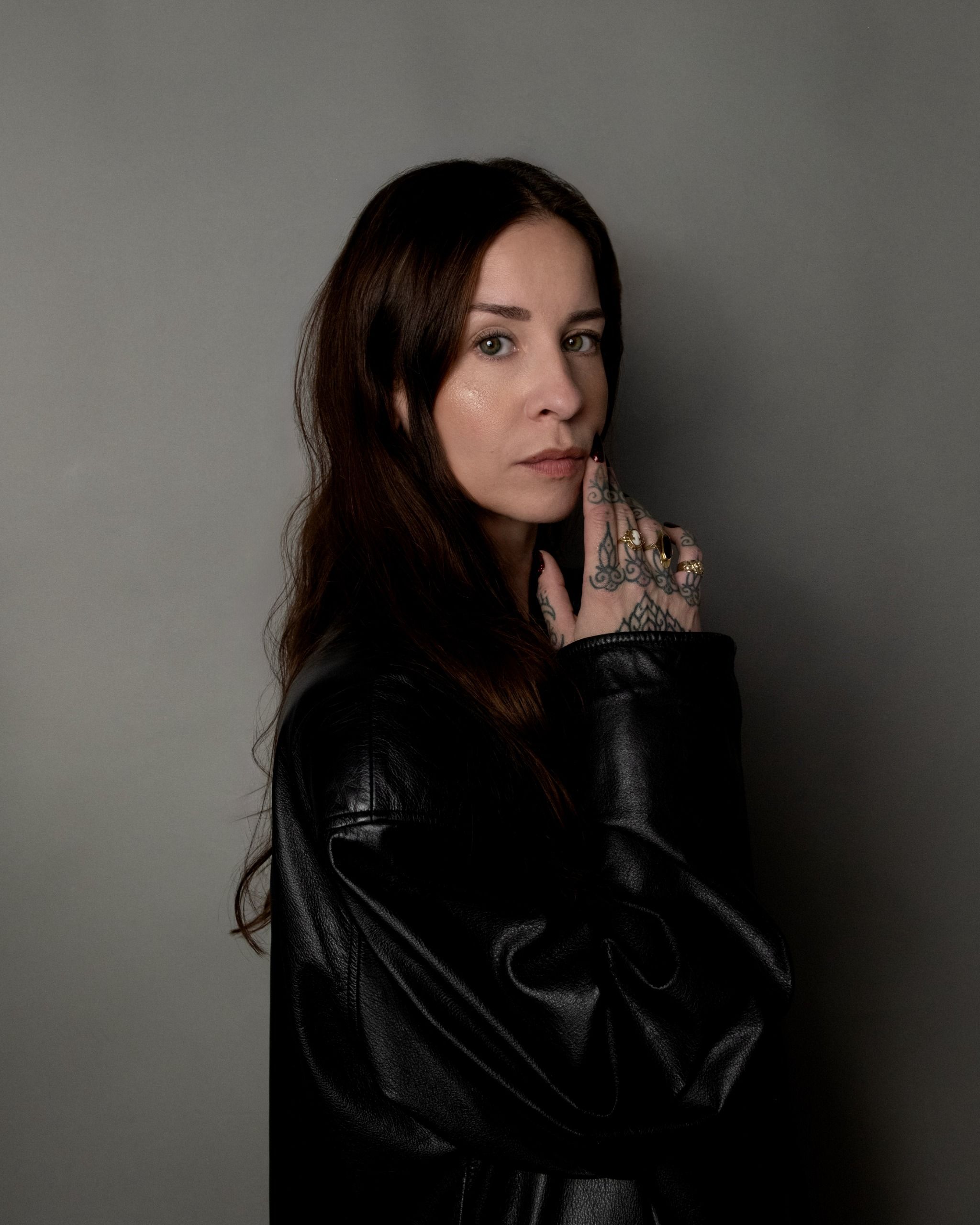 Laura van Hal Interview Image (c) the artist
“How boring life will become if the human touch, flow and process were to be taken away from creation itself.“
Video
