Published
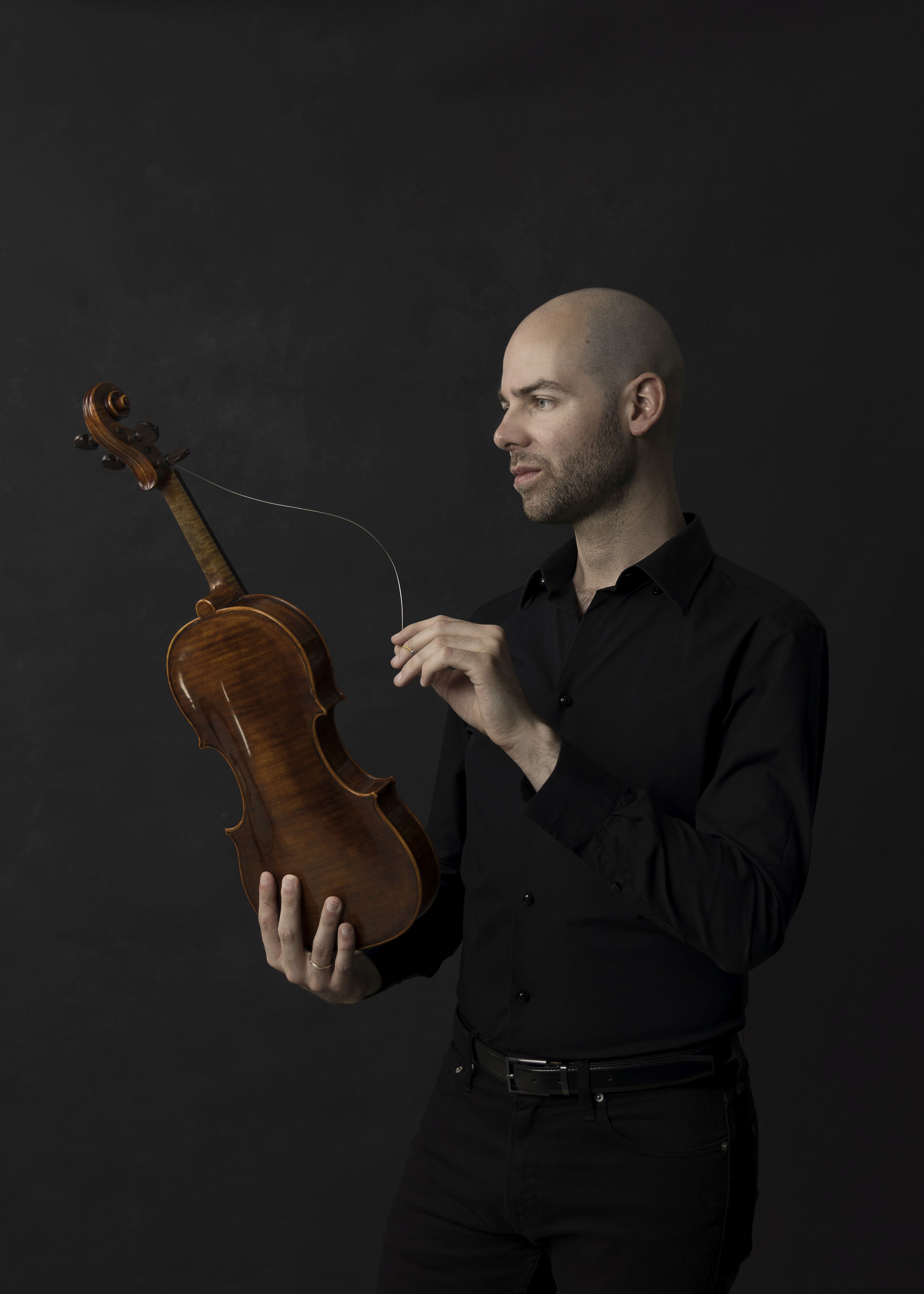
Name: Léo Belthoise
Nationality: French
Occupation: Composer, violinist, experimental artist
Current Release: Léo Belthoise's most recent release is his performance of Luiz Costa's "Sonatina for Violin and Piano" with Bruno Belthoise.
If you enjoyed this Léo Belthoise interview and would like to know more about his music, visit his official homepage. He is also on Instagram, and Soundcloud.
For a deeper dive, read our earlier Léo Belthoise interview.
You mentioned that “the performer’s choice of close collaborations makes a big impact in what becomes predominant in the artistic world.“ What do you generally look for in a collaborator and what made you want to collaborate with each other specifically?
I like it when people follow a line and don’t change their opinions to please their colleagues in the first place. Otherwise we may lose the main benefit of a collaboration which is making a piece of art out of everyone’s contribution. The process itself will shape our opinions anyway.
Most of the musicians I work with are people I met on other artistic projects, so there is already a feeling that we could do something together. But no matter where they come from, I want my collaborators to re-invent me by remaining true to themselves.
What kind of work did you do with Manon Lepauvre and Maël Bailly? In which way was it eye- and ear-opening for you?
Together with Manon we built the Ys cycle, which consist of three pieces for violin solo, violin with live electronics and violin with ensemble. I also performed some of her chamber works, but all pieces were premiered between 2020 and 2022, and two of them have been studio recorded.
The quality of her uncompromising composition process, which remains very open to external suggestions, has played a big role in my musical development by pushing my abilities to their limits.
The music of Maël Bailly is a more recent encounter, and it demands a very careful attention to the details of sound production, articulation, gesture. It forces me to listen more, to listen better. I also went improvising with him to guide visitors through a forest during an open-air exhibition, which was a memorable moment.
The political engagement of these composers and their common interest towards music education are inspiring and converge to where I believe music should stand today.
What tend to be the best collaborations in your opinion – those with artists you have a lot in common with or those where you have more differences? What happens when another musician takes you outside of your comfort zone?
There is good on both sides, but I couldn’t survive in this artistic world without differences and contradictions, I need them to keep my curiosity active. The last thing I want is to wake up one day with the feeling that everything has been made, that I have nothing more to learn and should quietly wait for my apocalypse.
As it will come anyway, I prefer to work with the insecurity of this outside zone, even if it’s difficult sometime. I may start to think that it isn’t worth it, that the outcome is not going to be appreciated. But eventually I find that even something niche and eccentric will be convincing when it is prepared and performed from the heart and the soul.
If I get home and feel that I am not exactly the same than when I left, it means that something precious has happened in the meantime.
What are your thoughts on the need for compromise vs standing by one's convictions? How do you resolve potential disagreements in a collaboration?
Chamber music is a good example of this delicate sociology.
You need to find a way to align the sensibilities of people with different musical backgrounds, and most of the time it’s about attenuating everything that can get in the way, like ego, mannerism, personal conflicts and inferiority complex. Sometimes you have to compromise to save time and energy, sometimes you have to accept that it doesn’t work as you thought, and sometimes you can take the time to persist and see where it leads.
I wish there was a secret recipe, but in any case, I am sure that a conflictual situation will never add any kind of value to the work. I find very useful to ask ourselves to what extend will the audience understand the performance in the same way as we do, and then to try out our ideas in front of other musicians if possible.
It doesn’t resolve everything but at least it brings the focus back on the purpose.
Do you feel as though writing or performing a piece of music is inherently different from something like making a great cup of coffee? What do you express through music that you couldn't or wouldn't in more 'mundane' tasks?
I don’t see a substantial difference.
There are people who dedicate their life to find specific ingredients, to refine and combine them to make a rich and complex beverage. Music is a food for the ears, just like food can feel like music to your tongue. Both can carry memories and emotions, they can stimulate or tranquilize, and they will be appreciated, or they won’t.
We could generalize to all creative activities that involve an infinite learning curve at an individual scale, they simply speak to us through different senses. The question is more about the role we expect these acts to play when we include them in our collective life.
Because of its level of potential multi-faceted complexity, I believe music to be a fantastic vehicle for human sensibilities, and from this perspective the reflections towards its inclusion in the daily life can be considered a public matter.