Published
Name: Lucy Durán
Occupation: Producer, ethnomusicologist, radio presenter, Professor Emerita at SOAS Uni of London
Nationality: Spanish-British
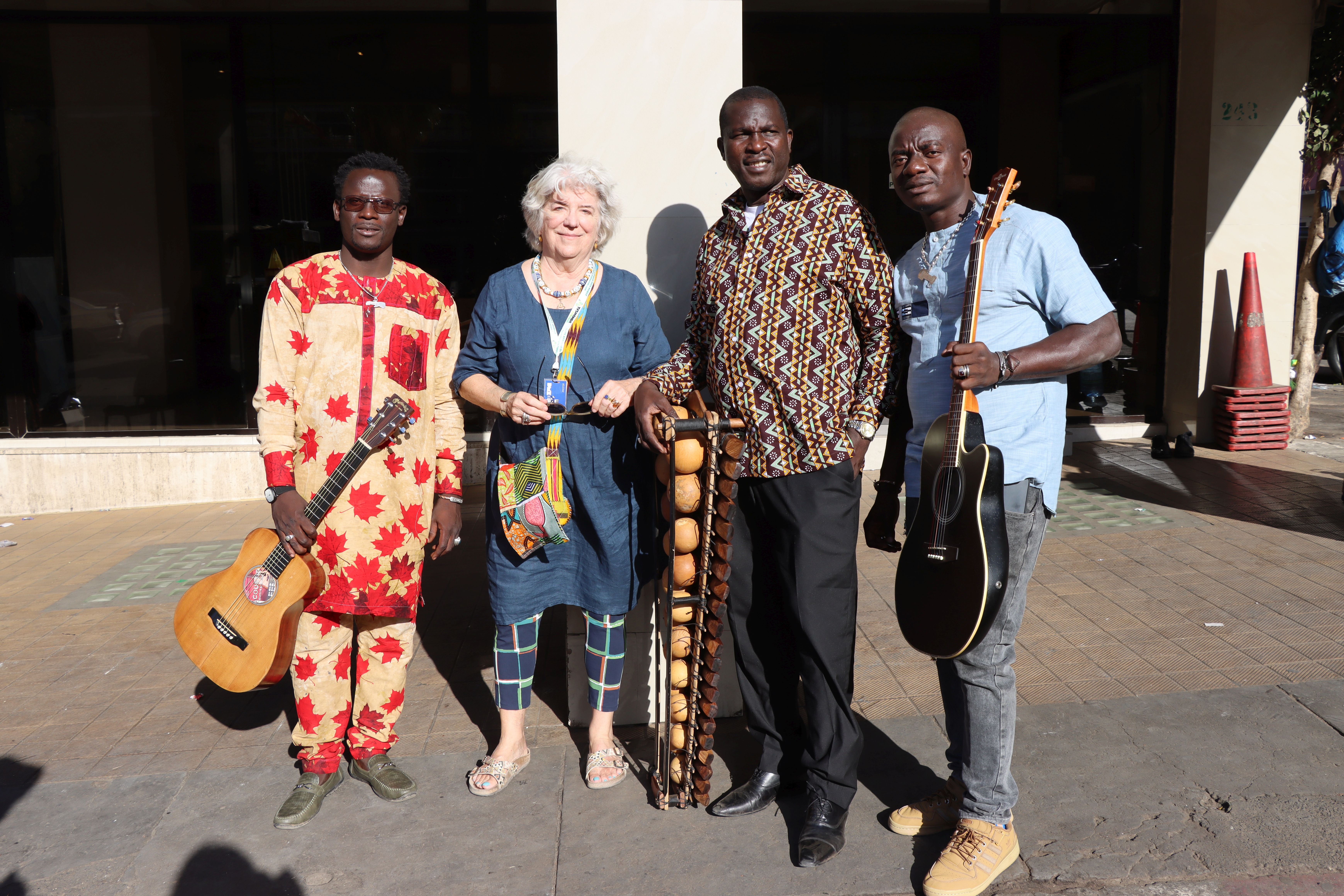
Current release: Lucy Durán lent her magic touch to the new album Guitari Baro by The Mande Griot Trio, out via Chrysalis Global.
Recommendations on the topic of sound: Having spent 27 years on BBC Radio, presenting what was at the time known as ‘world music‘ on a programme called WORLD ROUTES (BBC Radio 3), I would suggest that people listen to some of the programmes I recorded on location around the world. We talked to musicians about their music, its history and cultural significance, and recorded it live, not in a studio. And in this way, helping to understand the meaning of music across cultures. Please note: listening is free, but these programmes can only be accessed from the UK.
If you enjoyed this Lucy Durán interview and would like to keep up to date with her work, visit her on Instagram.
When I listen to music, I see shapes, objects and colours. What happens in your body when you're listening? Do you listen with your eyes open or closed?
I listen a great deal to music from around the world, particularly West Africa with which I have a long involvement as music producer, dating back to the 1980s. When I’m listening to live music, I don’t close my eyes, as I want to listen with my eyes and ears.
I don’t see any colours or shapes, but certain musics trigger intense emotion. And some musics make me want to dance.
How do listening with headphones and listening through a stereo system change your experience of sound and music?
Listening with headphones cuts me off from my immediate surroundings and allows me to travel in my mind.
That’s when I might close my eyes and allow my mind to fly. It’s a more abstract form of listening than watching a live performance.
Tell me about some of the albums or artists that you love specifically for their sound, please.
I grew up listening to a variety of different artists.
I love the voices of Mahalia Jackson and Billie Holiday, also Bill Withers, and Taj Mahal. From Cuba, old-timers Duo Los Compadres, Celina González and Benny Moré, also the great dance band NG La Banda.
From Senegal, Youssou N’Dour and Orchestra Baobab, also the female singer Mahawa Kouyaté ~ listen to her song, “Saya Magni”).
From Guinea, Bembeya Jazz, Sekouba Bambino, and Sory Kandia Kouyaté. From Mali : so many artists, including Salif Keita, Toumani Diabaté, Kassemady Diabaté, Ballaké Sissoko, Trio Da Kali, singer Kandia Kouyaté, Oumou Sangaré, Bassekou Kouyaté.
[Read our Ballaké Sissoko interview]
From DRC (former Zaire): Franco Luambo Makiadi, les Quatres Etoiles and Rochereau.
From Spain: Ketama, Paco de Lucía, Enrique Morente. And I never tire of JS Bach.
Do you experience strong emotional responses towards certain sounds? If so, what kind of sounds are these and do you have an explanation about the reasons for these responses?
I find that watching children perform music always automatically brings tears to my eyes. It must be connected to my childhood, but I don’t know how or why.
Listening to Spanish folksong, and to my father’s music, always moves me deeply, this is because my father was exiled from Spain after the Spanish Civil War, and performing Spanish folksong – and his own compositions on piano - were his way of keeping his memory of his homeland alive.
There can be sounds which feel highly irritating to us and then there are others we could gladly listen to for hours. Do you have examples for either one or both of these?
Any music that is performed out of tune, even slightly, I find unbearable. (In the studio, I’m sometimes called Tuning Police).
I am immensely irritated by Muzak and a lot of AI generated music. I could gladly listen to good live music, well-performed and in tune, for hours without tiring of it.
For example, the flowing instrumental kora duets on the album New Ancient Strings, which I recorded in 1997 in Mali, just reissued on Chrysalis, are endlessly mesmerising.
Another example is the brand new project Guitari Baro, whose instrumental album I have just produced.
It features two guitars and a balafon, all superb musicians from Guinea and Mali, who interlock with stunning virtuosity and lyricism, with touches of jazz and blues in subtle and innovative ways.
Are there everyday places, spaces, or devices which intrigue you by the way they sound? Which are these?
I am intrigued by spaces, such as mountains, that have echoes or send you back your own voice.
I also love concert spaces with very high ceilings that are highly resonant, for example, the Great Hall at Dartington, south Devon, or some churches and cathedrals.
Have you ever been in spaces with extreme sonic characteristics, such as anechoic chambers or caves? What was the experience like?
I have been in mountains and caves that have a striking acoustic, and in some cases I have heard music performed there and find it very moving.
The stunning concert Hall in Lanzarote inside a volcanic tunnel, Jameos del Agua, is a striking example.
What are among your favourite spaces to record and play your music?
I like to record in informal spaces. I love an atmospheric studio such as LaBoutique in Dakar, Senegal, where we recorded the album Guitari Baro, just released on Chrysalis Global.
But sometimes a studio can be confining - and then, musicians start jamming outside, and can often been more creative, producing better music. So we set up quickly to record as they are improvising!
Do music and sound feel “material” to you? Does working with sound feel like you're sculpting or shaping something?
Music doesn’t feel material to me, though playing an instrument is very physical.
Working with music can be very creative, just as sculpting can be.
How important is sound for our overall well-being and in how far do you feel the "acoustic health" of a society or environment is reflective of its overall health?
Music is essential for our wellbeing. All societies should have spaces and times to play and listen to music, from early childhood onwards. Music heals.
I cannot understand how some religions forbid music. To me, this is a clear indicator that the religious authorities fear music because of its power to influence thought.
Sound, song, and rhythm are all around us, from animal noises to the waves of the ocean. What, if any, are some of the most moving experiences you've had with these non-human-made sounds?
The wind, the sea, waves, rippling rivers, are all entrancing for me.
Many animals communicate through sound. Based either on experience or intuition, do you feel as though interspecies communication is possible and important? Is there a creative element to it, would you say?
I think that domestic cats and dogs have a form of speech, and clearly animals in the wild also communicate through sound.
Birds of course are the ultimate example of creative song and communication. This is why in many cultures, singers are likened to songbirds, for example, Oum Koulsoum (from Egypt) was known as “the Nightingale of the Nile“, and Oumou Sangaré (from Mali) is known as a “songbird“ (kono).
Tinnitus and developing hyperacusis are very real risks for anyone working with sound. Do you take precautions in this regard and if you're suffering from these or similar issues – how do you cope with them?
I have mild tinnitus in one ear. I acquired this problem from standing too close to loudspeakers at concerts over many years.
Mostly it doesn't bother me, but I’m now very careful to protect my ears from loud noises, and I don’t stand anywhere near loudspeakers. I always carry earplugs with me.
We can surround us with sound every second of the day. The great pianist Glenn Gould even considered this the ultimate delight. How do you see that yourself and what importance does silence hold?
Silence is important. I actively dislike background music.
Music for me is something to listen to with discrimination.
Seth S. Horowitz called hearing the “universal sense” and emphasised that it was more precise and faster than any of our other senses, including vision. How would our world be different if we paid less attention to looks and listened more instead?
I think that deafness must be torture. Sound is the most important of the senses.