Published
Part 1
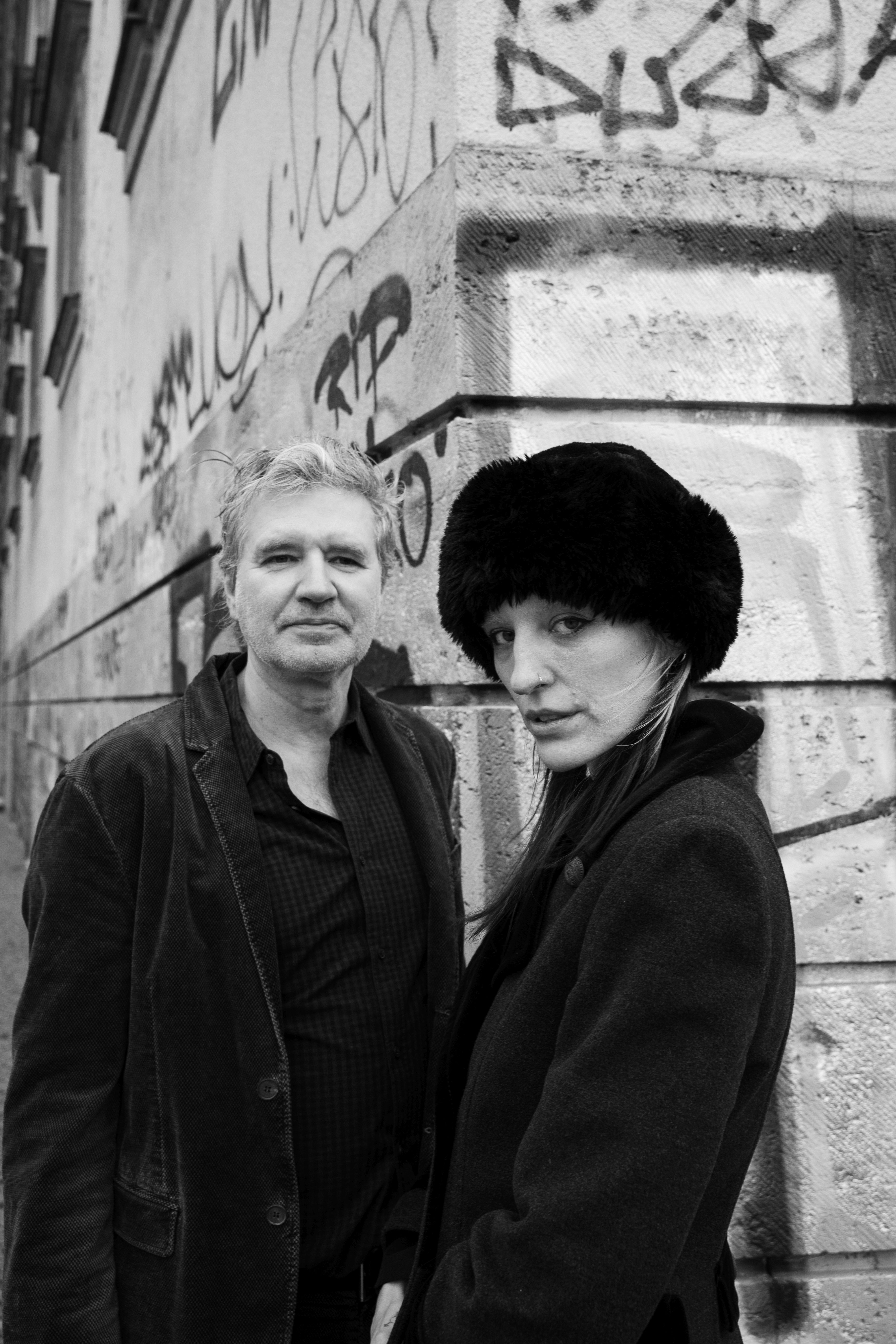
Names: Marc Elsner, Kimi Recor
Interviewee: Kimi Recor
Recent release: Marc Elsner & Kimi Recor's album i is out August 1st 2025 via Wandering Astray.
If you enjoyed this Marc Elsner & Kimi Recor interview and would like to stay up to date with their music, visit Kimi's official homepage and Marc Elsner on the website of Marx Audio.
Where does the impulse to create something come from for you? What role do often-quoted sources of inspiration like dreams, other forms of art, personal relationships, politics etc play?
For me, the impulse to create is pretty primal, but it has also become a practice.
I used to think I could only make something when I felt inspired, like I had to wait for the muse to show up. Now I see it more as a discipline. Creating is part of my routine, part of how I move through the world. Sometimes I have to lead myself into it, whether that means reading something that lights me up, going to see an exhibition, listening to music, or just getting out of my usual environment.
I try to take myself on what I call an artistic date once a week, when I can. It could be architecture, a gallery, a live show, anything that wakes something up in me. That’s also why I love collaborating. I’m often really inspired by the people I work with and the way they think. That’s actually how this project with Marc started.
We had worked together on something else, and I was just really inspired by him, both as a person and by his musical history. We’re both music nerds, so we got excited to nerd out together, and from that energy, we created this concept and ended up recording the entire album live.
For you to get started, do there need to be concrete ideas – or what some have called a 'visualisation' of the finished work? What does the balance between planning and chance look like for you?
What I’ve learned from my own creative process is that no matter how much I plan, things never end up exactly the way I imagined. I might start with a vision or a feeling, but the finished work usually surprises me. What actually works best for me is setting limitations. That’s where things get interesting.
With this project with Marc, we gave ourselves a clear framework. We chose specific instruments and stuck to them. Everything was recorded live. There was no multitracking, no going back to fix things, no over-editing. There was this sense of commitment to both the perfection and the imperfection.
That balance between intention and letting things unfold on their own is where the magic tends to happen.
Is there a preparation phase for your process? Do you require your tools to be laid out in a particular way, for example, do you need to do 'research' or create 'early versions'?
For this project, like I mentioned before, the preparation was mostly about deciding which tools we were going to use. I remember we did one early run-through where we didn’t record anything. We were just playing and experimenting, and afterwards we were both like, wow, we really wish we had captured that. So from that point on, we just recorded every time we sat down together.
We were really in a state of play. We’d drop into these long, immersive sessions, often hours at a time, getting into deep trances with these looping, droning frequencies. What you hear on the album is just a small slice of those sessions. Nothing was planned out. We didn’t map out any kind of arc. It was just us getting completely lost in the sound, and I’m so glad we decided early on to hit record, because that’s where the magic lived.
That being said, both Marc and I came into the project with a deep well of experience. Marc is not only a brilliant musician, but also a well-known producer, mixing engineer, and audio engineer. And I’ve spent years in bands, making music, and also working with sound in a healing context, specifically with frequency and nervous system regulation.
So even though we didn’t do formal research or sketches, all of that lived experience came with us into the room. It shaped what we created, even if it wasn’t written down.
Do you have certain rituals to get you into the right mindset for creating? What role do certain foods or stimulants like coffee, lighting, scents, exercise or reading poetry play?
It’s interesting, because when I think about it, we didn’t really have a set ritual that we consciously followed for this project. But there were definitely things that became part of the atmosphere. Marc and I both love a good cup of coffee, and we always enjoyed eating together. Food was definitely part of the joy.
What felt most important, though, was the energy we created in the space. We would usually dim the lights and let ourselves get completely lost in the sound. That felt like the ritual. The first ten minutes of each session were like a soft landing, a slow entry into the music where we allowed ourselves to drop in fully. That process became the ritual for me.
In my solo work, I have more defined rituals to help me prepare. But in this collaboration, the music itself was the ritual. Everything else was just a beautiful part of the container.
Tell me a bit about the way the new material developed and gradually took its final form, please.
We actually started with some monochord recordings that Marc had from a friend of his, and she generously said we could use them. That was kind of the starting point.
At the time, we were also working on one of my other projects, and we started having these conversations about frequency and how powerful it is as a tool for healing. From there, the ideas kept expanding. We got really into exploring convolution reverb and how we could use it creatively.
A lot of it unfolded naturally. I remember one session where we said, let’s just bring in the gong, the convolver, our voices, and see what happens. That sense of curiosity really shaped the direction of the project.
We were also collaborating with David, who created the entire visual world around the album. The core of that visual concept is about how frequency moves through us, especially because our bodies are mostly made of liquid. We wanted to show how the sounds we were creating could actually affect water in real time.
So we placed a cup of water on top of a speaker and lit it to highlight the movement. It felt important to show the physical impact of sound in an organic, analog way, especially now when so many visuals are created digitally. That felt grounding and alive.
That whole process became the seed for the project’s deeper concept, and I think we’re just at the beginning. There’s so much more we’re excited to explore from here.
Many writers have claimed that as soon as they enter into the process, certain aspects of the narrative are out of their hands. Do you like to keep strict control or is there a sense of following things where they lead you?
You know, I’m quite an anxious person, and that’s made me feel at times like a bit of a control freak. My inner control freak definitely shows up now and then. But I think that’s one of the things I really love about music.
Even when I try to control it or shape the narrative, it always ends up leading me somewhere else. It moves me out of that tight, anxious space and into something more open and exploratory. When I reach that place where anything can happen, it feels like being a kid again, just creating for the sake of it. That’s the magic of it for me.
Once I really enter the creative process, control doesn’t exist anymore
There are many descriptions of the creative state. How would you describe it for you personally? Is there an element of spirituality to what you do?
For me, being in a creative state feels like being in communion with spirit. I’ve always considered myself spiritual, but not in a dogmatic way. My creative practice is what connects me to something greater, to what I imagine people mean when they talk about feeling truly connected. For me, creating is a form of prayer.
When I’m in that flow state, where time melts away and I feel completely aligned with what I’m doing, it feels like a deep knowing. Like I’m exactly where I’m meant to be, doing exactly what I’m meant to be doing. It’s a surreal and beautiful feeling.
But it’s not something I can just drop into at any moment. Sometimes it takes days or even weeks to reach that place. I keep showing up for it, no matter what. The practice itself is the pathway. And when I do find myself in that state, it really does feel spiritual.
Music has always been more than just sound for me. It has always been a way to transcend. I feel incredibly lucky to connect with it in such a sacred and personal way.