Published
Part 2
How would you describe your relationship with your instrument – is it an extension of your self/body, a partner and companion, a creative catalyst, a challenge to be overcome, something else entirely?
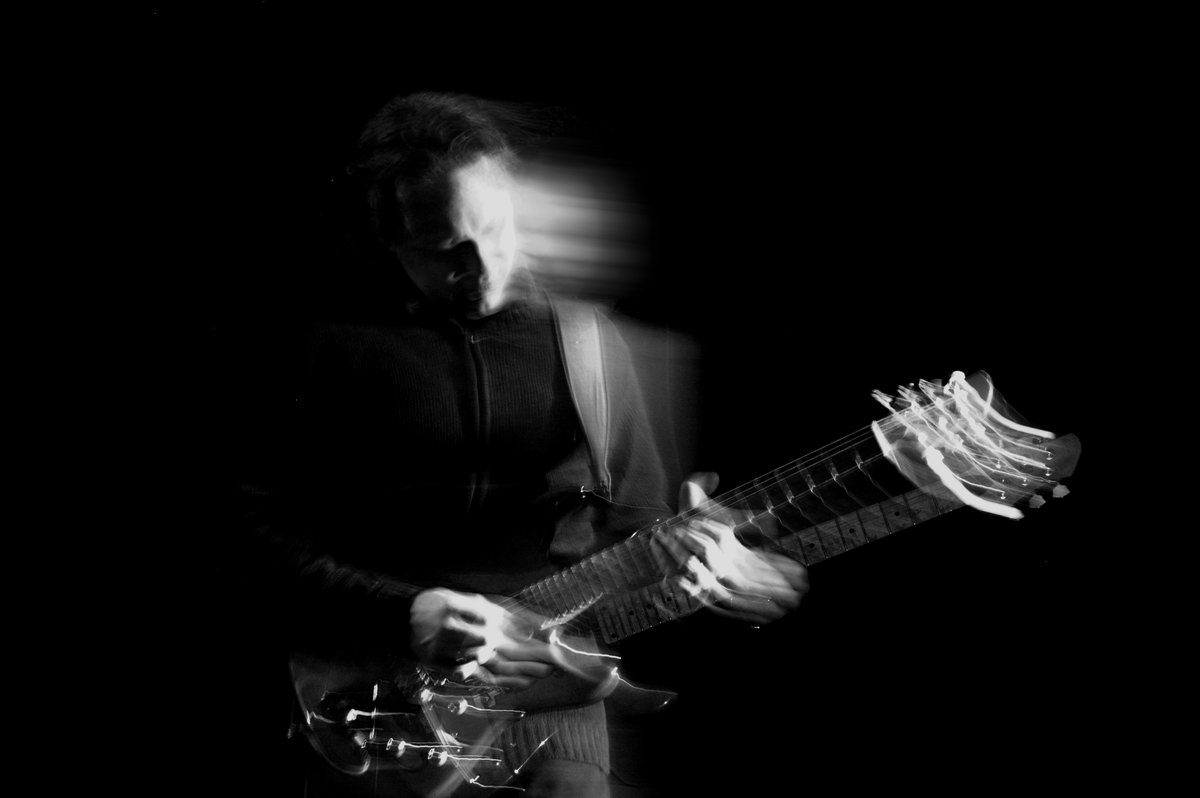
My guitar is all these things depending on what I’m doing. When I'm playing and really immersed in the music and the moment, I definitely feel one with my instrument and like it's an extension of my me. There's no feeling of a boundary where my guitar ends and I begin. It's in this state or this zone where a lot of my best playing happens.
Other times it can be a real challenge because however much I progress as a player, I can always hear something farther, something I can actually play. That's a blessing and a curse. It means having new ideas is rarely a problem for me and that's obviously a positive. But the down side is that a lot of the things I hear in my head are unplayable. So there's the frustration of only being able to play some of what I can hear, but much of it being out of reach.
I'm constantly putting in a lot of work to try and reach areas I'm hearing in my head that I'm not currently able to play. But that kind of work is slow, it takes months and years and I know I'll only ever be able to grasp some of what's in my imagination.
Jazz has always had an interesting relationship between honouring its roots and exploring the unknown. What does the balance between these two poles look like in your music?
Miles Davis' Bitches Brew overturned many aspects of the jazz that came before it. You could say the same of much of Jan Garbarek's music, or Pat Metheny's and other great innovators in jazz. Exploration and innovation are the hallmarks of great jazz for me. The tradition is not something I see as having any importance.
[Read our Steve Rodby (Pat Metheny Group) interview]
Influence from what has come before will always remain. Everything any of us plays has come form something we've heard somewhere. But for me the word "tradition" and jazz are almost like opposites. Tradition totally makes sense for some thing like folk music. But for me what defines the history of jazz is innovation and often overturning what came before. Looking at the history of jazz makes that clear.
In the last two or three decades some styles of jazz have been frozen in time, taught in schools and repeated by graduates in an endless repeat of the past. I even enjoy listening to this sort of music if it's played with real feeling. But it's not jazz to me in the same sense that Charlie Parker, Thelonious Monk, Miles Davis, Ornette Coleman, Cecil Taylor, Jan Garbarek, Kenny Wheeler and other great jazz musicians who carved a new paths and moved jazz forward in new directions are. To me that's the essence of what jazz is and it's certainly the history of it.
For me, honouring the history of jazz means breaking traditions and innovating, not staying within a tradition.
For many artists, life-changing musical experiences take place live. How do you see that yourself?
If the moment is really happening musically, if there is great interaction between the musicians, then it doesn’t matter to me whether it’s live or in the studio. Live there’s an audience there, but when I’m in the studio the audience is still there for me, there’s just a delay before they’ll hear it.
In some ways I don't draw a distinction between the two. I've also done quite a few studio recordings with a live audience. For example live radio broadcast recording sessions with Kevin Kastning and also with Markus Reuter as well as quite a few live studio sessions in front of an audience with Markus for our TEAR project. For me these were a perfect fusion of studio and live.
[Read our Markus Reuter interview]
But there are differences between live and studio obviously. With some live performances there's an energy that can happen because there's an audience in front of you, so you know have to make it as good as it can be. This can give you impetus to play with energy and focus. On the other hand you might feel like taking less risks in front of an audience.
In the studio, things can be more considered. You can do a take, then have a break and consider the bigger picture of the art you are trying to create. You might think: I know it could be better or I can feel that a different approach would speak more to the intention of the composition. Then you can do another take, and that might be a lot better or maybe have a deeper connection to the intention of the music. You don't get the chance to do that live, it is what it is, for better or worse.
In the studio you can afford to take more risks. During a take you can try for something that's beyond what you know or have done before. If it goes wrong it doesn't matter because you can scrap that take and do another one. But if it works you might discover inspired new territory, or reach depths you haven't reached before.
Of course exploring new territory does happen during some live performances. But you also know you owe it to the audience to make sure everything works as well as possible musically, and that might not lend itself so much to taking risks and exploring new territory. I just find that in the studio you have more opportunities to make that happen. Having said that there's nothing like the fun of playing live. For me they both offer different but equally valid ways of making music happen.
There is also the concept of live in the studio. In other words, you agree there will be no over-dubs and no second takes, you start recording and just play. Everything I've done with Kevin Kastning to date has been live in the studio (10 albums). The same is true of The Stone House and Lighthouse albums I recorded with Markus Reuter, Asaf Sirkis and Yaron Stavi (on The Stone House). There can definitely be a blurring of the line between live and studio.
The Montreux Festival intends to preserve its archive of recordings for future generations. Do you personally feels it's important that everything should remain available forever - or is there something to be said for letting beautiful moments pass and linger in the memories of those that experienced them?
A great moment in music is a precious thing and it’s rare. Why loose that when others can enjoy it, be moved and inspired, even have their lives changed by it?
There are live recordings that had a huge influence on me, Coltrane's many live recordings are a good example. If all I had was Coltrane’s studio recordings, I’d be missing what for me is his most powerful and innovative musical output.
I think repeated listenings often reveal new levels of musical meaning. There are amazing moments I've only really picked up on after listening to a live recording several times.