Published
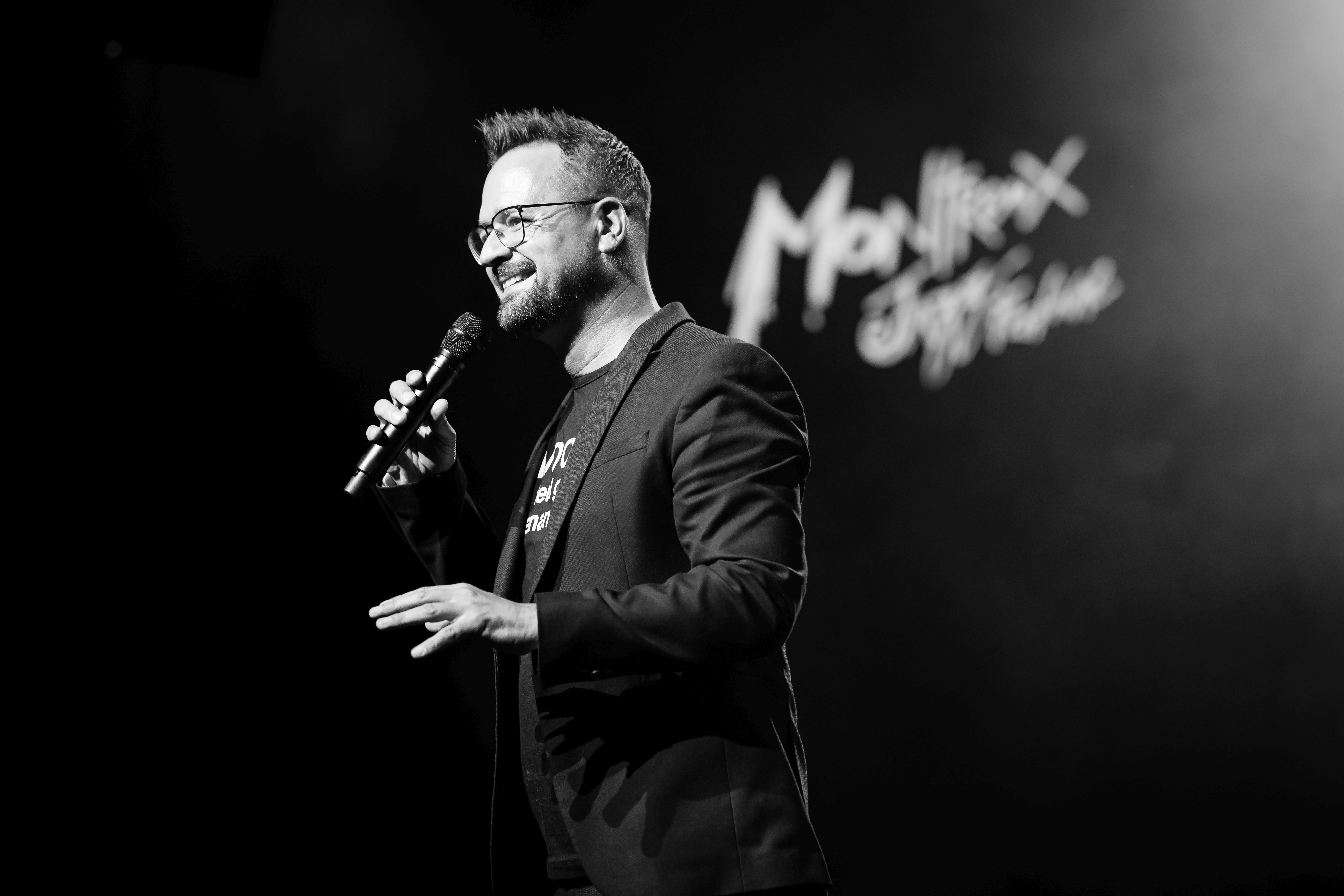
Name: Mathieu Jaton
Nationality: Swiss
Occupation: CEO of Montreux Jazz Festival
Recent release: The 2026 edition of the Montreux Jazz Festival will take place July 3rd-18th 2026. As always, it will host a wealth of artists from a plethora of genres and scenes.
For more information, visit the festival's official website.
I just watched the teaser for this year's festival, and in the background, it features intense electronic music – and no jazz! People instantly got provoked, but it does raise the question what you think, ultimately, defines the identity of a festival when there are so many factors this identity is composed of.
That's that's a beautiful question that I would love to talk about for two hours. I could argue it is the key question for the live music business in the future.
My first answer comes from the time when we started the strategy of positioning Montreux as a love brand. 10 or 15 years ago, I was with the head of Saatchi and Saatchi who invented the concept of the love brand for Harley Davidson, Apple, etc. He told me this: If you buy a regular phone, and your phone falls to the floor and breaks, your response is: What a shitty phone! But when the same happens to your iPhone, you're like: I've made a mistake! That's what Montreux is like for me. This festival is not about following trends. It is about creating needs. And that's a totally different perspective.
Back in the year 2000, the festival was focused on the person of Claude Nobs. He had been very successful, so I felt in a bizarre situation, saying that if we want to survive, we have to move away from this personalised strategy and towards a brand focus. And yet, most big festivals have gone down this road long-term. If you take Coachella, everything about that event has been created around precisely this. It's a lifestyle, and it's a marketing tool.
So it's not a question of size?
No - in the jungle of festivals right now, everyone has to look for a deeper positioning, for a deeper experience.
What does this mean concretely?
Before last year, the claim of the festival was: we're not a festival any more, we're creators of emotions. Two months ago, I told the team: yes, we're creator of emotions, but we have to move to the next stage and become memory makers.
Creating emotions is nice, but essentially, it does not set you apart. If you provide people with lasting impressions, you're on a dream level. I'm not saying that we are already there.
How did you come upon this change of focus?
I saw an interview Alicia Keys did for Apple Music, and they were talking about the start of her career. Suddenly she said, you know, my best memory is of me performing at Montreux, it's the best festival on the planet! She was up in Claude's chalet, and he showed her the entire archives, and she watched Nina Simone perform in 1976 and that made her understand why she was playing music. When I listened to that, I knew why I'm doing my job in Montreux – it's like she was expressing what we were trying to do.
When you look at the tour stats of all the major stars, they'll sell out millions of tickets in one day. It's crazy, and I'm impressed, but at the same time, it leaves me cold. For my 18 years old daughter, who is going to see Bruno Mars in Wembley, sure, it's a tremendous experience. But will that concert create a memory - a real memory deep inside her heart? We'll see. I'm not sure.
But I do think that if you ask any single person that was present last year at Montreux at that session at two in the morning, when Rey just jumped on stage with her Montreux T-shirt and started to jam for half an hour, giving everything she had inside her soul - that's a memory.
What is at the heart of creating these memories?
There's a story with Nicolas Bonard I'd like to share on this. Before he joined Montreux, he was really a digital media specialist. I asked him: “Nick, what do you think about our content on social networks?” And he looked at me and said: “It's nice, you have great images, everything is of a high quality. But what you need is a point of view. What you need is curation.”
What he meant was that everything is about bringing your content to an audience that didn't expect it but, when faced with it, feels a need for it. So we started Montreux Multimedia Ventures just on that idea alone. He brought so much into what I mentioned before, the brand strategy. It was a big step.
I spoke to Nicolas last year, and that conversation started with the word “opportunity.”
The beauty of Montreux is that we we have a small capacity, but a big festival. I mean, the festival is bigger than the city, so it's also very agile.
The most beautiful thing is that we are 100% independent, the festival is a foundation. There are no stakeholders. There is no investor looking for their return of investment. It's a board of people that are deeply in love with the brand and with the festival, with the beauty of the culture.
It may look a little bit naive and old school in the music business we are in, because now everything is a question of money and business. But I love this idea that Montreux is a place where you can think differently.
I do think that, as you alluded to earlier, artists will ultimately appreciate this. At least some will.
The most beautiful story I had in this regard was with Elton John. He was to play two shows in the Stravinsky Hall. We'd already confirmed the show, sold out all tickets. Then management called us in December to tell us they wouldn't tour with the small production any more. So they were sorry, but we have to cancel Montreux because the capacity is too small.
Instead of giving up, I asked them what they needed to make Elton's shows work in Montreux. And they told me, at least 15,000-20,000 visitors. So I said, give me one or two days. It was Christmas time, and I went on Google Maps to see if I could find an area near Montreux that could cater to that. And I found a beautiful soccer ground with a running course around it, close to the highway. It even had a beautiful view to the mountains and vineyards. The mayor told us they would support us, so I called management and said: I've got the stadium. We built the stage and the auditorium and we made it work.
The idea behind the festival is to make people happy and to entertain people. We even managed to set something up during Covid. If, during the worst period ever for humanity, culture is not able to bring something to the table, then we have failed in our our mission. So we created the stage on the lake in 2021 and it turned out to be a beautiful time.
It's very hard being an artist these days. I think it's an important attitude to say: for the duration of this festival, we'll do everything in our power to make things easier for them. To just make it possible for them to come and express themselves and worry about nothing else.
You're totally right. It's not easy!
That's why, for me, it was very clear, 15 years ago, that we would see the business split into two lines. One, which I shall call the very big entertainment music business, is about the big tours, the big residencies, Taylor Swift, Bruno Mars, Coachella. And on the other side, there are the intimate, local, small-club events, where artists can just go back to the roots. The real problem will be what happens to the middle. What happens with open air festivals with a 15,000 capacity,
The major change in the music business is that we moved from “artist name first, location second” to “experience first, location second, artist name third.” That doesn't mean that the name is not important, but it does mean that experience is now key.
Which brings us back to what you were saying that there are foremost opportunities. Let's think out of the box to find where the best opportunities lie.