Published
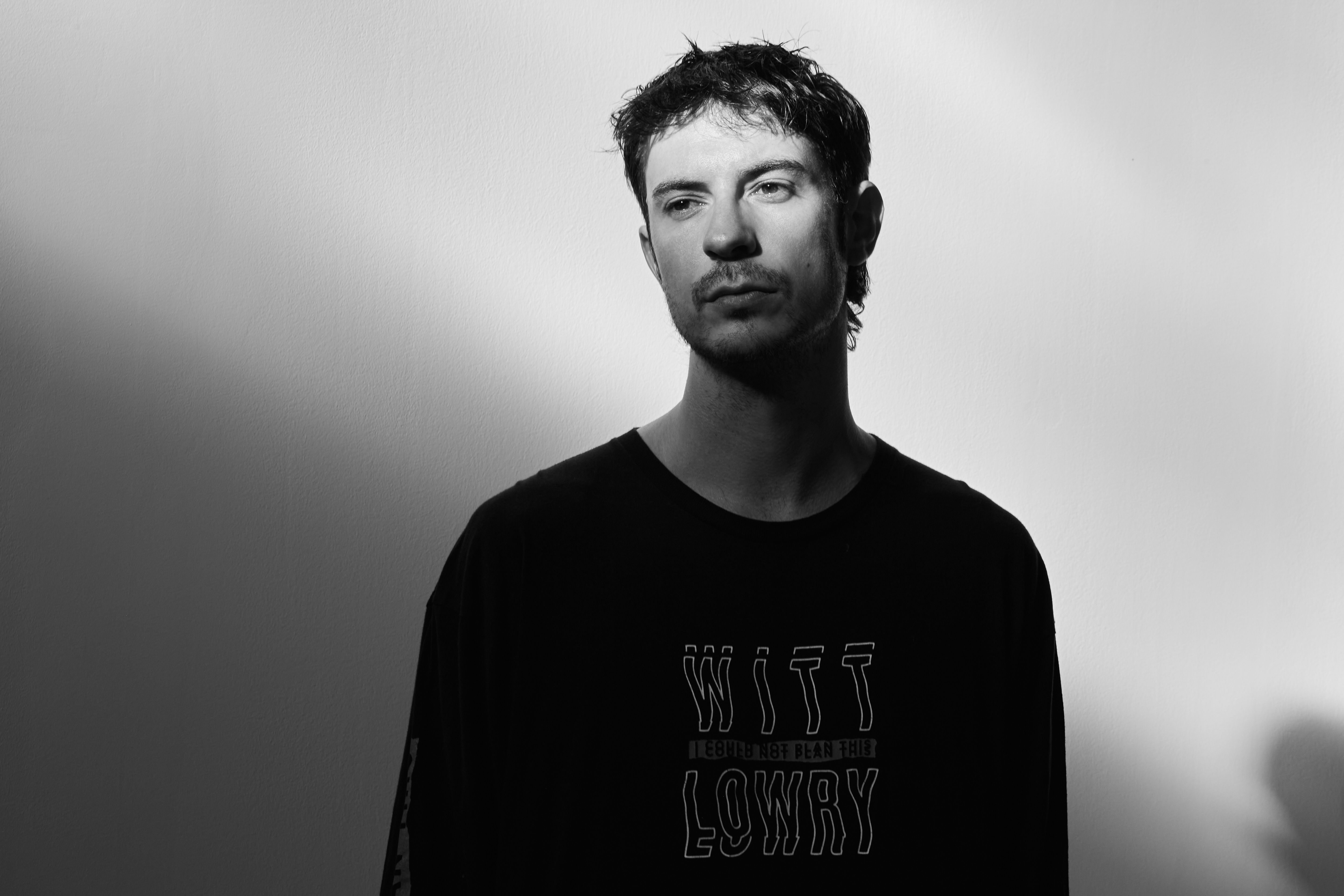
Name: Mathys Lenne
Nationality: French
Occupation: Producer, DJ
Current release: Mathys Lenne is one of the artists contributing to the new Monday Off compilation VA vol.8, also featuring Feph, Rasser, and Xhato. Order on bandcamp or from Triple Vision.
[Read our Xhato interview]
[Read our Feph interview]
If you enjoyed this Mathys Lenne interview and would like to stay up to date with his music and live dates, visit him on Instagram, Facebook, bandcamp, and Soundcloud.
For a deeper dive, read our conversation on the same topic with the Monday Off founder in our Mary Yuzovskaya interview.
Are there examples of minimalism in music – and outside of music - that impressed you early on?
Several artists have deeply influenced me since my early beginnings.
First and foremost, Efdemin. I think he was the very first electronic music artist I ever listened to, when I was around sixteen or seventeen. I fell in love with his music pretty quickly, and over time, I managed to train my ear to better understand his work.
I was also really drawn to Bad Vibes by Shlohmo when I was young. He's an artist from L.A. who has an incredible level of control over his sound elements.
I still love that album, even today it impresses me with its atmosphere and sonic exploration.
Were you ever interested in minimalism as a style – from the Philip-Glass-variety to solo instrumental work to minimal techno? If so, tell me a bit about your interest in this.
I believe the minimalism of Philip Glass opened a path where repetition becomes an exploration of time and perception.
Personally, for as long as I can remember, I’ve always been fascinated by the idea of repetition in music. That’s why I quickly gravitated toward what’s called “mental” or “spatial” techno. Nowadays people often refer to it as “hypnotic” techno.
I became obsessed with this style when I first heard Tadeo play at Tresor about ten years ago. It instantly unlocked something within me, and I wanted to dive deeper into that world.
Do you tend to find that, as many claim, “less is more?” Are the notes you don't play really as important as the ones you do play?
In minimalist music (Philip Glass’s work, for instance) it’s not about austerity for its own sake, but about learning to listen differently.
That’s precisely what inspired me most to start producing techno. The idea of creating differently, keeping things subtle and minimal while integrating other styles of music that I love and listen to every day.
Do you feel as that making music is a process of adding elements until it is done – or one where you chisel away pieces from something that is already there?
That’s a great question. Personally, I’ve always felt that my creative process is like sculpting. Carefully shaping and refining until every detail feels right.
It allows me to maintain a sense of tension, which for me is essential to achieving full sonic immersion.
Many artists are becoming more minimalist in their music as the years go on, focusing on the “essence.” How is that for yourself and how would you describe your development in this regard?
I’ve always worked this way, though over the years I’ve experimented with faster and slower tempos. I like to 'feel' the music differently, to better understand the subtleties that tempo brings.
Not staying locked into a single tempo is, I think, crucial for developing one’s ear and musical sensitivity.
What were some of the starting points for your most recent release?
I’ve loved all rock music genres since I was a kid. For my recent projects, I decided to incorporate atmospheres, guitar lines, or vocal textures reminiscent of some of my favorite tracks.
Of course, almost nothing is recognizable but I love the idea of using samples from songs that mean something personal to me, reshaping them until they form something that feels entirely my own.
How did a minimalist mindset possibly inform the creative process?
Minimalism has changed the way I approach production of course. Instead of layering too many elements, I focus on the relationship and interaction between just a few sounds. I pay particular attention to dynamics, spatial depth, and frequency balance.
It’s about finding richness in restraint. Using fewer tools, fewer notes, but with precision and depth.
Do you like to set yourself limitations? If so, which were some of those limitations for the new pieces?
I don’t impose any limits on myself.. Otherwise my creative process would inevitably be affected.
That’s also why I don’t have a single fixed technical method when I work on music. I always approach production from different angles. It’s a constant process of renewal. That’s what drives me the most.
There’s nothing more rewarding than creating differently while maintaining a structure that truly belongs to you.
Thanks to sampling and digital synthesis, there are endless possibilities for sculpting the sounds and overall sound design of a piece or album. What are your considerations in this regard?
That clearly ties back to what we discussed earlier. Sampling is an incredible tool when you know how to approach it.
Personally, I like to start with something very simple. A basic sample that doesn’t necessarily resonate much on its own. And then transform it, shaping it to achieve the frequencies and tension I’m looking for.
Would you say that you approach your creative tools with a minimalist mindset? Or do you need a wide choice of instruments and tools to make music?
I don’t need a lot of instruments or gear to work. Just a few plug-ins that help me reach the sound I’m aiming for.
These can come from Ableton, from synths, or from my own personal recordings.
What were some of the most important pieces of gear or instruments for this release?
I used UDO’s ''super-6'' to create the spatial elements.
For the rest, everything came directly from Ableton. My own recordings and the samples I frequently use.
Reducing one's options and techniques often implies a different way of working with the materials. Tell me about yours, please.
My technique is quite simple: finding the balance between each frequency range.
I use “Utility” for that. It’s a simple tool that controls the volume of a sound. It allows me to sculpt the sound I’m looking for, keeping only the elements that truly interest me.
French producer Guillaume Duchastel told me: “Minimalism is about more than owning fewer things. It’s about focusing on what truly matters.“ What are some of your strategies for separating what matters from that which doesn't?
There’s no specific strategy behind it. It’s more of a feeling, a personal response to what I’m composing and how it affects me.
Sometimes I’ll like a sound, a movement, or a waveform, and I’ll play with it for hours ... until suddenly, I get tired of it. When that happens, it usually means that frequency didn’t resonate deeply enough with me to become part of a final track.
It often happens that I work by stripping things away, one element at a time, keeping only what truly makes me vibrate. Again, it’s very much like sculpting.
With so much incredible music instantly available, are you finding that you want to take it all in – or that you need to be more selective? How do you pick the music you really want to invest in?
I never listen to a whole album in one go. My perception of music can easily be influenced by things I’ve seen, read, or heard during the day so I prefer taking the time to listen to one track and re-listen to it until I fully understand it. Then I move on to another.
That’s also why I personally feel there’s simply too much music being created every day. We can easily miss something truly interesting.
That’s why being fully attentive to each track is important, to make sure you’re really taking the best from it (or not, haha).
Would you say that minimalism extends into other parts of your life as well?
I’m not sure if it extends to other aspects of my life, probably.
For me, it already feels incredible to be able to express my inner emotions through music.