Published
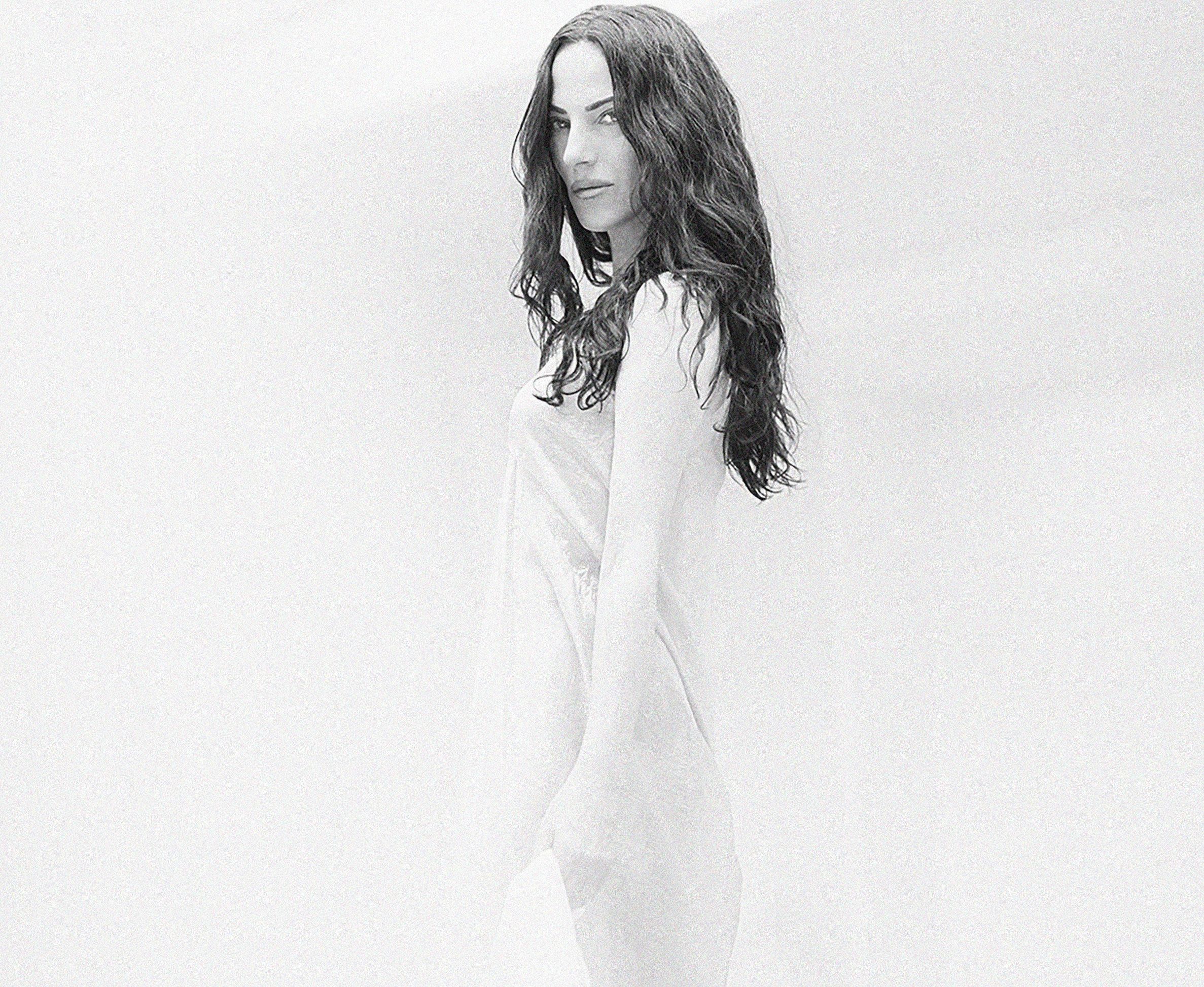
Name: Maya Beiser
Nationality: American
Occupation: Cellist, sound artist
Current Release: Maya Beiser's new album Islandia, featuring music by ranging from Henry Purcell and John Tavener to Meredith Monk and Missy Mazzoli, is out via Islandia.
If you enjoyed this Maya Beiser interview and would like to stay up to date with her music, visit her official homepage. She is also on Instagram, and Facebook.
For a deeper dive, read our earlier Maya Beiser interview. We also recommend our conversations with some of her collaborators in our Michael Harrison interview, our Lei Liang interview, our David Lang interview, and our Brian Eno interview.
When it comes to experiencing strong emotions as a listener, which albums, performances, and artists come to mind?
David Bowie’s last album Blackstar gets me every time I listen to it. Especially the song “Lazarus.” To me, he is an immortal artist.
And writing his own obituary - speaking to us from the afterworld with this album - was so brilliant and powerful and heartbreaking.
On the first anniversary of his death, we made a cello cover version of the whole album. Channeling Bowie’s voice with my cello is always an emotional roller coaster for me.
There can be many different kinds of emotions in art – soft, harsh, healing, aggressive, uplifting and many more. Which do you tend to feel drawn to most?
I don’t really think about music and art in those terms. I think you can experience a very wide range of emotions from a great work of art. But it only works if it’s not intentionally meant to do that – music that tries to manipulate emotions always falls flat.
In other words, great music is a kind of discovery, uncovering of a form of truth. It can be very personal, even quirky, sometimes it can be complicated and layered, sometime raw and simple. But the emotions we feel are a physical reaction and can be very subjective. We react emotionally to music based on our own experiences and personal history and the kind of memories and stories and deep visceral response it evokes in us.
Yet, I’m not sure we experience music, or the world around us for that matter, in the same way. When we listen to a piece of music together, how do I know if you hear it the same way I do? How do I know if you see the same colors I do? We have shared language that we all participate in but what I say, and you say, while it sounds the same, might reflect two different experiences.
So, I guess all the emotions that you mentioned are valid for me – except aggressive. I don’t connect to anything that convey aggression. Art, as life, should never be aggressive.
I have had a hard time explaining that listening to death metal calms me down. When you listen to a song or composition, does it tend to fill you with the same emotions – or are there “paradoxical” effects?
Interesting question. I guess it goes back to what I said in the previous question.
Our feelings and experiences are not linear and predictable. How we experience music is inherently subjective.
In as far as it plays a role for the music you like listening to or making, what role do words and the voice of a vocalist play for the transmission of emotions?
I mostly prefer music to be nonverbal. I like the openness of the sound world when it is devoid of language. It feels more liberating to me in terms of where it takes me. Music for me is a form of trance, meditation, ritual.
But sometimes, words are needed, and they work. They create a sort of boundaries and limitations that can lead to a powerful form.
When I think of Janis Joplin, her voice was so raw and visceral and the words she sang were an important part of it. Same is true for Nina Simone and Amy Winehouse.
When it comes to experiencing emotions as as a creator, how would you describe the physical sensation of experiencing them? [Where do you feel them, do you have a visual sensation/representation, is there a sense of release or a build-up of tension etc …]
I am very visual. I see music, not just hear it – images, colors. It’s an organic process. I don’t try to impose anything. I surrender and allow myself to become porous. That’s when I can truly connect.
It’s a fine balance between been led by what surrounds me and leading with intention. It only works when I allow myself to let go. to be vulnerable. Be nothing. It’s like you collapse and become ashes and rebuild every time you create.
When it comes to composing / songwriting, are you finding that spontaneity and just a few takes tend to capture emotions best? Or does honing a piece bring you closer to that goal?
When I make an album, I get very obsessive. I redo every take many times. I have a hard time settling on the “right” one. It is inevitably a compromise. And I don’t like to compromise. I am a perfectionist by nature (and nurture), but I don’t believe in perfection in art. So, I live in that paradox.
I often wish there was a form of recording where you could release a different version of the same album every day. Slightly different. With another color, another dynamic, another intonation. The shades of music are endless.
When you make an album, you must settle on the one moment where you experienced it in a particular manner. That’s why I have a hard time listening to my own albums after I create them.
How much of the emotions of your own music, would you say, are already part of the composition, how much is the result of the recording process?
It’s always a mixture of both. But the music isn’t realized until it is performed/recorded.
The sounds exist; the music exist but it’s inaudible, invisible. When you play, you bring it to life anew every time. And in the process, it is sometimes transformed, and you discover something you didn’t know was there.
When I am truly tuned-in and shed all preconceived notions, when I allow myself to be a vessel, that’s when the transformation happen. And often I am transformed in the process as well.
Those layers of seeing and feeling and experiencing deeply, they add up.
For Salt, what kind of emotions were you looking to get across?
Salt is built on remembrance and defiance. I wasn't thinking in terms of conveying specific emotions so much as creating a space for contemplation around memory and witness.
The album explores that tension between being told to move forward and the need to honor what we've left behind. There's something profound in Lot's wife's act of looking back—I wanted the music to hold that complexity, the ache of severed connections alongside the courage it takes to bear witness. I wanted to make space for those emotions that don’t resolve neatly, looking back—knowing the cost—and doing it anyway.
There is sorrow in it, yes, but also tenderness, awe, and a kind of quiet but powerful rebellion.
How do you capture the emotions you want to get across in the studio?
It's about creating an environment where both intimacy and expansiveness can coexist. The cello needs to feel close enough to be personal but also have the space to become monumental.
We worked with dynamics and space - sometimes the music feels like a whisper, sometimes like a pillar of salt.
What role do factors like volume, effects like distortion, amplification, and production in general for in terms of creating the emotions, energies or impressions you want?
Texture is emotion. Distortion, delay, reverb - they’re like emotional amplifiers. They take the raw material and stretch it into new dimensions.
I often think of production as painting with shadows and light. The production choices support the narrative arc of Salt. We use space and resonance to create that sense of looking back across vast distances. Sometimes I want the cello to feel ancient, otherworldly; other times it's completely raw and present.
The way a cello growls through an amp or dissolves into reverb can speak volumes.
In terms of emotions, what changes when you're performing live on stage, with an audience present, compared to the recording stage?
Everything is more dangerous when you are on stage. The risk of the moment becomes part of the emotion. You’re not just transmitting music - you are sharing it, letting it be altered by the presence of other bodies in the room.
There’s a kind of emotional conductivity that can’t be replicated in a studio. It’s a different kind of ritual. The pace is different. No second chances. No regrets.
It’s a type of explosion that unfolds over a period of a few hours never to be repeated.
How does the presence of the audience and your interaction with it change the emotional impact of the music and how would you describe the creative interaction with listeners during a gig?
The audience brings their own memories, their own experiences of loss and resilience. It’s like a feedback loop. I offer something, and the audience reflects it back - with their energy, breath, stillness.
Sometimes I feel a collective inhale before a moment lands. Sometimes a quiet gasp tells me they’re right there with me. It’s a conversation. A kind of communion.
What kind of feedback have you received from listeners or concert audiences in terms of the experience that your music and/or performances have had on them?
I will let other people describe their reaction to my work … :-)
I hope they are moved in some way. I hope they feel it brings them closer to a peaceful place, and that they, too, feel the urge to create.
We are all creative creatures.
Would you say that you prefer to stay in control to be able to shape the emotions or do you surrender to them and allow the music to take over? Who, ultimately has control during a live performance?
Control is a false comfort. The best performances happen when I am porous enough to be moved with the sound, not by it.
It is not about dominating the emotion but channeling it, trusting it, letting it pass through.
The emotions that music is able to generate can be extremely powerful. How, do you think, can artists make use of this power to bring about change in the world?
By telling the truth. Not the literal truth, but the emotional one - the kind that gets under the skin and stays there. Music can humanize what politics dehumanizes. It can create space for empathy, for memory, for grief.
And I think that matters - especially now. When words fail, music can say: Feel this. Remember this. Don’t look away.