Published
Part 2
Tell me a bit about your current instruments and tools, please. In which way do they support creative exchange and collaborations with others?
As an instrumentalist, I primarily perform on accordion, piano, and keyboards. While I’ve learned other instruments since, these are the ones I grew up playing, and they offer me the most freedom for creative expression. Collaboration requires strong communication and finding a common language with my peers, so it’s important for me to use tools and instruments that facilitate this connection.
Lately, I’ve been performing less and focusing more on my skills as a producer and organizer. I enjoy the creative thinking involved in the conceptual side of projects, and I often find the administrative aspects to be highly creative and fulfilling as well. I love turning wild visions—whether my own or others'—into tangible results, which requires a keen attention to detail and an instinct for organization.
Increasingly, my tools consist of my agenda, the numerous lists on boards around my studio, my very neurotic brain, and my ability to manage communication and enthusiasm to address problems as they arise. These skills are important in creative communities, and I’m happy to contribute them as I have come to think of them as integral components of my practice.
While I may often be the least technically skilled musician in various settings, I’m usually the one who brought everyone together. I like to create opportunities that produce results, and I like to enjoy those results with my friends.
Before you started making music together, did you in any form exchange concrete ideas, goals, or strategies? Generally speaking, what are your preferences when it comes to planning vs spontaneity in a collaboration?
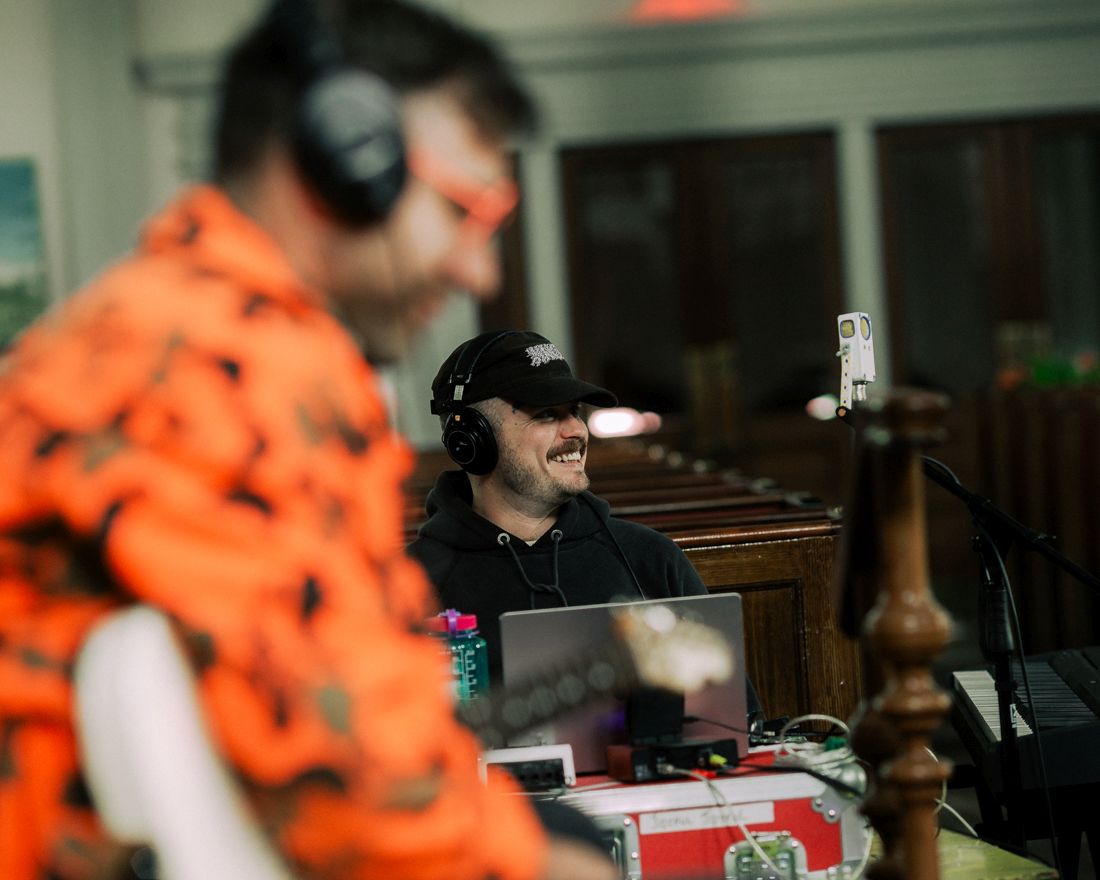
This project required extensive logistical strategizing, with members spread across Canada, over a dozen contributing performers, and a solar-powered makeshift studio set up in a 200-year-old church. We composed the material in one province and recorded it in another. A lot of practical details needed to be organized in advance to make everything possible, and we were fortunate to receive a federal arts grant to support the project and help things move forward.
Planning production for To Cry Out In The Wilderness demanded an unprecedented amount of organization and communication. Many of us contributed significant effort to arrange the sessions, but the actual work was rooted in spontaneity and improvisation. To pull off this kind of project, we had to strike a balance between planning and spontaneity, and I learned a lot about finding that balance throughout the process.
As a producer, I see it as my job to lay the groundwork and create an environment where creativity and collaboration can thrive. This requires thoughtful planning. As a bandleader, I believe my control begins and ends with inviting the right players into the project. My role is to curate and guide the process when necessary, but trying to forcefully direct things would be a mistake.
It’s essential that all participants are contributing with creative autonomy and agency. Why invite a highly skilled and creative instrumentalist to join a project, only to tell them exactly what to do? By inviting them, I’ve already given the essential instruction: to do what they do best. If I want something different, I have a responsibility to learn their instrument and do it myself.
Trust is vital in collaborative environments, and failing to trust would undermine the whole concept. This ties back to my earlier point about the importance of openness versus resistance.
Describe the process of working together, please. What was different from your expectations and what did the other add to the music?
Composing the material for To Cry Out In The Wilderness with the other members of Scions was a truly joyous and beautiful experience. We settled in at the Hotel Wolfe Island, a lovely old hotel on a small island between Canada and the U.S., owned and operated by my friend, musician Chris Brown. Our living quarters were directly connected to the piano lounge, where we collaboratively composed the music.
Honestly, I can’t recall my initial expectations, but I know they were surpassed. With a few guiding principles in place, we began each day with improvisation sessions, which allowed us to explore and develop ideas that emerged. We then refined these ideas into through-composed material, constructing a comprehensive narrative.
Each of us was trying something new, often in different ways. Some had never composed lyrical music, while others had never performed composed material at all. None of us had built a repertoire this way before, and I think we all found it thrilling. At the same time, we were getting to know one another and forming a community, which was a beautiful process. I could feel the trust growing alongside our familiarity, and it shone through in the work as we progressed.
We all took turns contributing ideas, and six months later, when the record was complete, I felt deeply satisfied and grateful to hear how each of us was distinctly represented in the final results.
What tend to be the best collaborations in your opinion – those with artists you have a lot in common with or those where you have more differences? What happens when another musician take you outside of your comfort zone?
In my opinion, collaborating with artists who think, look, and perform like me would be a mistake.
I am human, so I naturally gravitate toward my comfort zone, which is all the more reason to work with those who challenge me to step outside of it. A record created by a group of people like me would likely be quite dull. I intentionally seek out individuals who approach art-making from radically different perspectives.
Having lost nearly a decade of my career to addiction and mental illness, it’s crucial for me not to waste time going in circles. I want to grow and develop my craft with every project I contribute to. My goal as a producer is to guide people outside of their comfort zones. This is a big part of why I work outside conventional studio environments; it’s an effective way to destabilize expectations. My entire practice is rooted in these ideas: replacing old concepts with new ones, rejecting predictable decisions, and trusting instincts over convention. This approach hasn’t let me down yet.
As a sober person, I’ve learned that there are compelling ways to experience healthy, natural highs and expand my consciousness without substances. One of those ways is to operate outside my comfort zone in a creative environment. It can be intimidating to be invited into that space, but it’s always worth it. That’s where the magic happens. It can be trippy as hell.
What are your thoughts on the need for compromise vs standing by one's convictions? How did you resolve potential disagreements in this collaboration?
I believe that balance and trust are essential in collaborative environments, and it’s important that all participants have equitable opportunities for input.
Going into our composition sessions for To Cry Out In The Wilderness, we all had a clear understanding of our roles, and the process of developing compositional ideas through improvisation naturally facilitated collective decision-making. We were fortunate to experience a high level of unanimity during these sessions; we almost always agreed on which ideas to pursue and trusted one another throughout the process.
Often, we would break into smaller groups to work on specific ideas before reconvening to share our progress. While we occasionally had differing opinions, I can’t recall any instances where we struggled to find compromises. The enthusiasm and momentum in the sessions helped us maintain a clear vision, allowing us to see the bigger picture. We faced significant collective decisions—such as naming our project and selecting album art—and in those moments, we reached immediate consensus.
The Scions project began with my vision, and I’m grateful that the ensemble trusted me to bring it to life. However, part of my vision was to ensure that each participant had total agency. Whenever a new idea intersected with my own, I reminded myself that my role was to facilitate the process rather than dominate it.
The same approach applied during our production sessions; any notes or critiques from participants came to me only after we completed the recording, which I appreciated as a thoughtful gesture. This created an environment where there was little need for compromise, as the fundamental goal was to create space for one another.
From the beginning, Scions has been an experiment in trusting my instincts and standing by my ideas, resulting in something I take pride in as sincere and authentic. I intentionally set aside many ideas I had absorbed from more commercially-driven environments and pursued a process that felt genuine and fulfilling. I think that the record reflects that honesty and authenticity.
Was/Is this collaboration fun – does it need to be?
This collaboration has been incredibly fun—after all, these folks are my best friends!
Collaboration should be enjoyable, especially considering how gruelling the artistic landscape can be today. We’re in an environment that often fails to reward innovation, and I’ve seen this affect even DIY spaces. The odds seem stacked against joy, creative expression, camaraderie, and authenticity, but I strive to reject fatalism.
As artists, we can still find joy in our work. If the process of creating isn’t fun, what’s the point? I acknowledge my privilege in being able to make art at all, but I also come from a place of having lost a decade of my life to illness. I’m in this for the joy, which is why I structure my projects around adventurous themes and processes.
To Cry Out In The Wilderness engages with some very dark themes and presents stark realities, but ultimately, we aim to express joy through our work. It’s a forward-looking project in every sense, filled with hope.
If we weren’t having fun, I doubt we could cultivate that sense of hope.