Published
Name: Michael League
Occupation: Composer, producer, multi-instrumentalist.
Nationality: American
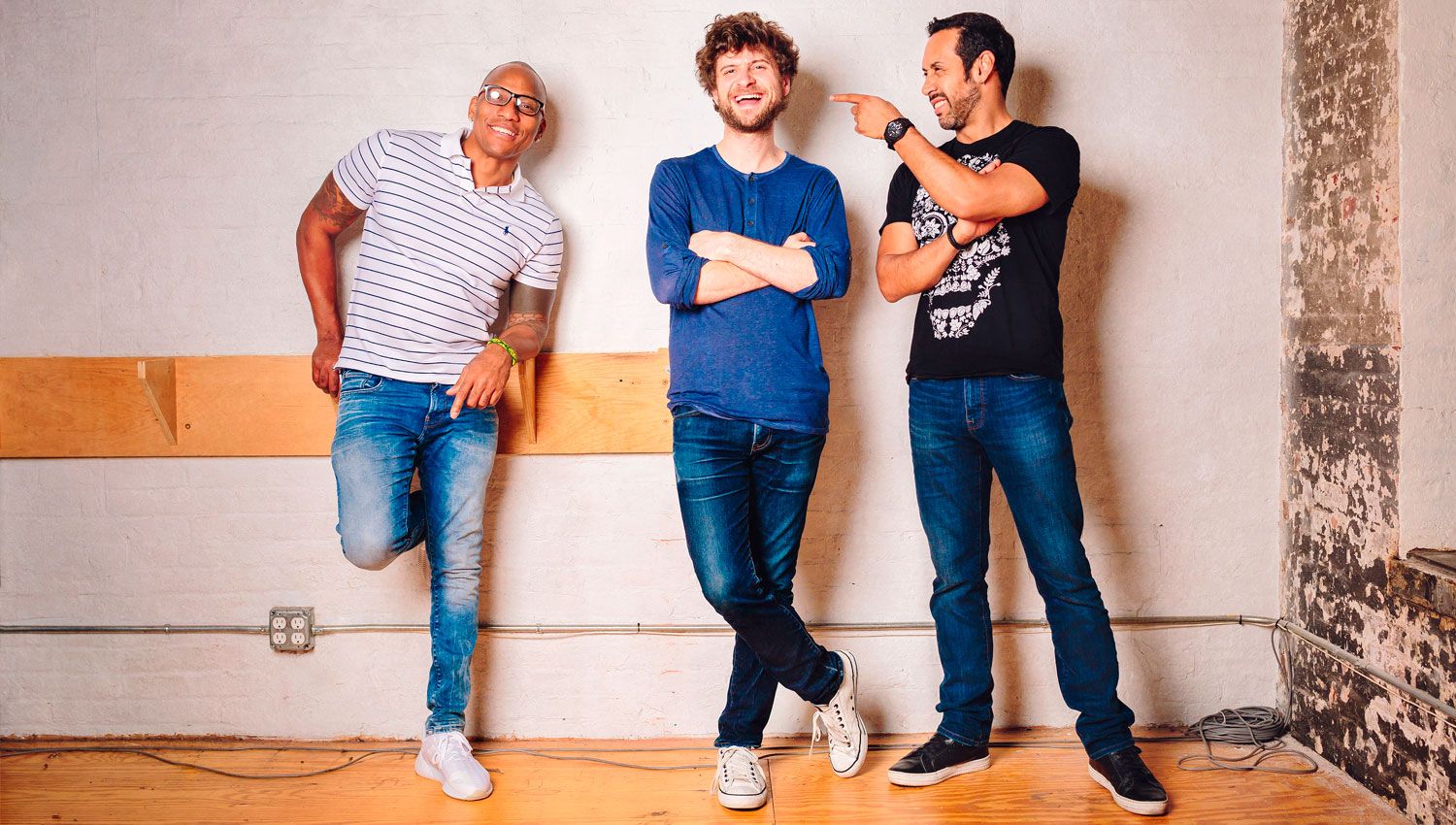
Current release: Michael League teams up with Pedrito Martinez and Antonio Sánchez for their album Elipsis, out via GroundUP.
Shoutouts: For me, Brain Feeder is the most interesting label right now. I think that they've done an incredible job of having a diverse artist roster that is definitely in touch with jazz roots, but is incredibly liberated and very adventurous. So for me, I think that's, you know, one of the most, if not the most interesting labels that I'm aware of in the world right now.
[Read our Pedrito Martinez interview]
If you enjoyed this Michael League interview and would like to know more about his music and current tour dates, visit his official website. He is also on Instagram, and Facebook.
What were some of the musical experiences which planted a seed for your interest in jazz?
Listening to my brother play with his trio at a local restaurant when I was about 11-12 years old was my first real contact with jazz in person, seeing it performed live. So I think that was the main thing that sparked the interest.
And then also listening to records like I remember Steely Dan's Alive in America and then other Steely Dan records. That was like a big kind of gateway drug for me and the jazz.
And also my brother gave me a record called Oscar Peterson Live at the Blue Note which was my first ever jazz CD that I owned. I listened to that hundreds of times.
So I think the electric element of bands like Steely Dan kind of drew me in, in one way. But also hearing jazz in kind of like a more acoustic form appeals to another part of my musical interest.
What does the term jazz mean today, would you say?
I mean it's not my opinion. The term jazz is controversial and I think there are a lot of musicians who would prefer that it never be used since it was essentially invented by white people to describe black music generally in a derogatory way. But of course that term has been co-opted and re-appropriated in a lot of senses.
So, you know, to keep things simple, talking about jazz as we understand it, I think the term has expanded dramatically. I think 20 years ago, if we were talking about music that had electric instruments, it almost wouldn't have been considered jazz. But now in 2026, I think the majority of jazz musicians are blending different styles of music with their background in jazz music to create new things.
So I think the term has amplified significantly and that its breadth is much wider than than it used to be.
As of today, what kind of materials, ideas, and technologies are particularly stimulating for you?
Life itself.
Where do most of your inspirations to create come from – rather from internal impulses or external ones? Which current social / political / ecological or other developments make you feel like you need to respond as an artist?
Inspiration comes from a lot of places. Principally, for me, it comes from other music, which may seem obvious, but it's definitely the case.
I love listening to especially folkloric music from around the world. It's incredibly inspiring for me, mostly because it introduces me to different ways of thinking about composition, about improvisation, about song structure. And generally folkloric forms of music utilize musical devices that aren't necessarily common in the kind of music that I grew up listening to.
But I'm also very, very inspired by architecture, by food, by people, by nature, by philosophical concepts. So it just depends on what mood I'm in that day when I sit down to write.
Tell me a bit about the sounds & creative directions, artists & communities, as well as the colleagues & creative hotspots of your current hometown, please. How do they influence your music?
I didn't move to Catalonia to change music scenes; I moved there to experience a different way of life. But Spain is an incredibly rich place in terms of folkloric music, especially flamenco, although it's by no means the only form of of traditional music in Spain.
So in spending time in in flamenco communities with friends who perform that music, you know, I've definitely been introduced to concepts, idiomatic concepts that don't really exist in the other kinds of music that I play. And I've tried to incorporate them in the music that I write as well as different rhythms.
For example, I based the Snarky Puppy song “Belmont” off of a flamenco rhythm that I then modified. So there's definitely an influence, even if that wasn't my intention when I moved there.
What role do electronic tools and instruments play for your creative process?
Both have their unique place in the process.
Thanks to technological advances, collaboration has become a lot easier. What have been some of the most fruitful collaborations for you recently and what approaches to and modes of collaboration currently seem best to you?
I had a very interesting collaboration made possible by technology that just came to fruition this month with the release of the album by Elipsis, which is Antonio Sanchez and Pedrito Martinez and myself.
That record was recorded during COVID with Antonio and Pedro in New York City and me in Spain through Zoom and Audio movers, which is a software that allows you to listen to Pro Tools output from a distance. I was able to kind of remotely co-produce this record with the other two band members from the top floor of my house. That was really fascinating and a very interesting process.
It's not ideal, it's always better to be somewhere in the flesh. But it worked out beautifully in this case.
Jazz has always had an interesting relationship between honouring its roots and exploring the unknown. What does the balance between these two poles look like in your music?
I think if you have studied the roots of the music that you're playing, you don't really have to seek balance because it's just going to be in everything you do as you're taking chances and taking risks and trying to forge kind of new directions in the music that you're making. The fundamentals, the tradition, the history, all of the stuff that you've spent years of your life studying are all going to be present in everything that you do.
Which is why people like Miles Davis were so successful in their, you know, out-of-the-box endeavors because he was just so rooted in the history, in the tradition of the music. There wasn't anything he could possibly do that would betray that, even if people accused him of it.
So I think it's on us as musicians. It's our responsibility to do our homework and understand that, whether we acknowledge it or not, we're participating in a very, very long standing tradition. And the more informed we are about that tradition, the more liberated we are to choose our own path and follow it.
How much potential for something “new” is there still in jazz? What could this “new” look like?
I firmly believe that no one can really do anything new. Anything we play has been played before. Anything we write has been written before to a certain extent.
But what we can do is similar to what we can do with language: We don't invent words, we combine them in such a way as to express ourselves on a deeply personal level. I think it's the same thing with music. We combine ideas based on all the things we've heard in our lives. We pick the things that we like the most and we combine them and then we express them through our voice, with our tone, with our sense of, of rhythm.
And through this, we kind of can create something new out of many old things, you know? But it's not new new. We're not inventing things. It's just the combinations which make it unique. I think the more music we have, the more potential we have to make these new combinations possible.
For many artists, life-changing musical experiences take place live. How do you see that yourself?
I think that with the new onslaught of technology that is essentially going to flood the music industry and replace so much of what we've been doing as humans for a long time, the sacred ritual of humans iplaying music in a physical space for other humans will be the last thing standing.
I don't think it'll ever go away. It might diminish in quantity and probably, you know, increase in value as a result. But I don't think it'll ever go away. I think it's always going to be there. I think a lot of other things that we thought would always be there will be replaced. But I think that one will will stick around.
The question about improvisation is obviously an essential element of jazz whatever. How do I feel the role of improvisation has changed in jazz?
I think that somewhere in the 80s until pretty recently, improvisation became not just the focal point of most jazz performances and recordings, but almost their sole element. I feel like the songwriting element of jazz almost disappeared for a long time. People were still writing songs, but it it really felt like the song was just a vehicle for the improvisation.
I think that it's a good thing that the art of songwriting, the art of composing has returned to a place of of importance and prominence in the modern jazz scene in 2026. I think people are thinking more about what they're composing than they were 20 years ago when people were really just kind of waiting to get through the melody so that they could take their solos.
I think genres live and die by the song, you know? And I think that as long as people are writing great songs, the genre will stay strong.
The Montreux Festival intends to preserve its archive of recordings for future generations. Do you personally feel it's important that everything should remain available forever?
I think it's great to preserve things. And I think it's great to experience something once and never have the opportunity to experience it again so that you stay present and appreciate the value of the moment.
I think they're both good things.