Part 2
Once a work is finished, how important is it for you to let it lie and evaluate it later on? How much improvement and refinement do you personally allow until you're satisfied with a piece? What does this process look like in practice?
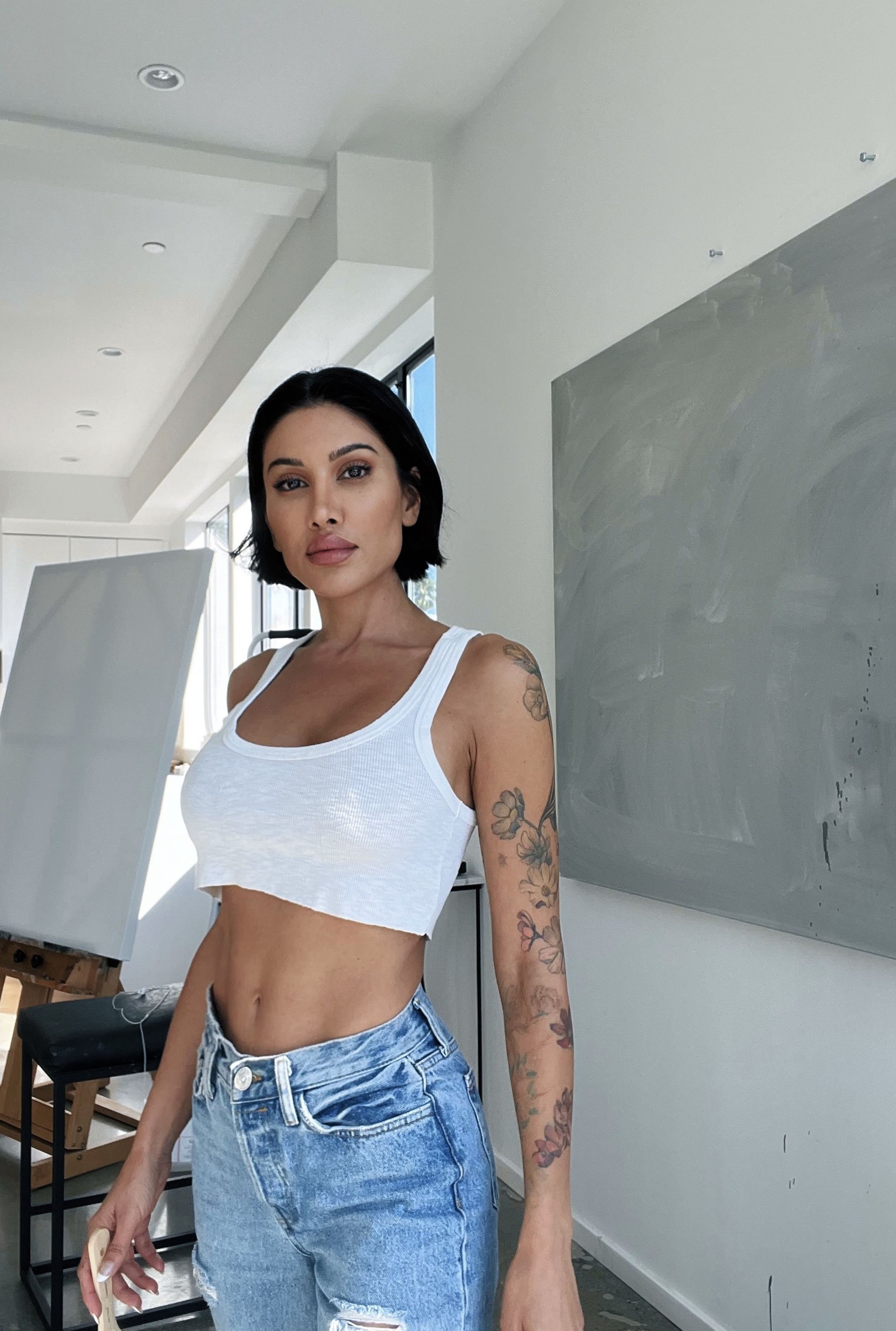
Because right now, as we're doing this, as I'm thinking about this question, I'm staring at a piece that I thought was complete. I put it aside six months ago, and I'm looking at it and I'm like, well, clearly, it's not done. What am I going to do? That will happen sometimes. I've put a piece aside for a year and been like, “I can't look at this right now.” And I don't know why, I actually think I hate this work that I made. Or'll pull it out a year later and be like, “wow, I love this.” This was one of my best pieces of work. Let me just finish it up.
Also in my studio right now I'm looking at, when I finished those, the moment that I stepped back, I knew those were done. And I have looked at them over and over again. Yeah, sure, I could do A, B and C to them. But it wouldn't improve upon the work, right? It's already saying and doing what it's doing. So those are done.
Some pieces, I look at them, and I think, you're good, but I don't know if you're great. So I'm not going to worry about you right now. I'm not going to worry about making you great. I'm just going to come back to you when I know what will make you great.
After finishing a work and releasing something into the world, there can be a sense of emptiness. Can you relate to this – and how do you return to the state of creativity after experiencing it?
I don't ever feel those feelings. I never feel a sense of loss or emptiness after the work is put out. And that might have a little bit to do with my conditioning for how I moved through life. I've tried to move forward in life knowing that my best days are ahead of me, my best work is ahead of me, and my best experiences are ahead of me.
So the body of work that I put out and released, that was my best in that moment. That's not my best for the next work, I'm going to do so because of that I feel a sense of excitement. When I finish a work and put it out. I'm like, "Yes, now I get to explore all these other bizarre images and thoughts that have been floating in my head the whole time I've been doing this."
I don't know if other artists feel this way. I don't really ask other artists about this. But I know for me, I have so much I want to try and create and do and express that I almost feel a sense of relief. When I put something out. I'm like, Okay, go live in the world now. Like go fly out of the nest and live with whoever you're meant to live with and impact their lives. Because now it's living with other people right? Now, the relationship for that work is not a relationship for me - I expressed it -that was our relationship. Now this piece lives.
I sold one of my favorite pieces I've ever made. Because somebody loved it. I was like "I'm kind of totally cool if this never sells because I could look at it forever. I love it." It just felt like a breakthrough moment piece for me. And I sold it to somebody who lives locally. And I felt really good because I could go back and visit it sometimes. But ultimately, the most exciting part about that, for me is "now you're living with someone else. And now your story begins with them. And now I go back to just creating." So no, no sadness.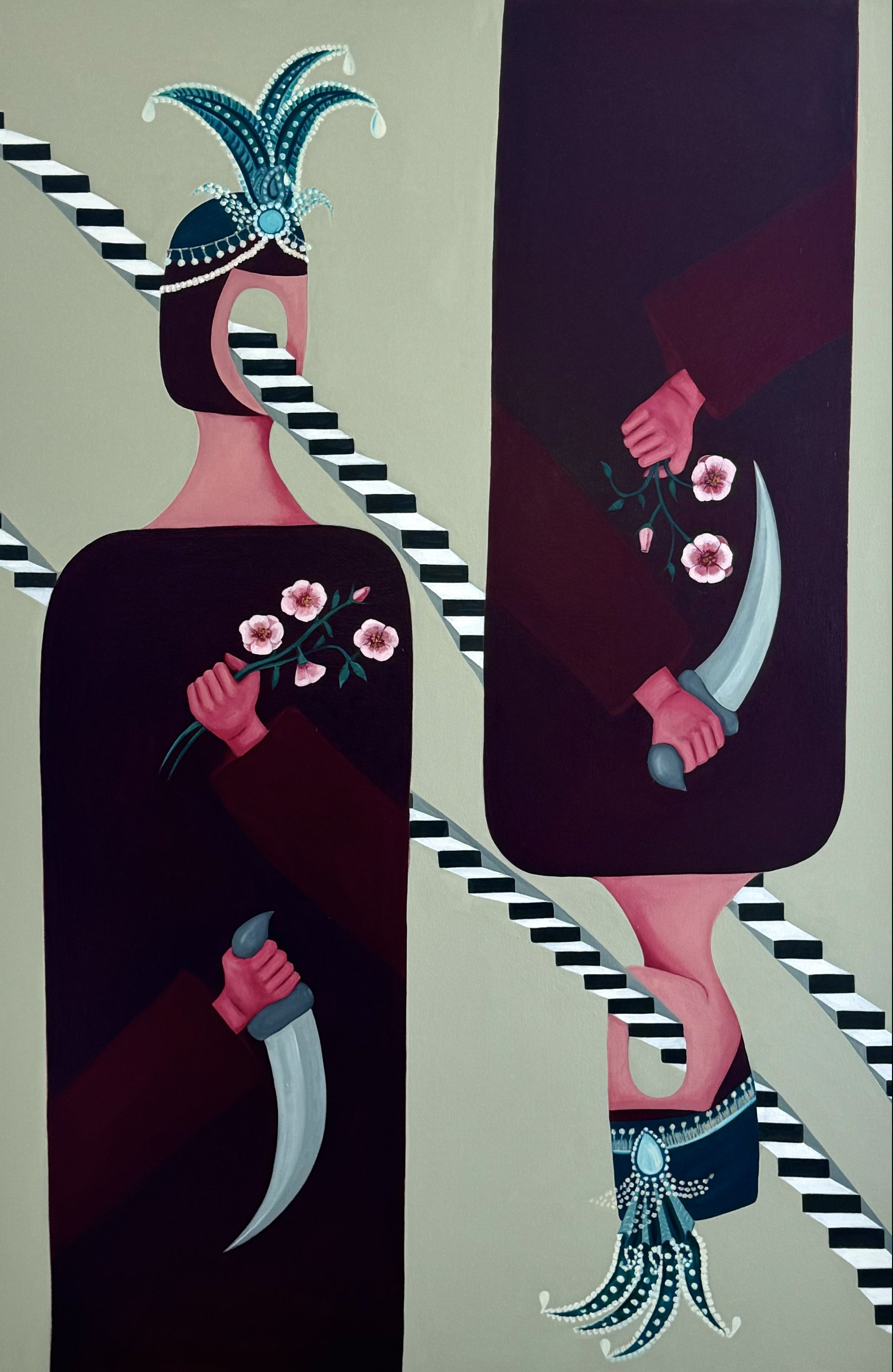
Pleasure & War (c) Mina Alikhani
For some forms of art, like music, reproductions are not considered a loss in value. For your own work, as far as it is possible at all, how do you see the relationship between the original and a copy?
So the original has a certain part of me that the copy won't, but the copy will have the messaging, right? For me, I live, I limit my reproductions, so that they retain a certain type of value.
The original was a timestamp, it was a moment in time, it was created with touch and energy, and so much of me in it. So there's the me, and then there's the messaging behind the work and my work has messaging that has nothing to do with me. My work isn't always about me and my personal experience, it's about events in the world, and through lines and messaging that I think we can all relate to.
For me, the original has me with it, right? You buy the original, you get that experience of something that was a part of me. The prints, I limit the amount, and I don't think you can really get that part of me in a print per se, but in a way, I feel like when you do a limited run of prints, it's like you create a small club of people who are like minded. I think it's a cute, cool value of being able to do that.
We all believe in the same feeling and idea. Even if you have a reproduction of it, there's only going to be a certain amount of them, they're not an endless amount. So we're in a little club together, like we believe this, we fuck with this idea together so much so that we want to look at it all the time. We want to buy it and look at it. We want to think about it and we want it to live with us.
The original - I think there's more value, of course, because of the craftsmanship and the personal relationship to that creative process.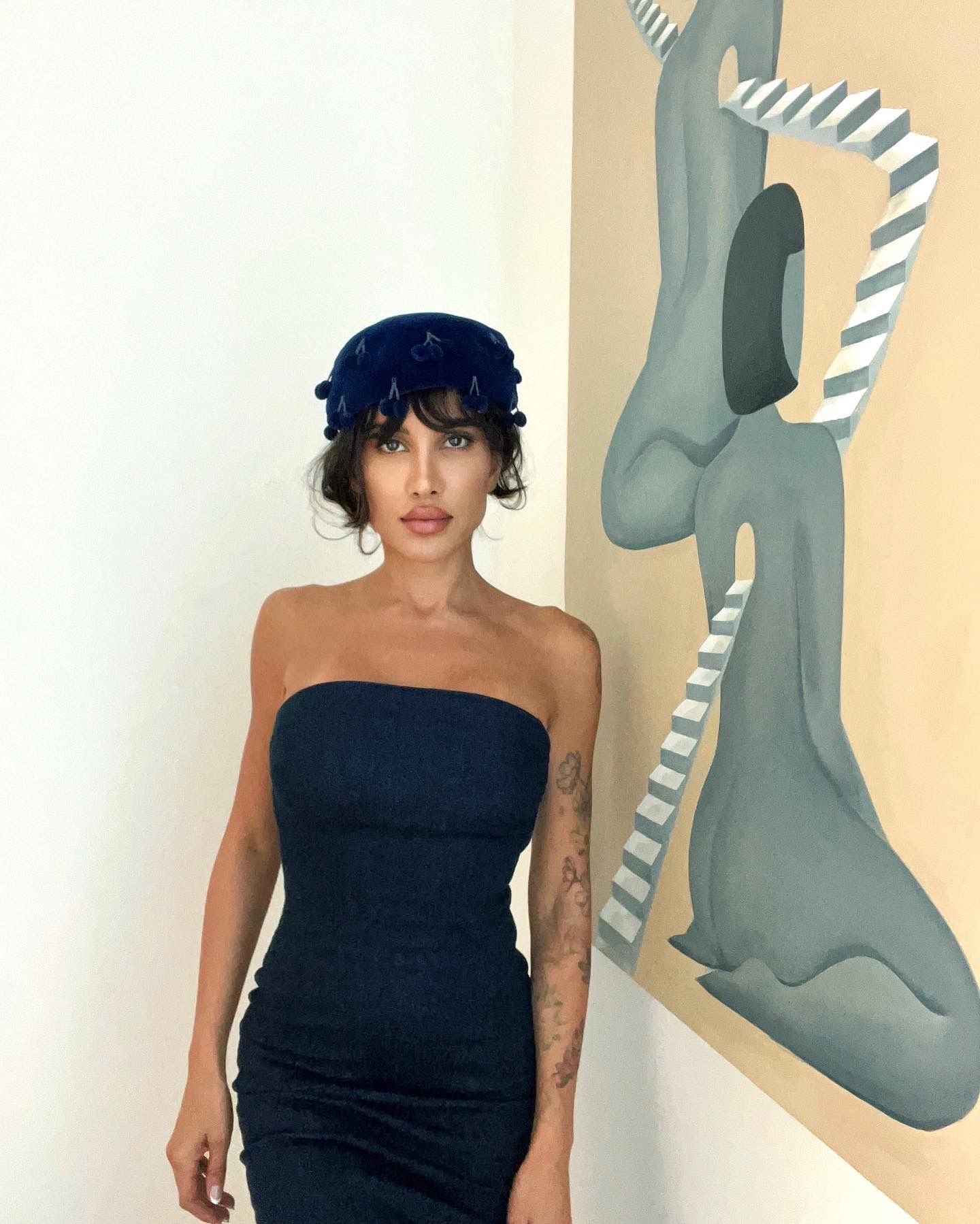
Mina Alikhani Interview Image (c) the artist
There are interesting overlaps between the senses and between different artforms: Poetry has rhythm and words can have timbre, there can be narratives behind paintings, and music can evoke images. Are these overlaps relevant for your work would you say?
I think they all impact and in a greater sense, I would say I am such a I'm a sensitive person in the world. I may not always react to everything around me, but I'm experiencing it. I can't point to one thing, and be like, "Oh, whenever I smell this, this happens."
But I think that accumulatively, as I experienced the world around me, it feeds into the visualization process, which is ultimately how things move for me in my process. It starts with visualization, but I do think all those other things sight smell, sound - they impact what imagery is formed into my mind.
Art is a language, but like any language, it can lead to misunderstandings. In which way has your own work – or perhaps the work of artists you like or admire - been misunderstood? How do you deal with this?
At various times, I've dealt with it differently. In early stages, when I first started putting work out, I would get some commentary from people that just were like, "Damn, you're really missing the mark here." So I used to find the need to defend and explain. Now I'm just kind of like, here's the thing, you can take what you want out of it.
But if somebody wants to ask me, if they don't know, or they're not sure, and they want to ask me and they want to have a dialogue about it, then I'm available for that to a certain extent. But I'm not really worried.
Maybe I should rethink this question … It depends when people misunderstand … sometimes you can tell there are people committed to misunderstanding. You're just kind of like, “oh, you're one of those people who lives to debate everything, right?”
Creativity can reach many different corners of our lives. Do you personally feel as though creating a work of art is inherently different from something like making a great cup of coffee? What do you express through your creative work that you couldn't or wouldn't in more 'mundane' tasks?
It just feels such like a such a silly question ... Making a cup of coffee is a mundane task, but here's the thing: I'm an oil painter, right? So this shit takes a long time sometimes. So once the general idea has been locked in, and it's put up there, there are days where it's mundane to finish it - like doing the detail work, doing the shading doing this - and then that does kind of become ...
Listen, the coffee thing, you got me stuck on that, because I actually like a really good cup of coffee. So it's important that it turns out right, albeit mundane. And similarily with certain stages of my work, I'm like, "damn, I do large scale work, and this is gonna take a long fucking time, and the creative part has been expressed. Now it's just about tying it all up, crossing the t's dotting the eyes to really take it home. And that becomes "put your head down and get it done" type of stuff. So, sometimes it's not that different when finishing work.
Artists are like, “I had Miles Davis playing down to the very last drop," like, "No, you didn't - if you're fucking finishing large scale work, you better believe that sometimes you're fucking exhausted and you got to finish it. I'll take phone calls with AT&T, or my car insurance in the last stages. I'm like, I'm gonna be here for a while, like, I might be here for days doing the uncreative part. So it's not all romance.
I think that creating work is like falling in love from top to bottom every time. I have an idea. I'm like, oh my god, I'm flooded with all of those in-love-feelings. And I'm in love, and I'm falling in love. And I'm doing it. And that's getting the creative portion of it out. And then you're in a relationship, you fell in love, and that was really cute and romantic, but now you're in a relationship, and now you're wearing sweatpants a couple times more often than you would. And now like you're peeing with the bathroom door open. And now you gotta figure out a system for bills and taxes and things.
You've got to figure out how to make it work and find moments where you fall in love again. That's literally what it is for me.