Part 1
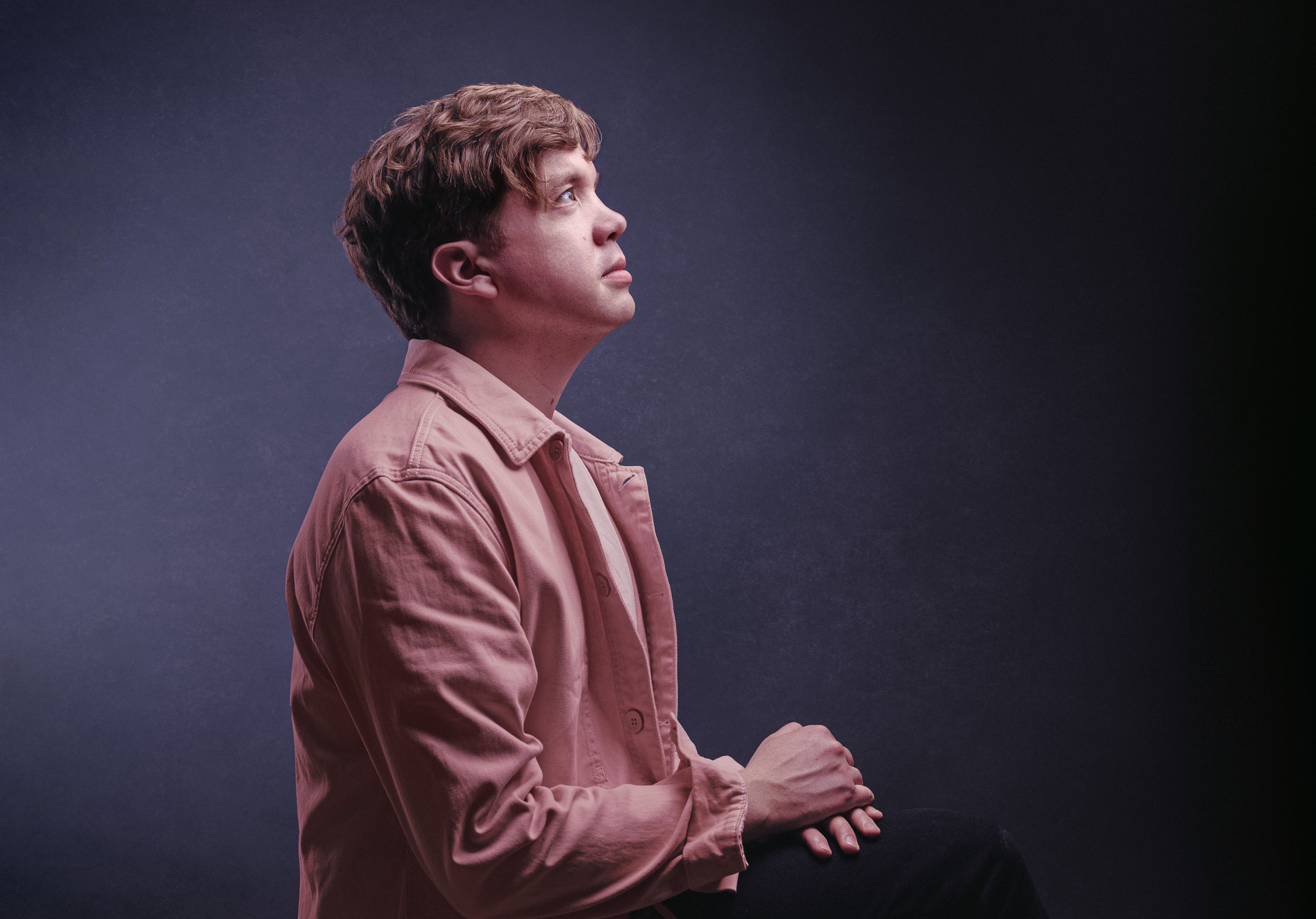
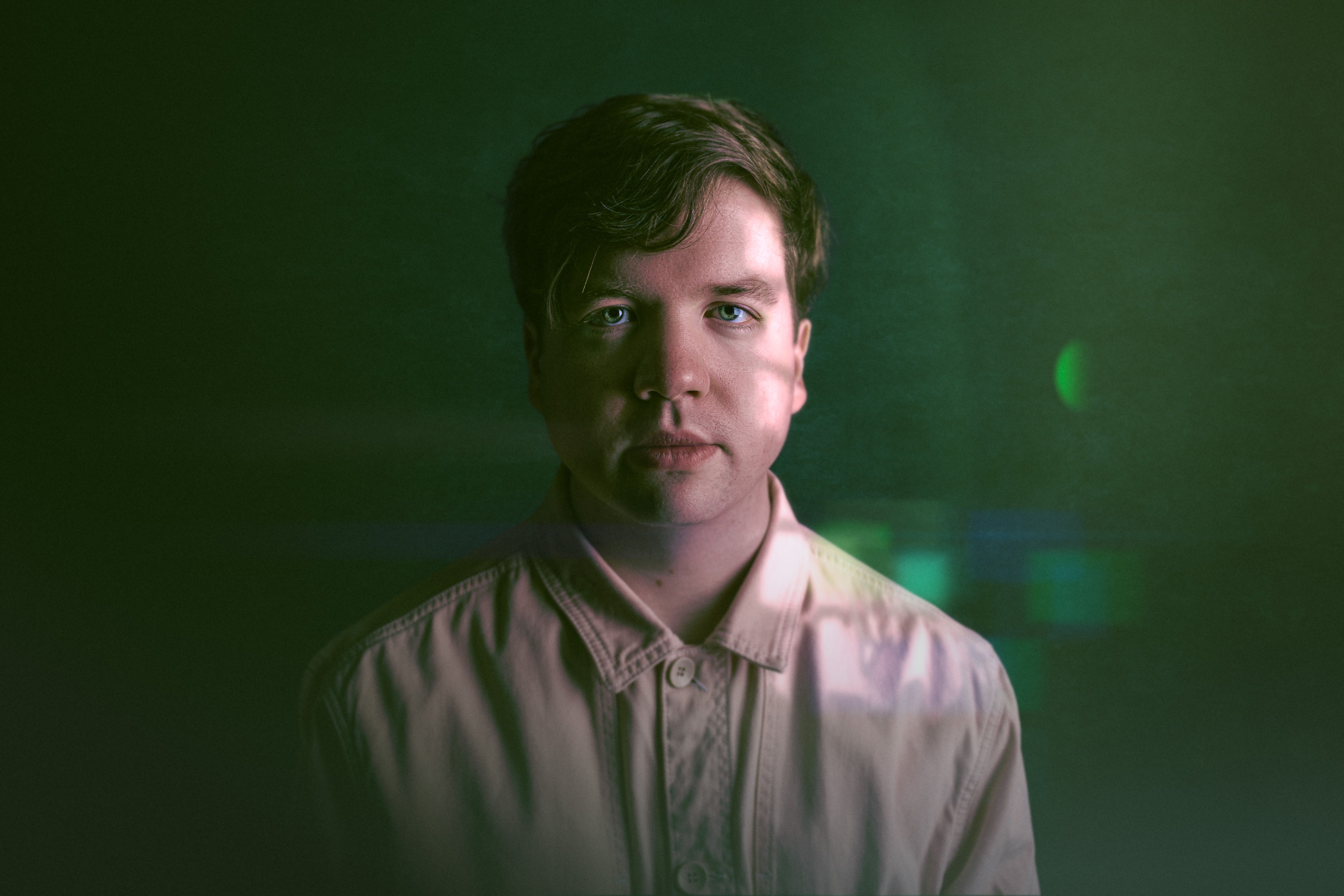
Name: Morten Duun
Nationality: Danish
Occupation: Guitarist, composer, improviser
Current Release: Morten Duun's latest album Code Breaker is out via Cmntx. The release features his trio of Brandon Choi (trumpet), and Wouter Kühne (drums), alongside guest musicians Matthew Sheens (piano), Mim Crellin (voice), and Theo Bleckmann, (voice)
Recommendations: Mary Halvorson, Code Girl.
I was introduced to the music of Mary Halvorson back in 2018. Her adventurous approach to music as a composer, guitarist, and improviser very quickly had her on the top my list of favourite musicians. 2018 is, I believe, also the release year of Code Girl, the first album of hers that I listened to. It has since become a formative album for me, both as a guitarist and as a composer.
Sam Amidon, All Is Well.
While on the topic of formative bodies of music, I find it only all too appropriate to include Sam Amidon. My choice could have landed on many different albums. All Is Well, and particularly the song ‘Saro’ was my introduction to his music. Discovering Amidon’s music opened a door to a new world of curiosity, the merging of old and new, and banjos!
[Read our Theo Bleckmann interview]
If you enjoyed this Morten Duun interview and would like to know more about his work and music, visit his official website. He is also on Instagram, and Facebook.
Do you think that some of your earliest musical experiences planted a seed for your interest in improvisation?
My earliest musical experiences were as a listener and as a participant in baby music/rhythm classes. Neither of my parents are musicians, but both are very musical, and music was found in both homes in the form of instruments in the living room and records coming out of the speakers.
As for playing, it was fairly limited and sporadic until I was in my mid to late teens. I think it is possible that my playful introduction to music and my late onset of music education may have instilled a certain proclivity toward the improvisatory and spontaneous.
When did you first consciously start getting interested in musical improvisation? Which artists, teachers, albums or performances involving prominent use of improvisation captured your imagination in the beginning?
I don’t think that I had a word or a concept for it at the time, but looking back now I think that improvisation snuck its way into my listening habits at a fairly early point.
While I think it could be argued that more or less all music has a degree of improvisation within it, there is one particular and particularly clear example that I can think of. Namely Jimi Hendrix live at Woodstock in 1969.
His long and adventurous guitar improvisations and, most prominently for me at the time, his use of open string noise, feedbacking and general messy electric-acoustic guitar chaos.
Tell me about your instrument and/or tools, please. What made you seek it out, what makes it “your” instrument, and what are some of the most important aspects of playing it?
The idea of “my” instrument is an interesting one.
In the years since I really got into the guitar and music in general, the guitar has occupied a variety of positions within my musicianship. Sometimes at the very center - being the source from which everything springs. Sometimes the guitar takes a backseat. I think that overall I consider myself a musician/composer first and guitarist second. But it's an ever evolving, living thing – which I love.
That being said, there are many things that I appreciate about the guitar. The vast world of toying with the boundaries between the acoustic and the electric, making use of pedals, extended techniques, playing other instruments into the pickups, and so on and so forth.
I also appreciate the fact that the guitar has played a part, historically, in so many different musical styles and traditions. As a player, it gives me a lot of material that I can choose to either dig into or purposely avoid to shape the sound and the aesthetic I want for a given piece or situation.
How would you describe your own relationship with your instrument – is it an extension of your self/body, a partner and companion, a creative catalyst, a challenge to be overcome, something else entirely?
To me an instrument can be many things. As stated in the previous answer, I like using different instruments, challenges or limitations in order to look for new creative paths or catalysts. I think of my guitar (and other instruments I may attempt to play) as being an extension, or almost a part of my body.
It seems to me that there is already a kind of spectrum within the human body from the vital to the utilitarian. The brain and heart being vital, core components (I believe the word core may even be related to the french cœur for heart?) and hands, fingers and vocal folds being examples of more utilitarian or practical parts of the body. I think of the guitar (or any other musical instrument) as falling within this category.
I think it is fairly common among musicians to start feeling a very visceral absence of one’s instrument after a few days away from the instrument. In short, I think that an instrument can most certainly be an extension of the self of the body. I think that, at times, the experience is more so that it is a part of the self or the body.
On the album Code Breaker the search for “extra-guitaristic” inspiration and methodology takes many shapes. The piece ‘They Build Dams to Stem the Flow of Tears’ is probably a good example.
Every part in the piece was written on a different (non-guitar) instrument as a way of trying to bypass habit and muscle memory. The airy texture in the beginning is fingers running over the drum of a banjo, the labyrinthine melody is written (and performed) on banjo - an instrument still fairly new to me. Lastly, the piano chords were all written using a browser midi keyboard, with randomised keys, thoroughly negating muscle memory as a factor.
There are many more examples like this on the album.
Derek Bailey defined improvising as the search for material which is endlessly transformable. What kind of materials have turned out to be particularly transformable and stimulating for you?
I think that I find that the search itself is what is endlessly transformable and rewarding. What I gravitate towards can and will be different on any given day (or really in any given minute, it would seem). However, it is generally the case that I am drawn to extra-musical material as a catalyst or a thematic blanket for improvisation.
The first track on Code Breaker, ‘Actual Malice’ is a good example of this.
The piece depicts a courtroom and the musicians are given limited information to work with; just a few written melody fragments and the instruction to improvise argumentatively.
Other examples include ‘On Time’ and ‘On Space’ which are trio-musings on simple, yet vast concepts.
Trying to narrow down the kind of materials that are particularly transformable or stimulating feels counterintuitive, in that it is often the unpredictability or the ever changing nature of the material that is most important for me.
Do you feel as though there are at least elements of composition and improvisation which are entirely unique to each? Based on your own work or maybe performances or recordings by other artists, do you feel that there are results which could only have happened through one of them?
I have been reading An Unfinished Ballad an email-interview-turned-book by Sam Amidon and David Mitchell. Amidon writes the following about a musical encounter between himself, Nico Muhly and Shahzad Ismaily:
“So it became a kind of battle between Nico’s wonderfully unleashed ensemble writing and the multi-dimensional Shahzad zone. Nico has a very improvisatory approach to arrangement and Shahzad has a compositional sense of improvisation …”
I think of this as a good example of how I think of improvisation and composition. It seems to be in our nature to see the world through opposites (day and night, rich and poor, happy and sad) - and to assume that these opposites are necessarily distant extremities. I don’t really think of improvisation and composition as being opposites.
When I write music (this is the case for just about all the material on Code Breaker), I use improvised fragments, chords, textures, etc as building blocks in my compositional constructions. Conversely, when I improvise, I tend to find that it is the improvisations with a compositional sense of forms, dynamics and flow that work the best.