Published
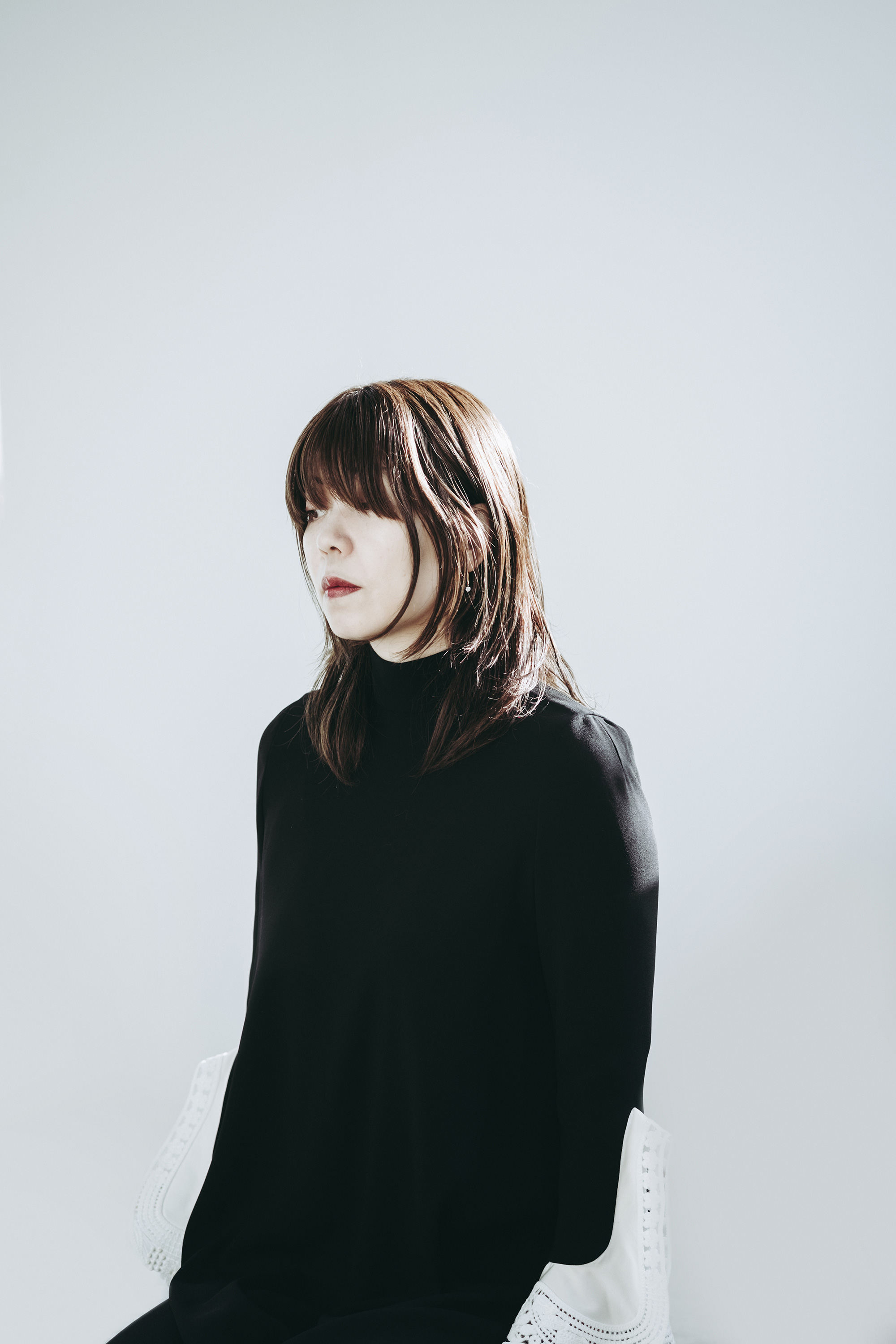
Name: moskitoo
Nationality: Japanese
Occupation: Composer, producer, vocalist, songwriter
Recent release: moskitoo's Unspoken Poetry, mastered by Taylor Deupree, is out via HEADZ/WEATHER.
If you enjoyed this moskitoo interview and would like to stay up to date with her work and music, visit her official homepage. She is also on Instagram, Facebook, and twitter.
When I listen to music, I see shapes, objects, and colours. What happens in your body when you're listening? Do you listen with your eyes open or closed?
When I listen to music, different sensations start to blend and overlap inside me. Sometimes, shapes or images gradually appear in my mind, or I might feel like I’m remembering moments I’ve never actually experienced—it's like a switch that awakens hidden emotions. It’s a bit like waves, with feelings and thoughts coming and going.
When I want to focus more deeply on the subtleties and changes in sound, I might close my eyes, but often, I leave them open or listen while walking outside, letting the music mix with the everyday noises around me.
How do listening with headphones and listening through a stereo system change your experience of sound and music?
Listening with headphones feels more intimate, like the sounds are resonating inside my body and mind. It allows me to catch all the little changes, like looking through a magnifying glass.
Listening through a stereo system, on the other hand, is a more physical experience—the sound fills the space around you and you can feel it in the air.
I used to rely a lot on headphones for both listening and creating music, but now, for the sake of my hearing, I prefer working with speakers at a lower volume.
Tell me about some of the albums or artists that you love specifically for their sound, please.
Cluster & Eno: Cluster & Eno; Taylor Deupree: Northern, sti.ll; FourColor: Air Curtain.
Cluster & Eno is a masterpeace I always come back to.Taylor Deupree and FourColor have been huge influences on my sound. Their music is something I constantly study. Taylor Deupree mastered my latest album, and Keiichi Sugimoto (FourColor) did the mixing and even contributed a remix for one of my tracks.
[Read our Brian Eno interview about climate change]
[Read our Cluster's Roedelius interview]
[Read our Taylor Deupree interview]
Do you experience strong emotional responses towards certain sounds? If so, what kind of sounds are these, and do you have an explanation about the reasons for these responses?
I feel a comforting sense of being cocooned when I hear things like the gentle overlap of different sounds, or drones and soft noises. It’s like being wrapped up inside a silky cocoon in the forest.
People say that when we focus on sounds we like, our brains filter out what we don’t. I think that feeling of comfort I get from following the sounds I love is a bit like using a mental filter to keep out unpleasant noise or distractions.
There can be sounds which feel highly irritating to us and then there are others we could gladly listen to for hours. Do you have examples for either one or both of these?
When I'm working with sound, I try to stay open-minded, treating both sharp, noisy sounds and more pleasant ones equally.
For example, in the second half of my track "evvve", I used electronic tones to create these delicate, water droplet-like sounds that spread out into space with reverb. I loved how gentle it turned out, but I also felt something was missing. So I added a bit of crackling noise towards the end, hoping to make the soundscape feel a bit broader.
Are there everyday places, spaces, or devices which intrigue you by the way they sound? Which are these?
I’m drawn to those tiny sounds that get lost in everyday life—like the hum of a hard drive, train noises and their announcements, the buzz of conversations in a café, or the faint music from a radio playing in an alley. Here in Japan, you can hear bell crickets singing in the city right now.
When I focus on these sounds, it’s like each one carries a bit of someone’s story or life. It feels like following a thread that leads to different worlds.
Have you ever been in spaces with extreme sonic characteristics, such as anechoic chambers or caves? What was the experience like?
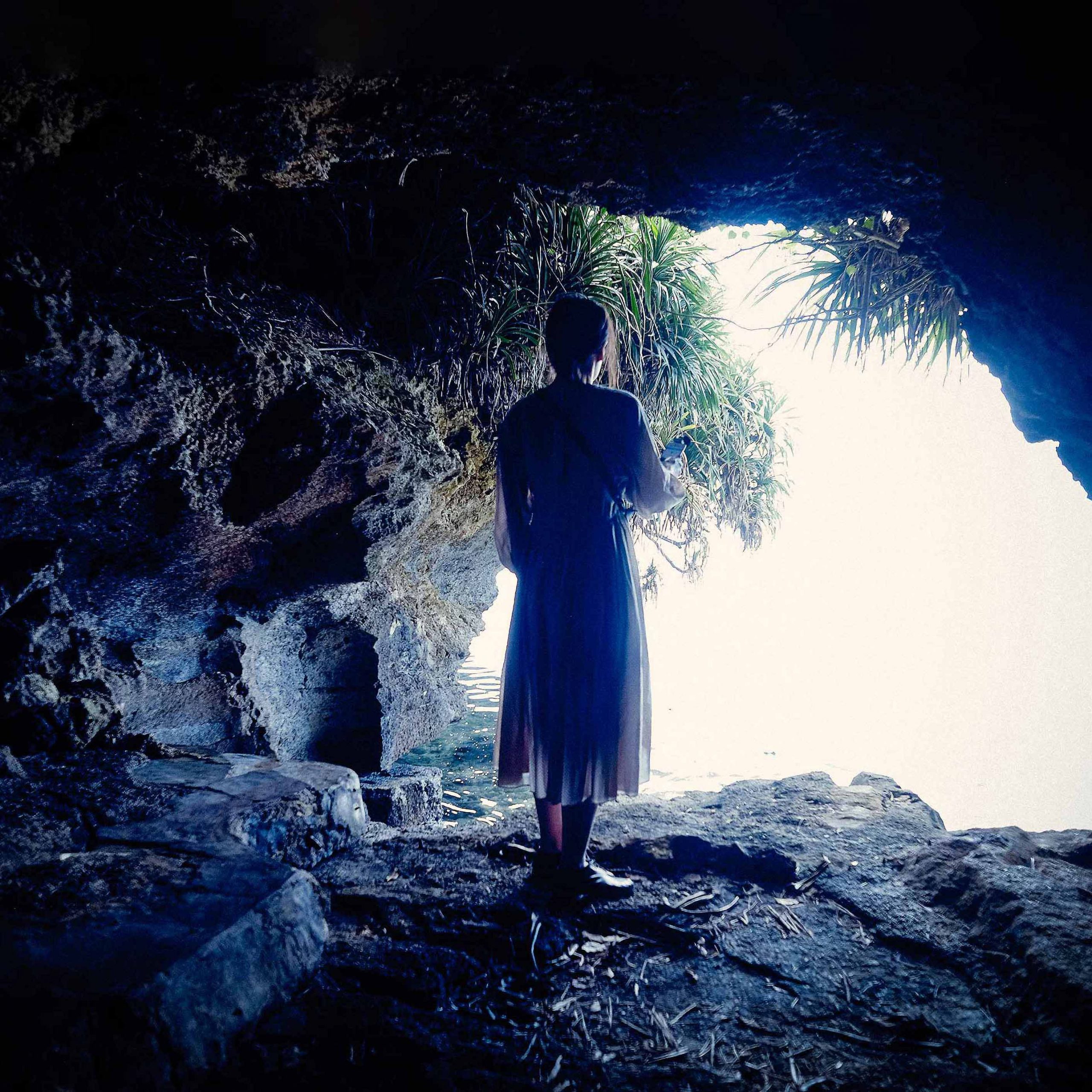
This summer, I did some field recording in a big limestone cave. Inside, there was a suikinkutsu (a water harp), and I got to hear the gentle melodies created by water droplets. I encountered the way sounds emerge from nature, resonate, and then fade back into silence.
Even when I could hear distant voices from other families, the words lost their shape in the echoes, leaving only the reverberation that reached us. It felt like a space where resonance and silence coexist, like the origin of sound.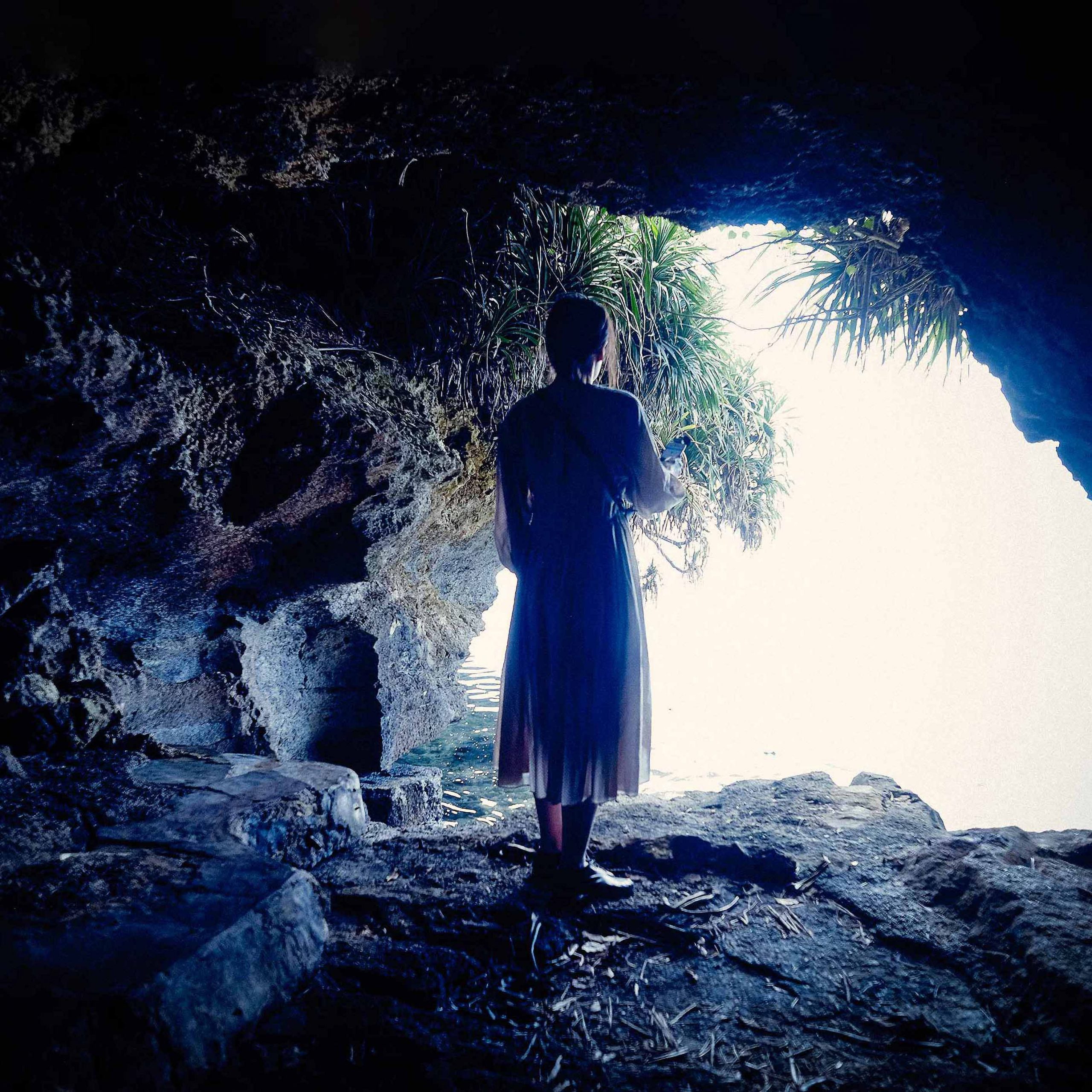
moskitoo Interview Image (c) the artist
What are among your favourite spaces to record and play your music?
I mostly record in a small home studio since I often work with electronic music. There’s a well-known phrase by a Priest, “Bloom where God has planted you.” I enjoy making music in this small studio, like a plant extending its roots from an electrical outlet—wherever my recording equipment is, that’s where creativity blooms, and it’s my favorite place to be.
For live shows, I have great memories of playing in a temple where nature and stillness blend. The wooden pillars and tatami mats absorb the sound, making it feel tighter and more focused, while the paper shoji screens let in the gentle noises from outside, like the rustling of trees. Playing in planetariums is also special—the way the sound changes depending on where you sit under the dome feels like the space itself becomes part of the music.
Every place is different, and a dialogue between sound and space always emerges. Each space’s unique acoustics gives new interpretations to my music.
Do music and sound feel “material” to you? Does working with sound feel like you're sculpting or shaping something?
The process of combining sounds into a musical form is like sculpture. Shaping and layering waveforms, adjusting their contours, and positioning them in space is similar to forming something physical. At the same time, when recording sounds, I aim to capture fleeting phenomena, like trapping the wind in a bottle, or seeking out accidental sounds.
My friend once described my music as “sculpting the whereabouts of sound with words,” and that description resonated with me. My track “Embroidery Story“ was made with that feeling, creating music as if I were carving a path for it with words.
How important is sound for our overall well-being, and in how far do you feel the "acoustic health" of a society or environment is reflective of its overall health?
Our sound environment has a significant impact on our lives, as seen in studies about the health effects of urban noise or the relaxing effects of natural sounds. You can learn more about this through Raymond Murray Schafer’s books … After the pandemic, the popularity of natural sounds and ambient music suggests that people are seeking relaxation and comfort through sound.
But I don’t entirely agree with the idea that being healthy or having beautiful sounds equates to happiness. I pursue things that are useless, imperfect, or rough, rather than music solely aimed at relaxation, health, or happiness. To me, there’s a raw beauty in the incomplete and the awkward. Many of my tracks are built from "waste sounds" or "discarded noise." In a way, this might even be a form of acoustic pollution …
Sound, song, and rhythm are all around us, from animal noises to the waves of the ocean. What, if any, are some of the most moving experiences you've had with these non-human-made sounds?
I grew up in a snow-covered city. The urban environment is usually filled with sounds—cars passing, murmuring crowds, distant echoes of daily life.
But on snowy nights, when the snow piles up to two meters and stops all traffic, there’s a moment when every sound gets absorbed into the snow. It’s like even time itself has stopped—complete silence enveloping the city.
The memory of that deep, soundless night is unforgettable, just as much as the joy of encountering new sounds.
Many animals communicate through sound. Based either on experience or intuition, do you feel as though interspecies communication is possible and important? Is there a creative element to it, would you say?
I believe every sound is part of communication.
For instance, when a cat meows, you can sense emotion or intention behind it. Cats even seem to enjoy low-frequency vibrations from speakers or play a toy piano to get our attention. (Sorry, I tend to use cats as examples since I’m a cat lover…) Observing them, it feels like animals have something they want to convey through sound and vibrations.
Birdsong and insect chirping have beautiful rhythms, and I think there’s a kind of shared emotion that crosses species through sound, creating a bridge for communication.
moskitoo Interview Image (c) the artist
Tinnitus and developing hyperacusis are very real risks for anyone working with sound. Do you take precautions in this regard, and if you're suffering from these or similar issues, how do you cope with them?
I have a bit of a tendency toward sound sensitivity, so I try to make space for quiet moments in my daily life to help me stay focused. I intentionally create "blank time" when I don’t listen to anything, giving myself a chance to reset my senses.
When composing, I avoid listening at high volumes for long periods. And in places where noise bothers me or the sound levels can get high, I take precautions like using open-ear earplugs when needed.
We can surround ourselves with sound every second of the day. The great pianist Glenn Gould even considered this the ultimate delight. How do you see that yourself, and what importance does silence hold?
There’s definitely a richness in a world filled with sound, and I totally get the joy that comes with that. However, I also value the moments of silence and the space between sounds.
Just as a painting starts from a blank canvas, silence is essential for highlighting sound. Even when all external sounds disappear, you can still hear something—your heartbeat, your breath. There’s a whole world of faint sounds from machines, distant noises, and even the sounds inside yourself.
Discovering the sound within silence and the silence within sound is something I find really fascinating.
Seth S. Horowitz called hearing the “universal sense” and emphasized that it was more precise and faster than any of our other senses, including vision. How would our world be different if we paid less attention to looks and listened more instead?
When we focus on listening, we start to tune into the inner layers of things and imagine what we can’t see. A sound begins, shifts, echoes, and fades. By paying attention to a single sound, we can perceive time and space differently, and it might bring up memories we didn’t expect. Or it could make us feel boring, think about what to eat for dinner, or notice our own inner dialogue.
Listening deeply can lift us out of the ordinary and take us somewhere else, even just for a moment. It’s not that hearing is the most important sense, but it has a unique quality that goes beyond just perceiving sound. In a world that paid more attention to listening, sounds would carry more meaning. We might sense the change of seasons through the buzz of insects, or hear the weather shifting in the birdsong or the wind.
By truly listening, we can have a conversation with the inner essence of things that we might miss if we only focused on what we see.