Published
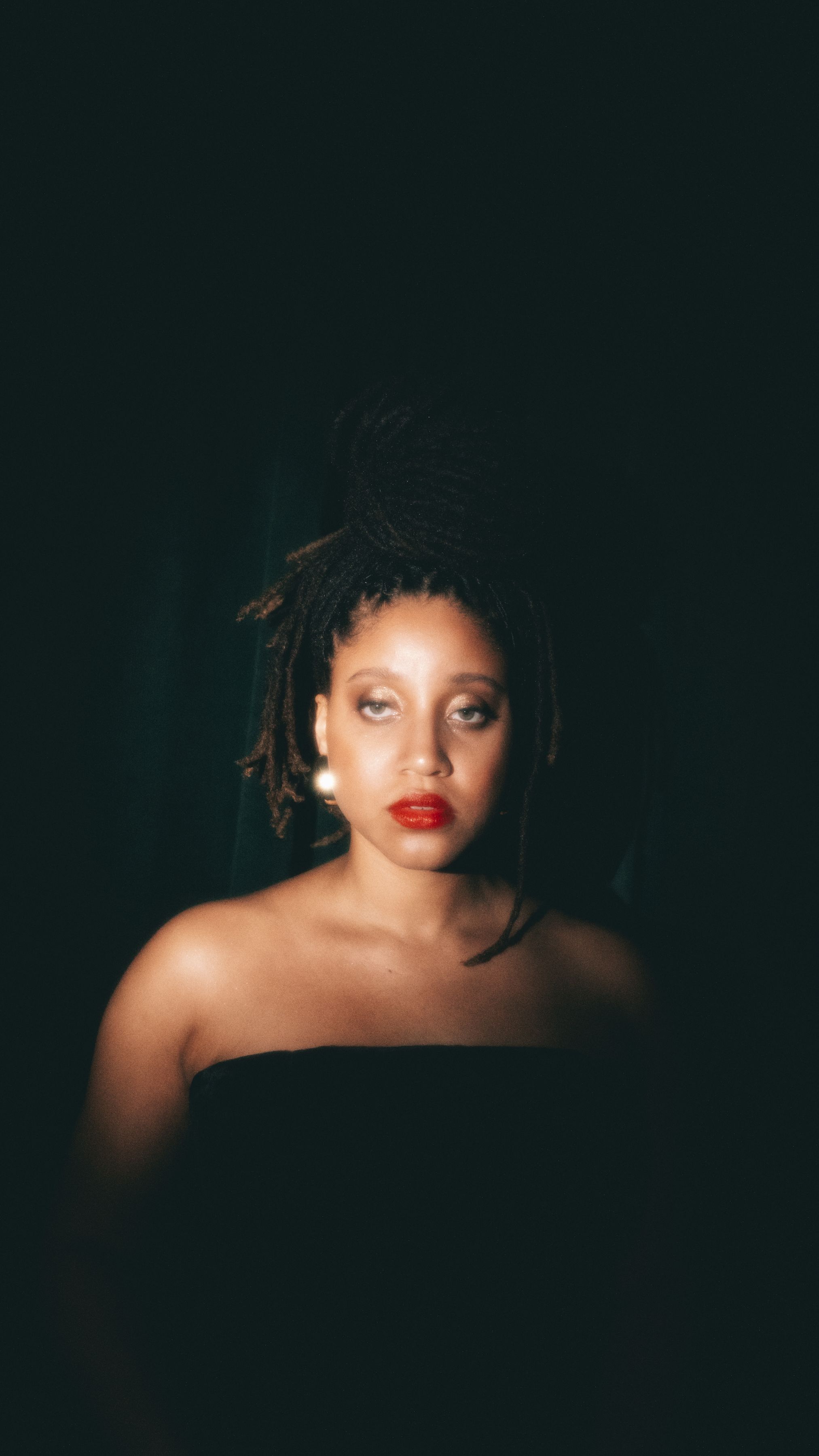
Name: Ni Maxine
Occupation: Singer, songwriter
Nationality: British
Current event: Ni Maxine is one of the artists on the roster of the 2025 edition of the Cheltenham Jazz Festival. Other acts include Nubya Garcia, Joe Armon-Jones (Ezra Collective), Neil Cowley Trio, Mark Kavuma, Amadou & Mariam, Elles Bailey as well as the Blind Boys of Alabama. Get tickets and more information here.
Topics I am passionate about but rarely talk about: I actually LOVE food. I can’t say that I ‘know’ much about it, other than when it tastes good, but yeah, food is the way to my heart and I love exploring culture through cuisine.
Recommendations for Liverpool: Since we’re talking about food, you must visit ‘The Middle Eastern’ on Lodge Lane in Liverpool for traditional Yemeni food. Their Lamb Mandi is incredible, slow-cooked lamb with delicious yellow rice, with some fresh orange juice and some adeni tea, perfect! Another couple of spots which are essential visits are Mahoe Blue (a gorgeous Jamaican restaurant on Aigburth Road, with the perfect soundtrack), Minna, the perfectly pink brunch spot on Lark Lane and a new one (to us), Bolete (in Neston, on the wirral) who do the best roast dinner money can buy - I had the roast beef yesterday and it was so soft that you could have sliced it with a spoon. I know you only asked for one, but I couldn’t resist some Liverpool restaurant recommendations!
[Read our Nubya Garcia interview]
[Read our Ezra Collective interview]
[Read our Neil Cowley Trio interview]
[Read our Mark Kavuma interview]
[Read our Blind Boys of Alabama interview]
If you enjoyed this Ni Maxine interview and would like to stay up to date with her music, visit her official website. She is also on Instagram, facebook, and tiktok.
What were some of the musical experiences which planted a seed for your interest in jazz?
Jazz FM in the car in the 2000s, Ramsey Lewis (ft Earth, Wind & Fire) - Sun Goddess, Fela Kuti - Water No Get Enemy; that is where it all began. Then there was The Brand New Heavies, Incognito, Angie Stone, Erykah Badu and singing gospel at church on Sundays.
Fast-forward to my early secondary school years (if I remember rightly), I borrowed a copy of Ella Fitzgerald sings the Irving Berlin Songbook from a family friend, and learned all of the lyrics in the liner notes booklet.
I became really obsessed with the CD, listening to it LOUDLY through my mum’s huge speakers, on repeat. It was a huge part of my jazz education.
I had a few terms of classical singing lessons at school, thanks to my godmother, and my singing teacher and I very quickly recognised that sight-reading and sheet music wasn’t for me so I was categorised as a ‘jazz’ singer.
That really stuck with me, and now I like to challenge what that is, and what that means …
What does the term jazz mean today, would you say?
Jazz is about freedom. Jazz is about expression. Jazz is about telling your story and making your feelings known. Jazz helps me tap into my emotions. If I’m feeling a little blue, I’ll put on Count Basie Orchestra - Lil’ Darlin and shed a tear, or scat and dance along, …
... or play through Roberta Flack’s ‘First Take’ (1969) and cry to ‘I Told Jesus’, that one really hits.
If I’m feeling silly on a sunny day, I’ll go for Blossom Dearie with ‘Comment Allez Vous’ (1957) and dance around like I’m on a film set …
If I’m feeling moody, I’ll go for Sultan Stevenson - To Be Seen (2023) which makes me feel validated. It’s so broad, I don’t really know what it is.
To be honest, I have a funny relationship with the term ‘jazz’ though - It feels like a label that was given to African American musicians making music which stood for something, certainly when it came to vocalists, but what do I know? I didn’t study ‘jazz’, all I know is what I have learned by listening, feeling and repeating.
What I do know, though, is ’Jazz’ is a really polarising term. Some people love it, and the connotations of it, some people are repulsed by it and immediately think ‘Not For Me’, but it’s a broad ‘genre’ which is ever-evolving and is unique to the people creating it, in any particular space and time so there is something for everyone
Lots of people, if they gave it a chance, might see themselves reflected in it …
Where do most of your inspirations to create come from – rather from internal impulses or external ones?
My creative impulses come from my feelings which I need to express.
For me, songwriting usually starts with a conversation, it’s a bit like therapy. I’m a sensitive soul and I feel things deeply so writing songs helps me make sense of how I’m feeling. So much of how I feel is influenced by the world around me; people, spaces, sounds, smells, memories, what is happening at present ... I respond to how I feel, package it up and archive it.
It doesn’t necessarily ever need to be heard, but it helps me to work through complex emotions and be a more balanced human being. I just wish I’d found it sooner!
Which current social / political / ecological or other developments make you feel like you need to respond as an artist?
I find the state of the world right now quite overwhelming and so much bigger and more complex than me or what I could ever understand. I try to focus on my personal experiences and emotions and create a space for people like me or who have experienced similar things to me to feel seen, heard and supported.
Cliché it may be, but sometimes I feel like the whole world would be a better place if people just dealt with their personal issues like low self-esteem, for example, and found more ways to ‘love’ each other.
It’s not easy, I haven’t mastered it (I’m a work in process as much as the next person) but I believe that ‘freedom’ is an inside job.
What role do electronic tools and instruments play for your creative process?
Some of the songs you’ll hear me play live at Cheltenham (and in other places across the UK) started with me speaking with my partner who picked up a guitar and responded to me ranting, others, a similar process with a few more musicians in the room. All of these songs have evolved a lot with me over the past few years as I’ve played them live with lots of different musicians, in lots of different contexts.
We recently recorded my debut EP, ‘Mother’s Arms’ with live instruments (mostly recorded in my living room, apart from the drums), with my upright piano. We also added in some synth and keyboard sounds, and goodness me, I can’t wait to share this body of work with you. It has been described as ‘timeless but contemporary’ and ‘rare’ and I think that’s because it’s a perfect balance of electric and acoustic instruments with layered vocals backed by live drums chopped up and looped with a hip-hop sensibility. You’ll have to hear it for yourself.
But yeah, I’m getting more and more into sampling old jazz tracks and I’m sure the next project will see me lean into this as a process. Watch this space!
Jazz has always had an interesting relationship between honouring its roots and exploring the unknown. What does the balance between these two poles look like in your music?
I can’t put my finger on why I do it, or who I think I am calling myself a ‘jazz’ (well Neo-jazz’) singer, but I guess I feel rooted in the tradition because of my background.
I often get really wrapped up in being ‘Black British’ and exploring what that means for me, but I feel strangely connected to the roots of jazz. My family are West African via the Caribbean, the USA and the UK (and European).
There’s a lot of lost history and identity which I’d like to uncover, and I hope that my art leads me to it. I think that’s the ‘unknown’ that I’m seeking in my creative path, finding bass lines, percussive rhythms, a cappella voices improvising and intertwining, community, space, sun…
How much potential for something “new” is there still in jazz? What could this “new” look like?
Loads! Ni Maxine, that’s what new ‘jazz’ looks like. Something ‘timeless but contemporary’ … (joking).
But on a more serious note, I think ‘jazz’ has limitless potential, being all about personal expression and always referencing the time that it was made in which I think really comes through in production choices and the place that it was made, which makes it feel really authentic.
I was introduced to Rudi Creswick, a very well-respected bass player/ producer, by one of my best friends, and we wrote ‘Dark Days Are Done’, which is definitely one of the tracks that I’ve released so far that I am most proud of.
Rudi has such a cool sound and approach to production and it came together so naturally. It’s optimistic, it’s political, it’s a ‘power to the people’ tune, blending a jazz vocal with a strong bass line and electronic production elements, which I always go back to when I need a bit of light and inspiration.
The track found itself on Spotify’s ‘Fresh Finds Jazz’ playlist which seemed like a good home for it, so I think this is what a ‘new’ jazz might look like, but I’ll let you decide!
For many artists, life-changing musical experiences take place live. How do you see that yourself?
Where do I even begin? I’ve been playing live shows around the country (and a little bit in France), while I’ve been writing and figuring out how to release my debut project.
Sometimes it feels like I’ve done things the wrong way around (the old-school way), but at the same time, these live experiences have really helped me to find my sound and, I guess, prepared me for what feels like it will be a pivotal moment, my debut EP release. I have played with some absolutely incredible musicians on some incredible stages in some incredible rooms and fields, and I have to pinch myself every time. I think, ‘Did that really just happen? Did we just do that?’ And then I’m onto the next one, which feels crazy.
It’s like, by the time you get onstage, nervous and exhausted because of all of the preparation you’ve had to do to pull it all together, you’ve moved on, but then something happens, maybe 2 or 3 songs into a set, where the moment sinks in and you start to enjoy it, then you blink and it’s over.
It’s definitely getting easier as I find my rhythm and find the right people to work with, but it's easy to get lost in logistics. Whenever I catch up with someone after a couple of months, they say ‘You’ve been busy, you’re doing so well’ and I’m just thinking … I wish it felt more like that! It’s hard to really live in the moment of a live show when you’ve got so much to organise around it.
With that said, there have been a few times in the last 6 months where things feel like they’ve really fallen into place. The first one was during my EFG London Jazz Festival show last year, singing ‘Mother’s Arms’, the title track of my upcoming EP, live with a band for the first time. I think by the second verse, I’d broken down in tears. I got so emotional, especially with my mum being in the room, but it was a really healing moment, when I look back at it.
Another life-changing musical experience was being onstage with Laura Mvula, Corinne Bailey Rae, China Moses and The Nu Civilisation Orchestra at a sold-out Royal Festival Hall for the Southbank x Montreux Jazz Festival launch and missing my cue for my verse in ‘Four Women’. It’s a song I usually sing in its totality in my own set, and I often get quite emotional singing that one too, it’s heavy, so I was probably a bit distracted by that!
But basically, once I’d missed my cue, I couldn’t figure out where in the song we were, so I did a scat solo instead. I was mortified when I came off stage, I could have cried, but Corinne quietly reassured me that ‘this is music, not an exam’ and then, after the standing ovation, she decided that our encore would be ‘Four Women’ and we did it again, so my verse was heard.
This was definitely a live moment which pushed me out of my comfort zone and maybe even changed my life …
How, would you say are your live performances and your recording projects connected at the moment? How do they mutually influence and feed off each other?
I’m really lucky to work with an MD who was involved in the writing and recording process of my music in a live setting, so my EP and my live show feel really serendipitous at the moment.
Who knows what direction the live show will go in though … Watch this space!
What, would you say, are the key ideas behind your approach to improvisation?
Ideas? Well, I don’t really understand improvisation as something I think about or ideate on, but something that just happens spontaneously. It’s about listening, feeling, being open to receiving … It’s kind of spiritual for me.
Gosh, that sounds pretentious, but I don’t really know how else I’d describe it!
Are there approaches, artists, festivals, labels, spaces or anyone/-thing else out there who you feel deserve a shout out for taking jazz into the future?
You know what? I’ve got to say Alex Carr, Tomorrow’s Warriors and We Out Here Festival - Alex Carr is a powerhouse (enough said), Warriors have been a huge support to me in my career (and have nurtured the best of the UK Jazz Scene for over 30 years), and We Out Here Festival just feels a bit like a utopia where jazz can exist as a relic and an ever-evolving concept, simultaneously, which I love.
I’ve also got to give our baby ‘The Wombat Jazz Club’ a nod - We’re doing things in Liverpool which you can find out more about at www.thewombatjazzclub.co.uk, and hats off to Cheltenham Jazz Festival for consistently creating a platform and a pathway for emerging artists like me! Am I allowed to still call myself that!?
The Montreux Festival intends to preserve its archive of recordings for future generations. Do you personally feels it's important that everything should remain available forever - or is there something to be said for letting beautiful moments pass and linger in the memories of those that experienced them?
Good question. Personally, I am a data hoarder (I love documenting and archiving things).
I’m not sure everything needs to be available to everyone forever, but I do think it’s good to have the option to revisit these special moments, and share them with those who couldn’t be in the room.