Part 1
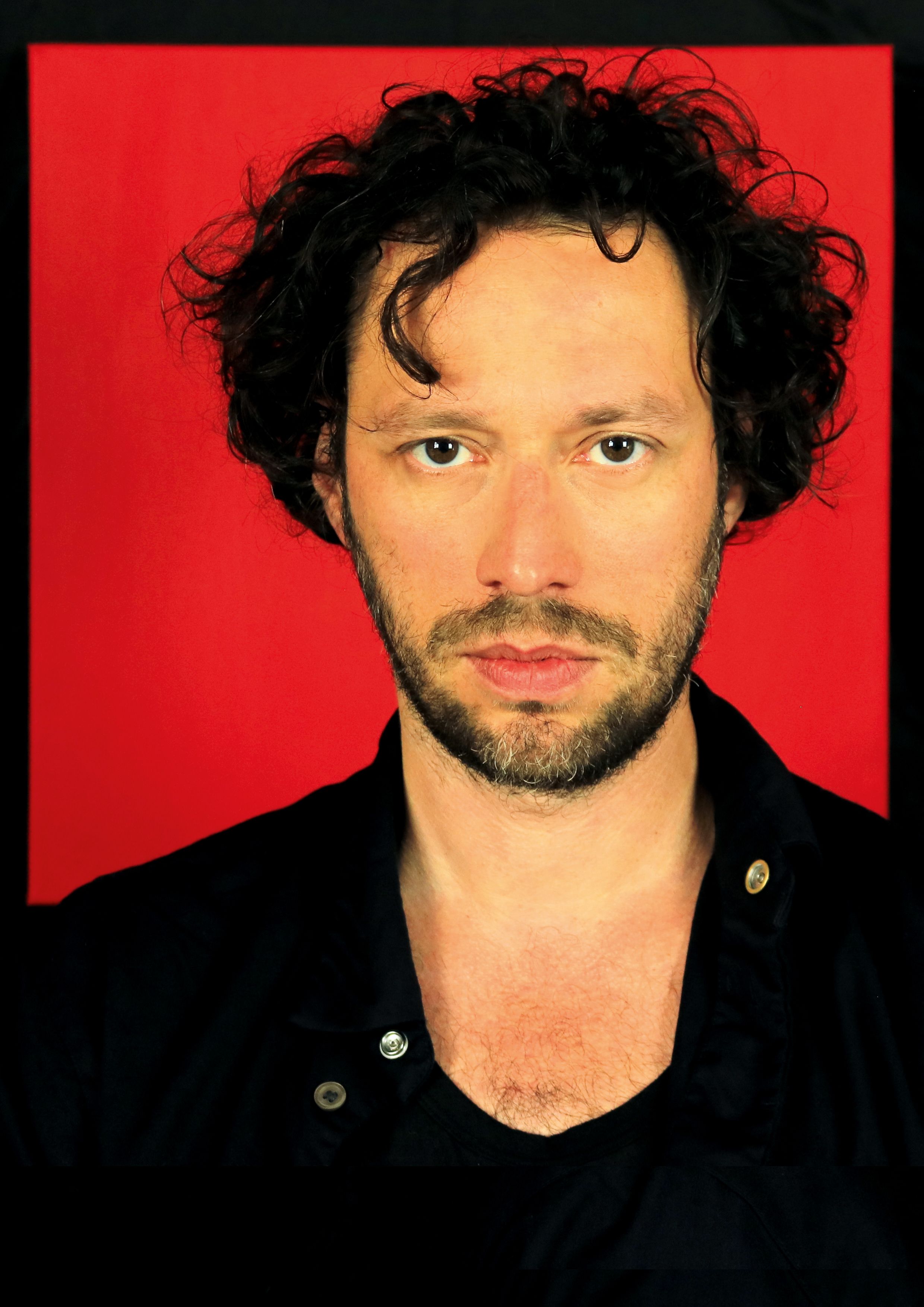
Name: Nico van Wersch
Nationality: German
Occupation: Composer, musician
Current Release: Nico van Wersch's Psychose is out September 20th via Naked. Order the physical edition via bandcamp. Stream on Apple Music and Spotify. [Links will become active on release day]
Current event: October 2nd and 9th 2024, Nico van Wersch will present new music written for the play Agamemnon at the Residenztheater Munich. The piece is presented on a 12-meter long and 2-meter wide rotating platform and will take listeners on a 2-hour journey. Conceptualised as a trance ritual similar to Psychose, it features instruments designed and built by him - the "Simantraphon" and "Aluphon" - and played alternately by 4 percussionists. For more information, visit the website of the Residenztheater.
Recommendations: “Licht “by Karlheinz Stockhausen, because it shows how far one idea (basically) can carry you away, and what you are able to achieve, when you stick to it.
“A Rainbow in Curved Air” by Terry Riley: here an idea is presented in such a clean way and delivers a pleasant (unlike Stockhausen) listening experience
If you enjoyed this Nico van Wersch interview and would like to know more about his music, current live dates and upcoming releases, visit his official homepage. He is also on Instagram, Facebook, and Soundcloud.
Where does the impulse to create something come from for you? What role do often-quoted sources of inspiration like dreams, other forms of art, personal relationships, politics etc play?
The impulse to create or compose something is, above all, to bring something into the/my world, to “have” something or to experience something that I have not yet heard, that I have not yet felt. Something that challenges me in the creation process, in the work that lies within it, but also in its subsequent and ongoing reception.
In the best sense, the result and the things I learned along the way tell me something about myself and the world we live in - or how I could or would like to perceive it. That's also what I want to share with the listener, beyond the music of course, as an actual meta-perception.
In the case of composition for theatre, film or dance, a framework often emerges based on the underlying topic, content, synopsis, use of language, bodies and stage or set. That already conjures up a certain energy or a certain feeling that inspires me for the basis of every piece: instrumentation and concept - together these parts create a “basic sound” or “original idea” of a composition
But even without this absolutely predetermined framework, the instrumentation and concept are always fundamentally related to a feeling, a “color” or abstract artistic idea that arises within me.
For you to get started, do there need to be concrete ideas – or what some have called a 'visualisation' of the finished work? What does the balance between planning and chance look like for you?
As already described, the most important thing for me is to start with a concept and concrete instrumentation. These factors must be such that I can research and experiment on them as much as possible. If I ever work with the same cast, next time there has to be a certain twist that allows me to create new contexts.
Concepts can also be small things like, for example, a microtonal tuning that I haven't worked with yet, self-built instruments with semi-random tuning. It could actually be anything that gives me the feeling that I can experiment, research, learn, experience and play. It's a bottomless pit and I enjoy always coming up with new things from which perspective you can make music - mundane or intellectual.
I try to avoid visualizing a finished piece so as not to lose my artistic flexibility during the process. In my experience it is almost always the case that unforeseen “discoveries” can have a massive influence on the composition. A corset that is too narrow for the process and too much focus on an imaginary, finished piece can massively narrow the space for these discoveries.
Planning is on a different level, but is essential in order to complete a project in a given time - chance is important in giving the artistic process the necessary freedom. Salt and pepper, oil and vinegar, yin and yang, you get the idea … On the other hand, there are things that I actually visualize - emotionally abstract poses and choreographies.
You can call this “meta-music-making” or, to put it more conservatively, “gestures.” (e.g. praying, or being drunk, sick, tired, dead...) From this I can draw entire phrases and sometimes entire blocks for a composition. However, these are only compositional vehicles and cannot be seen in an actual performance, although they can be heard - at least in my opinion.
Is there a preparation phase for your process? Do you require your tools to be laid out in a particular way, for example, do you need to do 'research' or create 'early versions'?
It always starts with simple sketches, notes, drawings to capture and develop basic ideas. Old school ... Then more and more devices and technology are used: Many production tools such as DAWs, controllers, microphones, plug-ins, - you name it – I'll use it.
I actually do full production for all my pieces, although that's not my primary product - live music is my focus. This production composing helps me to play with ideas very concretely and also to think about elements of sound design and programming of sound synthesis.
Do you have certain rituals to get you into the right mindset for creating? What role do certain foods or stimulants like coffee, lighting, scents, exercise or reading poetry play?
I certainly know many rather unhealthy ways and rituals to get into the right “mindset”, but I tend to avoid these and work on making them better and healthier with every work unit.
Getting into the “zone” is incredibly important to me when it comes to creating, and I can’t fully explain why it’s too tricky to enter the “zone” and ride it. I think I actually take making music incredibly seriously.
What particularly resonates with me is finding the right state when night falls. Everyone is sleeping: this helps me to disconnect from the “sophisticated” world and concentrate on a universe far, far away.
Most of the time, however, the process is rather unromantic: I start the studio at 9 a.m. every day!
What do you start with? And, to quote a question by the great Bruce Duffie: When you come up with a musical idea, have you created the idea or have you discovered the idea?
I see myself as a “musical sculptor”. I often start with semi-arbitrary oversized chords, progressions, and indefinable rhythms - which can be perceived as musical nonsense or noise.
I start listening and using my ear and intuition to generate something from this sprawling information, and the simultaneous events in rhythm, harmony, etc., that I can work with.
Then I start carving pieces out of this “block”, just like a sculptor, chiseling and grinding and polishing, until the essence of the information is revealed before me with a clarity that allows me to formulate it clearly, for myself and potential musicians. In this sense, I “discover” these ideas. My ear, or rather my intuition and my intellect, is challenged until things adapt to my “style”.
Another starting point can be, as already briefly described, to translate physical gestures. This is particularly true of percussion and keyboard instruments, as they are particularly tactile and physical, in my opinion. An imaginary continuous gesture on an instrument fills itself with music when it is mentally “executed”.
The greatest motivation remains to discover sounds and develop their potential contexts. The experiment leads to the discovery
Many writers have claimed that as soon as they enter into the process, certain aspects of the narrative are out of their hands. Do you like to keep strict control or is there a sense of following things where they lead you?
I love losing control in the creative process. I love forgetting everything I thought I knew about music (I studied music, by the way).
This mindset allows me to go much deeper into composing than my musical intellect or especially my instrument skills. Although these are essential in my job and enable me to do a lot, I also see them as clear limitations. It's not exciting to do what you can, it's exciting to do what you can't. In my opinion, the greatest moments arise in this area of tension.
Experimentation experience is very valuable in this context in order to be able to search for the “right” things with the right self-confidence, without being dissuaded by the fear of not being able to find anything. You just have to look hard enough.
Often, while writing, new ideas and alternative roads will open themselves up, pulling and pushing the creator in a different direction. Does this happen to you, too, and how do you deal with it? What do you do with these ideas?
I begin my musical journeys with an intention to ensure that alternative routes inevitably arise. I welcome them and am grateful for them.
I never really know what a piece is going to sound like, I know how it “feels” and I know how it’s orchestrated, that’s all. (And when it should be finished ...)
I appreciate the moments, these alternative routes, these ideas that arise along the way and I stretch and squeeze them as much as I can.
It often seems as if some thoughts and directions are out of reach, but conceptually forcing yourself to delve deeper into an idea or limitation will make you a good problem solver and composer - at least in my opinion.