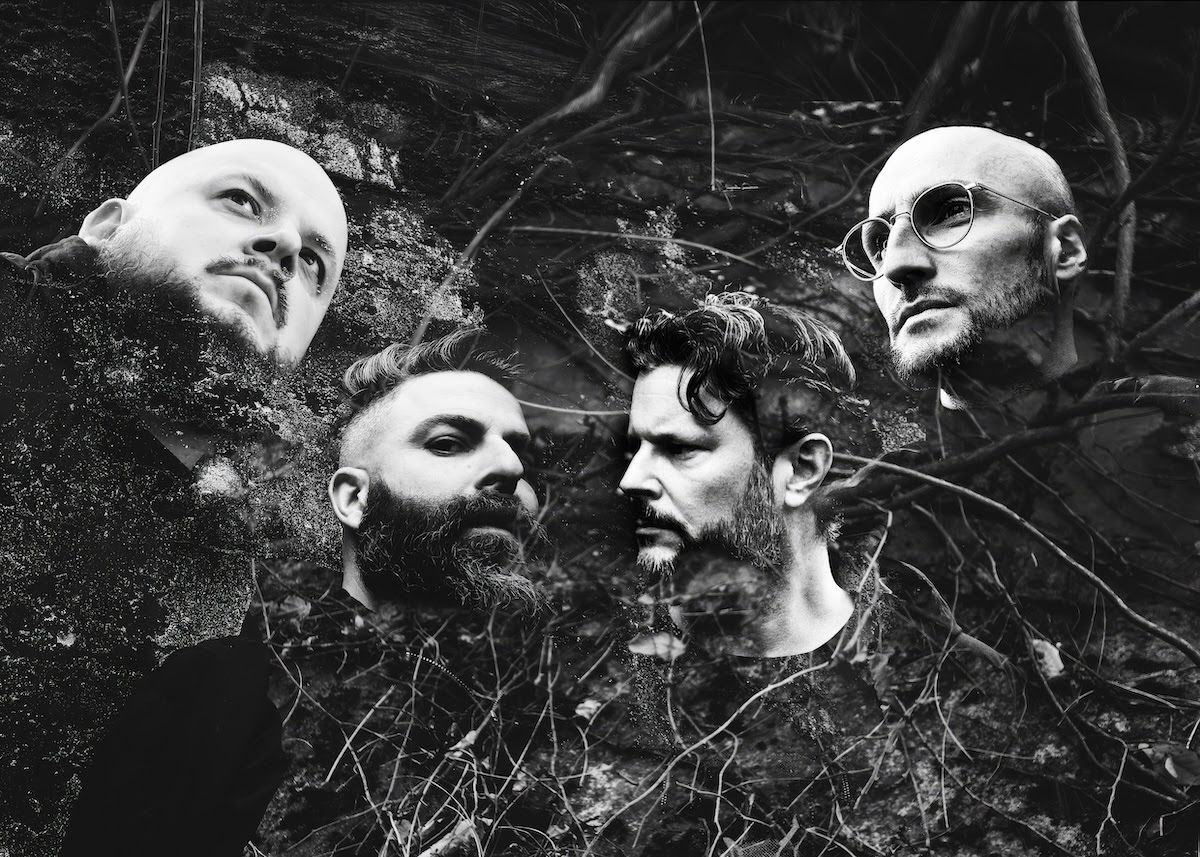
Published
Part 2
Tell me about the concrete lyrical themes that you felt drawn to for Hell Interface.
Simon: There is always a lot of misery in our lyrics, sometimes inspired by worldly issues or, at other times, psychological woes. There is probably no darker realm than the human psyche. And almost every topic we tackle can be derived from that.
Hell Interface features lyrics written by myself in collaboration with our vocalist John, and our new vocalist Christian Kolf also contributed lyrics this time around.
When it comes to exploring darker themes, what's your approach to writing lyrics? What makes lyrics good in this regard?
Simon: It's all about strong and even over-exaggerated imagery. We often utilize terminology of war and other catastrophes to emphasize the impact of the misery we channel through our lyrics.
Sometimes, the more over the top the imagery, the greater the cathartic effect. There are moments during the writing of our lyrics where we laugh at how messed up some of the imagery in our lyrics gets.
So clearly, it acts as a release for us.
Tell me about the creative process for the Hell Interface EP, please.
Paul: The process was long and relatively drawn-out in some ways, but after a certain point this year it actually became quite straightforward.
We'd already started writing in April 2024, when I stayed in Portland for two weeks after having toured the US with The Ocean. All the songs were written and recorded in our home studios, with the exception of some of the vocals, which we partly recorded at friends’ places in professional environments.
Usually, Simon and I sit together, work on riffs or drum parts, and move from idea to idea until a rough structure starts to take shape. Sometimes, though, we approach songs with a much clearer concept in mind, for example when we already know what we want in terms of dynamics, complexity, or the overall vibe.
The drums are usually programmed in a basic form at first and then fine-tuned by me before I fully learn and record the final parts. Simon wrote a lot of material for this EP and also put a great deal of effort into developing his guitar sound.
On top of that, we now have an additional facet in the songwriting and vocals with Christian from Valborg, which has made everything feel genuinely fresh and exciting.
Simon: This was the first time in years I had to pick up the song writing by myself to finish the EP. After the initial session with Paul in 2024, I wrote and recorded the rest of the material at my warehouse.
I sell guitar pedals through my shop Cult FX for a living, so I constantly test new pedals / effects and stumble over sounds that inspire me creatively. With time, I made a more and more intentional effort to write Nightmarer riffs when ever I came across a sound I found inspiring.
This ended up making a big difference in comparison to our previous material, which usually had a less diverse guitar tone and utilized almost no effects what so ever.
For Hell Interface, how did you realise your goals in terms of the production, including effects for your current release?
Simon: In addition to my previous answer, I actually simplified my setup and rig quite a bit. I used to have this huge, elaborate studio desk with rack gear and expensive monitors, but put together a much more simple setup in my warehouse.
I wanted my experience to be different from previous recordings in a sense where more analogue gear was used and I just committed to tones more quickly and straight up recorded them as I was writing the material, rather than tracking DIs that could later be re-amped.
This was also the first time I quad-tracked guitars with two entirely different tones - not only to broaden the sonic palette, but also because I wanted the recordings to be a little less tight and perfect. Less "on grid", if you will. I tried to play more loose and even built super small tempo changes into the songs from part to part, just so everything would become less static or robotic.
Paul: We took even more into our own hands this time and also improved our recording skills along the way. Since 2023, I’ve had my own studio in Berlin where I can record drums as well as work on synthesizers and soundscapes.
Creating spaces like that as personal retreats, essentially, has been incredibly liberating and inspiring. It allows us to refine and develop our sound without being pressured by time constraints.
Exploring darker themes in the music often goes hand in hand with the accompanying artwork. Tell me a bit about this relating to your new release.
Simon: I wanted the artwork to reflect the ambivalence of the title and Nik at Wax Vessel suggested Jérôme "Trëz" Oudot. We all really liked his style and let him explore some of the lyrical themes of the release. His painting has this organic tone to it, but if you look closely, there are a lot of glitchy artefacts to be found.
Finally, Kai Blackwell really emphasized the latter with the new band logo and modernist layout. He was already responsible for both on our previous remix album 'Deformity Adrift: Reformed', so we knew we could trust in him understanding what we were looking for.
I would love to know a little about the feedback you've received from listeners or critics about what they thought some of your darker songs are about or the impact it had on them – have there been “misunderstandings” or did you perhaps even gain new “insights?”
Simon: People respond to our music in very different ways. To some it's the sheer heaviness that speaks to them, others find joy in the "technicality" of the compositions - although we're hardly an overtly technical band - and thankfully, many can fully connect with the atmosphere our music creates.
A very dear friend of mine shared this with me, just a couple of weeks before he sadly passed away:
"Deformity Adrift is one of the sickest heavy records l've heard in a very long time. It's like waking up from a coma to an entirely barren landscape and feeling both empowerment and loneliness."
I thought it was such a great observation, because while there is a lot of self-loathing and misery in our lyrics, there is also a feeling of the triumph - the triumph of not letting it all defeat you.
I feel fortunate that he shared that with me and miss the hell out of him. Gone way too soon, R.I.P. Dave Cohen!
Sharing music on stage can change the way it is experienced, both for musicians the listeners. Can you talk about this a bit, especially in the light of darker themes?
Simon: I think the most potent marriage of darkness and heaviness is low end.
We tune very low, so playing these songs live and feeling the stage resonate with droning low end while throwing my body into the sonics of it all feels extremely cathartic to me. Manipulating distortion and sustain into precisely dosed feedback is another extremely fulfilling exercise to me.
In combination with the extremely sparse lighting we use on stage, I think it's where we can best translate what we're trying to express with our music. The feedback we usually get for the shows thankfully reflects that.
Throughout the history of art, there have been artists who did not want to exorcise their demons, afraid they might lose their creative spark. What's your take on that?
Paul: I think it’s far more helpful to tame your "demons" and make use of them whenever they can actually serve the creative process. It’s pointless and counterproductive to shut ourselves off from these aspects of being human.
I genuinely believe that, as a global community, as a species, we would be much further along if we stopped hiding from our own realities and instead engaged with our "darker sides" rather than ignoring or suppressing them.
That’s also the beautiful thing about the artistic process: it helps us release these internal tensions and transforms them into something tangible, so they don’t wander around uncontrolled inside us and wreak havoc.
And at the end of the day, we can always find ourselves within that process, both as individuals who share many of these experiences, and as a collective that should be learning to endure and understand these tensions in order to grow.
Simon: Isn't exorcising our demons where the creative spark lives?