Published
Name: Dieter Boels aka Nite Kite
Nationality: Belgian
Occupation: Composer, producer
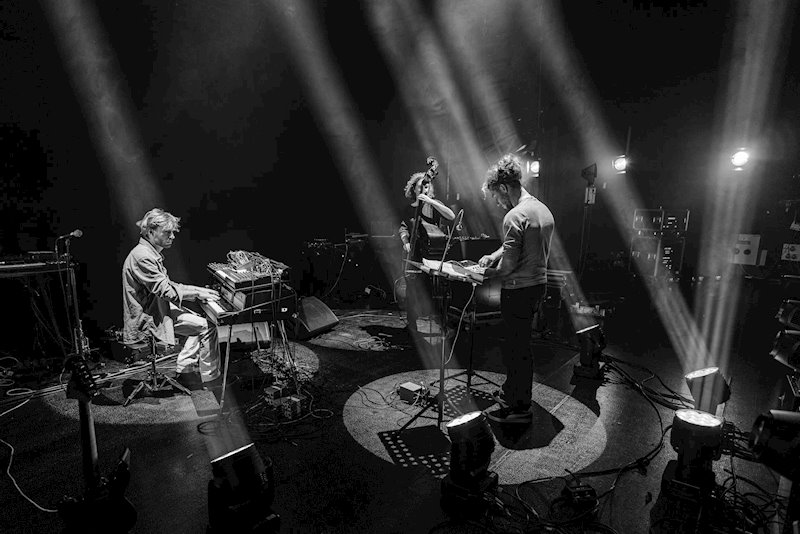
Current release: Nite Kite's latest single “Rust Roest” is out now. It is taken off upcoming full-length album Erratic Erosion, out April 11th 2025, and, besides Dieter himself on piano and synths, features a band of Emma Bierens (double bass), Léo Gaucher (electronic drums), and Joannes Van Duffel (acoustic drums)
Recommendation for Brussels, Belgium: I’m an absolute Brussels-lover, so I don’t know where to start. But a little place that every person will love is a hidden café called ‘l’Estaminet’ in Schaarbeek and the garden behind the beautiful La Maison des Arts. If you’re lucky there might be a concert or another activity in the café, or in La Maison des Arts itself
If you enjoyed this Nite Kite interview and would like to know more about his music, visit his official homepage. He is also on Instagram, Facebook, and bandcamp.
What were some of the musical experiences which planted a seed for your interest in jazz?
When I was 17 two things happened more or less at the same time; the older brother of a good friend of mine started studying jazz at the conservatory and a band member of the high school rock band got interested in jazz. I got introduced to some of the classics (Coltrane, Davis, Hancock).
At the time, I did not really fall in love with the genre, but my interest was triggered and I was introduced to classic albums on a regular basis.
What does the term jazz mean today, would you say?
Ha, this is a very difficult question since the genre (as many genres actually) has become so vast and so many cross-over genres exist.
I, myself, would experience music as jazz these days when I feel that the musicians have incorporated the more classical jazz techniques and theories in their compositions, repertoire or playing; I can hear and feel they’ve played their hours of standards, or studied jazz harmonies.
As of today, what kind of materials, ideas, and technologies are particularly stimulating for you?
After having worked many years in the box (i.e. with Ableton on the computer), I got attracted to working without a computer for the writing process, production process and playing with others.
The last few years, I’ve been investigating the interplay possibilities with electronic instruments using both vintage and more modern equipment. Recently, I see more and more new fun stuff to stimulate this workflow without computers, also embracing the value of limitations in the creative process.
Instruments or tools that meet a perfect sweet spot of playful intuition and technical depth are my jam.
Where do most of your inspirations to create come from – rather from internal impulses or external ones? Which current social / political / ecological or other developments make you feel like you need to respond as an artist?
With so many possibilities in life nowadays, my days too, tend to be very diverse. I enjoy being curious in everyday life activities and can think about all the things I see, hear and read about.
The speed at which we live nowadays, lack of social connectivity, and the growing, yet unnecessary inequality preoccupy me a lot. Trying to oppose these developments and inviting others to join me is present in most of my activities and therefore in how I make music.
Music has become a lot more global, and incorporating elements from other parts of the world or the musical spectrum is commonplace. Do you still think there are city scenes with a distinct, unique sound? How does your local scene influence your work?
To me, the personality of the musician has the strongest impact on the music being written or played and I think that personalities are still strongly influenced by where we are geographically based, even if there is some convergence in the developments of personalities due to the internet.
In music, I often prefer the more nuanced and calm Scandinavian, over the more busy and flashy American music.
Belgium, and Brussels par excellence, is a country with a very strange structure. As I remember correctly, there even has been some research on the impact on the creativity of Belgian people due to this. I too, do think there is some truth in that and I like how to recognise the same creative and mental processes in other musicians of my local scene.
What role do electronic tools and instruments play for your creative process?
The multitude of tools at hand these days can distract me from a more profound creative process, therefore I try to keep the core creative process, i.e. the actual composing, in a space with limited tools, for example only one synth and my piano.
On the other hand I will very regularly experiment and jam with synths and electronic setups and draw a lot of inspiration from the unexpected twists that tend to happen when using electronic tools.
At this stage, I mainly use this inspiration for production- and sound design decisions in the creative process rather than the compositional, but I have the feeling this might change. A lot of the sound design used in ‘Innuendo’ comes from late-night unexpected twists.
Thanks to technological advances, collaboration has become a lot easier. What have been some of the most fruitful collaborations for you recently and what approaches to and modes of collaboration currently seem best to you?
It's funny, a few years ago I actually worked on a software to enhance online collaboration. But since then I actually moved towards a collaboration process with real life interaction, since I value human interconnection a lot and therefore also when playing and creating music.
For my newest album Erratic Erosion I decided to step away from the solo production process I used on my previous EPs and co-wrote and collaborated with some of my best friends. So, just the old fashioned way, by sitting together in the studio behind our instrument and working on melodies.
The Dutch song ‘Laat me achter’, co written with Belgian artist Stoomboot (Niels Boutsen) is one of my favourites; Niels perfectly understood the complexity of a passionate but hopeless relationship, which I had composed in the form of a blues, and the addition of the rich voice of Ruth Kennivé as the antagonist will give even the non-Dutch speaking people a recognisable feeling.
Jazz has always had an interesting relationship between honouring its roots and exploring the unknown. What does the balance between these two poles look like in your music?
I practice and play a lot of jazz, in the old way; playing standards at jams and so on. The classics of jazz is probably the music genre I listen to the most, but my level of jazz is not developed enough to challenge new boundaries yet.
I’m also not so preoccupied with exploring the unknown. Experimenting and messing around is very important for me and surprising and refreshing results are good to keep me triggered, but I’m not so much busy with trying to be innovative. I think there are a lot of people who love music which sounds nice and familiar and not particularly innovative or new.
For many artists, life-changing musical experiences take place live. How do you see that yourself?
I agree, for me the closer we are to something pure, the stronger the experience. The more the musician, or even the person shines through, the purer the experience I think.
I love to hear musicians play when they are experimenting, jamming or practicing, something playful, natural and pure comes to life. A lot of like-minded musicians around me stay confined in the amount of effects and equipment they use, even when we play electronic music.
One of the last times I almost cried was when a singer was practicing a song next to me - while I was playing the piano - without a microphone or whatsoever, I just froze. This is also why I prefer not to exaggerate with effects in the mix, some people might find the vocals in ‘The Dancer’ too direct, I just absolutely love it.
How would you say are your live performances and your recording projects connected at the moment? How do they mutually influence and feed off each other?
By focussing on interaction with other musicians, which is uncommon within the crossover genre.
We played live a lot last year and when we play live a lot is left over to what happens in the moment. The fundamentals are the compositions, but we adapt how we perform the songs to our mood and to the setting. We can play the same song in a club setting or at a relaxing jazz festival.
In the studio we also live-tracked all the songs, even with more musicians, letting the interplay and spontaneous development speak, compromising the perfection of the performance, but accentuating the interplay. With electronic rhythms or sequences at the heart of many songs, working without a computer and by live tracking, the result is a lot more fragile and human than many productions of this day and age.
‘Shy Away’ on the album is one of those songs that really profits from this approach I think.
Ímprovisation is obviously an essential element of jazz, but I would assume that just like composition, it is transforming. How do you feel has the role of improvisation changed in jazz?
I’m currently in a love-hate relationship with improvisation in jazz. It often sounds so rudderless and the only solution many musicians see is by playing fast and complex stuff.
Sometimes I do find artists that improvise in a way I connect to, but I feel those solos actually have a lot of compositional background.
Are there approaches, artists, festivals, labels, spaces or anyone/-thing else out there who you feel deserve a shout out for taking jazz into the future?
I think the Belgian label SDBAN is really doing a good job at allowing their artists to develop something valuable.
So I’m curious to see how they will continue this in the future.
Here are a few interviews with artists on the SDBAN roster:
[Read our Black Flower interview]
[Read our Jon Ghost interview]
[Read our KAU interview]
[Read our ECHT! interview]
[Read our Glass Museum interview]
The Montreux Festival intends to preserve its archive of recordings for future generations. Do you personally feel it's important that everything should remain available forever - or is there something to be said for letting beautiful moments pass and linger in the memories of those that experienced them?
I have mixed feelings about recording and archiving everything. The ease, availability and low price of recording and storing whatever media has made it an obvious thing in all aspects of life and we have slowly but surely incorporated this into our mindset and in my opinion, it’s a bit much.
The amount of content being produced (and by being produced, we mostly mean recorded for later reproduction), is overwhelming and with all this material overshadowing our own practice, how much space and time do we still have to enjoy the present? There is so much beauty in the volatility of things and by embracing this we can appreciate and enjoy the present more.
I think institutions like the Montreux Festival encourage this mentality with these initiatives and I wonder how newer generations will have a healthy relation with the art of recording, but also with the weight of the past.