Published
Part 2
There must be endless ways of “matching” two or more tracks. How do you prefer to do it? What makes two tracks inherently “matchable” and what constitutes a great transition?
Most of my tracks naturally sit within a tempo range that works together, so I don’t have to think too much about BPM.
Key is more important for me, I’ve been using Mixed In Key in recent years, which definitely helps, though it can also feel limiting at times. Different mixing techniques let me move between keys smoothly, and I’ll often build the tempo gradually through the night if the set calls for it.
The way I mix changes depending on the music I’m playing. Sometimes I’ll let tracks breathe with long, hypnotic blends; other times, I’ll overlap more aggressively, switching basslines, making sharper cuts, whatever it takes to keep things flowing without clashing.
I learned with vinyl, so my foundation has always been about smooth EQ mixing rather than relying heavily on loops or effects. That old-school approach still shapes how I play today, but I’ll adapt my style to the genre in front of me, making sure every transition feels right for the moment.
How would you describe the experience of DJing, physically and mentally? Do you listen – and deejay - with your eyes open or closed?
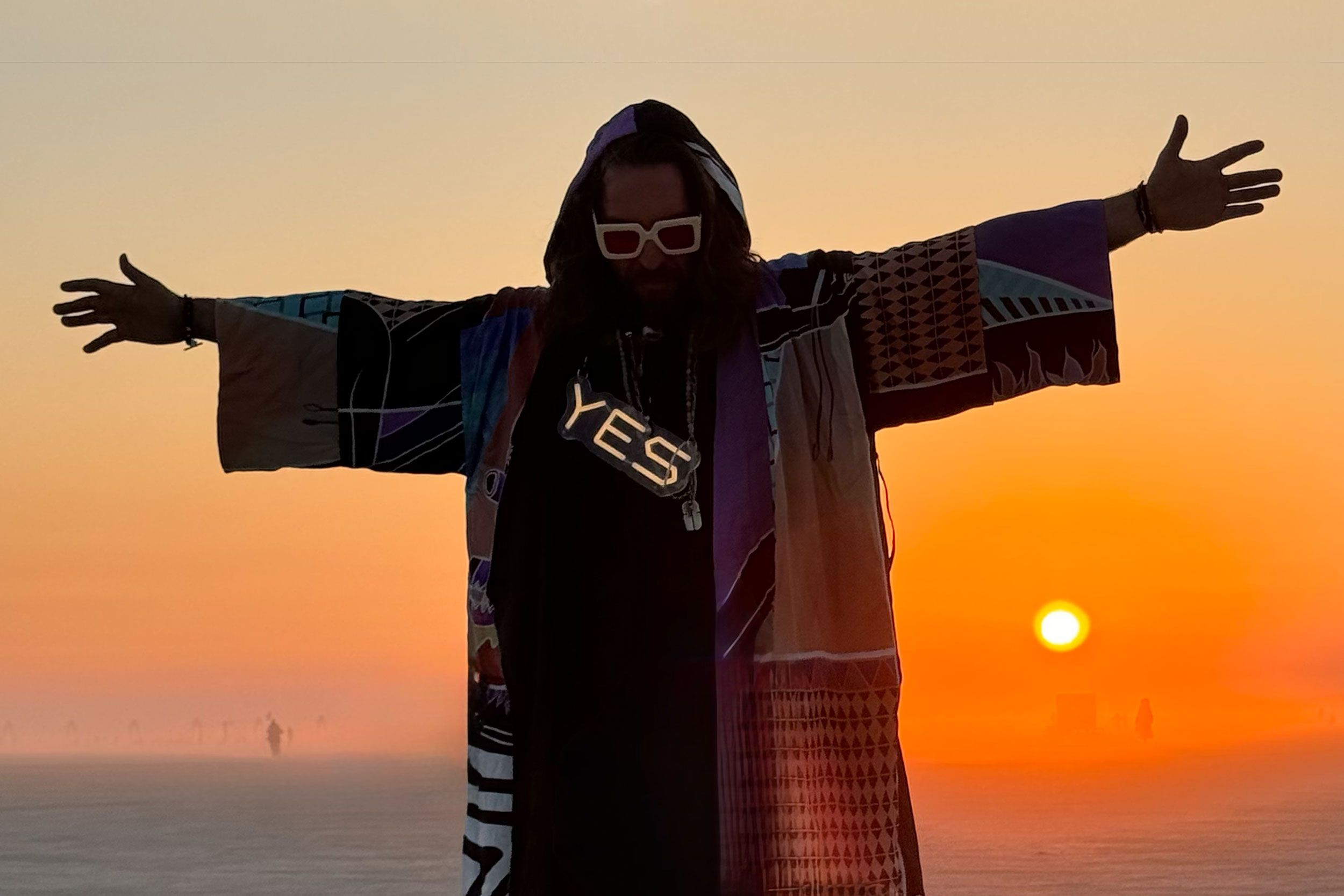
For me, the perfect example is a sunset set … that’s the environment I’m most passionate about. The music becomes inseparable from the setting: the view, the light, the atmosphere, and the way the crowd responds. There’s something about aligning those elements that creates a feeling you can’t replicate anywhere else.
Everyone experiences music differently, so it’s hard to compare my perspective to anyone else’s. But when I’m playing, I can lock so deeply into the music that it feels like it’s part of me. In those moments, I’m as present and immersed as I want the people dancing or listening to be.
It’s hypnotic, emotional, a blend of love, connection, and euphoria. That’s the state I aim for, where both I and the crowd are completely lost in the moment together.
Do you engage with audiences/dancers - and how? Taking one of your online DJ mixes as an example, how does the experience and the way you deejay change when you subtract the audience?
Some of my most successful mixes ... and my biggest influence in creating them, come directly from Burning Man, especially my Deep Tunes for Deep Playa sets. When I make those, my intention is always to recreate that feeling of watching the sun rise in the desert, with all the memories from the many years I’ve spent there.
For me, it’s a therapeutic process, a way of transporting myself back to that happiness, that magic, and those emotions I’ve felt in that place. I think that intention comes through in the music. It’s authentic, it’s heartfelt, and it’s rooted in love.
That’s why I believe those mixes resonated so strongly with listeners, because they could feel the genuine emotion and connection that went into them.
Collaboration is a key part of almost every aspect of music making, but it is stil rare in DJing. Tell me about your own views on back-to-back DJing, interactions with live musicians or other forms of turning DJing into a more collective process.
Some of my best connections and memories in music have come from back-to-back sessions. A standout would be playing with Ashley Wild ... especially our sets at Secret Garden Party, where we’d navigate through different genres.
Ash had this knack for completely changing the flow by dropping in a disco track out of nowhere, before we’d jump back into something housier or more party-driven. It kept things fun, surprising, and always interesting, with the set constantly shifting in fresh directions.
Then there was my great friend Pete Zorba, who sadly is no longer with us. He leaned more towards house, while I was deeper, and we’d meet in the middle. Those sets were legendary, a perfect balance of our styles that created something neither of us could have achieved alone.
I also can’t forget Chris Fountain, aka Twenty2, and our Lost in Sound days. We often had separate sets, but when we wanted a longer stretch, we’d join forces. Those would turn into three or four-hour marathons, where we could really dig in. Our tastes were very similar, powerful, high-energy, melodic tracks, and that shared vision made the flow effortless.
Each of those back-to-backs had its own unique style, which kept me on my toes. But honestly, the real training ground for all of it was at afterparties, those endless kitchen sessions with friends, going back-to-back-to-back for hours across different genres. That’s where you hone those instincts, learn to adapt instantly, and for me, it’s still the most enjoyable way to play.
How important is dancing for our wellbeing on a personal and even on a societal level?
Honestly, I don’t know any different ... I’ve been dancing for more of my life than I haven’t. For me, it keeps you fit, it keeps you young, and it creates an incredible social life. You make friends for life, and sometimes just for that one magical night, both are equally special.
It’s one of the most important things I’ve ever done, and something I think everyone should experience. Dancing is a kind of life therapy: it lifts you up, brings people together, and gives you moments you’ll carry with you forever.
Especially in the light of advances in AI, where do you see the role of humans in DJing versus that of technology? Can AI act as a collaborator or creative stimulus?
Technology has always shaped DJing, from vinyl to CDJs to digital controllers, and AI is just the next chapter. I think it can be a powerful tool for discovery and inspiration, whether that’s suggesting unexpected track combinations, generating stems for creative edits, or helping dig through vast music libraries to find hidden gems.
But for me, the heart of DJing will always be human. It’s about intuition, connection, and reading the room in real time, something that goes far beyond algorithms. AI can suggest, but it can’t truly feel the energy of a crowd or know when to break the rules in just the right way.
I do see potential for AI as a collaborator, not to replace creativity, but to spark it. The magic happens when you blend technology’s possibilities with a human’s instinct, emotion, and storytelling. That’s where the future of DJing could get really interesting.
Tinnitus and developing hyperacusis are very real risks for anyone working with sound. Do you take precautions in this regard and if you're suffering from these or similar issues – how do you cope with them?
I’ve got to be honest ... I don’t really take as many precautions as I probably should. I do have some basic ear protectors, but I rarely use them.
I’ve experienced tinnitus a few times, usually after being in front of overpowering monitors, but also just from being out on the dance floor. It’s not something that happens regularly, but it has happened enough for me to know I should take it more seriously.
Hearing is such a vital part of what we do, and I’m aware that protecting it is key to being able to keep DJing for years to come. It’s definitely something I need to prioritise more moving forward.
Do you feel as though DJing is inherently different from something like making a great cup of coffee? What do you express through music that you couldn't or wouldn't in more 'mundane' tasks?
Not everybody can do it … It’s a skill set, but it’s also about love and dedication. I’ve never been great with words, maybe because of dyslexia or ADHD, but music has always been my language. When there’s something I can’t do or don’t want to do, I’ll always turn to music.
DJing is my constant … whether it’s playing for a crowd or just for myself. It’s therapy, it’s release, and it’s a vital part of my life. It allows me to express things I could never put into words, and that’s something no “mundane” task could ever replace.
Let's imagine you lost all your music for one night and all there is left at the venue is a crate of records containing a random selection of music. How would you approach this set?
That would definitely be a challenge ... and hopefully I’d recognise a few tracks in the crate.
If not, I’ll admit, there’d be a moment of panic. I’d start by pulling out anything familiar and arranging them into some kind of workable order, just to buy myself a bit of breathing space.
While those tracks were playing, I’d be cueing up others in my headphones, figuring out on the fly which ones could work and which ones to leave alone. It would be a mix of quick thinking, improvisation, and hoping for those unexpected moments of magic that sometimes happen when you least expect them.
If the crowd knew the situation, I think it could actually add to the experience; they wouldn’t be getting my usual set, but they’d be part of a unique, one-off adventure. And honestly, once the initial nerves settled, I’d probably enjoy every second of it.