Part 1
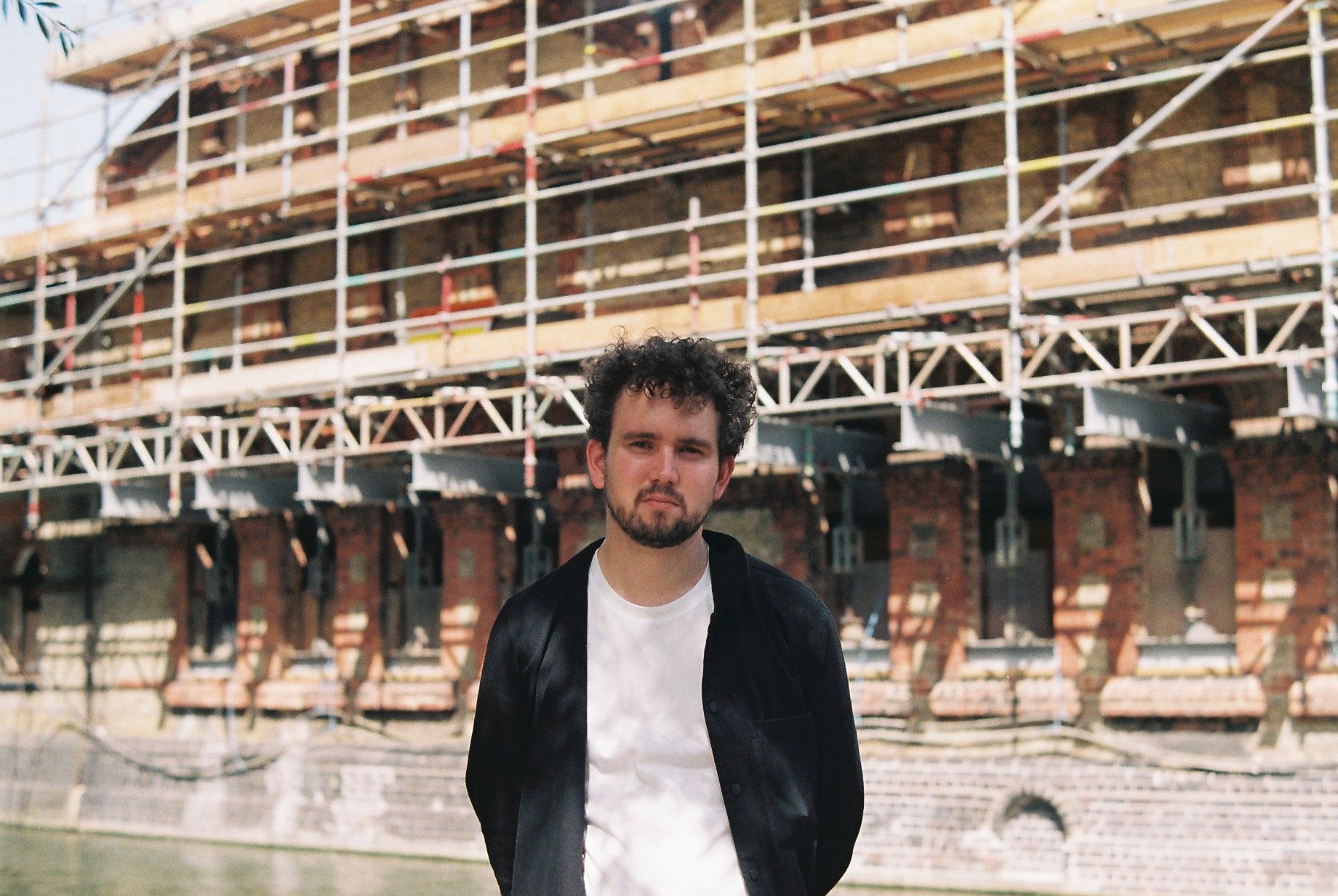
Name: Patrick Ellis
Nationality: British
Occupation: Composer, performer, curator and the Creative Director at PRXLUDES
Current event: Patrick Ellis will host the Launch Party of PRX.LIVE with Zygmund de Somogyi on 5th February 2026, produced by Stomping Ground. Featuring the ensemble, Standard Issue performing a new commission by Millicent B James, 'Snow Sprites', as well as Rylan Gleave's 'Heartstrings', Holly Gowland's 'Skew', Blasio Kavuma's 'Soundclash', Kian Ravaei's 'iPod Variations' and Aileen Sweeney's 'The Wooden Web.' For tickets go here.
Recommendations: If you are visiting London (where I am currently living), and you are interested in new and experimental music, but you’ve already been to Cafe Oto, then I would recommend visiting The Hundred Years Gallery. It’s a lovely small space and has hosted a lot of great events over the years.
I grew up in a village called Elstead, one of my favourite places that I enjoyed fairly consistently from childhood to my early adult years was Elstead Common, it’s a great space for walks, cycling, and sightseeing.
Topics I am passionate about but rarely get to talk about: Guitar modulation effects (chorus, phasers, and flangers) and electric pianos should be used more in the context of contemporary music. I think that sounds are great, and with a bit of time, you can get some really nuanced timbres. Why aren’t we exploring these kinds of sounds in our music?
If you enjoyed this Patrick Ellis interview and would like to stay up to date with his music and upcoming live performances, visit his official homepage. He is also on Instagram, bluesky, and Soundcloud.
The borders between producers, sound artists, and even songwriters are becoming increasingly blurry. What does being a composer mean today, would you say?
To me, on a fundamental level, a composer writes the music and deals with anything else that is central to the creation of the piece.
It does get a bit murky when you are working closely with instrumentalists or vocalists. But in my eyes, I would see them as ‘producers’, as they are often using their expertise to improve the piece on a practical level.
Many people perceive classical music and contemporary composition as having high barriers of entrance, both for listeners and musicians. What have your own experiences been in this regard?
When I first began to get involved in composition and the world of contemporary music that surrounded it, I don’t remember feeling as though there were high barriers in front attempting to block my curiosity or preventing me from being a composer; I know that when I was in my late teens, I was pretty headstrong in wanting to immerse myself in it as much as I could and become a composer.
Looking back now though, I was incredibly privileged and fortunate to have several brilliant mentors early on who encouraged me to begin my pursuit of this field (shoutout to Louise Yeadon, Pande Shahov and Martin Read - a big thank you to all three of them).
That being said, by the time my applications rolled over for applying to Conservatoires at an undergraduate level, I felt as though my tastes and music didn’t quite align with some of the departments that I visited at the time. Were my pieces too minimal? Was my portfolio too tonal? Should I have really told the panel that the music of Peter Maxwell Davies was a big influence rather than Philip Glass?
Glass you could say I was influenced by a bit at the time, but I would name-drop Maxwell Davies sheepishly in the hope that it would give me some brownie points from the different panels that I visited. It felt as though despite having the privilege of some additional mentoring on top of my brief checks on my GCSE and A-Levels composition modules, that I was not ‘in the know’.
Many of the composers and techniques that an ‘ideal candidate’ was meant to know were almost exclusively taught at a Junior Conservatoire or were behind a myriad of academic journals in large libraries or on niche websites, frustratingly behind paywalls. Some of my colleagues who were auditioning might have had several years of a head start to where I was at the time, or just purely had more resources and time to learn the ‘right’ things.
Fast-forward to today, I am very big on trying to make sources and documentation about being a composer and the world of contemporary music as open and free to view as possible (without compromising or ‘dumbing down’ the content). To blow my own trumpet, I have been the Creative Director of PRXLUDES for three years, and a large part of that organisation is to platform in the most accessible way possible, the ideas that emerging and early-career composers are exploring at the moment.
There are no paywalls or subscriptions, it’s just out there for the whole world to view for free.
As of today, what kind of materials, ideas, and technologies are particularly stimulating for you?
Over the past few years, I have been particularly drawn to making audiovisual work and to pairing acoustic instruments, fixed electronics, and different tunings together.
As a student composer, I actively avoided a lot of that, preferring to keep things quite straightforward with how the instruments were set up and the stage setups; for example, I generally avoided extended techniques (especially during my undergraduate degree), I usually allocated one percussion instrument to each performer and only used a limited palette of sounds when I opted to use electronics and guitar pedals.
It’s inevitable as an artist that over time, you will begin to get tired of some of your creative traits and aims, but time doesn’t permit you to pivot somewhere else. When it came to the Covid-19 lockdowns, percussionist and now friend, Gabriele Segantini contacted me to ask if I would be interested in working with his trio XTRO to create a new piece; the timing of everything being largely shut down, provided me the opportunity to ruminate on my ideas and to explore a different direction, resulting in my first audiovisual work, Objects and Portrait Projections (2021).
With regards to the pairing of acoustic instruments and fixed electronics that started a bit earlier on. I can remember tentatively dipping my toes into making electronic music in 2011 during the summer after finishing my GCSEs, effectively creating my first ‘portfolio’. I would quickly switch to mainly writing for acoustic instruments when I was preparing for my Conservatoire auditions portfolio, but for various assignments in further and higher education, I would make the occasional ‘electro-acoustic’ piece.
The first time that I tried to combine live acoustic instruments with electronics was with my 2015 piece, 20 Years and 81 Days (2015), which was workshopped and then performed by the Swedish Electric Guitar Quartet, Ensemble KROCK.
Shortly after, I met and then befriend one of my long-term collaborators, Chris Cresswell, who encouraged me to explore this approach further and gave me the opportunity to compose several works with fixed media for himself and with his chamber group, 315 Ensemble.
These pieces are Unbranded Ensemble Piece (2017), Detunes, Drones (2018), Augmensions and Extentations (2024) and Spinning Around, Slowing Down (2025). Ever since Objects and Portrait Projections (2021), most of my compositions have included electronics in some way.
When it comes to pairing different tunings together, that has perhaps been my most recent interest (even though it started several years ago!). I first dabbled with the idea whilst I was working on a soundtrack project that ended up being shelved due to time constraints. Despite the project not happening, I really liked what I had created, and so I wanted to try to bring that into my concert music.
Early experiments with this were Fractured Motion (2022) and Between Two Trios (2022), which are characterised by these swells between the live instruments and the electronics, the latter of which is what the entire piece is based around. Taking things further, I began to embody this technique amongst other ideas, with works such as Broken Superficiality (2024) and Moments of Escapist Thoughts (2024).
The swelling between the tunings is no longer the main part of the piece, but it is still an important element in each of these.
Where do most of your inspirations to create come from – rather from internal impulses or external ones? Which current social / political / ecological or other developments make you feel like you need to respond as an artist?
Admittedly, I would say that the vast majority of my output as a composer has been largely abstract in nature, focusing on the medium that I am writing for in a particular project or concerned with what I want to explore on a musical level.
Having said that, during most of this decade so far, I have tried to push myself a little and use some of my works as a vessel to respond to the world that we find ourselves in. I started this run on an ecological level, using the rise of the average global temperature as a system to form the basis of my 2020 work, Around Clocks.
And in Objects and Portrait Projections (2021), I examined plastic pollution by repurposing drinks bottles and canisters paired with stocked visuals that featured scenes of environments that had been deeply affected by plastic waste.
Similarly, I wrote Broken Superficiality (2024) as a jab at Neo-Liberalism, which was composed during the backdrop of the lead-up to several world elections, whereby the populations felt a bit disillusioned with the options on offer and the mass layoffs that were beginning to occur in some sectors of the corporate world.
On reflection, I felt that perhaps this was far too big a theme for me to truly tackle as a composer and to transfer those ideas into an instrumental ensemble work. So, in light of that realisation, I wanted the following piece to be scaled back and to be more concerned about what brings light amongst the heaviness of the modern world, and so I composed an audiovisual work, Moments of Escapist Thoughts (2024), for the trio, Terra Invisus.
For that piece, I asked the three musicians (Alex Lyon, Rebecca Burden and Milda Vitartaitė), what things that they found escapist (answers ranged from the woods to yarn to charity shop vases), videoed these objects and scenes (with help from Alex and Milda) and then edited them into a semi-abstracted tapestry full of different colours and textures; musically, this was paired with material that weaved between different tunings, registers, textures and timbres, resulting in blurred and murky character throughout.
In terms of what I’m wishing to respond to now, I’ve turned my attention more towards the music industry / sector and musicians themselves. At the time of writing, I am developing two audiovisual works, Insights into an Industry, for the ensemble Standard Issue, which will explore burnout within the classical music industry using quotes from over 200 anonymous responses and The Relationship with…, for To Your Ear Collective, which will interview each member of the group about their relationship with their instrument.
Both of these are completely new subject matter to me, but I am intrigued by how the processes will unfold and what the resulting compositions will be like.
Tell me a bit about the sounds & creative directions, artists & communities, as well as the colleagues & creative hotspots of your current hometown, please. How do they influence your music?
London is a vast city with something cultural happening every night, often with clashes on the same evenings!
I’ve only been living here for around nine months, so I would say that perhaps it has been a bit too early for the city to really directly influence my own music. In the year or so leading up to my move down here, I would frequently travel here on weekends for concerts, so perhaps the city started to embed itself into my work before I even lived here.
When going through my music, you could make the case that Moments of Escapist Thoughts (2024), due to some of the locations being filmed in London, is influenced by London, but that was more of a general response to the modern world, rather than this city in particular.
Composing has always had an interesting relationship between honouring its roots and exploring the unknown. What does the balance between these two poles look like in your music?
My friend, Wilson Leywantono, would often quote a phrase lifted from a class with Howard Skempton, ‘Beauty is in the absolute balance’, which in Wilson’s context was a justification to use intuitive intervention when dealing with systems that derived from conceptual themes and that phrase can ring true also when juggling between the roots of one’s own practice and the unknown.
I would like to think that I am always trying to push myself into new directions, even ever so slightly, with each piece that I create, but if something feels ‘too far’ off for me at that point in time, then it will likely get discarded before the final piece is made.
When it comes to honouring composing’s roots and the unknown in a more general sense, that personally feels as though it’s far too loaded of a thing for me to really obsess over; for me, when it comes to writing I just want to move ahead with what I have done more than anything, and ideally also enjoy the process and be proud of the end result.