Published
Part 1
Name: Pullman
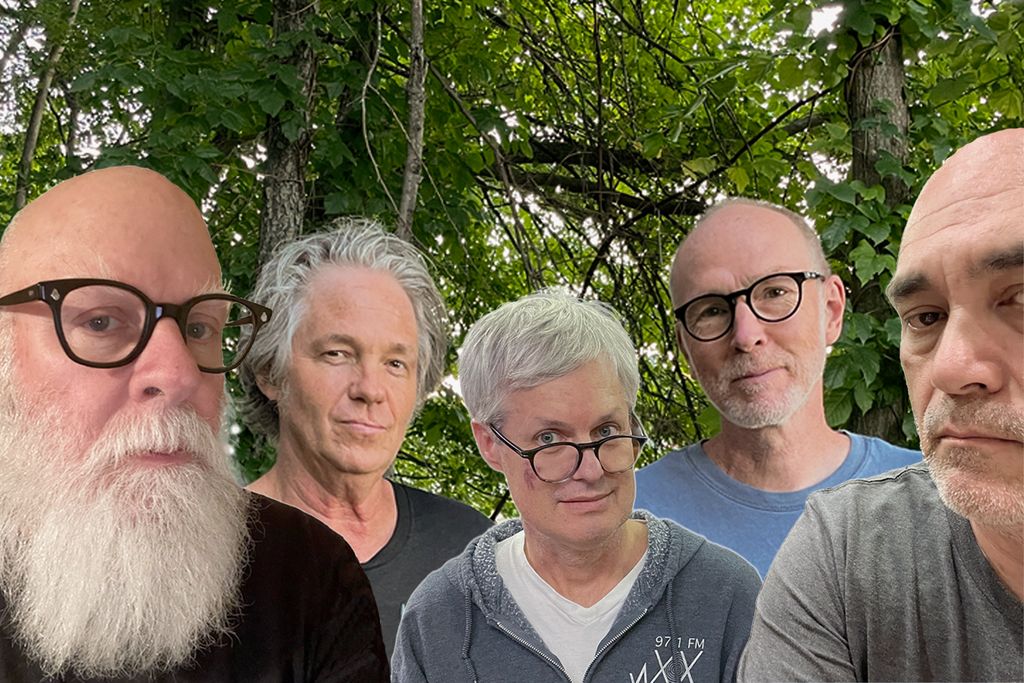
Members: Tim Barnes, Chris Brokaw, Ken Brown, Curtis Harvey, Douglas McCombs
Interviewee: Ken Brown
Nationality: American
Current release: Pullman's new album III is out via Western Vinyl.
Recommendations for Louisville, USA: Louisville is a small-ish city. I have places that I enjoy, but without knowing what someone’s looking for, I struggle with recommendations. Louisville is known for it’s Bourbon scene, American whiskey has seen an ascendancy since I moved here 16 years ago. While I don’t drink, I have many friends in the industry, and could recommend distilleries and tasting rooms if someone is interested in that. But that’s not my thing.
The places I spend most of my time recreationally are on hikes, some of my favorites are Jefferson Memorial Forest, Bernheim Arboretum, and Broad Run and Turkey Run parks.
Topics I am passionate about but rarely get to talk about: As I'll mention in this interview, cooking and food are a passion of mine. I do feel like I get to spend a lot of time talking about food, though not in this context. I have several friends for whom the focus of our time is eating together, and as a cook I spend a lot of time talking with other cooks and chefs about things we cook or have enjoyed eating. And of course we do a little trash talking too.
Where does the impulse to create something come from for you? What role do often-quoted sources of inspiration like dreams, other forms of art, personal relationships, politics etc play?
A good friend and someone from whom I’ve sought advice once told me “creators gonna create”. I think creativity is innate to the human condition, it just manifests differently for each of us.
There’s definitely ways I express my creativity on a day to day basis outside of making music: cooking meals for my family, writing, practicing jiu jitsu. I was in a conversation with a friend today who’s a musician, but primarily makes his living teaching computer science to high school students, and he was talking about the improvisation that’s a huge part of his role as a teacher, the way his creative life creeps into the very structured work he has to perform in that role.
In the context of Pullman, we share the desire to make something as a group, it’s always been about participating in the experience of making music together, even though we’ve always lived far from one another. At first it was a reason for us to get together and explore ideas that didn’t necessarily fit into the context of the other groups we were involved in, but it’s evolved from that.
All of the music on III came about because Tim, our drummer, had been diagnosed with a terminal illness, and we wanted to both support him through creating together and make sure we had a chance to build something with him while he still had the capability to do so.
Speaking for myself, I do look to other forms or art in order to find inspiration, but often not in a direct or explicit way. I enjoy engaging with visual art, film, and literature on a regular basis. But I can’t draw a direct connection to any of the music Pullman has made to any particular piece of art, at least that has not been my intention.
While I may have recently read something notable, or seen a film that impacted me, I don’t often find myself using that as a jumping off point if I’m starting work on a new piece of music. All of us in Pullman are avid readers, I think Chris more so than anyone. I can’t speak to whether there are any references in our music to literature, however oblique, but it’s certainly possible.
I also think it’s important to point out that we can’t fully insulate the music we create from the environment in which we live, whether it’s social, political or cultural. Recently I’ve felt compelled to address the audience when I perform live, because virtually all the music I make is instrumental, so I can’t attach any particular narrative to it. I think because of the extreme environment under which we’re all currently living it’s important to voice my opinion, so giving a short monologue prior to playing helps me to use my platform as a musician to express outrage or make a call to action where my music might not otherwise.
But I don’t feel that relationship on the other side, as something that’s compelling my creativity, though I do think engaging in creative acts can be a radical action in and of itself.
For you to get started, do there need to be concrete ideas – or what some have called a 'visualisation' of the finished work? What does the balance between planning and chance look like for you?
In the past, on both Turnstyles & Junkpiles and Viewfinder, all the group members brought ideas, sometimes very simple kernels of songs, other times more fully conceived pieces, though in that case rarely with a finished arrangement. Each of us then brought what we felt was appropriate to the others’ songs, or if the idea presented was rudimentary, we’d collectively build on it.
III was built up less collectively, as it was composed and finished remotely, so we didn’t have the opportunity to collaborate in real time, but there were still small pieces from which each song was built. While not specifically a concrete vision, on Turnstyles we did initially impose some restrictions on ourselves - all the songs were recorded live with no overdubs, and all on acoustic instruments. For me at least that was part of the aesthetic, at the time everyone else was also interested in trying that.
But we didn’t adhere to those restrictions for future recordings, and both Viewfinder and III were more organic, there wasn’t a specific vision or goal or even set of constraints. The songs on those projects came about just out of our group dynamic.
With Pullman there hasn’t been much planning, but I’m not sure I’m comfortable saying it was all up to chance either. If there’s a spectrum between those two poles, we exist somewhere in the middle.
Is there a preparation phase for your process? Do you require your tools to be laid out in a particular way, for example, do you need to do 'research' or create 'early versions'?
I would say we’ve played with the idea of this, but it hasn’t worked well for us. On the first two albums the work only began in earnest once we were all together, and trying to share ideas in advance wasn’t especially useful or motivating.
Even though III wasn’t built with all of us together, there wasn’t any demo-ing or beta versions of the material, no preparatory phase. Because it was done remotely though, each of us had the freedom to take whatever time was needed to sit with the material and work on it at our own pace as we shared the recordings-in-progress remotely.
Do you have certain rituals to get you into the right mindset for creating? What role do certain foods or stimulants like coffee, lighting, scents, exercise or reading poetry play?
On the first two albums we had a very small span of time to write and record the albums. Both were taken from nothing to a finished recording in less than two weeks, in fact Turnstyles was assembled in about a week’s time.
We would meet up in the morning, have breakfast and coffee together then get to work writing and typically recording each song once we were satisfied with everyone’s parts and the overall arrangement. We’d work for a full day, taking breaks for meals and occasional cigarettes, then wrap up at some point in the evening. I love to cook and recall cooking many of the meals during that recording.
I probably wouldn’t have said the meals or even the coffee were rituals per se in the making of that record, but in hindsight definitely contributed to the overall vibe. We didn’t set aside time for rituals or processes, or even set up. We just got together and got on with our day which we knew would be to write and record as much music as we could.
Viewfinder unfolded differently because we had to book studio time, so we spent a couple days writing and rehearsing, then two days recording in the studio. So it was a little less laid back and followed a trajectory more like the approach we’d all taken in other recordings with other bands.
None of us in Pullman need a specific setting in order to make music or spend of lot of energy getting things “just right”. Although I don’t use caffeine on a regular basis now, drinking strong coffee and lots of it definitely fuelled the first two records. At the time Doug, Chris and Tim all enjoyed cigarette breaks.
While I wasn’t smoking during the making of either of the records, using caffeine and nicotine as stimulants or focusing agents is definitely something I’ve done in the past. I use both cannabis and psilocybin recreationally, but have not found them useful in the creative process, and avoid them when making music.
As I mentioned above, I practive jiu jitsu, and yoga and meditation are part of my regular weekly routine. None of those things particularly needed to happen on any given day in order for me to be productive creatively, but I know if several days passed without me incorporating those into them somehow, I would definitely not be in the proper state of mind to make music.
For III, what did you start with? If there were conceptual considerations, what were they?
On III there was no specific framework or goal set out at the beginning. There wasn’t any overriding vision or concept we adhered to.
Something that occurred to me once the album was finished and I listened back to the material was that it was made at a time when Tim was confronting severe neural deficits, and somehow the music has a general feel of expressing a divergent perspective experience, though by no means was that an intention or defined context.
Tell me a bit about the way the new material developed and gradually took its final form, please.
Each song evolved differently. All of them did start with a small initial idea, a couple were loop based, others built on ideas or riffs.
The songs were assembled piecemeal in a round robin fashion. All of us contributed our parts one at a time, and the order in which each song was presented to everyone varied. For instance “Weightless” is built on a loop I made, over which Tim and I played, then sent along to Doug, then Curtis, then Chris.
“Kabul” started with an idea Curtis brought to the project which was in turn added to by Tim, then me, then Doug, then Chris.
Each song proceeded differently from the next, but all of them evolved slowly, over time, with each group member contributing in turn, but not in a very highly planned out manner - it was more based on who was available as each song was sent around.