Published
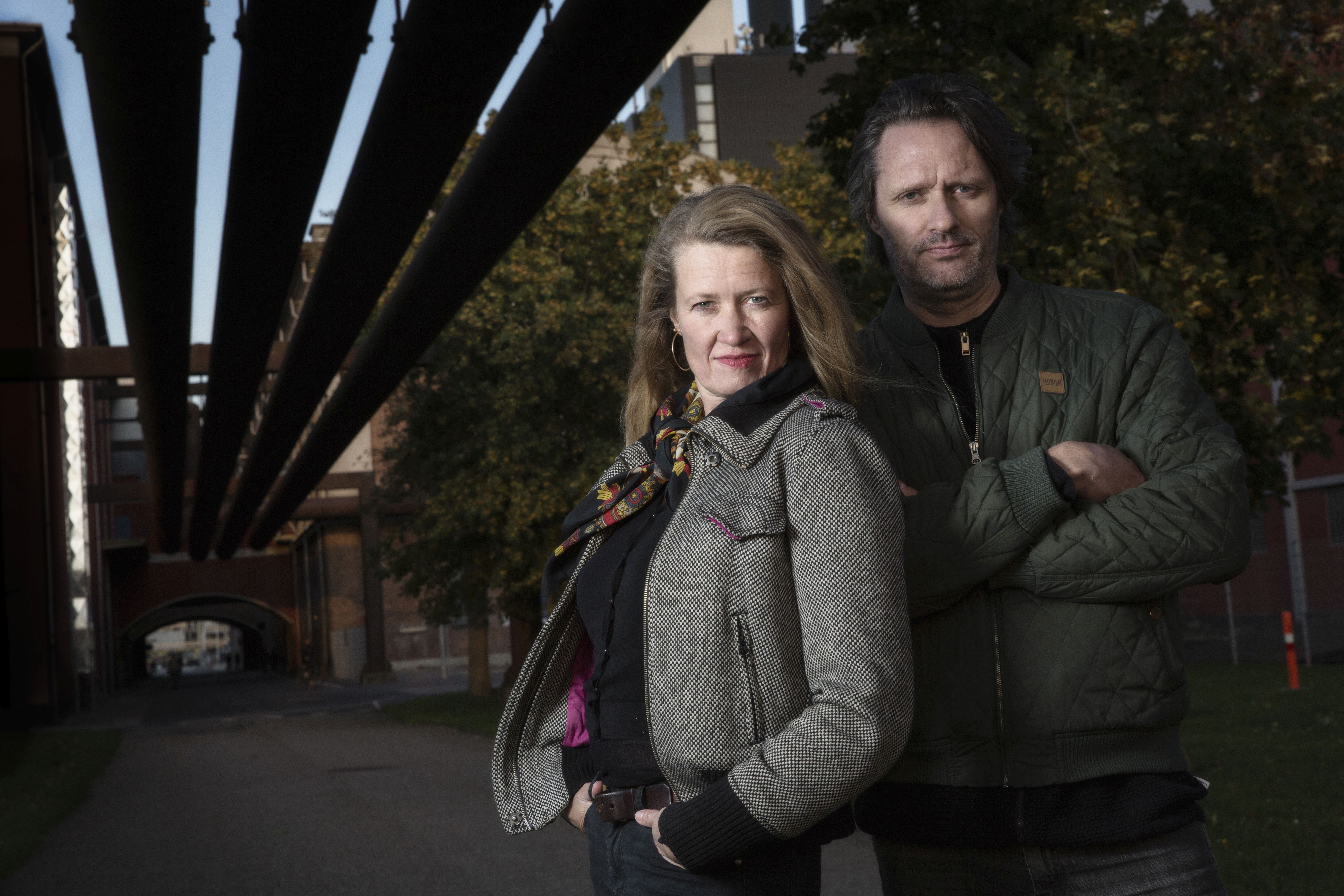
Names: Randi Pontoppidan (vocalist, electronic composer), Christian Rønn (pianist, composer, sound artist)
Interviewee: Randi Pontoppidan
Nationality: Danish
Current release: Randi & Christian's new album Shadow Moves is out via Nische.
Recommendations for Copenhagen, Denmark: Definitely go north and visit the Louisiana Museum of Modern Art. It’s a truly unique spot.
If you enjoyed this Randi & Christian interview and would like to know more about their work and upcoming performances, visit their personal homepages: Randi Pontoppidan; Christian Rønn
Randi is also part of Nordic vocal ensemble IKI. For a deeper dive, read our IKI interview.
What were some of your earliest collaborations? How do you look back on them with hindsight?
Christian and I were first invited by multi-artist Jørgen Teller to perform his piece "City Size," commissioned by the Gong Festival, together with percussionist Fast Forward and Rhys Chatham (US/FR). We performed it at Copenhagen Jazzhouse.
Later we met again at Jyderup Akkordeontræf, where we played in a combo with Roscoe Mitchell. That meeting laid the foundation for our duo, which eventually led to our debut album released on the American contemporary label Chant Records in 2020.
[Read our Rhys Chatham interview]
There are many potential models for collaboration, from live performances and jamming in the same room to file sharing. Which do you prefer – and why?
For us, the physical presence of playing together is essential. We draw so much inspiration from direct interaction.
When recording at The Village Recording, we could see and communicate through the glass window of the studio. This setup gave us enough contact to preserve spontaneity while capturing the music in the best possible way.
How did this particular collaboration come about?
We released our debut album HeadˮSpace in 2020, and from there our collaboration naturally developed into live shows and further projects together.
What did you know about each other before working together? Describe your creative partner in a few words.
Playfulness and openness – the willingness to say yes and to explore without fear.
We are both deeply curious, and that curiosity quickly became a cornerstone of our collaboration.
What do you generally look for in a collaborator, and what made you want to collaborate with each other specifically?
Curiosity and playfulness. We’re not afraid of silence or space.
What excites us is exploring new ground and meeting each other in unexpected territory.
Tell me a bit about your current instruments and tools. How do they support creative exchange and collaboration?
Randi uses her voice as an instrument, together with live processing. The electronics act as an extension of her voice, allowing loops, reshaping, and expansion – sometimes delicate, sometimes building vast soundscapes and rhythmic structures.
Christian works with prepared piano, which has long been a central part of his practice. Its textures blend seamlessly with Randi’s electronics and voice. At times it’s hard to tell whether a sound comes from the piano or the machines – and that ambiguity is part of the dialogue.
Before you started making music together, did you exchange concrete ideas, goals, or strategies?
That process started when we met at Jyderup Akkordeontræf working with Roscoe Mitchell. It was an intense week of free playing and free music – truly unforgettable.
Out of that experience, we began to develop a shared musical language, which we’ve been expanding and refining ever since.
Generally speaking, what are your preferences when it comes to planning vs. spontaneity in a collaboration?
We compose in the moment. The music emerges through instant creation, so any “planning” happens on another level – spontaneously, as we play.
Every moment comes alive in that way, and too much pre-planning would kill that energy.
Describe the process of working on Shadow Moves. What was different from your expectations and what did the other add to the music?
On our latest LP (vinyl/CD) Shadow Moves, Christian plays prepared grand piano, which was a big shift from our debut, where he worked with a Wurlitzer piano and effects.
This time, Randi’s contribution was more acoustic, with subtler use of live processing.
The delicate interaction between Randi’s electronics and the acoustic piano created an openness and spaciousness that we really love.
Is there a piece that shows the different aspects you each contributed particularly clearly?
The opening track, “Shade,” is one of our favorites.
Towards the end, there’s a very delicate use of processing on Randi’s voice, while the prepared piano underlines the ethereal, wind-like quality of the vocal. It captures both sides of our collaboration very clearly.
What tend to be the best collaborations in your opinion – those with artists you have a lot in common with, or those where you have more differences?
I enjoy both. My collaboration with Sissel Vera Pettersen feels almost like working with a sister, while my work with Greg Cohen always pushes me to the edge.
In the vocal group IKI, we are all singers with the same instrument, but with very different characters – and that creates something unique.
[Read our IKI interview]
What happens when another musician takes you outside of your comfort zone?
Christian: Some of my best work has happened outside of my comfort zone. That’s where you discover something about yourself – or even what your “self” is in that situation. That’s exciting.
Randi: I completely agree.
Decisions between creatives often work without words. How did this process work in this case?
Because of our long-term relationship, we rarely needed to talk directly about the music.
Often it felt more important simply to spend time together – eating, talking about life – until we reached a kind of zero point, from which we could naturally enter the music.
What are your thoughts on the need for compromise vs. standing by one’s convictions? How did you resolve potential disagreements in this collaboration?
We’ve never really had any major artistic disagreements – maybe we should try working on that sometime, haha.
What matters most is absolute freedom when we create. That doesn’t mean we never discuss things or that there’s no structure, but for us it’s very much about the vibe – and also about the time, the space, and the audience.
Was/Is this collaboration fun – does it need to be?
Yes, it is fun. Developing and expanding our sonic world together is deeply rewarding.
If it wasn’t fun for us, people would eventually lose interest – because that energy is what comes across to the listener.
Do you find that this collaboration has changed certain parts of your process or outlook?
We both feel that we’re growing together – as artists and as people.
Naturally, that means many things change and evolve over time.
Collaborating with one’s heroes can be a thrill or a cause for panic. Do you have any practical experience with this?
Christian: Working with Ikue Mori was fascinating, because we’re so different and only met a few times. But differences can be inspiring, and we ended up making a killer record.
Randi: Last year I worked with Laurie Anderson, together with seven other composers/singers, on her “talking choir” for her upcoming opera – a huge inspiration.
I also collaborate with Jamaaladeen Tacuma, and playing concerts with him has been and continues to be a privilege. He really encouraged me to stay true to myself.