Published
Name: IKI
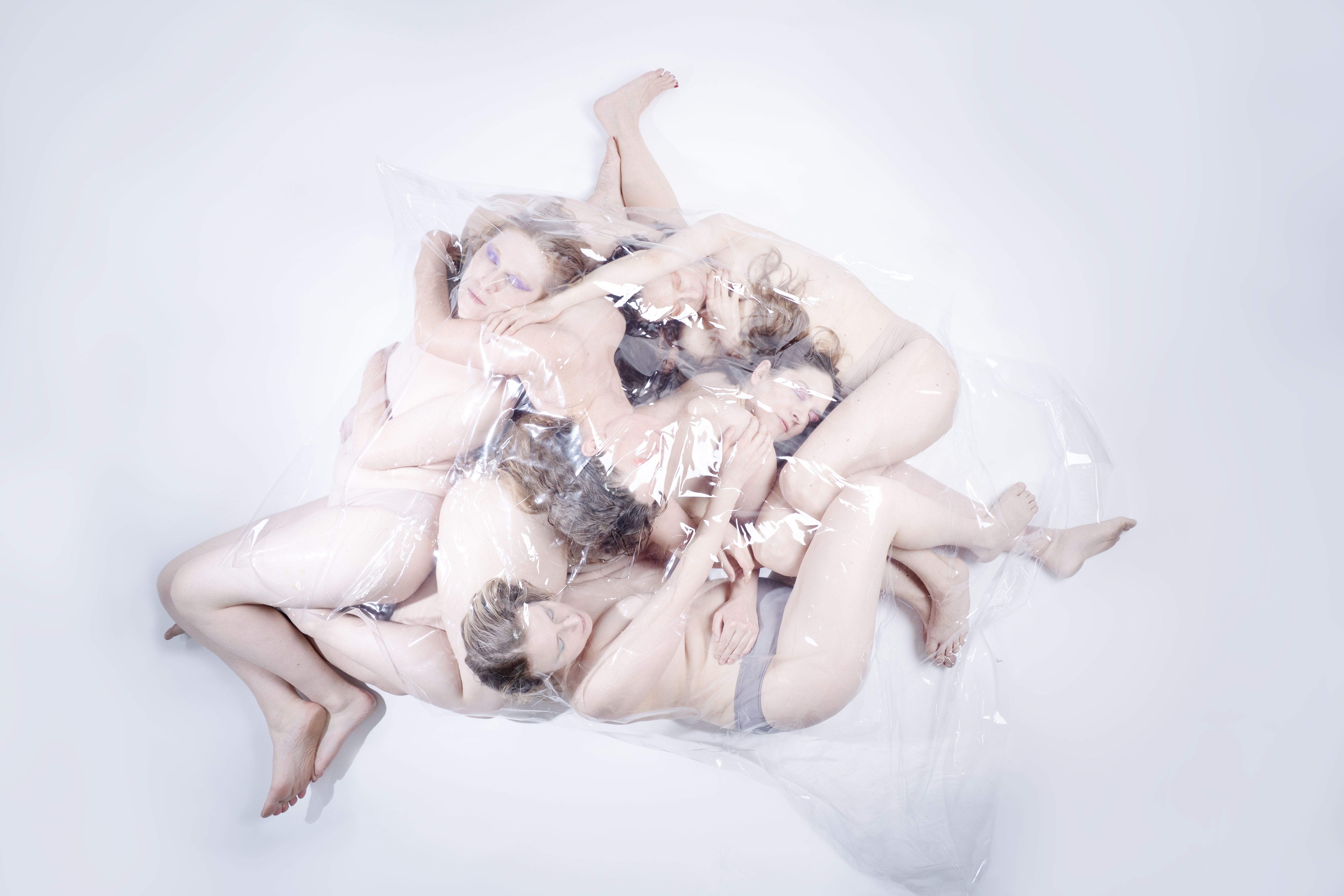
Members: Anna Mose, Guro Tveitnes, Kamilla Kovacs, Johanna Sulkunen, Randi Pontoppidan
Interviewee: Anna Mose, Johanna Sulkunen
Nationality: Danish (Randi Pontoppidan, Anna Mose), Danish-Hungarian (Kamilla Kovacs), Finnish (Johanna Sulkunen), Norwegian (Guro Tveitnes)
Current release: IKI's new album Body is out October 17th 2025 via TILA.
Recommendations for Copenhagen, Denmark: Copenhagen Jazz Festival: Every year, the first week of July, all of Copenhagen turns into a vibrant music scene with over a 100 concerts a day in every music genre that is not mainstream. There’s a great chance to hear both big international names and discover new, underground music.
Topic we are passionate about but rarely get to talk about: We could say our new group practice has become Qigong during this BODY album journey. We started doing a short session before or between rehearsals and performances. It helps us find focus and brings us onto the same platform, so we can work together with more presence and connection.
In general, we are pretty passionate people, always curious, always discovering new things to be passionate about.
If you enjoyed this IKI (Nor) interview and would like to know more about the group's work and upcoming performances, visit their official homepage. They are also on Instagram, Facebook, Soundcloud, and bandcamp.
For a deeper dive, read our Randi Pontoppidan interview and our Isabelle Duthoit interview, and our Anthony Laguerre interview, both of the band's French namesake IKI.
When did you first consciously start getting interested in singing? What was your first performance as a singer on stage or in the studio and what was the experience like?
When we first got together with IKI we were all in the Rhythmical Conservatory in Copenhagen, studying to be professional vocalists. We encountered many flaws in the way of teaching that had a counter effect on our expression.
A group of vocal students gathered every week to experiment with their voices and explore different ways of relating to one another through music.
It was really open, and we avoided any stylistic idioms, since we all came from various musical backgrounds.
Singing is an integral part of all cultures and traditions. Which of these do you draw from – and why?
One of the things we appreciate most about being part of IKI is that we all bring our own vocal traditions. We all carry with us our own personal stories and roots in our respective folk music traditions (Norwegian, Danish, Finnish, and Hungarian) as well as the way we’ve been schooled (jazz, experimental, classical).
To be able to blend these various sources is always a fascinating journey and brings us to unknown territories.
What were some of the main challenges in your development as a singer/vocalist? Which practices, exercises, or teachers were most helpful in reaching your goals – were there also “harmful” ones?
Singing together as a group for over 15 years, the biggest challenges in our development have been to trust the moment, let go of control, and not to be too self-aware while singing and performing. Trust the music that is the sum of us and not try to push into a result that is somehow predefined.
It is a complex field of learning, both in terms of straight musical concepts and also in something that we really do together, in relation to each other. This is a constant learning. So I guess all the exercises and practices that we do somehow bring us into something new.
Also, the ‘harmful’ ones ( that we probably have all experienced) are at the end part of this journey and bring us somewhere.
What are the things you hear in a voice when listening to a vocalist? What moves you in the voices of other singers?
As a mirror of the last question: Being present in the moment, secure and free of one’s own ego or vanity.
We have a speaking voice and a singing voice. Do these feel like they are natural extensions of each other, ends on a spectrum or different in kind?
For IKI, there are more layers to this, because we each have an individual voice and sensation of our own voices. However, in our practice as IKI, we strive to blend together in a unified voice.
We have sung together for over 15 years, so we know each other on a very deep level. That is a significant force. Seeking that force of locking together - being individuals becoming one - requires being in touch with something outside our own bodies. Something bigger, maybe more spiritual.
It’s hard to explain, because it is very abstract, but it is kind of like having a common nervous system.
How do you see the relationship between harmony, rhythm and melody? Do you feel that honing your sense of rhythm and groove has an effect on your singing skills?
Yes, very much. The more you practice, the better/ deeper you get. Simple as that.
What are the potentials and limits of your voice? How much of your vocal performance can and do you want to control?
We use improvisation as our primary artistic tool. Being in control of your own body and voice and its skills is essential to let go of control.
It sounds contradictory, but letting go of control is crucial to improvise together and let the music flow naturally.
As a singer, it is possible to whisper at the audience, scream at the audience, reveal deep secrets or confront them with uncomfortable truths. Tell me about the sense of freedom that singing allows you to express yourself and how you perceive and build the relation with the audience.
We love to experiment with the voice and explore its many facets-from whispering to screaming.
Our audiences are an essential part of this journey. At our concerts, we always remind them that what we are about to experience together exists only in this moment and will never be repeated again. This creates an intimate partnership, where everyone feels more present and connected.
In this space, everything is allowed—beyond the boundaries of ‘real life.’ Feelings and expressions can be released and transformed into art. Through this, we can push our limits, experiment with vulnerability, and also embrace the safe and soothing qualities of the voice.
The reactions are never the same. Sometimes, audiences are deeply moved, crying, laughing, or even becoming so provoked that they are angered or walk out. Each response becomes part of the shared experience, reminding us that art lives through its ability to evoke, and we should see it as an essential part of human experience.
I'd love to know more about the vocal performances for BODY, please, and the qualities of your voice that you wanted to bring to the fore.
Our fifth album BODY delves into the human body — biologically, spiritually, and socially. It's created solely with sounds coming from our voices, and it’s completely self-produced. It feels very personal to us - probably our most personal album to date - which is funny, ‘cause our voices are even more anonymous and collective than ever before.
On many tracks, you can’t tell if it’s Kamilla's, Randi’,s or Johanna’s voice singing - and that’s the point. To melt together as one voice - one body.
When you're writing song lyrics, do you sense or see a connection between your voice and the text? Does it need to feel and sound “good” or “right” to sing certain words? What's your perspective in this regard of singing someone else's songs versus your own?
On BODY we’ve created this 11-syllable, kind of cyclic melody, that appears throughout the album in different ways.
At the end of the album, the phrase “Are You Gone When Your Body Is Not Breathing?” is revealed. We use the lyrics in a sparse way, leaving it for the listener to interpret. Like an abstract question mark.
Strain is a particularly serious issue for many vocalists. How do you take care of your voice? Are the recipes or techniques to get a damaged voice back in shape?
We use different physical and voice training techniques to keep our voices in shape. We all of course try to take as good care of our bodies and voices as we can, because they are our instruments.
However - in IKI, we want to erase the idea of “the perfect voice” as we also believe in vocal freedom and expression. If someone has a hoarse or rusty voice one day, they use that hoarse voice as their truth that day.
There is no particular idiom we try to perfect.
How has technology, such as autotune or effect processing, impacted singing? Has it been a concrete influence on your own approach?
We have worked with machines and pedals for many years, processing our voices live on stage. There are almost endless possibilities.
On our new album BODY, we work with the contrasts of “the natural, acoustic, imperfect sounding voice” against “the tuned, pitched voice”, as well as we work with live sung elements against very cut-up, almost-impossible-to-sing elements.
The discussion about nature and technology is not a question we want to solve, but a field we, in a way, inhabit. The two are often spoken of as opposites—nature as pure, original, and fragile, technology as artificial, invasive, and overpowering. However, when we listen closely, the boundaries begin to blur.
Our bodies are already both. Breathing lungs and vibrating vocal cords meet microphones, speakers, and digital processing. Each performance becomes a space where the organic and the synthetic intertwine, sometimes clashing, sometimes dissolving into one another.
For us, BODY is not about choosing one side, but about exploring the spaces in between: where the voice becomes machine, where the machine becomes body, where new forms of life and expression can emerge.
In this way, the project also invites the audience to reflect on their own bodies in relation to technology—how it extends them, limits them, or even becomes part of their identity.
For recording engineers, the human voice remains a tricky element to capture. What are some of the favourite recordings of your own voice so far and what makes voices sound great on record and in a live setting?
We’re super happy with the way our voices sound on BODY. We wanted a quiet, hi-fi, yet natural, crisp sound on the album to complement the avant-garde, futuristic aesthetics of the compositions and productions.
Live on stage, we also prefer a crisp sound in general. Then we can use our machines to make contrast to that. To mess up the pretty.
Motherese may have been the origin of music, and singing is possibly the earliest form of musical expression and culture in general. How connected is the human voice to your own sense of wellbeing, your creativity, and society as a whole?
The human voice is a healing force. The human voice is our main communication tool. The voice brings us together, and singing connects human beings across ages, countries, cultures and social classes.
IKI's ground philosophy is to be connected through singing and to connect with the world, with our audiences by using our voices.