Published
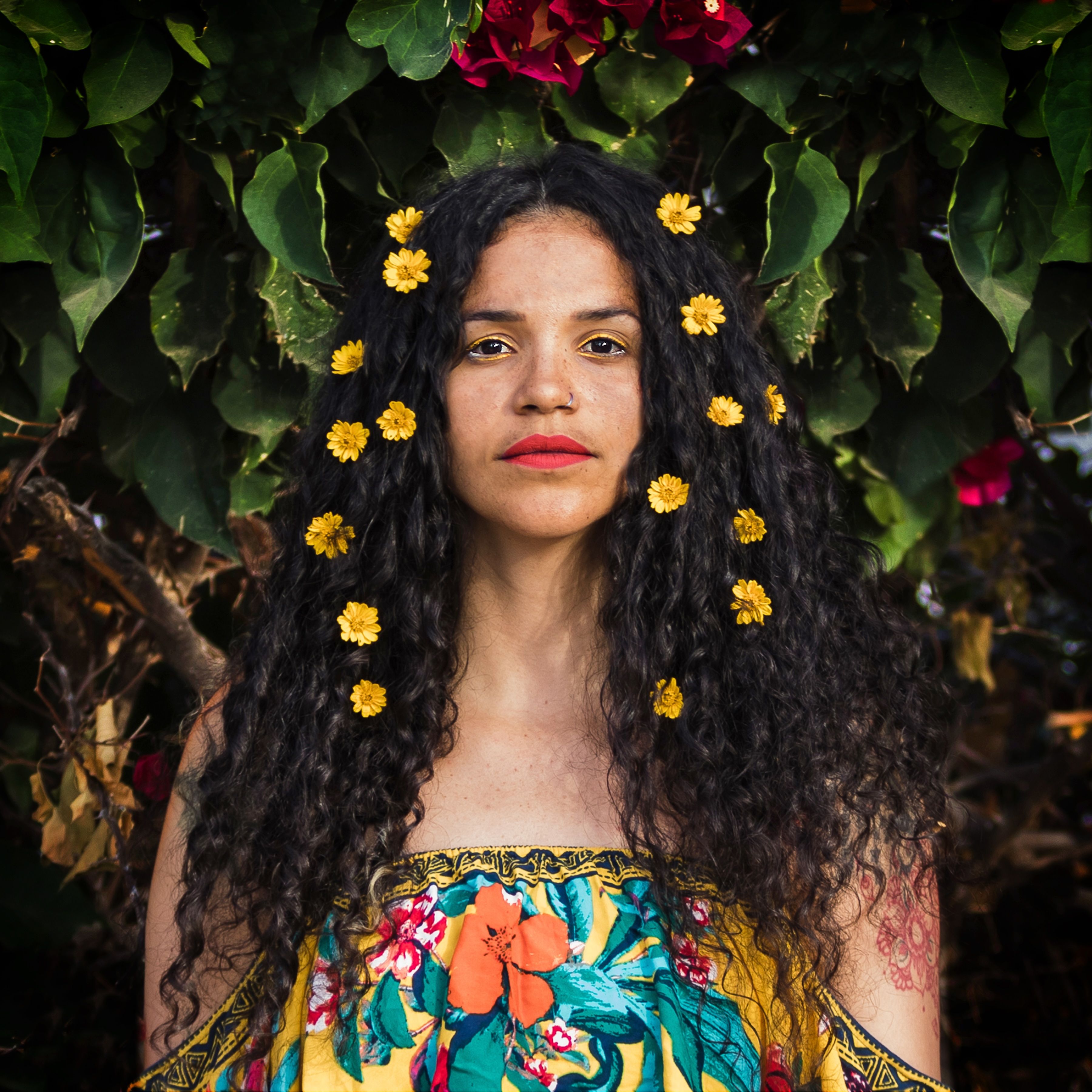
Name: Rita Donte
Occupation: Singer, songwriter
Nationality: Cuban, Mexico-based
Current release: Rita Donte's new album Ritual is out March 28th 2025 via Ansonia.
Global recommendations: In my hometown, I highly recommend watching the sunset from the Havana boardwalk. Now that I live in Baja California Sur, I also highly recommend visiting during whale season.
Topics I am passionate about but rarely get to talk about: I’m passionate about dancing, cooking (especially cooking!), photography, and gardening. After music, these are my greatest passions. My relationship with each of them is very special, although sometimes I don’t have much time to devote to them.
My passion for dance, especially flamenco, is something I could write pages about. Capturing a moment in time through a great photograph moves me deeply. Putting seeds in the ground and nurturing a plant to grow, or making a soup without a recipe—just mixing ingredients by intuition—these simple acts bring me great satisfaction.
[Read our interview with Harald Walkate about translating photography into music]
If you enjoyed this Rita Donte interview and would like to stay up to date with her music, visit her official website. She is also on Instagram, and bandcamp.
When did you first consciously start getting interested in singing? What was your first performance as a singer on stage or in the studio and what was the experience like?
From a very young age, I felt that I could sing, but it wasn’t until my early 20s that I consciously began to explore my voice as an instrument.
My first performance was in 2012 at El Callejón de los Peluqueros in ArteCorte, Papito, in Old Havana, where I presented my first musical project, Tierra Santa. I remember the experience as a truly magical night. The concert was very special—the music was beautiful, and the audience was full of people dancing and feeling joyful. Others watched attentively from the small balconies of their homes.
I was nervous in the hours leading up to the event, but once the music started, my body relaxed, and I enjoyed it immensely.
If you're also playing other instruments, how does the expressive potential of these compare to your own voice?
I don’t consider myself an instrumentalist, but I can easily connect with the piano, guitar, and jarana well enough to explore basic composition and accompaniment.
However, I would say that my voice remains the medium of expression with the most potential—where I can most naturally articulate what I want to express and evoke through sound and song.
Singing is an integral part of all cultures, and traditions. Which of these do you draw from – and why?
I am undoubtedly inspired by the culture of the land where I was born, but my culture is a blend of many influences. It draws from Africa, from Spain, and from what emerged in Cuba when these two cultures intertwined.
However, my strongest inspiration comes from home—from the singing of my grandmothers and the music that played on the vinyl record player while I played or helped them clean rice and beans to cook for the whole family.
What were some of the main challenges in your development as a singer/vocalist? Which practices, exercises, or teachers were most helpful in reaching your goals – were there also “harmful” ones?
The challenges have been many—finding my tessitura, working on the sound in all its dimensions, and exploring interpretation, which opened up an entirely new universe in my experience as a singer. I feel there was a distinct before and after in that journey. Singing and interpreting are two very different things.
Another challenge was learning how to sustain the right energy when stepping on stage—something you can only discover and refine along the way. Honestly, I don’t practice as much as I should (I confess I could be more disciplined), but there are always a few things that help: warming up my voice, doing simple vocalizations before singing, and blowing through a straw into a bottle of water, which is especially practical when my voice feels tired.
Over the past two years, my teacher, Gema Corredera, has been an invaluable guide with her advice and exercises. But overall, my experience has been more about intuition and self-exploration.
What are the things you hear in a voice when listening to a vocalist? What moves you in the voices of other singers?
When I listen to a singer I hear the level of relaxation in their performance, their honesty.
How would you describe the physical sensation of singing? [Where do you feel the voice, do you have a visual sensation/representation, is there a sense of release or tension etc …]
For me, the physical sensation of singing feels like an active meditation—somewhere between being asleep and awake.
I often close my eyes while singing, not always, but almost always, so I can fully feel and visualize the stories I’m telling through the music.
I project my voice from my entire body, adjusting depending on what I’m singing, but the feeling is always one of liberation—rooted in relaxation.
We have a speaking voice and a singing voice. Do these feel like they are natural extensions of each other, ends on a spectrum or different in kind?
The singing voice is completely different from the speaking voice—yet, I would say they are the same voice expressed in different situations.
How do you see the relationship between harmony, rhythm and melody? Do you feel that honing your sense of rhythm and groove has an effect on your singing skills?
For me, harmony, rhythm, and melody are like a family. The more harmonious their relationship, the better the experience feels. By harmonious, I mean a conversation where each element listens and responds to the others, savouring both the silences and the unique voice that each brings.
“Zunzun Baba” is one of those pieces where everything aligns perfectly—the solid foundation of the drums and the cave, the powerful presence of the bass paving the way for the celestial voices and their message.
I am a very rhythmic person. I love playing soniquetes with my feet and subdividing measures and words—it’s SO much fun! It stirs something deep inside me and keeps my creativity alive. I feel that it allows me to sing the same song in a thousand different ways, making the horizon of interpretation truly infinite.
What are the potentials and limits of your voice? How much of your vocal performance can and do you want to control?
I feel that my voice is small (at least in my opinion), but I’ve discovered a simple yet powerful way to communicate through it. What truly matters to me is leaving something meaningful with the listener—not necessarily impressing them with virtuosity or soaring volumes, but delivering the message the way one offers a hug or gives a flower.
Even when the song is fun, rhythmic, and danceable, my intention is always to leave something behind. Paseo las Misiones is one of those songs—a story of my ancestors and my musical lineage, told to the rhythm of a conga that moves the whole body.
But beneath that rhythm lies a message of gratitude, and that is what I share each time I sing it.
As a singer, it is possible to whisper at the audience, scream at the audience, reveal deep secrets or confront them with uncomfortable truths. Tell me about the sense of freedom that singing allows you to express yourself and how you perceive and build the relation with the audience.
My relationship with the audience is very intimate.
It’s true that being a singer allows me to express things I would never stand in the middle of the street and shout out loud. But through singing, freedom of expression becomes a pair of wings that carries both the musicians and the audience along for the journey.
I feel that my honesty and the authenticity of my stories make it easy to connect with people—intimacy and affection arise naturally and spontaneously.
I'd love to know more about the vocal performances for your latest release Ritual, please, and the qualities of your voice that you wanted to bring to the fore.
On my most recent album, Ritual, I feel that my voice is clearer than ever. The message in each song gave color to the interpretation, reflecting where I am in this moment of my life—free and full of gratitude.
I didn’t set out to highlight my solo voice in any particular way, but I did want to share the clarity and freshness of Cubanía. On the other hand, exploring choruses with many voices united brought me immense joy. That collective sound plays a special role in the album, and I love it deeply.
When we all sing together, just as we are—each with our own color and sound, without imitating anything that already exists—I feel a powerful sensation in my chest. It’s as if we’re converging in a circle where the song rises and Grace gently descends.
When you're writing song lyrics, do you sense or see a connection between your voice and the text? Does it need to feel and sound “good” or “right” to sing certain words? What's your perspective in this regard of singing someone else's songs versus your own?
There is definitely a strong connection between the voice and the words being spoken. It doesn’t always have to be specific words, but when there’s a vibration and force behind each phrase, that energy is woven and balanced with the voice.
I began with songs that weren’t my own. I grew up and trained as an interpreter, singing bolero, filin, trova, jazz, and Latin American music in general. I feel very comfortable with that, as it gives me the freedom to interpret what I sing in my own way.
Now, with more of my own compositions, I’m beginning to cultivate the relationship of singing my own songs. This relationship is ongoing—an eternal search. There’s always a new way to interpret a song.
Strain is a particularly serious issue for many vocalists. How do you take care of your voice? Are the recipes or techniques to get a damaged voice back in shape?
I try to stay relaxed, especially since I sing for many hours as part of my work, which can be very tiring. If you don’t relax, you can end up damaging your voice. I always try to stay conscious of maintaining relaxation.
My second ally is water—I drink a lot of it, but it has to be at the right temperature: not cold, not lukewarm, and definitely not tea—just plain water.
When my voice is tired or damaged, one way to recover is to sleep as much as possible to rest the vocal cords. I also turn to thyme tea. If I need to sing while I’m still recovering, I lower the pitch of my highest songs and sing very softly.
How has technology, such as autotune or effect processing, impacted singing? Has it been a concrete influence on your own approach?
Technology definitely brings many good things, but it also has some drawbacks, in my opinion.
With all the effects and tools available to alter pitch and tone in the studio, the craft and effort it takes to build your voice—cultivating your path as a performer, growing through your search, and developing a unique sound—can sometimes be diminished. With those effects, everything can end up sounding the same.
I’m not opposed to technology, but sometimes it feels like it undermines beauty and originality. On the positive side, it allows everyone to sing and resolve vocal issues with ease.
Ultimately, what matters most is that the end result of your work makes you happy—that’s what counts. Personally, I’m more old school.
For recording engineers, the human voice remains a tricky element to capture. What are some of the favourite recordings of your own voice so far and what makes voices sound great on record and in a live setting?
In general, I’m quite satisfied with the vocal capture on Ritual, and it’s not very different from what you’d hear when I perform the music live.
One thing that really contributed to the sound of this album is that we all recorded together in the studio, without a metronome. Instead, we focused on breathing together on each song.
Motherese may have been the origin of music, and singing is possibly the earliest form of musical expression, and culture in general. How connected is the human voice to your own sense of wellbeing, your creativity, and society as a whole?
The voice is an incredibly powerful tool. Expressing oneself through the voice allows you to release much of the energy that accumulates in the body—both in the individual and, in a broader sense, in the collective body of humanity.
I feel that being connected with your voice brings a sense of lightness to life, and that lightness can be projected on all levels.
It would do us all a great deal of good if we could embrace a little more lightness, not just individually but for all of humanity.